Ava Ramirez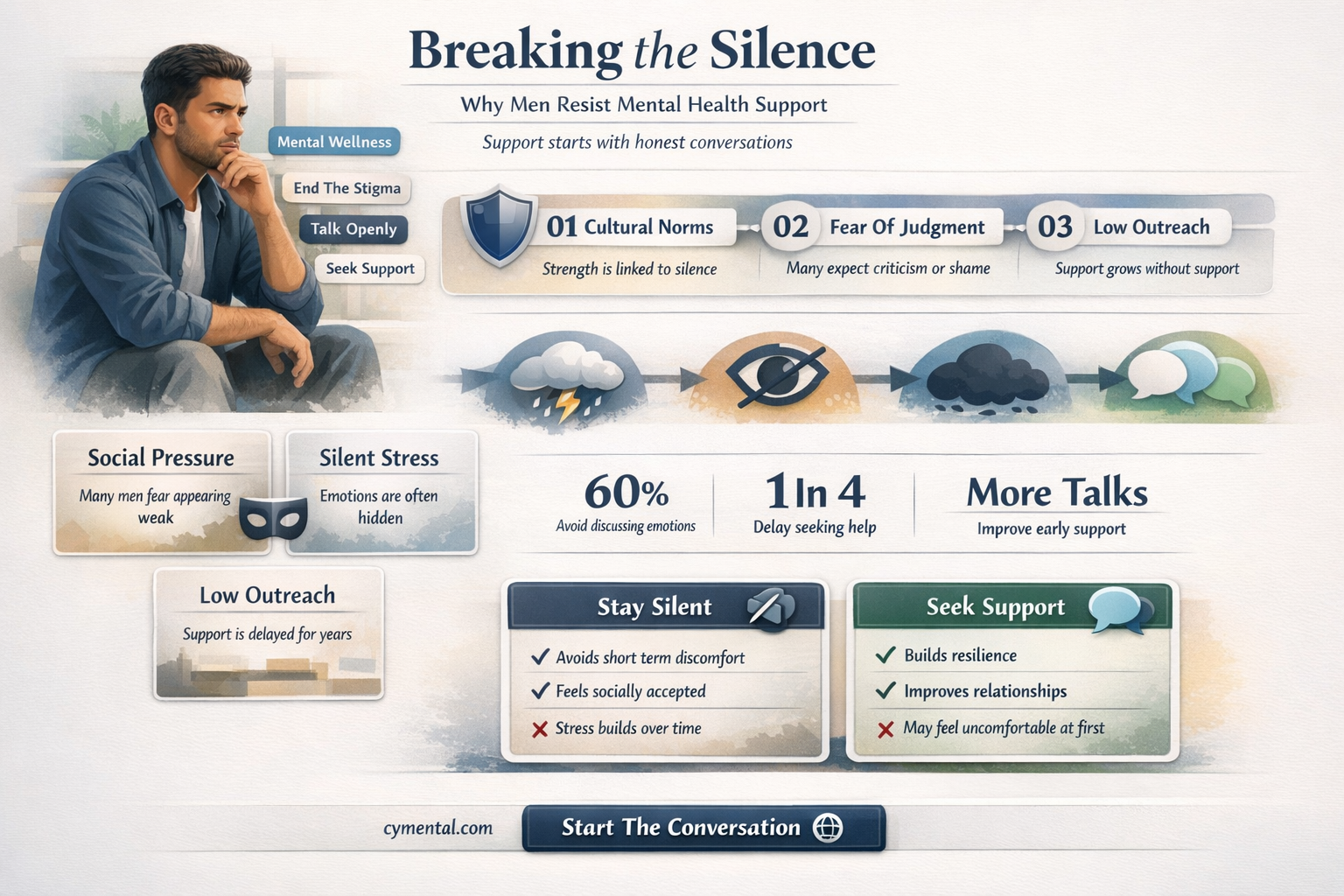
The question of whether men are less likely to seek help for mental health issues is a critical and multifaceted topic that intersects with societal norms, gender roles, and cultural expectations. Historically, men have been conditioned to embody traits such as stoicism, self-reliance, and emotional restraint, often leading to the suppression of vulnerability and a reluctance to acknowledge mental health struggles. This phenomenon, compounded by the stigma surrounding mental health in many communities, creates barriers that discourage men from seeking support. Research consistently shows that men are less likely to access mental health services compared to women, despite experiencing similar rates of mental health challenges. Understanding the underlying reasons for this disparity and addressing the systemic and cultural factors at play is essential to fostering a more inclusive and supportive approach to mental health care for all.
| Characteristics | Values |
|---|---|
| Likelihood of Seeking Help | Men are significantly less likely to seek help for mental health issues compared to women. |
| Prevalence of Mental Health Issues | Men and women experience mental health issues at similar rates, but men are less likely to report them. |
| Barriers to Seeking Help | Stigma, societal expectations of masculinity, lack of awareness, and fear of appearing weak. |
| Preferred Coping Mechanisms | Men often rely on self-reliance, substance use, or avoidance rather than professional help. |
| Suicide Rates | Men are 3.5 times more likely to die by suicide than women, partly due to untreated mental health issues. |
| Help-Seeking Behavior | Only 1 in 3 men with depression seek professional help, compared to 1 in 2 women. |
| Awareness and Education | Lower awareness of mental health symptoms and available resources among men. |
| Cultural Norms | Societal norms discourage men from expressing vulnerability or emotional distress. |
| Healthcare Utilization | Men are less likely to visit healthcare providers for any reason, including mental health. |
| Age and Help-Seeking | Younger men are slightly more likely to seek help than older generations, but the gap persists. |
| Impact of Stigma | Fear of judgment or being perceived as less masculine is a major deterrent. |
| Workplace Factors | Work-related stress and long hours contribute to mental health issues but are less likely to be addressed. |
| Relationship to Substance Abuse | Men are more likely to use alcohol or drugs as a coping mechanism instead of seeking help. |
| Access to Resources | Limited access to male-focused mental health services and campaigns. |
| Geographical Differences | Help-seeking behavior varies by region, with some cultures having stronger stigma than others. |
| Policy and Advocacy | Increasing efforts to promote male mental health through campaigns like Movember and Men’s Health Week. |
Explore related products

$8.44 $14.99


What You'll Learn
- Stigma and Masculinity: Societal expectations of men as strong, self-reliant, and unemotional discourage help-seeking
- Lack of Awareness: Limited education on mental health symptoms and resources reduces men’s likelihood to seek support
- Fear of Judgment: Men often avoid help due to fear of being perceived as weak or inadequate
- Barriers in Therapy: Traditional therapy models may not resonate with men’s communication styles or needs
- Workplace Culture: High-pressure work environments often prioritize productivity over mental well-being, deterring men from seeking help

Stigma and Masculinity: Societal expectations of men as strong, self-reliant, and unemotional discourage help-seeking
Men are three times more likely than women to die by suicide in the United States, a stark statistic that underscores a deeper issue: the reluctance of men to seek help for mental health struggles. This disparity isn’t rooted in biology but in societal expectations that equate masculinity with strength, self-reliance, and emotional stoicism. From childhood, boys are often told to “toughen up,” “be a man,” or “don’t cry,” messages that internalize the idea that vulnerability is a weakness. These norms create a toxic cycle where men suppress their emotions, avoid seeking support, and suffer in silence.
Consider the workplace, a domain where traditional masculine ideals are often reinforced. Men are frequently expected to be assertive, competitive, and unflappable, leaving little room for admitting struggles with anxiety, depression, or burnout. A 2019 study by the American Psychological Association found that 30% of men reported feeling pressure to show no weakness, compared to 17% of women. This pressure isn’t just psychological; it has tangible consequences. Men are less likely to take mental health days, attend therapy, or even discuss their feelings with friends or family. Instead, they may turn to maladaptive coping mechanisms like substance abuse or isolation, which exacerbate mental health issues.
The stigma surrounding men’s mental health is further perpetuated by media and cultural narratives. Films, advertisements, and sports often glorify the “strong, silent type,” reinforcing the idea that emotional expression is unmasculine. For example, a 2020 analysis of popular films found that male characters were twice as likely to be portrayed as emotionally distant or stoic compared to female characters. These portrayals shape public perception, making it harder for men to deviate from the script without fear of judgment or ridicule. Even when men do seek help, they may face skepticism or dismissal, as if their struggles are less valid than those of women.
Breaking this cycle requires a multifaceted approach. First, education is key. Schools, workplaces, and communities must challenge harmful stereotypes by promoting emotional literacy and normalizing vulnerability. Programs like the Movember Foundation’s “Beyond Blue” campaign have successfully encouraged men to open up about their mental health by framing it as an act of strength rather than weakness. Second, mental health services need to be tailored to men’s needs. Male-focused therapy groups, online platforms, and peer support networks can provide safe spaces for men to share without fear of judgment. Finally, public figures and role models must lead by example. When athletes, actors, or politicians openly discuss their mental health struggles, they help dismantle the stigma and inspire others to seek help.
The takeaway is clear: societal expectations of masculinity are not just outdated—they are dangerous. By redefining what it means to be a man, we can create a culture where seeking help is seen as a sign of courage, not failure. Men’s mental health is not a personal issue; it’s a collective responsibility. Until we address the stigma head-on, the silent suffering will continue, and the statistics will remain grim.
Seeking Support: Exploring Resources to Help Navigate Life's Challenges
You may want to see also
Explore related products





Lack of Awareness: Limited education on mental health symptoms and resources reduces men’s likelihood to seek support
Men often struggle to recognize the early signs of mental health issues, mistaking symptoms like irritability, fatigue, or withdrawal as mere stress or temporary setbacks. Unlike physical ailments, mental health symptoms can be subtle and subjective, making them harder to identify without proper education. For instance, persistent sadness might be dismissed as a “bad week,” while changes in sleep patterns could be attributed to a busy schedule. This lack of awareness stems from a societal tendency to overlook emotional well-being, particularly in men, who are often conditioned to prioritize stoicism over self-reflection. Without clear guidance on what constitutes a mental health concern, men are less likely to seek help, assuming their experiences fall within the realm of normalcy.
Consider the following scenario: a 30-year-old man experiences frequent mood swings and difficulty concentrating at work. Without understanding that these could be indicators of anxiety or depression, he might self-medicate with alcohol or isolate himself, exacerbating the problem. Educational initiatives, such as workplace workshops or school programs, could equip men with the knowledge to identify these symptoms early. For example, teaching men to recognize the difference between everyday stress and clinical anxiety—such as persistent worry lasting over six months—could encourage timely intervention. Practical tools like self-assessment quizzes or symptom checklists could further bridge the gap between confusion and clarity.
The absence of mental health education also leaves men unaware of available resources, creating a barrier to seeking support. Many men are unfamiliar with services like counseling, support groups, or helplines, assuming mental health care is inaccessible or unaffordable. For instance, a study found that only 30% of men knew about free community mental health programs in their area. This knowledge gap is particularly pronounced in rural or underserved communities, where resources are scarce and stigma is high. By integrating mental health education into primary care visits or public health campaigns, men could be informed about low-cost options like sliding-scale therapy or online platforms, reducing the perception of seeking help as an insurmountable hurdle.
To address this issue, a multi-faceted approach is necessary. Schools and workplaces should incorporate mental health literacy into their curricula, using age-appropriate language and relatable examples. For instance, high school students could learn about the link between social media use and anxiety, while corporate employees could be trained to spot signs of burnout in themselves and colleagues. Additionally, public health campaigns could target men directly, using platforms like sports events or social media to normalize conversations about mental health. For example, a campaign featuring athletes sharing their struggles could resonate with men who admire physical strength, subtly challenging the notion that seeking help is a sign of weakness.
Ultimately, the lack of awareness about mental health symptoms and resources perpetuates a cycle of silence and suffering among men. By investing in education and outreach, society can empower men to recognize when they need help and take actionable steps to address their mental well-being. Small changes, such as including mental health information in annual physical exams or providing resource guides in community centers, could make a significant difference. The goal is not just to inform but to transform cultural attitudes, ensuring that men no longer view seeking support as a failure but as a vital part of self-care.
Supporting Teens: Practical Strategies for Navigating Mental Health Challenges
You may want to see also
Explore related products

$9.79 $17.99


Fear of Judgment: Men often avoid help due to fear of being perceived as weak or inadequate
Men often hesitate to seek mental health support due to a pervasive fear of being labeled as weak or inadequate. This stigma is deeply rooted in societal expectations of masculinity, which equate emotional vulnerability with failure. For instance, a 2019 study published in the *Journal of Mental Health* found that 60% of men surveyed avoided therapy because they feared it would make them appear less masculine. This reluctance isn’t just a personal choice—it’s a barrier reinforced by cultural norms that penalize men for expressing emotional distress.
Consider the workplace, where men are often expected to be stoic and unshakable. Admitting to anxiety or depression can be seen as a sign of unreliability, potentially jeopardizing career advancement. Similarly, in friendships and relationships, men may avoid discussing their struggles to maintain an image of strength. This internalized pressure creates a cycle: the fear of judgment prevents them from seeking help, which in turn exacerbates their mental health issues. Practical steps to counteract this include normalizing vulnerability in male-dominated spaces and promoting role models who openly discuss their mental health journeys.
The fear of judgment isn’t just psychological—it has tangible consequences. Men are less likely to access mental health services, leading to higher rates of untreated depression, substance abuse, and even suicide. According to the American Psychological Association, men die by suicide at a rate 3.5 times higher than women, a statistic that underscores the deadly impact of unaddressed mental health issues. To combat this, organizations like Movember have launched campaigns specifically targeting men, emphasizing that seeking help is a sign of strength, not weakness.
Breaking this cycle requires a shift in perspective. Men must be taught that emotional resilience isn’t about suppressing feelings but about addressing them constructively. Start by encouraging small, manageable steps: confiding in a trusted friend, joining a support group, or using anonymous helplines. Employers can play a role too by offering mental health days and fostering a culture where seeking help is applauded, not stigmatized. Ultimately, dismantling the fear of judgment begins with redefining what it means to be a man—not as someone who never falters, but as someone who faces challenges head-on, with courage and honesty.
Seeking Support: A Guide to Asking for Mental Health Assistance
You may want to see also
Explore related products


Barriers in Therapy: Traditional therapy models may not resonate with men’s communication styles or needs
Men often approach communication with a focus on problem-solving and action, yet traditional therapy models frequently prioritize emotional exploration and introspection. This mismatch can leave men feeling frustrated or disconnected during sessions. For instance, a man struggling with workplace stress might prefer concrete strategies to manage anxiety, but a therapist trained in psychodynamic methods may instead encourage him to delve into childhood experiences. While both approaches have value, the misalignment in communication styles can deter men from continuing therapy, as they may perceive it as unproductive or irrelevant to their immediate needs.
Consider the structure of therapy itself: open-ended questions, emotional probing, and a focus on vulnerability. These elements, while effective for many, can feel alienating to men socialized to suppress emotions or equate vulnerability with weakness. A 2019 study published in the *Journal of Counseling Psychology* found that men were more likely to disengage from therapy when sessions felt overly emotional or lacked clear, actionable goals. Therapists can bridge this gap by incorporating solution-focused techniques, such as setting specific, measurable objectives or teaching practical coping skills early in treatment. For example, a therapist might start by helping a client develop a daily stress-reduction routine before exploring deeper emotional issues.
Another barrier lies in the language and framing of therapy. Terms like "processing emotions" or "self-care" may resonate less with men who are accustomed to more direct, task-oriented communication. Therapists can adapt by using action-oriented language, such as "developing strategies" or "building resilience," which aligns more closely with how men often conceptualize personal growth. For instance, instead of asking, "How does that make you feel?" a therapist might ask, "What steps can we take to address this challenge?" This small shift can make therapy feel more accessible and engaging for male clients.
Finally, the physical and cultural environment of therapy settings can inadvertently discourage men. Traditional therapy offices, often adorned with soft furnishings and calming decor, may feel overly feminine or intimidating to some men. Similarly, the expectation to sit in a confined space and discuss personal struggles can clash with men’s preferences for more active or side-by-side interactions. Therapists can address this by offering alternative formats, such as walking therapy or group sessions focused on shared activities, which can reduce the pressure of one-on-one emotional disclosure. By reimagining therapy to better align with men’s communication styles and needs, mental health professionals can remove significant barriers to engagement and retention.
Supporting Mental Health: Practical Ways to Help Someone in Need
You may want to see also
Explore related products


Workplace Culture: High-pressure work environments often prioritize productivity over mental well-being, deterring men from seeking help
High-pressure work environments often demand relentless productivity, leaving little room for employees to acknowledge, let alone address, their mental health struggles. For men, this dynamic is particularly insidious. Societal expectations of stoicism and self-reliance collide with workplace cultures that equate emotional vulnerability with weakness, creating a perfect storm of silence. A 2019 study by the American Psychological Association found that 38% of men reported feeling uncomfortable discussing mental health concerns with their employer, compared to 28% of women. This disparity highlights how workplace norms disproportionately deter men from seeking the support they need.
In such environments, seeking help for mental health issues can feel like admitting defeat. The unspoken rule is to "tough it out," to push through burnout, anxiety, or depression in the name of meeting deadlines and exceeding expectations. This toxic culture not only perpetuates stigma but also exacerbates mental health problems, leading to decreased productivity, increased absenteeism, and higher turnover rates. Consider the tech industry, notorious for its "hustle culture," where long hours and constant connectivity are glorified. A 2021 survey by Blind revealed that 57% of tech workers reported experiencing burnout, with men being less likely than women to take time off for mental health reasons.
To break this cycle, organizations must actively cultivate a culture that prioritizes mental well-being alongside productivity. This involves tangible steps: implementing flexible work arrangements, offering confidential mental health resources, and providing training for managers to recognize signs of distress. For instance, companies like Google and Microsoft have introduced mental health days and mindfulness programs, signaling a shift towards acknowledging the human cost of high-pressure environments. However, these initiatives must be accompanied by a fundamental change in mindset. Leaders need to model vulnerability, openly discussing their own mental health challenges to normalize seeking help.
Ultimately, the onus cannot solely be on individuals to challenge ingrained workplace norms. Policy changes are essential. Governments and regulatory bodies should mandate mental health training for employers and enforce stricter regulations around working hours and overtime. Simultaneously, men must be encouraged to redefine masculinity, understanding that seeking help is not a sign of weakness but a crucial step towards resilience and long-term success. By dismantling the stigma surrounding mental health in high-pressure workplaces, we can create environments where productivity and well-being are not mutually exclusive but interconnected pillars of a healthy, thriving workforce.
Helping Reluctant Loved Ones Access Mental Health Care in Texas
You may want to see also
Frequently asked questions
Yes, research consistently shows that men are less likely to seek professional help for mental health concerns due to societal norms, stigma, and traditional gender roles that discourage emotional expression.
Men often avoid seeking help due to fear of appearing weak, societal expectations to "tough it out," lack of awareness about mental health, and concerns about being judged or misunderstood.
Stigma reinforces the idea that seeking help is a sign of weakness, leading many men to internalize their struggles and avoid reaching out, which can worsen their mental health over time.
Raising awareness, promoting mental health literacy, challenging gender stereotypes, and creating safe, non-judgmental spaces for men to express their emotions can help encourage them to seek help.