Madison Cole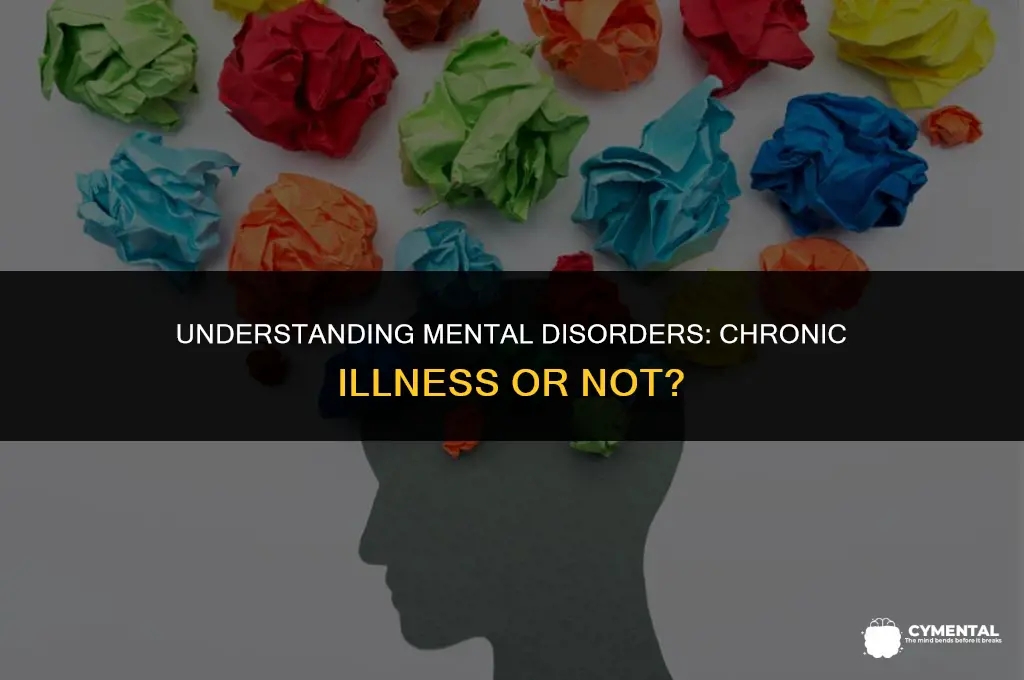
Mental disorders are often considered chronic illnesses due to their persistent and long-lasting nature. While some mental health conditions may be episodic, many others, such as schizophrenia, bipolar disorder, and major depressive disorder, can have a chronic course that significantly impacts an individual's daily life and functioning. Like chronic physical illnesses, mental disorders often require ongoing treatment and management to control symptoms and improve quality of life. Additionally, mental health conditions can have a substantial impact on physical health, increasing the risk of chronic medical conditions and complicating their management. As such, it is essential to recognize mental disorders as chronic illnesses and provide comprehensive, long-term care to those affected.
Explore related products


What You'll Learn

Definition and Classification
Mental disorders are often misunderstood as being synonymous with chronic illness, but this is not always the case. While some mental disorders can be chronic and long-lasting, others may be episodic or situational. It's essential to understand the definitions and classifications of mental disorders to accurately determine their chronicity.
The Diagnostic and Statistical Manual of Mental Disorders (DSM-5) is the primary reference used by mental health professionals to diagnose and classify mental disorders. It provides a comprehensive list of mental health conditions, each with its own set of diagnostic criteria. However, the DSM-5 does not explicitly categorize mental disorders as chronic or acute. Instead, it focuses on the symptoms, duration, and impact of the disorder on the individual's daily life.
To determine whether a mental disorder is chronic, it's necessary to consider the duration and course of the condition. Chronic mental disorders typically persist over an extended period, often lasting months or years. They may also have a relapsing and remitting course, where symptoms improve and then worsen again. In contrast, acute mental disorders have a sudden onset and may resolve within a shorter timeframe, such as weeks or months.
Some examples of chronic mental disorders include schizophrenia, bipolar disorder, and major depressive disorder. These conditions often require ongoing treatment and management to control symptoms and improve quality of life. On the other hand, acute mental disorders such as acute stress disorder or brief psychotic disorder may be triggered by a specific event or stressor and may resolve once the trigger is removed or addressed.
It's important to note that the classification of mental disorders as chronic or acute is not always clear-cut. Some conditions may have both chronic and acute elements, and the course of the disorder may vary significantly from person to person. Additionally, the severity and impact of a mental disorder can change over time, making it necessary to reassess and adjust treatment plans accordingly.
In conclusion, while mental disorders can be chronic, they are not inherently so. The classification of a mental disorder as chronic or acute depends on various factors, including the duration, course, and impact of the condition on the individual's daily life. Understanding these distinctions is crucial for accurate diagnosis, treatment, and management of mental health conditions.
Understanding Comorbidity: When Multiple Mental Disorders Co-Occur
You may want to see also
Explore related products


$49.95 $49.95


Prevalence and Statistics
According to the World Health Organization (WHO), mental disorders are among the leading causes of disability worldwide. In 2019, an estimated 970 million people suffered from a mental disorder, with anxiety and depressive disorders being the most prevalent. These conditions not only affect individuals but also have significant societal and economic impacts. For instance, the global economic burden of mental illness is projected to reach $6 trillion by 2030, primarily due to lost productivity and healthcare costs.
In the United States, the National Institute of Mental Health (NIMH) reports that approximately 1 in 5 adults experience a mental illness each year. This equates to around 52.9 million people. Furthermore, 1 in 25 adults suffer from a serious mental illness, such as schizophrenia, bipolar disorder, or major depressive disorder, which substantially interferes with daily functioning. Among adolescents, the prevalence of mental illness is also concerning, with about 1 in 6 experiencing a major depressive episode in the past year.
The prevalence of mental disorders varies across different regions and countries. Low- and middle-income countries bear a disproportionate burden, with over 80% of people with mental disorders residing in these areas. This is partly due to limited access to mental health services and the stigma associated with mental illness in these regions. In contrast, high-income countries tend to have better mental health infrastructure and resources, although the prevalence of mental disorders remains significant.
Mental disorders can be chronic, with many individuals experiencing recurrent episodes or persistent symptoms over time. For example, people with schizophrenia often require lifelong treatment and support, as the condition can significantly impact their ability to function in daily life. Similarly, those with bipolar disorder may experience periods of remission but are at risk of future manic or depressive episodes. The chronic nature of these conditions underscores the importance of ongoing mental health care and support.
In conclusion, the prevalence and statistics of mental disorders highlight the significant impact these conditions have on individuals and society as a whole. With millions of people affected worldwide, it is crucial to address the gaps in mental health care and reduce the stigma associated with mental illness. By doing so, we can work towards improving the lives of those affected and mitigating the broader societal and economic consequences of mental disorders.
Navigating the Labyrinth: Understanding the Challenges of Complex Mental Disorders
You may want to see also
Explore related products


$11.99 $27.95


$25.99


Impact on Daily Life
Mental disorders can significantly impact an individual's daily life, affecting their ability to function in various aspects of their personal and professional lives. One of the primary ways mental disorders can disrupt daily life is through the impairment of cognitive functions. Conditions such as depression, anxiety, and bipolar disorder can lead to difficulties in concentration, memory, and decision-making, making it challenging for individuals to perform tasks that require sustained attention and mental effort.
In addition to cognitive impairments, mental disorders can also affect an individual's emotional well-being and social interactions. For example, individuals with depression may experience persistent feelings of sadness and hopelessness, leading to social withdrawal and isolation. Those with anxiety disorders may struggle with excessive worry and fear, making it difficult to engage in social situations or maintain relationships. Furthermore, mental disorders can lead to physical health problems, as the stress and strain of managing these conditions can weaken the immune system and increase the risk of chronic diseases such as heart disease and diabetes.
The impact of mental disorders on daily life can also be seen in the realm of employment and education. Individuals with mental health conditions may struggle to maintain consistent attendance and performance in their jobs or academic programs, leading to financial instability and limited opportunities for advancement. Moreover, the stigma surrounding mental illness can lead to discrimination and prejudice in the workplace and educational settings, further exacerbating the challenges faced by those with mental health conditions.
To mitigate the impact of mental disorders on daily life, it is essential for individuals to seek appropriate treatment and support. This may include therapy, medication, and lifestyle changes such as regular exercise and a healthy diet. Additionally, creating a supportive environment that reduces stigma and promotes understanding can help individuals with mental health conditions to better manage their symptoms and improve their overall quality of life. By addressing the unique challenges posed by mental disorders, individuals can work towards achieving a more balanced and fulfilling life.
Unraveling the Complexities: Understanding Mental Health Disorders
You may want to see also
Explore related products


Treatment and Management
Effective treatment and management of mental disorders require a multifaceted approach that combines medical, psychological, and social interventions. Medications such as antidepressants, antipsychotics, and mood stabilizers can help alleviate symptoms, but they must be used in conjunction with other therapies for optimal results. Cognitive-behavioral therapy (CBT), for example, is a powerful tool that helps individuals identify and change negative thought patterns and behaviors. Other forms of psychotherapy, such as dialectical behavior therapy (DBT) and acceptance and commitment therapy (ACT), can also be beneficial in managing chronic mental health conditions.
In addition to individual therapies, group therapy and support groups can provide valuable social support and help individuals feel less isolated. Family therapy can also be an important component of treatment, as it can help educate family members about the disorder and improve communication and coping strategies. For some individuals, alternative therapies such as art therapy, music therapy, or mindfulness-based interventions may also be helpful in managing symptoms and improving overall well-being.
Lifestyle changes can also play a significant role in the treatment and management of mental disorders. Regular exercise, a healthy diet, and adequate sleep are all important factors in maintaining mental health. Additionally, stress management techniques such as meditation, yoga, or deep breathing exercises can help individuals cope with the challenges of living with a chronic mental health condition.
It is important to note that treatment and management strategies will vary depending on the specific mental disorder and the individual's unique needs and circumstances. A comprehensive treatment plan should be developed in collaboration with a mental health professional and may need to be adjusted over time as the individual's needs change. With the right combination of treatments and support, however, many individuals with mental disorders can lead fulfilling and productive lives.
Overcoming Stigmas: Strategies to Mitigate Bias Against Mental Health Disorders
You may want to see also
Explore related products


Societal Perceptions and Stigma
Mental health disorders are often shrouded in stigma, leading to widespread misconceptions and societal prejudices. This stigma can manifest in various forms, from overt discrimination to subtle biases in language and behavior. For instance, individuals with mental health conditions may be unfairly judged as being weak, lazy, or dangerous, which can significantly impact their social interactions, employment opportunities, and overall quality of life.
One of the primary sources of stigma is the lack of understanding and awareness about mental health disorders. Many people still view mental illness as a personal failing rather than a legitimate medical condition. This misconception is fueled by the invisible nature of mental health issues, which can make it difficult for others to empathize or recognize the severity of the condition. Furthermore, sensationalized media portrayals of mental illness often perpetuate harmful stereotypes, reinforcing negative attitudes and beliefs.
Stigma can also be perpetuated by institutional factors, such as inadequate mental health policies and funding. In many countries, mental health services are underfunded and understaffed, leading to long wait times, limited access to care, and poor treatment outcomes. This systemic neglect can contribute to the perception that mental health disorders are not as important or valid as physical illnesses, further exacerbating the stigma.
Combating stigma requires a multifaceted approach that involves education, advocacy, and policy change. Increasing public awareness about mental health disorders through campaigns, workshops, and social media can help dispel myths and promote understanding. Additionally, advocating for better mental health policies and funding can help ensure that individuals with mental health conditions receive the care and support they need. By working together to address stigma, we can create a more inclusive and supportive society for those affected by mental health disorders.
Understanding Cluster B: The Complexity of Personality Disorders
You may want to see also
Frequently asked questions
Yes, mental disorders are often considered chronic illnesses because they can persist over time, significantly impact daily life, and may require ongoing treatment and management.
Examples of mental disorders classified as chronic illnesses include depression, anxiety disorders, bipolar disorder, schizophrenia, and obsessive-compulsive disorder (OCD).
Mental disorders can affect a person's quality of life by causing emotional distress, impairing cognitive function, disrupting social interactions, and limiting the ability to perform daily tasks and responsibilities.