Noah Parker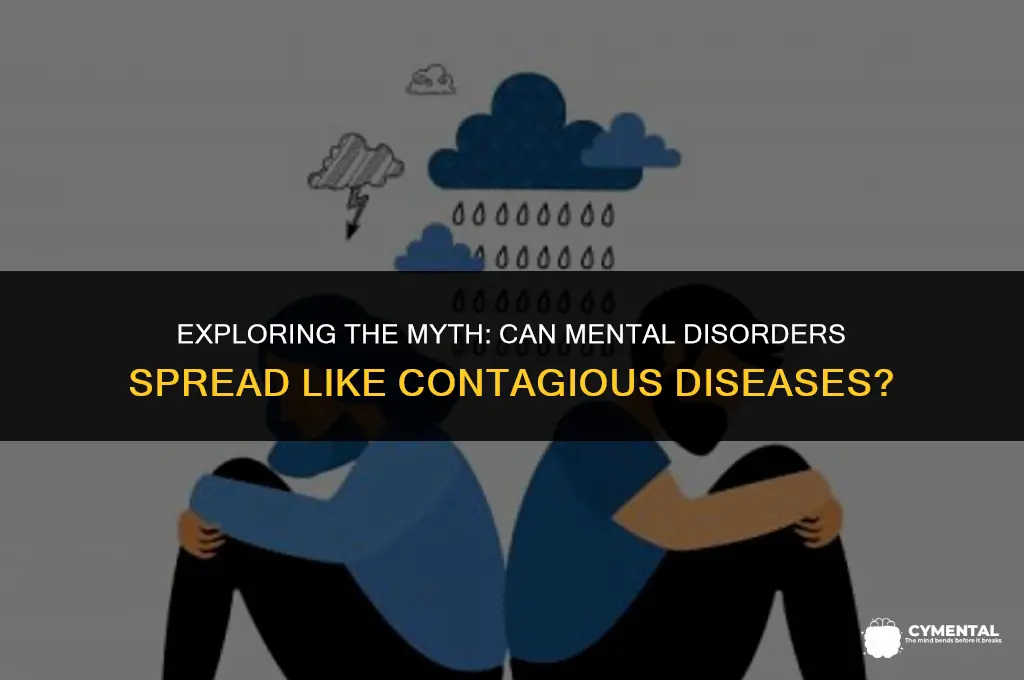
Mental disorders are complex conditions that affect a person's thinking, feeling, and behavior. While they are not contagious in the traditional sense, like a cold or flu, research suggests that certain mental health conditions can have a social component. For example, studies have shown that depression and anxiety can spread through social networks, particularly among close friends and family members. This is thought to occur through a process called social contagion, where individuals may adopt the emotional states and behaviors of those around them. However, it's important to note that this is not the same as saying that mental disorders are catching like a virus. Rather, it highlights the importance of social support and the potential impact of our social environment on our mental health.
| Characteristics | Values |
|---|---|
| Definition | Mental disorders are not contagious in the traditional sense like physical illnesses. They cannot be transmitted through physical contact or bodily fluids. |
| Etiology | Mental disorders are often caused by a combination of genetic, environmental, and psychological factors. They are not caused by germs or viruses. |
| Transmission | Unlike infectious diseases, mental disorders do not spread from person to person through casual contact or exposure. |
| Symptoms | Symptoms of mental disorders vary widely and can include changes in mood, behavior, thinking, and perception. Common symptoms include anxiety, depression, hallucinations, and delusions. |
| Diagnosis | Mental disorders are diagnosed based on a person's symptoms and medical history. A mental health professional, such as a psychiatrist or psychologist, typically makes the diagnosis. |
| Treatment | Treatment for mental disorders often involves a combination of medication, therapy, and lifestyle changes. The specific treatment plan depends on the individual and the type of disorder. |
| Prognosis | The prognosis for mental disorders varies depending on the specific disorder, the individual's circumstances, and the effectiveness of treatment. Many people with mental disorders can lead fulfilling lives with proper treatment and support. |
| Prevention | While mental disorders cannot be prevented in the same way as infectious diseases, certain risk factors can be addressed to reduce the likelihood of developing a mental disorder. These include maintaining a healthy lifestyle, managing stress, and seeking help early if symptoms appear. |
| Social Impact | Mental disorders can have a significant impact on an individual's social life, relationships, and ability to function in society. Stigma and discrimination against people with mental disorders can exacerbate these challenges. |
| Research | Ongoing research is focused on better understanding the causes of mental disorders, developing more effective treatments, and improving the overall quality of life for people with mental disorders. |
Explore related products


What You'll Learn
- Myth vs. Reality: Dispelling common misconceptions about the contagiousness of mental health conditions
- Social Stigma: Exploring how societal beliefs impact individuals with mental disorders and their families
- Transmission Myths: Discussing false ideas about how mental disorders might spread from person to person
- Genetic Factors: Investigating the role of genetics in mental health and potential hereditary risks
- Environmental Influences: Examining how environmental factors contribute to the development of mental disorders

Myth vs. Reality: Dispelling common misconceptions about the contagiousness of mental health conditions
Mental health conditions are often misunderstood, and one of the most pervasive myths is that they are contagious. This misconception can lead to stigma, discrimination, and a lack of support for those affected. In reality, mental disorders are not transmissible from person to person like physical illnesses. They are complex conditions that arise from a combination of genetic, environmental, and psychological factors. Understanding this distinction is crucial for fostering empathy and providing appropriate assistance to individuals struggling with mental health issues.
One common misconception is that spending time with someone who has a mental disorder can cause you to "catch" it. This myth is rooted in a misunderstanding of how mental health conditions develop. Mental disorders are not caused by a virus or bacteria that can be transmitted through contact. Instead, they are influenced by a range of factors, including genetics, life experiences, and brain chemistry. It's important to recognize that mental health conditions are not a result of personal weakness or a lack of willpower, but rather a legitimate medical issue that requires treatment and support.
Another myth is that mental health conditions are rare and only affect a small percentage of the population. In reality, mental disorders are quite common, with approximately one in five adults experiencing a mental illness each year. This statistic highlights the importance of addressing mental health as a public health issue and ensuring that resources are available for those who need them. By dispelling the myth of rarity, we can encourage more people to seek help and reduce the stigma associated with mental illness.
A related misconception is that mental health conditions are a sign of personal failure or a lack of coping skills. This myth can be particularly damaging, as it discourages individuals from seeking help and perpetuates the idea that mental illness is something to be ashamed of. In truth, mental disorders are not a reflection of a person's character or abilities. They are medical conditions that can affect anyone, regardless of their background or circumstances. It's essential to approach mental health with compassion and understanding, recognizing that those affected are not to blame for their condition.
Finally, it's important to address the myth that mental health conditions cannot be treated or managed. This misconception can lead to hopelessness and despair for those affected. In reality, many mental disorders are treatable with a combination of therapy, medication, and lifestyle changes. With the right support and resources, individuals can learn to manage their symptoms and lead fulfilling lives. Dispelling this myth is crucial for encouraging people to seek help and for promoting a more optimistic outlook on mental health recovery.
In conclusion, it's essential to challenge the myths surrounding the contagiousness of mental health conditions. By understanding the realities of mental illness, we can reduce stigma, promote empathy, and ensure that those affected receive the support they need. Mental health conditions are not contagious, but they are common and treatable. Let's work together to create a more compassionate and informed society that supports the well-being of all individuals.
Exploring the Myth: Liberals and Mental Health Disorders
You may want to see also
Explore related products



Social Stigma: Exploring how societal beliefs impact individuals with mental disorders and their families
Social stigma surrounding mental disorders can have profound effects on individuals and their families. One of the most insidious aspects of this stigma is the belief that mental disorders are contagious. This misconception can lead to ostracization, discrimination, and a lack of support for those who are struggling. It's crucial to understand that mental disorders are not transmissible in the same way as physical illnesses. They are complex conditions that arise from a combination of genetic, environmental, and psychological factors.
The impact of this stigma can be seen in various aspects of life. For instance, individuals with mental disorders may face difficulties in finding employment, securing housing, or maintaining relationships. They may also be subjected to verbal abuse, physical violence, or social exclusion. Families of individuals with mental disorders often experience similar challenges, as they may be blamed for their loved one's condition or treated with suspicion and fear.
To combat this stigma, it's essential to educate the public about the realities of mental disorders. This includes promoting awareness about the causes, symptoms, and treatments of these conditions. It also involves challenging negative stereotypes and misconceptions, and encouraging empathy and understanding. By fostering a more informed and compassionate society, we can help to reduce the stigma associated with mental disorders and improve the lives of those who are affected.
One effective way to address this issue is through storytelling. Sharing personal narratives about mental health struggles can help to humanize the experience and break down barriers. It can also provide a platform for individuals to express their feelings and connect with others who are going through similar challenges. Additionally, media representation can play a significant role in shaping public perceptions. By portraying mental disorders in a more accurate and nuanced way, we can help to dispel myths and promote a more inclusive and accepting society.
Ultimately, the key to reducing stigma is to foster a culture of openness and understanding. This involves creating safe spaces for individuals to talk about their mental health, and encouraging dialogue and education about these issues. By working together, we can help to create a world where individuals with mental disorders are treated with dignity and respect, and where their families are supported and understood.
Understanding Mental Disorders: Examples and Insights
You may want to see also
Explore related products


Transmission Myths: Discussing false ideas about how mental disorders might spread from person to person
One prevalent myth is that mental disorders can be transmitted through casual contact, such as shaking hands or sharing a meal. This misconception likely stems from a misunderstanding of how infectious diseases spread, leading people to erroneously apply similar principles to mental health conditions. In reality, mental disorders are complex conditions influenced by a multitude of factors, including genetics, environment, and personal experiences, and cannot be passed on through everyday interactions.
Another common fallacy is the belief that mental disorders can be contagious through social media or other forms of digital communication. The rapid spread of information online has led some to worry that exposure to content related to mental health issues could somehow transmit these conditions to vulnerable individuals. However, this idea overlooks the fact that mental disorders are not caused by external influences alone, but rather by a combination of internal and external factors. While social media can certainly impact mental health, it does not have the power to directly transmit mental disorders.
Furthermore, there is a misguided notion that mental disorders can be spread through certain behaviors or personality traits. For example, some may believe that being around someone who is anxious or depressed can somehow transfer these feelings to others. This myth ignores the complexity of human emotions and the fact that mental disorders are not simply a matter of mindset or attitude. Mental health conditions are rooted in biological, psychological, and social factors, and cannot be transmitted through behavior alone.
It is also important to address the myth that mental disorders can be cured or prevented through social isolation. This misconception may lead some to avoid individuals with mental health conditions, fearing that they might somehow "catch" the disorder. In reality, social support and connection are crucial for maintaining mental health and promoting recovery. Isolating individuals with mental disorders can exacerbate their symptoms and hinder their ability to seek help and support.
In conclusion, these transmission myths not only perpetuate harmful stereotypes and stigma surrounding mental health, but also distract from the real factors that contribute to the development and treatment of mental disorders. By understanding and debunking these myths, we can work towards creating a more informed and supportive society for individuals struggling with mental health issues.
Navigating the Complexities of BPD: Is It the Most Challenging Mental Disorder?
You may want to see also
Explore related products




Genetic Factors: Investigating the role of genetics in mental health and potential hereditary risks
Recent studies have unveiled compelling evidence that genetic factors play a significant role in the development of mental health disorders. For instance, research on twins has shown that when one twin develops a mental illness, the other twin is more likely to develop the same or a similar condition, suggesting a strong genetic link. This hereditary risk is particularly pronounced in disorders such as schizophrenia, bipolar disorder, and major depressive disorder.
One of the key genes implicated in mental health is the COMT gene, which is involved in the breakdown of dopamine, a neurotransmitter that plays a crucial role in mood regulation and cognitive function. Variations in the COMT gene have been associated with an increased risk of developing conditions such as schizophrenia and bipolar disorder. Additionally, the BDNF gene, which codes for a protein that promotes the growth and survival of brain cells, has also been linked to mental health disorders, including depression and anxiety.
While genetic factors are a significant contributor to mental health disorders, it is important to note that they do not act in isolation. Environmental factors, such as stress, trauma, and social support, also play a critical role in the development of these conditions. The interplay between genetic and environmental factors is complex and not fully understood, but it is clear that both elements are essential in determining an individual's risk of developing a mental health disorder.
The implications of these findings are profound. They suggest that mental health disorders are not simply a result of personal weakness or environmental factors, but are also influenced by biological processes. This understanding has the potential to revolutionize the way we approach mental health treatment, shifting the focus from purely psychological interventions to a more holistic approach that incorporates genetic and biological factors.
In conclusion, the investigation into the role of genetics in mental health has yielded valuable insights into the complex interplay between biological and environmental factors in the development of these disorders. These findings have important implications for the prevention, diagnosis, and treatment of mental health conditions, and highlight the need for a more comprehensive understanding of the underlying causes of these disorders.
Understanding ADHD: Mental Illness or Neurological Disorder?
You may want to see also
Explore related products


$68.01 $92


Environmental Influences: Examining how environmental factors contribute to the development of mental disorders
Environmental factors play a significant role in the development of mental disorders. Research has shown that exposure to certain environmental stressors can increase the risk of developing conditions such as anxiety, depression, and post-traumatic stress disorder (PTSD). For example, individuals who experience traumatic events, such as natural disasters or violent crimes, are more likely to develop PTSD. Similarly, chronic exposure to air pollution has been linked to an increased risk of depression and anxiety.
One of the ways in which environmental factors contribute to mental disorders is through epigenetic changes. Epigenetics refers to the study of how environmental factors can influence gene expression without altering the underlying DNA sequence. Studies have shown that exposure to environmental stressors can lead to epigenetic modifications that affect the expression of genes involved in mental health. For instance, exposure to childhood trauma has been associated with changes in the expression of genes that regulate stress response, leading to an increased risk of developing depression and anxiety later in life.
Another way in which environmental factors can contribute to mental disorders is through social determinants of health. Social determinants of health refer to the social and economic conditions in which individuals live, work, and play. Factors such as poverty, unemployment, and social isolation can all contribute to an increased risk of developing mental disorders. For example, individuals living in poverty may experience chronic stress due to financial insecurity, which can lead to depression and anxiety. Similarly, social isolation can lead to feelings of loneliness and disconnectedness, which can contribute to the development of mental disorders.
It is important to note that while environmental factors can contribute to the development of mental disorders, they do not act in isolation. Genetic factors also play a significant role in mental health, and the interplay between genetic and environmental factors is complex. Additionally, individual resilience and coping mechanisms can help mitigate the impact of environmental stressors on mental health.
In conclusion, environmental factors are a critical component in the development of mental disorders. Understanding how these factors contribute to mental health can help inform prevention and intervention strategies. By addressing environmental stressors and promoting social determinants of health, we can work towards reducing the incidence of mental disorders and improving overall mental well-being.
Understanding Amanda Bynes' Mental Health Journey: A Compassionate Look
You may want to see also
Frequently asked questions
No, mental disorders are not contagious. They cannot be transmitted from one person to another through physical contact, bodily fluids, or any other means. Mental disorders are complex conditions that arise from a combination of genetic, environmental, and psychological factors.
No, you cannot catch a mental illness from someone else. Mental illnesses are not infectious diseases and do not spread like viruses or bacteria. However, being in close proximity to someone with a mental illness may influence your mood or behavior temporarily, but it does not mean you will develop the same condition.
Yes, it is possible for mental disorders to have a hereditary component. Certain mental illnesses, such as schizophrenia, bipolar disorder, and major depressive disorder, tend to run in families. However, having a family member with a mental disorder does not guarantee that you will develop the same condition. Genetic factors are just one aspect of the complex interplay of factors that contribute to the development of mental disorders.