Harper Lewis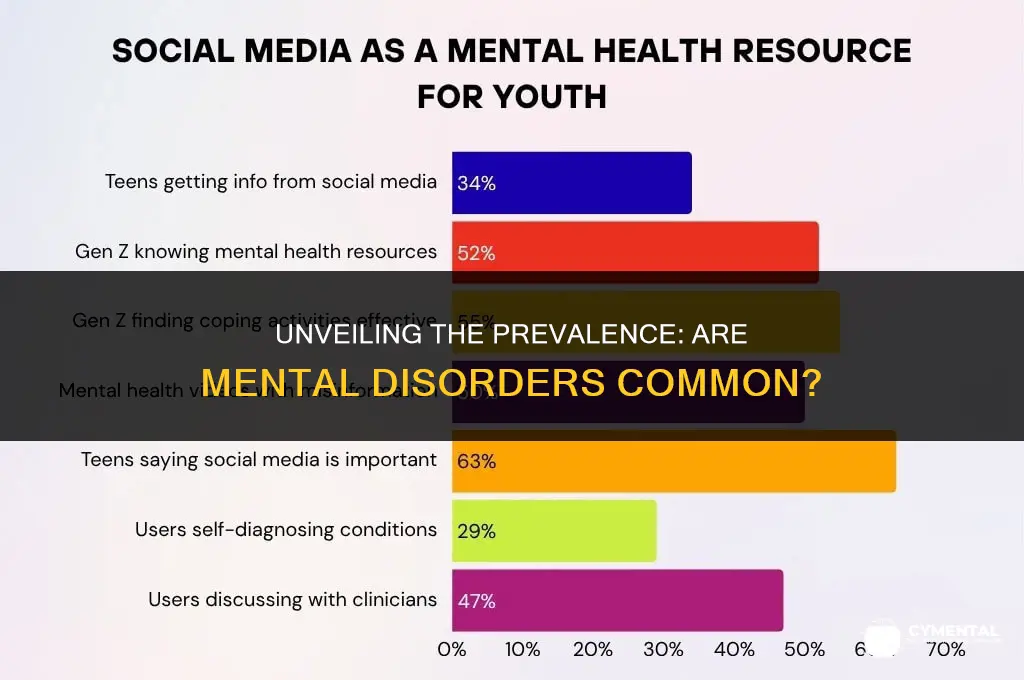
Mental disorders are a prevalent aspect of modern society, affecting individuals across all demographics. According to recent studies, approximately one in five adults in the United States experiences a mental illness each year. This statistic underscores the widespread nature of mental health challenges and highlights the importance of addressing these issues openly and compassionately. Mental disorders encompass a broad spectrum of conditions, ranging from anxiety and depression to more severe illnesses like schizophrenia and bipolar disorder. Understanding the prevalence and impact of these conditions is crucial for promoting awareness, reducing stigma, and ensuring that those affected have access to the support and resources they need.
Explore related products


What You'll Learn
- Prevalence of Mental Disorders: Mental disorders are widespread, affecting millions globally, with varying rates across different populations
- Types of Mental Disorders: Common mental disorders include anxiety, depression, bipolar disorder, schizophrenia, and personality disorders
- Risk Factors: Factors such as genetics, environment, trauma, and lifestyle choices can contribute to the development of mental disorders
- Diagnosis and Treatment: Mental disorders are diagnosed through clinical evaluation and treated with therapy, medication, or a combination of both
- Stigma and Awareness: Despite their prevalence, mental disorders often carry a stigma, highlighting the need for increased awareness and education

Prevalence of Mental Disorders: Mental disorders are widespread, affecting millions globally, with varying rates across different populations
Mental disorders are a pervasive issue, impacting the lives of millions worldwide. According to the World Health Organization (WHO), approximately 1 in 4 people will experience a mental health disorder at some point in their lives. This statistic underscores the widespread nature of mental health issues and highlights the need for increased awareness and support.
The prevalence of mental disorders varies across different populations, with certain groups experiencing higher rates of mental health issues. For example, women are more likely to experience anxiety and depression than men, while men are more likely to experience substance abuse disorders. Additionally, marginalized communities, such as LGBTQ+ individuals and people of color, often face higher rates of mental health issues due to systemic inequalities and discrimination.
Age is another factor that influences the prevalence of mental disorders. Young adults, particularly those between the ages of 18 and 25, are more likely to experience mental health issues than older adults. This may be due to the significant life changes and stressors that young adults face, such as transitioning to college or the workforce, forming new relationships, and navigating financial responsibilities.
Geographic location also plays a role in the prevalence of mental disorders. Urban areas tend to have higher rates of mental health issues than rural areas, possibly due to the increased stress and isolation associated with city living. Additionally, countries with lower socioeconomic status often have higher rates of mental health issues, as access to mental health care and support may be limited.
It is important to note that while mental disorders are common, they are also treatable. With the right support and resources, individuals can manage their mental health issues and lead fulfilling lives. Increasing awareness and reducing stigma around mental health is crucial in encouraging individuals to seek help and support.
Unraveling the Complexities: Why Mental Disorders Exist
You may want to see also
Explore related products




Types of Mental Disorders: Common mental disorders include anxiety, depression, bipolar disorder, schizophrenia, and personality disorders
Mental disorders are a prevalent aspect of modern society, affecting individuals across various demographics. Among the most common mental disorders are anxiety, depression, bipolar disorder, schizophrenia, and personality disorders. Each of these conditions presents unique challenges and symptoms, impacting the daily lives of those affected.
Anxiety disorders, for instance, encompass a range of conditions characterized by excessive worry and fear. Generalized anxiety disorder (GAD) is one of the most prevalent forms, affecting approximately 3% of the U.S. population annually. Symptoms include persistent worry, restlessness, and difficulty concentrating. Treatment options often involve a combination of medication and cognitive-behavioral therapy (CBT).
Depression, another widespread mental disorder, is marked by persistent feelings of sadness and loss of interest. Major depressive disorder (MDD) affects around 7% of adults in the U.S. each year. Symptoms can include changes in appetite, sleep disturbances, and thoughts of suicide. Treatment typically involves antidepressant medications and psychotherapy.
Bipolar disorder, previously known as manic depression, is characterized by extreme mood swings between mania and depression. It affects approximately 2.8% of adults in the U.S. annually. Manic episodes may involve increased energy, impulsivity, and grandiose thoughts, while depressive episodes mirror the symptoms of MDD. Treatment often includes mood stabilizers and psychotherapy.
Schizophrenia is a chronic brain disorder marked by symptoms such as delusions, hallucinations, and disorganized thinking. It affects about 1% of the global population. Treatment primarily involves antipsychotic medications and psychosocial interventions.
Personality disorders, which affect approximately 9% of adults in the U.S., are characterized by long-standing patterns of thinking and behavior that deviate from societal norms. Examples include borderline personality disorder, narcissistic personality disorder, and antisocial personality disorder. Treatment can involve psychotherapy, medication, or a combination of both.
In conclusion, mental disorders are indeed common, with each type presenting distinct challenges and treatment approaches. Understanding these conditions is crucial for promoting awareness, reducing stigma, and improving access to effective care.
Unraveling Jinx's Psyche: A Deep Dive into Her Mental Health Struggles
You may want to see also
Explore related products


Risk Factors: Factors such as genetics, environment, trauma, and lifestyle choices can contribute to the development of mental disorders
Genetics play a significant role in the development of mental disorders. Studies have shown that certain genetic variations can increase the risk of conditions such as schizophrenia, bipolar disorder, and major depressive disorder. For example, a family history of mental illness can significantly heighten an individual's susceptibility to developing a mental disorder themselves. This genetic predisposition can be passed down through generations, making it a critical factor to consider when assessing risk.
Environmental factors also contribute to the development of mental disorders. These can include socioeconomic status, access to healthcare, and exposure to toxins or pollutants. For instance, individuals living in poverty or those who have experienced homelessness are at a higher risk of developing mental health issues due to the chronic stress and lack of resources they face. Similarly, exposure to traumatic events, such as natural disasters or violent crimes, can trigger the onset of mental disorders like post-traumatic stress disorder (PTSD).
Trauma is another significant risk factor for mental disorders. This can encompass a wide range of experiences, from childhood abuse and neglect to combat trauma and sexual assault. The impact of trauma on mental health can be long-lasting, leading to conditions such as anxiety disorders, depression, and dissociative disorders. It's important to note that trauma can affect individuals of all ages and backgrounds, and its effects can be both immediate and delayed.
Lifestyle choices can also influence the development of mental disorders. Factors such as diet, exercise, substance use, and sleep patterns can all impact mental health. For example, a diet high in processed foods and low in nutrients has been linked to an increased risk of depression and anxiety. Similarly, regular exercise has been shown to have a positive effect on mental health, reducing symptoms of depression and improving overall well-being. Substance use, particularly the misuse of drugs and alcohol, can also contribute to the development of mental disorders, as these substances can alter brain chemistry and exacerbate underlying vulnerabilities.
In conclusion, the development of mental disorders is a complex interplay of genetic, environmental, and lifestyle factors. Understanding these risk factors can help individuals and healthcare providers take proactive steps to mitigate risk and promote mental health. By addressing these factors early on, it may be possible to prevent the onset of mental disorders or reduce their severity, improving overall quality of life for those at risk.
Exploring the Complex Treatment Landscape of Mental and Emotional Disorders
You may want to see also
Explore related products

$23.79 $121


Diagnosis and Treatment: Mental disorders are diagnosed through clinical evaluation and treated with therapy, medication, or a combination of both
Mental health professionals use a variety of tools and techniques to diagnose mental disorders. The process typically begins with a thorough clinical evaluation, which may include interviews, questionnaires, and observations. This evaluation helps the clinician to identify the patient's symptoms, their severity, and their impact on daily life. In some cases, additional assessments such as psychological testing or brain imaging may be used to provide further insight into the patient's condition.
Once a diagnosis has been made, the clinician will work with the patient to develop a treatment plan. This plan may include therapy, medication, or a combination of both. Therapy can take many forms, such as cognitive-behavioral therapy (CBT), dialectical behavior therapy (DBT), or psychodynamic therapy. These therapies aim to help patients understand and manage their symptoms, improve their coping skills, and enhance their overall well-being. Medication can also be an effective treatment for mental disorders, with different types of medications used to target specific symptoms or conditions.
It is important to note that there is no one-size-fits-all approach to treating mental disorders. The most effective treatment plan will vary depending on the individual patient, their diagnosis, and their unique circumstances. In some cases, a combination of therapy and medication may be the most beneficial approach, while in other cases, one or the other may be sufficient.
In addition to professional treatment, there are also a number of self-help strategies that individuals can use to manage their mental health. These may include exercise, meditation, relaxation techniques, and social support. While these strategies can be helpful, they should not be used as a substitute for professional treatment.
Overall, the diagnosis and treatment of mental disorders is a complex and multifaceted process. By working with a mental health professional and utilizing a variety of treatment options, individuals can take steps towards managing their symptoms and improving their overall well-being.
Exploring the Link Between Mental Disorders and Demonic Influences
You may want to see also
Explore related products


Stigma and Awareness: Despite their prevalence, mental disorders often carry a stigma, highlighting the need for increased awareness and education
Mental health disorders are widespread, affecting millions of people worldwide. However, despite their prevalence, they often carry a significant stigma. This stigma can manifest in various ways, such as social exclusion, discrimination, and negative attitudes towards those affected. The consequences of this stigma are far-reaching, leading to reduced access to care, lower rates of treatment adherence, and a poorer quality of life for those suffering from mental health issues.
One of the primary reasons for the persistence of stigma is a lack of awareness and education about mental health disorders. Many people still view mental illness as a sign of weakness or a character flaw, rather than as a legitimate medical condition. This misconception is fueled by a lack of understanding about the causes, symptoms, and treatments of mental health disorders. Increasing awareness and education about mental health can help to dispel these myths and reduce the stigma associated with mental illness.
There are several ways to increase awareness and education about mental health disorders. One approach is through public education campaigns, which can use various media channels to disseminate information about mental health. These campaigns can focus on specific disorders, such as depression or anxiety, or they can provide general information about mental health and well-being. Another approach is through school-based programs, which can teach children and adolescents about mental health and provide them with the skills to recognize and respond to mental health issues in themselves and others.
In addition to these broader initiatives, there are also specific strategies that can be used to reduce stigma in particular settings. For example, in the workplace, employers can provide training for managers and employees on how to recognize and respond to mental health issues. This can help to create a more supportive and inclusive work environment, where employees feel comfortable seeking help if needed. In healthcare settings, providers can work to reduce stigma by using non-judgmental language when discussing mental health issues and by providing patients with accurate information about their conditions and treatment options.
Ultimately, reducing the stigma associated with mental health disorders requires a multifaceted approach that involves increasing awareness and education at all levels of society. By working together to dispel myths and promote understanding, we can create a more supportive and compassionate environment for those affected by mental health issues. This will not only improve the lives of those suffering from mental illness but will also benefit society as a whole by promoting better mental health and well-being for all.
Serving with a Mental Disorder: Understanding Military Recruitment Policies
You may want to see also
Frequently asked questions
Yes, mental disorders are quite common. According to the World Health Organization (WHO), approximately 1 in 4 people worldwide experience a mental disorder each year.
Some of the most common mental disorders include anxiety disorders, depression, bipolar disorder, schizophrenia, and post-traumatic stress disorder (PTSD).
Yes, mental disorders can affect anyone, regardless of age, gender, socioeconomic status, or cultural background. However, certain factors such as genetics, environment, and life experiences can increase the risk of developing a mental disorder.
Yes, many mental disorders are treatable with a combination of medication, psychotherapy, and lifestyle changes. Early diagnosis and treatment can significantly improve outcomes and quality of life.
If you suspect someone may be struggling with a mental disorder, it's important to approach them with empathy and understanding. Encourage them to seek professional help, offer to accompany them to appointments, and provide emotional support. Remember to take care of yourself as well, as supporting someone with a mental disorder can be challenging.