Ava Ramirez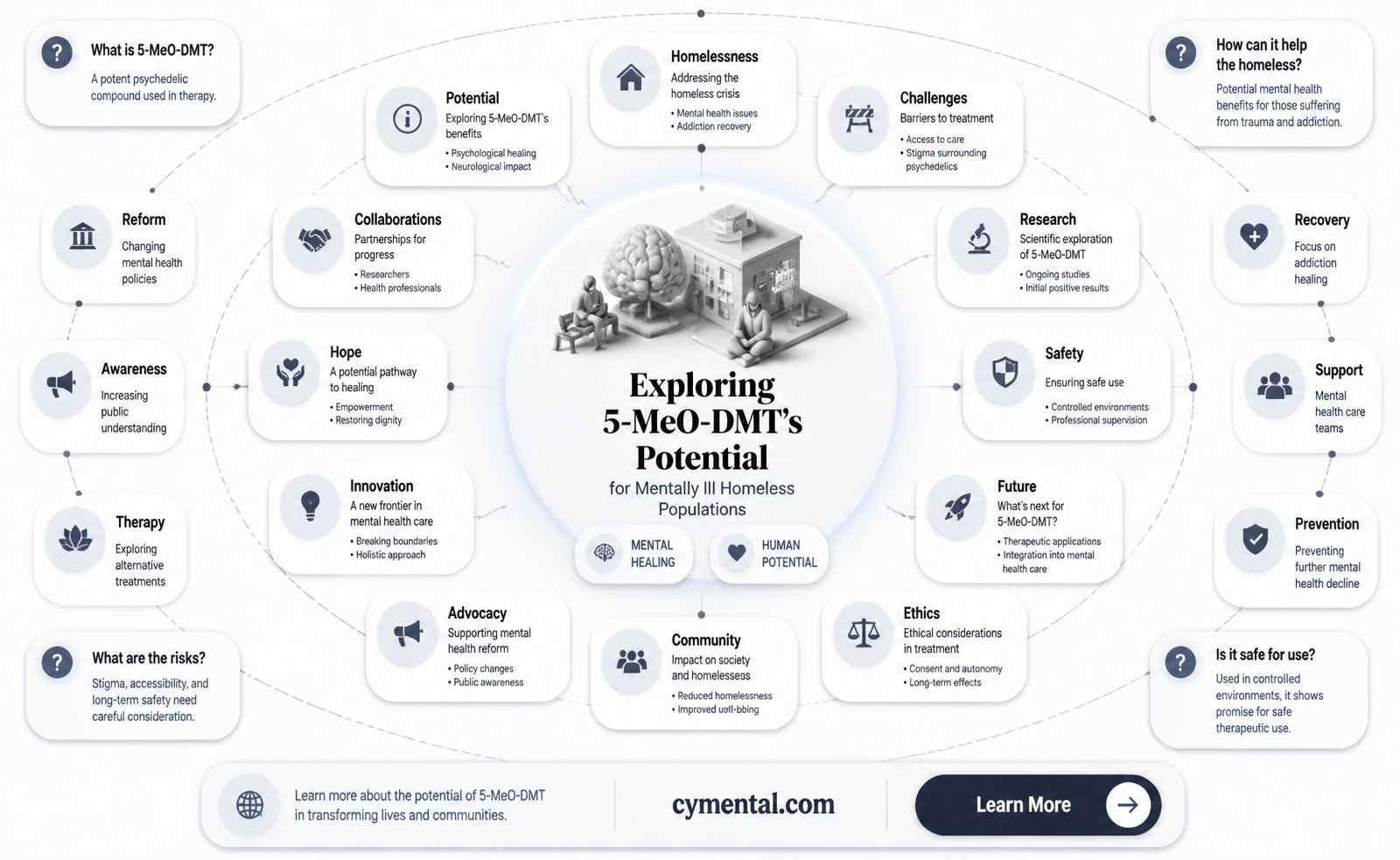
The potential therapeutic benefits of 5-MeO-DMT, a potent psychedelic compound, have sparked interest in its application for treating mental health disorders among vulnerable populations, including the mentally ill homeless. This demographic often faces significant barriers to accessing traditional mental health care, leading to a cycle of untreated conditions and chronic homelessness. Emerging research suggests that 5-MeO-DMT, known for its rapid and profound effects on consciousness, may offer a novel approach to alleviating symptoms of depression, anxiety, and PTSD, which are prevalent in this group. By potentially resetting neural pathways and fostering emotional healing, this substance could provide a transformative intervention, though rigorous scientific studies and ethical considerations are essential to ensure safety and efficacy in such a complex and underserved population.
| Characteristics | Values |
|---|---|
| Potential Therapeutic Effects | 5-MeO-DMT has shown promise in treating depression, anxiety, and PTSD in clinical settings. Research suggests it may help reset neural pathways associated with mental illness. |
| Psychological Impact | Users often report profound spiritual experiences, increased self-awareness, and reduced symptoms of mental distress after use. |
| Short-Term Effects | Intense, short-lived psychedelic experience (5-20 minutes) that can alter perception, mood, and cognition. |
| Long-Term Effects | Some studies indicate lasting improvements in mental health and well-being, though more research is needed. |
| Safety Concerns | High doses can lead to psychological distress, disorientation, or dangerous behavior, especially in unsupervised settings. |
| Accessibility for Homeless Population | Limited due to legal restrictions, lack of controlled environments, and potential exploitation. |
| Ethical Considerations | Administering psychedelics to vulnerable populations raises ethical concerns about consent, safety, and exploitation. |
| Current Research Status | Ongoing clinical trials are exploring 5-MeO-DMT for mental health, but no studies specifically target homeless populations. |
| Legal Status | Classified as a Schedule I substance in the U.S., illegal in many countries, though some exceptions exist for research or religious use. |
| Supportive Environment Requirement | Effective use requires a safe, controlled, and supportive environment, which is often unavailable to homeless individuals. |
| Potential Risks for Homeless | Increased vulnerability to adverse effects due to pre-existing mental health issues, substance abuse, or lack of support. |
| Community and Policy Implications | Implementing such treatments would require significant policy changes, funding, and infrastructure to ensure safety and efficacy. |
Explore related products


What You'll Learn
- Potential therapeutic effects of 5-MeO-DMT on treatment-resistant mental health conditions in homeless populations
- Safety and ethical considerations of administering 5-MeO-DMT to vulnerable homeless individuals
- Comparing 5-MeO-DMT to traditional therapies for mental illness in homeless communities
- Accessibility and feasibility of 5-MeO-DMT-assisted treatments for homeless people with mental illness
- Long-term psychological and social impacts of 5-MeO-DMT on mentally ill homeless individuals

Potential therapeutic effects of 5-MeO-DMT on treatment-resistant mental health conditions in homeless populations
Homeless individuals with treatment-resistant mental health conditions often face limited access to effective therapies, exacerbating their struggles. Emerging research suggests that 5-MeO-DMT, a potent psychedelic compound, may offer a novel approach to addressing these challenges. Derived from the venom of the Colorado River toad and certain plants, 5-MeO-DMT has shown promise in clinical trials for its rapid and profound effects on mood, anxiety, and depression. For homeless populations, who frequently experience trauma, chronic stress, and comorbid substance use disorders, this compound could provide a breakthrough where traditional treatments fall short.
Consider the case of a pilot study where participants with severe depression received a single dose of 5-MeO-DMT (ranging from 5 to 20 mg, depending on body weight and tolerance). Within hours, many reported significant reductions in depressive symptoms, with effects lasting weeks to months. This rapid onset of action is particularly critical for homeless individuals, who may not have consistent access to follow-up care. However, administering such treatments requires a controlled environment, such as a supervised clinic, to ensure safety and minimize risks like psychological distress or physical harm.
Implementing 5-MeO-DMT therapy for homeless populations involves several practical considerations. First, screening for contraindications, such as cardiovascular issues or a history of psychosis, is essential. Second, integrating the treatment with psychosocial support—such as counseling, housing assistance, and harm reduction services—maximizes its potential benefits. For example, pairing a single psychedelic session with ongoing case management could address both mental health and systemic barriers to stability. Third, dosage must be carefully tailored; lower doses (e.g., 5–10 mg) may be more appropriate for first-time users or those with heightened vulnerability.
Critics argue that the legality and ethical implications of using psychedelics in vulnerable populations are significant hurdles. In the U.S., 5-MeO-DMT remains a Schedule I substance, limiting research and accessibility. However, countries like Mexico and Portugal have more permissive frameworks, offering potential models for regulated therapeutic use. Advocacy for policy reform, coupled with rigorous clinical trials, could pave the way for broader adoption. For homeless individuals, whose mental health needs are often overlooked, this could represent a transformative shift in care.
Ultimately, while 5-MeO-DMT is not a panacea, its potential to alleviate treatment-resistant conditions in homeless populations warrants serious exploration. By combining scientific rigor with compassionate, holistic care, this approach could offer a lifeline to those who have exhausted conventional options. The challenge lies in balancing innovation with ethical responsibility, ensuring that such treatments are accessible, safe, and integrated into a broader support system. For a population facing immense adversity, even a glimmer of hope is worth pursuing.
Finding Support: Where to Get Mental Health Help and Resources
You may want to see also
Explore related products


Safety and ethical considerations of administering 5-MeO-DMT to vulnerable homeless individuals
Administering 5-MeO-DMT to vulnerable homeless individuals raises profound safety and ethical concerns that demand careful scrutiny. This potent psychedelic, derived from the glands of the Colorado River toad, induces intense, short-lived psychoactive effects, often described as a "reset" of consciousness. While preliminary studies suggest potential therapeutic benefits for conditions like depression and PTSD, its use in marginalized populations, particularly those with mental illness and unstable living conditions, introduces unique risks. Homeless individuals often face compounded challenges—chronic stress, trauma, substance abuse, and limited access to healthcare—which complicate both the administration and integration of such a powerful substance.
From a safety perspective, the physiological and psychological risks cannot be overstated. 5-MeO-DMT can cause rapid heart rate, hypertension, and respiratory distress, particularly in individuals with pre-existing health conditions, which are common among the homeless. A typical dose ranges from 5 to 20 mg, but even small variations can lead to unpredictable outcomes. Mental health is another critical factor; individuals with schizophrenia, bipolar disorder, or severe anxiety may experience exacerbated symptoms, including psychosis or disassociation. Without a controlled environment, such as a clinical setting with medical supervision, the potential for harm escalates dramatically. For instance, a homeless person experiencing a dissociative episode in a public space could face immediate physical danger or legal repercussions.
Ethically, the question of consent and autonomy is paramount. Vulnerable populations may feel pressured or coerced into participating in experimental treatments, particularly if they perceive it as a condition for receiving essential services like food or shelter. Informed consent requires not only understanding the risks but also having the capacity to make a free decision, which can be compromised by factors like hunger, exhaustion, or mental instability. Additionally, the power dynamics between providers and recipients must be addressed. How can we ensure that the administration of 5-MeO-DMT is not perceived as exploitation but rather as a genuinely therapeutic intervention? This requires transparent communication, cultural sensitivity, and a commitment to prioritizing the individual’s well-being over research or institutional goals.
Practical considerations further complicate implementation. Post-session integration is crucial for maximizing therapeutic benefits, yet homeless individuals often lack access to safe spaces, supportive relationships, or follow-up care. Without structured aftercare, the profound experiences induced by 5-MeO-DMT could lead to confusion, re-traumatization, or a sense of isolation. For example, a person who undergoes a spiritual awakening but returns to a chaotic, unsupportive environment may struggle to process or apply their insights. To mitigate this, any program involving 5-MeO-DMT would need to include long-term support systems, such as counseling, peer groups, and stable housing solutions.
In conclusion, while 5-MeO-DMT holds promise as a therapeutic tool, its application to vulnerable homeless individuals must be approached with extreme caution. Safety protocols, ethical safeguards, and comprehensive support systems are non-negotiable. Rather than viewing this as a quick fix, it should be part of a holistic approach addressing the root causes of homelessness and mental illness. Until these conditions are met, the risks of administering such a powerful substance to this population far outweigh the potential benefits.
Seeking Support: A Guide to Accessing Mental Health Assistance
You may want to see also
Explore related products

$12.99 $12.99


$14.94 $16.95


Comparing 5-MeO-DMT to traditional therapies for mental illness in homeless communities
The mental health crisis among homeless populations is a complex issue, often exacerbated by limited access to consistent, effective treatment. Traditional therapies, such as cognitive-behavioral therapy (CBT) and pharmacological interventions, face significant barriers in this demographic, including stigma, lack of stable housing, and fragmented healthcare systems. In contrast, emerging research suggests that 5-MeO-DMT, a potent psychedelic compound, may offer a novel approach to addressing mental illness in this vulnerable group.
Consider the logistical challenges of traditional therapies for the homeless. CBT, for instance, requires regular sessions over weeks or months, a near-impossible commitment for individuals without stable living conditions. Antidepressants, while effective for some, demand daily adherence and often come with side effects that can deter long-term use. 5-MeO-DMT, however, is administered in a single, high-dose session (typically 5–10 mg intramuscularly or via vaporization), potentially providing rapid and profound therapeutic effects. This brevity could be a game-changer for homeless individuals, offering a concentrated intervention that doesn’t rely on prolonged engagement.
However, the intensity of 5-MeO-DMT experiences warrants caution. The compound induces a short but extremely powerful altered state of consciousness, often described as ego dissolution. While this can lead to profound insights and emotional release, it also requires a controlled, supportive environment—a challenge in resource-constrained settings. Traditional therapies, though slower, provide a structured, gradual approach that may be more accessible and less overwhelming for individuals already grappling with trauma and instability.
A key distinction lies in the mechanisms of action. Traditional therapies focus on behavioral modification and symptom management, whereas 5-MeO-DMT appears to catalyze neuroplasticity and emotional processing at a deeper level. Studies have shown that a single dose can significantly reduce symptoms of depression and anxiety in clinical populations, with effects lasting months. For homeless individuals, this could mean a transformative shift in perspective, potentially breaking cycles of despair and hopelessness. However, integrating such an intervention would require careful planning, including trained facilitators, safe spaces, and follow-up care.
In practice, combining these approaches could yield the best outcomes. A 5-MeO-DMT session might serve as a catalyst for change, followed by traditional therapy to integrate insights and build coping skills. For example, a homeless individual could undergo a supervised psychedelic experience, then engage in weekly group therapy sessions tailored to their needs. This hybrid model could address both the immediacy of psychedelic healing and the sustained support of conventional methods.
Ultimately, while 5-MeO-DMT shows promise as a revolutionary tool for mental health in homeless communities, it is not a panacea. Its implementation must be thoughtful, ethical, and context-specific, balancing the compound’s potential with the practical realities of this population. Traditional therapies, despite their limitations, remain a vital foundation—one that could be enhanced, not replaced, by the strategic use of psychedelics.
Supporting Loved Ones: A Guide to Accessing Mental Health Assistance
You may want to see also
Explore related products






Accessibility and feasibility of 5-MeO-DMT-assisted treatments for homeless people with mental illness
The potential of 5-MeO-DMT as a therapeutic tool for mental health issues has sparked interest, but its application for homeless populations presents unique challenges. This powerful psychedelic, found in certain toad species and synthetic forms, has shown promise in treating conditions like depression and anxiety, often in just one or two doses ranging from 5 to 20 mg. However, administering such treatments to homeless individuals requires careful consideration of their specific needs and circumstances.
Logistical Hurdles and Potential Solutions:
Implementing 5-MeO-DMT therapy for the homeless demands a rethinking of traditional treatment settings. Typical clinical environments may be inaccessible or intimidating for this population. Instead, mobile clinics or outreach programs could bring the treatment to them, ensuring a familiar and non-threatening space. These settings should prioritize privacy and comfort, perhaps utilizing temporary structures or adapted vehicles. A single session might involve a trained facilitator guiding the individual through the experience, which typically lasts 15-60 minutes, followed by integration support to process the insights gained.
Addressing Safety and Ethical Concerns:
Safety is paramount, especially given the vulnerable nature of this population. Homeless individuals often face complex health issues, including substance abuse disorders, which could interact adversely with 5-MeO-DMT. A comprehensive screening process is essential, including medical and psychiatric evaluations, to identify contraindications. For instance, individuals with a history of psychosis or cardiovascular problems may be at higher risk. Ethical considerations also come into play, ensuring informed consent and protecting participants from potential exploitation.
A Comparative Perspective:
Compared to traditional mental health treatments, 5-MeO-DMT offers a unique advantage: its rapid and profound effects. Standard therapies often require weeks or months of engagement, which can be challenging for homeless individuals facing unstable living conditions. A single dose of 5-MeO-DMT, under professional supervision, could provide immediate relief from symptoms, potentially stabilizing individuals enough to engage with longer-term support services. This approach could be particularly beneficial for those with treatment-resistant depression or severe anxiety, offering a 'reset' for their mental health.
Community Integration and Long-Term Support:
The success of such treatments relies on more than just the psychedelic experience. Post-session integration is critical, involving counseling, peer support groups, and access to social services. These services should be tailored to the homeless community, addressing their unique challenges, such as housing instability and social isolation. By combining the transformative potential of 5-MeO-DMT with practical, ongoing support, this approach could offer a pathway to improved mental health and, ultimately, a more stable and fulfilling life.
In summary, while 5-MeO-DMT shows promise as a treatment for mental illness in the homeless population, its implementation requires careful adaptation to their unique needs. From mobile clinics to comprehensive aftercare, every aspect of the treatment must be designed with accessibility and feasibility in mind, ensuring both safety and effectiveness.
Exercise Boosts Elderly Mental Health: Benefits and Strategies for Wellbeing
You may want to see also
Explore related products



Long-term psychological and social impacts of 5-MeO-DMT on mentally ill homeless individuals
The potential of 5-MeO-DMT as a therapeutic tool for mentally ill homeless individuals is a topic of growing interest, yet its long-term psychological and social impacts remain largely uncharted. This powerful psychedelic, often derived from the venom of the Colorado River toad, has shown promise in treating conditions like depression and anxiety in controlled settings. However, applying it to a vulnerable population like the homeless requires careful consideration of their unique challenges, including trauma, substance abuse, and lack of stable support systems.
Analyzing the Psychological Landscape:
Long-term psychological effects of 5-MeO-DMT on mentally ill homeless individuals could vary dramatically. A single dose, typically ranging from 5 to 20 mg, can induce profound mystical experiences, potentially offering a reset for those trapped in cycles of despair. For instance, studies on veterans with PTSD have shown sustained reductions in symptoms post-treatment. However, for homeless individuals, the lack of post-experience integration support could lead to re-traumatization or confusion. Without structured therapy or a safe environment, the intense nature of the experience might exacerbate existing mental health issues, such as psychosis or dissociative disorders.
Social Reintegration Challenges:
Socially, the impact of 5-MeO-DMT on this population is equally complex. While some users report increased empathy and a sense of interconnectedness, translating these insights into tangible social improvements is difficult for those without stable housing or community ties. For example, a homeless individual might experience a profound shift in perspective but still face systemic barriers like stigma, poverty, and lack of access to mental health services. Programs incorporating 5-MeO-DMT would need to pair treatment with practical support, such as housing assistance, job training, and ongoing counseling, to foster meaningful social reintegration.
Practical Implementation and Cautions:
If considering 5-MeO-DMT as a therapeutic option for this demographic, several steps are critical. First, screening for contraindications, such as severe psychosis or cardiovascular issues, is essential. Second, dosage must be carefully calibrated, with lower starting doses (e.g., 5–10 mg) recommended for first-time users. Third, a supportive environment during and after the experience is non-negotiable. This includes trained facilitators, a safe physical space, and follow-up care. Cautions include the risk of dependency, though 5-MeO-DMT is not considered addictive, and the potential for adverse reactions in individuals with untreated mental illness.
While 5-MeO-DMT holds promise for mentally ill homeless individuals, its long-term psychological and social impacts hinge on careful implementation. The substance alone is not a panacea; it must be part of a holistic approach addressing the root causes of homelessness and mental illness. Pilot programs could start with small, controlled groups, focusing on individuals aged 25–50 with moderate mental health issues and a willingness to engage in therapy. By combining psychedelic treatment with systemic support, we might unlock a new pathway to healing for one of society’s most marginalized populations.
Nurturing Your Mind: Practical Strategies for Better Mental Health
You may want to see also
Frequently asked questions
While 5-MeO-DMT has shown potential in treating conditions like depression and PTSD in controlled settings, its use for mentally ill homeless populations is not currently supported by research or clinical guidelines. Homeless individuals often face complex challenges requiring comprehensive care, including housing, therapy, and medication, rather than experimental treatments.
As of now, there are no known studies specifically investigating the effects of 5-MeO-DMT on homeless populations with mental illness. Most research on this substance focuses on controlled environments with stable participants, not those facing homelessness.
The risks include unpredictable psychological reactions, lack of access to medical supervision, and potential exacerbation of existing mental health issues. Homeless individuals may also lack the support systems needed to process the intense experiences associated with 5-MeO-DMT.
No, 5-MeO-DMT is not a viable option for addressing mental health in the homeless community. Evidence-based interventions, such as housing support, psychotherapy, and medication, are more appropriate and effective for this population.