Madison Cole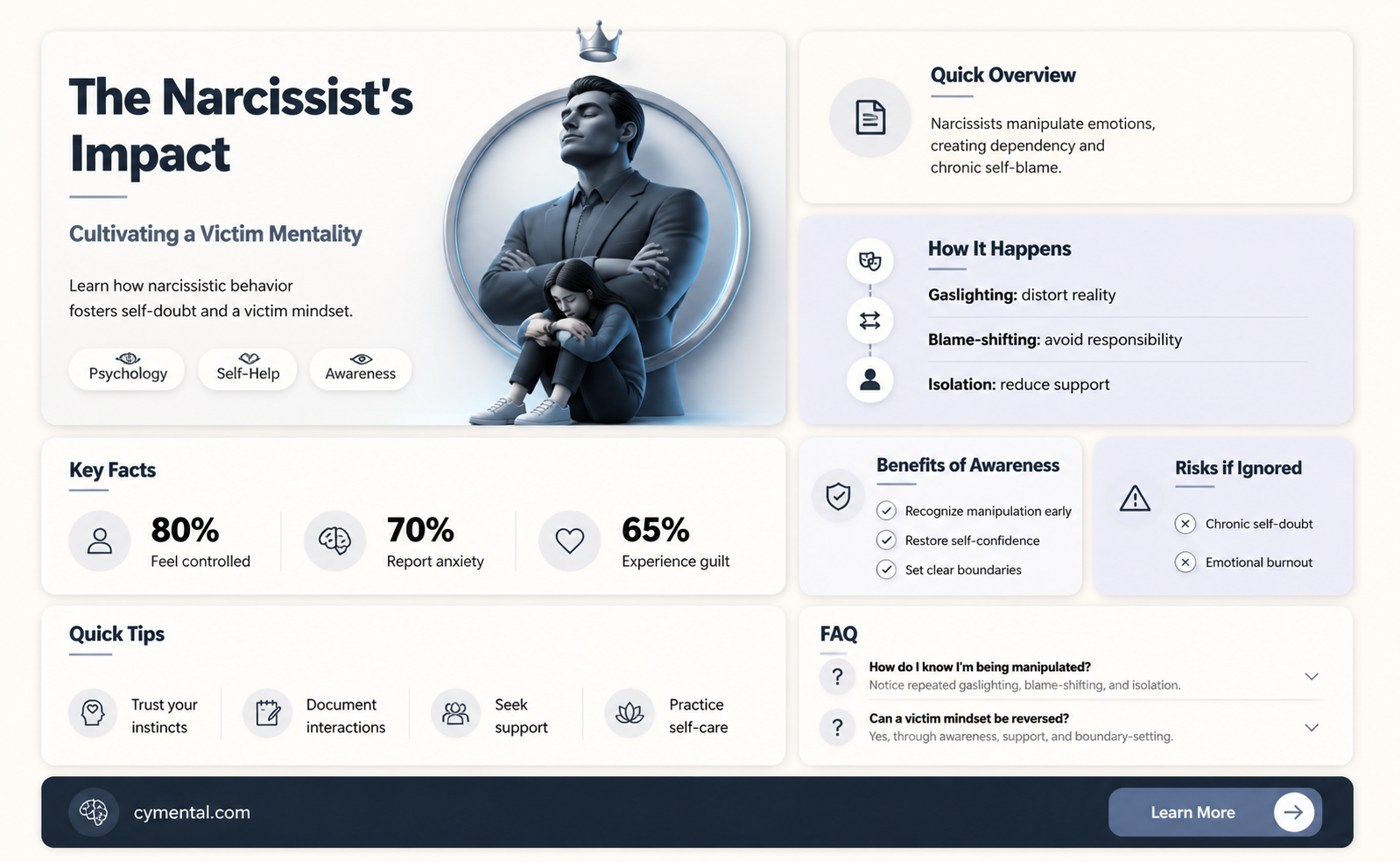
The question of whether a narcissist can cause victim mentality is a complex and multifaceted one. At its core, victim mentality refers to a pervasive feeling of being a victim, often characterized by a sense of powerlessness, helplessness, and a tendency to blame external circumstances or others for one's problems. Narcissists, on the other hand, are individuals who exhibit a grandiose sense of self-importance, a need for admiration, and a lack of empathy for others. They often manipulate and exploit others to achieve their own ends, which can lead to feelings of victimization in those who are targeted. However, it is important to note that victim mentality is not solely caused by narcissists, and that other factors, such as past trauma, abuse, or societal conditioning, can also contribute to its development.
Explore related products


What You'll Learn
- Gaslighting: Manipulating perceptions to make victims doubt their own sanity or memories
- Emotional Abuse: Using criticism, blame, and shame to control and demean victims
- Isolation: Separating victims from friends and family to increase dependence on the narcissist
- Projection: Attributing one's own negative behaviors or feelings onto the victim
- Playing the Victim: Narcissists portraying themselves as victims to gain sympathy and manipulate others

Gaslighting: Manipulating perceptions to make victims doubt their own sanity or memories
Gaslighting is a form of psychological manipulation where the perpetrator alters the victim's perception of reality, leading them to question their own sanity or memory. This tactic is often employed by narcissists to maintain control over their victims. By distorting the victim's sense of what is real and what is not, the narcissist can create a dependency on their own version of events, further entrapping the victim in the abusive relationship.
One common technique used in gaslighting is the denial of previous agreements or conversations. For example, a narcissist might promise to take their victim on a vacation, only to later deny that such a promise was ever made. This can lead the victim to doubt their own memory and question whether they are going crazy. Another tactic is to twist the victim's words or actions, making them seem irrational or unreasonable. Over time, these manipulations can erode the victim's confidence in their own perceptions and judgment.
Gaslighting can have severe long-term effects on the victim's mental health. It can lead to anxiety, depression, and even post-traumatic stress disorder (PTSD). Victims may also experience a loss of identity, as the narcissist's constant manipulation can cause them to lose touch with their own sense of self. Recognizing the signs of gaslighting is crucial for victims to break free from the cycle of abuse and begin the process of healing.
In conclusion, gaslighting is a powerful tool used by narcissists to control and manipulate their victims. By understanding the tactics and effects of gaslighting, victims can empower themselves to escape the abusive relationship and reclaim their lives. It is essential to raise awareness about this form of psychological abuse and provide support for those who have been affected by it.
Unraveling the Impact: Can a Mental Breakdown Cause..
You may want to see also
Explore related products


Emotional Abuse: Using criticism, blame, and shame to control and demean victims
Emotional abuse is a subtle yet powerful tool used by narcissists to exert control over their victims. This form of abuse often involves the use of criticism, blame, and shame to manipulate and demean the victim, leading to a profound impact on their mental and emotional well-being. Unlike physical abuse, emotional abuse leaves no visible scars, making it difficult for victims to recognize and seek help.
One of the primary tactics employed by narcissists is gaslighting, a form of psychological manipulation that causes the victim to question their own sanity and perception of reality. This can be achieved through constant criticism, belittling, and denial of the victim's feelings and experiences. Over time, the victim may begin to internalize these negative messages, leading to a diminished sense of self-worth and an increased dependence on the narcissist for validation and approval.
Another common strategy used by narcissists is projection, where they attribute their own negative traits and behaviors to the victim. This can take the form of accusations, such as calling the victim selfish, lazy, or unfaithful, when in reality, these are characteristics that describe the narcissist themselves. By projecting their own flaws onto the victim, narcissists are able to maintain a sense of superiority and control.
Emotional abuse can also involve the use of guilt and shame to manipulate the victim. Narcissists may use threats of abandonment or withdrawal of affection to coerce the victim into complying with their demands. They may also play on the victim's fears and insecurities, using them as leverage to maintain control. This can lead to a cycle of abuse, where the victim feels trapped and helpless, unable to escape the narcissist's grasp.
It is essential for victims of emotional abuse to recognize the signs and seek help. This can involve reaching out to friends and family for support, seeking professional counseling, or joining a support group for victims of narcissistic abuse. By taking these steps, victims can begin to reclaim their lives and break free from the cycle of abuse.
Exploring the Link: Epilepsy and Mental Health in Adulthood
You may want to see also
Isolation: Separating victims from friends and family to increase dependence on the narcissist
Isolation is a key tactic employed by narcissists to exert control over their victims. By systematically separating individuals from their support networks, narcissists create an environment where victims become increasingly dependent on them for emotional, financial, and social support. This process often begins subtly, with the narcissist making comments about the victim's friends or family members, suggesting that they are not good enough or that they don't understand the victim's needs. Over time, these comments can escalate into more overt actions, such as forbidding the victim from seeing certain people or sabotaging relationships through manipulation and lies.
The effects of isolation can be devastating for victims, leading to feelings of loneliness, anxiety, and depression. Without the support of friends and family, victims may struggle to maintain their sense of self and may become increasingly reliant on the narcissist for validation and companionship. This dependence can further entrench the victim in the abusive relationship, making it more difficult for them to recognize the narcissist's manipulative behavior and seek help.
One of the most insidious aspects of isolation is the way it can be disguised as concern or love. Narcissists may claim that they are acting in the victim's best interests, that they are protecting them from harmful influences or that they are simply trying to help them become more independent. This can make it challenging for victims to recognize the true nature of the narcissist's actions and may lead them to feel guilty or ashamed for wanting to maintain relationships with friends and family.
Breaking free from isolation requires victims to recognize the narcissist's tactics and to seek support from others. This can be a difficult and frightening process, but it is essential for victims to regain their autonomy and begin the journey towards healing. By reaching out to friends, family, or support groups, victims can start to rebuild their social networks and regain a sense of connection and belonging. This, in turn, can help them to see the narcissist's behavior more clearly and to develop the strength and resources needed to leave the abusive relationship behind.
Exploring the Link: Can a Common Cold Cause Mental Confusion?
You may want to see also
Projection: Attributing one's own negative behaviors or feelings onto the victim
Projection is a psychological defense mechanism where an individual attributes their own negative behaviors, thoughts, or feelings to someone else. In the context of narcissism and victim mentality, this tactic can be particularly insidious. Narcissists may use projection to manipulate their victims, making them feel guilty or responsible for the narcissist's own actions or emotions. This can lead to a cycle of abuse where the victim is constantly trying to appease the narcissist or defend themselves against false accusations.
For example, a narcissistic partner might accuse their significant other of being unfaithful, even though they themselves are engaging in infidelity. This projection serves to deflect attention away from their own behavior and onto their partner, who may then feel compelled to prove their innocence or justify their actions. Over time, this can erode the victim's self-esteem and create a sense of dependency on the narcissist for validation.
Projection can also be used to gaslight victims, making them question their own perceptions and reality. A narcissist might deny saying or doing something hurtful, even when there is clear evidence to the contrary. This can lead to feelings of confusion and self-doubt in the victim, as they begin to wonder if they are misremembering or overreacting to the situation.
To combat projection and victim mentality, it is essential for individuals to maintain a strong sense of self and to set clear boundaries with others. This may involve practicing assertiveness, seeking support from friends and family, and engaging in self-care activities that promote emotional well-being. Additionally, therapy can be a valuable tool for addressing the underlying issues that contribute to narcissism and victim mentality, such as low self-esteem, trauma, or attachment disorders.
In conclusion, projection is a powerful tool that narcissists can use to manipulate and control their victims. By understanding the dynamics of projection and taking steps to protect themselves, individuals can break free from the cycle of abuse and reclaim their autonomy and self-worth.
Exploring the Link: Mental Illness and Seizure Disorders Uncovered
You may want to see also
Playing the Victim: Narcissists portraying themselves as victims to gain sympathy and manipulate others
Narcissists often employ a manipulative tactic known as "playing the victim" to gain sympathy and control over others. This behavior is a form of emotional manipulation where the narcissist portrays themselves as a victim of circumstances or other people's actions, eliciting pity and support from those around them. By doing so, they can divert attention away from their own negative behaviors and maintain a sense of power and superiority.
One common way narcissists play the victim is by exaggerating or fabricating stories of hardship or injustice. They may claim to have been wronged by others, even when they are the ones who have caused harm. This tactic can be particularly effective because it taps into people's natural empathy and desire to help those in need. However, it is important to recognize that narcissists use this strategy to manipulate and control, rather than to genuinely seek help or support.
Another aspect of playing the victim is the narcissist's ability to shift blame onto others. They may accuse others of being the source of their problems, even when they are the ones responsible. This behavior can create confusion and doubt in the minds of those around them, making it difficult to discern the truth. It is crucial to be aware of this tactic and to seek out multiple perspectives when dealing with a narcissist who is playing the victim.
Narcissists may also use self-pity and martyrdom to gain sympathy and attention. They may claim to be sacrificing themselves for others or to be suffering unfairly. This behavior can be particularly challenging to deal with, as it can make the narcissist appear vulnerable and in need of support. However, it is important to remember that narcissists use these tactics to manipulate and control, rather than to genuinely express their emotions or seek help.
In order to protect oneself from being manipulated by a narcissist playing the victim, it is important to set clear boundaries and to be aware of one's own emotions and reactions. It can be helpful to practice assertiveness and to learn to recognize and respond to manipulative behavior. Additionally, seeking support from trusted friends, family members, or mental health professionals can provide valuable guidance and assistance in dealing with narcissistic manipulation.
Unraveling the Complex Link Between Mental Illness and Violence
You may want to see also
Frequently asked questions
Yes, a narcissist can cause victim mentality. Narcissists often manipulate and exploit others to feed their own ego, which can lead to the victim feeling powerless, helpless, and trapped in a cycle of abuse.
Narcissists manipulate their victims through various tactics such as gaslighting, emotional abuse, and psychological manipulation. They may also use charm and charisma to gain control over their victims.
Signs of victim mentality include feeling helpless, powerless, and trapped. Victims may also feel anxious, depressed, and have low self-esteem. They may blame themselves for the abuse and feel guilty or ashamed.
Victims can break free from narcissistic abuse by seeking support from friends, family, or a therapist. They should also set boundaries, practice self-care, and focus on rebuilding their self-esteem and confidence.
The long-term impact of narcissistic abuse on victims can be severe. It can lead to chronic anxiety, depression, and post-traumatic stress disorder (PTSD). Victims may also struggle with trust issues, low self-esteem, and difficulty forming healthy relationships.