Harper Lewis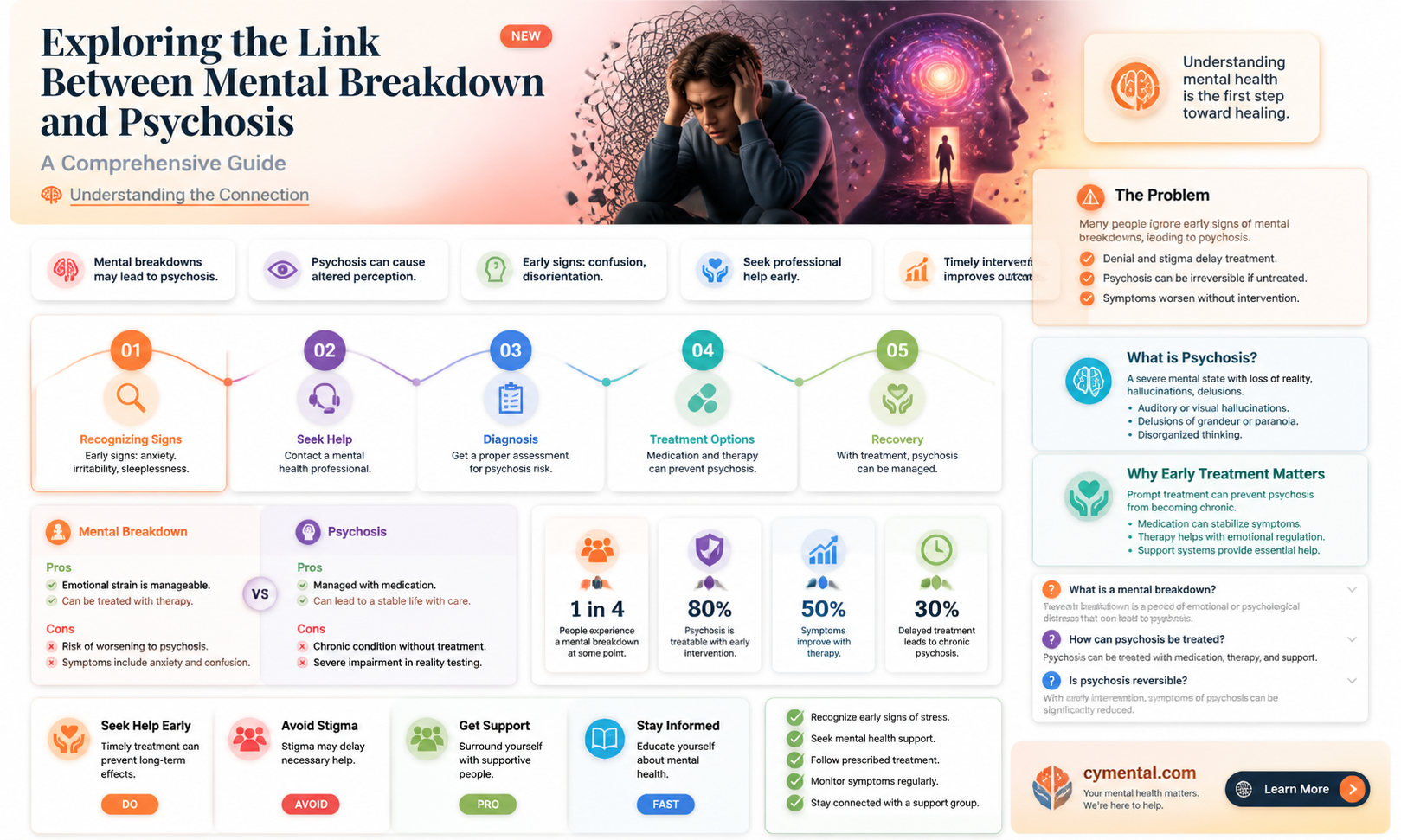
A mental breakdown, often referred to as a nervous breakdown, is a term used to describe an acute episode of mental distress that can interfere with a person's ability to function in their daily life. It can be caused by a variety of factors, including stress, trauma, or underlying mental health conditions. One of the questions that arises in the context of a mental breakdown is whether it can lead to psychosis. Psychosis is a condition characterized by a disconnection from reality, often manifesting as hallucinations, delusions, or disorganized thinking. While a mental breakdown can be a risk factor for the development of psychosis, particularly in individuals who are already vulnerable or have a history of mental health issues, it is not a direct cause. The relationship between a mental breakdown and psychosis is complex and can be influenced by various biological, psychological, and environmental factors. It is important to seek professional help if experiencing symptoms of either condition to ensure proper diagnosis and treatment.
Explore related products


What You'll Learn
- Definition of Mental Breakdown: Understanding the term and its implications on mental health
- Symptoms of Psychosis: Identifying the signs that may indicate a psychotic episode
- Potential Triggers: Exploring factors that could precipitate a mental breakdown leading to psychosis
- Treatment Options: Discussing therapeutic approaches and interventions for managing psychosis
- Prognosis and Recovery: Examining the outlook for individuals experiencing psychosis post-mental breakdown

Definition of Mental Breakdown: Understanding the term and its implications on mental health
A mental breakdown is a term used to describe an acute, temporary disturbance in an individual's mental state, characterized by a sudden inability to cope with everyday life and responsibilities. This condition can manifest in various ways, including extreme stress, anxiety, depression, or dissociation. It is important to note that a mental breakdown is not a formal psychiatric diagnosis but rather a colloquial term used to describe a range of mental health symptoms that can be overwhelming and debilitating.
The implications of a mental breakdown on mental health can be significant. It can lead to a decline in overall well-being, impaired social and occupational functioning, and an increased risk of developing more severe mental health disorders, such as depression or anxiety disorders. In some cases, a mental breakdown can also be a precursor to psychosis, particularly if the individual experiences symptoms such as hallucinations, delusions, or disorganized thinking.
Understanding the term 'mental breakdown' and its implications is crucial for recognizing the signs and symptoms of this condition and seeking appropriate help. It is important to approach this topic with sensitivity and empathy, as individuals experiencing a mental breakdown may feel stigmatized or ashamed. By promoting awareness and understanding, we can help reduce the stigma associated with mental health issues and encourage those affected to seek the support they need.
In conclusion, a mental breakdown is a serious mental health concern that can have significant implications for an individual's well-being and functioning. By understanding the term and its associated symptoms, we can better support those affected and help them navigate the challenges they face. It is essential to approach this topic with compassion and empathy, recognizing the importance of seeking help and support in times of mental health crisis.
Exploring the Link: UTI's Impact on Mental Status in Young Adults
You may want to see also
Explore related products


Symptoms of Psychosis: Identifying the signs that may indicate a psychotic episode
Psychosis is a serious mental health condition characterized by a disconnection from reality. Identifying the symptoms early can be crucial for timely intervention and treatment. One of the key signs of an impending psychotic episode is a significant change in behavior or functioning. This might include social withdrawal, a drop in academic or work performance, or a lack of interest in previously enjoyed activities.
Another common symptom is the presence of hallucinations or delusions. Hallucinations can manifest as seeing or hearing things that aren't there, while delusions are firmly held beliefs that are not based in reality. For example, a person might believe they are being followed or that they have special powers. These symptoms can be frightening and confusing, both for the individual experiencing them and for those around them.
Disorganized thinking and speech are also indicative of psychosis. This can include rapid, incoherent speech, or a lack of logical progression in thoughts. The person might switch topics abruptly or use words in a way that doesn't make sense to others. Additionally, they may exhibit unusual behaviors, such as pacing back and forth, muttering to themselves, or displaying inappropriate emotions in certain situations.
It's important to note that psychosis can be triggered by various factors, including stress, substance abuse, or underlying mental health conditions. A mental breakdown, which is a period of intense emotional distress, can indeed lead to psychosis in some cases. This is why it's crucial to seek help as soon as possible if you or someone you know is experiencing symptoms of psychosis. Early treatment can significantly improve outcomes and help prevent further episodes.
In conclusion, recognizing the symptoms of psychosis is the first step towards getting help. If you notice any of these signs in yourself or someone else, it's important to reach out to a mental health professional immediately. With the right support and treatment, individuals can learn to manage their symptoms and lead fulfilling lives.
Exploring the Link: Vertigo and Mental Confusion Explained
You may want to see also
Explore related products


Potential Triggers: Exploring factors that could precipitate a mental breakdown leading to psychosis
Traumatic events, such as the loss of a loved one, a serious accident, or a natural disaster, can act as potential triggers for a mental breakdown that may lead to psychosis. These events can cause significant emotional distress, disrupting an individual's ability to cope with daily life and leading to a decline in mental health.
Another factor that could precipitate a mental breakdown is severe stress, whether it be related to work, relationships, or financial difficulties. Prolonged exposure to high levels of stress can overwhelm the brain's ability to regulate emotions and thoughts, potentially resulting in a psychotic episode.
Substance abuse, particularly the use of hallucinogens or stimulants, can also trigger a mental breakdown leading to psychosis. These substances can alter brain chemistry and perception, pushing an individual towards a state of mental instability.
Additionally, certain medical conditions, such as sleep disorders or hormonal imbalances, can contribute to a mental breakdown. These conditions can affect mood, energy levels, and cognitive function, making it more difficult for an individual to maintain mental equilibrium.
It is important to note that while these factors can increase the risk of a mental breakdown leading to psychosis, they do not guarantee that such an outcome will occur. Many individuals experience traumatic events, stress, substance abuse, or medical conditions without developing psychosis. The interplay between genetic predisposition, environmental factors, and individual resilience plays a complex role in determining the likelihood of a mental breakdown leading to psychosis.
Unraveling the Complex Link Between Mental Illness and School Shootings
You may want to see also
Explore related products


$18.99


Treatment Options: Discussing therapeutic approaches and interventions for managing psychosis
Psychosis, a condition characterized by a disconnection from reality, can be a challenging mental health issue to manage. However, with the right treatment approaches and interventions, individuals experiencing psychosis can lead fulfilling lives. One of the primary therapeutic approaches for managing psychosis is antipsychotic medication. These medications work by blocking dopamine receptors in the brain, which helps to reduce symptoms such as hallucinations and delusions. It's important to note that medication should be tailored to the individual's specific needs and monitored closely by a healthcare professional to minimize side effects.
In addition to medication, cognitive-behavioral therapy (CBT) has been shown to be effective in managing psychosis. CBT helps individuals identify and challenge negative thought patterns, which can contribute to the development and maintenance of psychotic symptoms. Through CBT, individuals can learn coping strategies and develop a better understanding of their condition, leading to improved overall functioning.
Another therapeutic approach is family therapy. Psychosis can have a significant impact on not only the individual experiencing it but also their family members. Family therapy provides a supportive environment where family members can learn about the condition, express their concerns, and develop strategies for coping and supporting their loved one.
Electroconvulsive therapy (ECT) may also be considered in cases where medication and other therapies have not been effective. ECT involves the use of electrical currents to stimulate the brain, which can help to alleviate symptoms of psychosis. While ECT can be an effective treatment option, it is typically reserved for more severe cases and should be discussed thoroughly with a healthcare professional.
It's crucial to address the social and environmental factors that can contribute to the development and exacerbation of psychosis. This includes providing access to stable housing, employment opportunities, and social support networks. By addressing these factors, individuals experiencing psychosis can have a better chance of recovery and improved quality of life.
In conclusion, managing psychosis requires a comprehensive approach that includes medication, therapy, and social support. By working closely with healthcare professionals and support networks, individuals experiencing psychosis can develop effective coping strategies and lead fulfilling lives.
Unseen Scars: The Profound Impact of Mental Abuse on Brain Health
You may want to see also
Explore related products


Prognosis and Recovery: Examining the outlook for individuals experiencing psychosis post-mental breakdown
Individuals who experience a mental breakdown may face a challenging road to recovery, particularly if they develop psychosis as a result. Psychosis, characterized by a disconnection from reality, can significantly impact a person's ability to function in daily life. However, with proper treatment and support, many individuals are able to manage their symptoms and lead fulfilling lives.
The prognosis for individuals with psychosis post-mental breakdown varies depending on several factors, including the severity of symptoms, the presence of any underlying mental health conditions, and the individual's access to treatment and support. Early intervention is key, as it can help prevent the development of more severe symptoms and improve the overall prognosis. Treatment typically involves a combination of medication, therapy, and social support, tailored to the individual's specific needs.
Recovery from psychosis is a complex and ongoing process. It requires patience, perseverance, and a strong support system. Individuals may need to learn new coping skills, develop strategies for managing their symptoms, and work on rebuilding their self-esteem and confidence. With the right treatment and support, many individuals are able to achieve a significant improvement in their quality of life, although the process may be gradual and marked by setbacks.
It's important to note that each person's experience with psychosis is unique, and there is no one-size-fits-all approach to recovery. What works for one individual may not work for another, and it's essential to tailor treatment and support to the individual's specific needs and circumstances. By taking a holistic approach to recovery, addressing not only the symptoms of psychosis but also the underlying factors that may have contributed to the mental breakdown, individuals can improve their chances of achieving a lasting recovery.
Unraveling the Link: Depression and Mental Confusion Explored
You may want to see also
Frequently asked questions
Yes, a mental breakdown can sometimes lead to psychosis. Psychosis is a condition where an individual loses touch with reality, experiencing hallucinations, delusions, or disorganized thinking. A severe mental breakdown can trigger such symptoms, especially if the person has underlying vulnerabilities or a history of mental health issues.
Signs of a mental breakdown that could potentially lead to psychosis include extreme stress, anxiety, depression, sleep disturbances, withdrawal from social interactions, and a decline in personal hygiene or self-care. Additionally, the person may exhibit unusual behaviors, such as pacing, muttering to themselves, or displaying uncharacteristic aggression or paranoia.
Differentiating between a mental breakdown and psychosis can be challenging, as both conditions share some overlapping symptoms. However, a mental breakdown typically involves a more general decline in mental health and functioning, while psychosis is characterized by specific symptoms like hallucinations, delusions, and disorganized thinking. A mental health professional can provide a more accurate diagnosis through a thorough evaluation.
Treatment for a mental breakdown with psychotic symptoms usually involves a combination of medication and therapy. Antipsychotic medications can help manage symptoms like hallucinations and delusions, while antidepressants or anti-anxiety medications may be prescribed to address underlying mood disorders. Cognitive-behavioral therapy (CBT) or other forms of psychotherapy can also be beneficial in helping the individual cope with their symptoms and develop strategies for managing their mental health.
Recovery from a mental breakdown that leads to psychosis is possible, but it often requires ongoing treatment and support. With appropriate medication and therapy, many individuals can learn to manage their symptoms and lead fulfilling lives. However, it's important to note that recovery may be a gradual process, and setbacks can occur. A strong support system, including family, friends, and mental health professionals, can play a crucial role in the recovery journey.