Ava Ramirez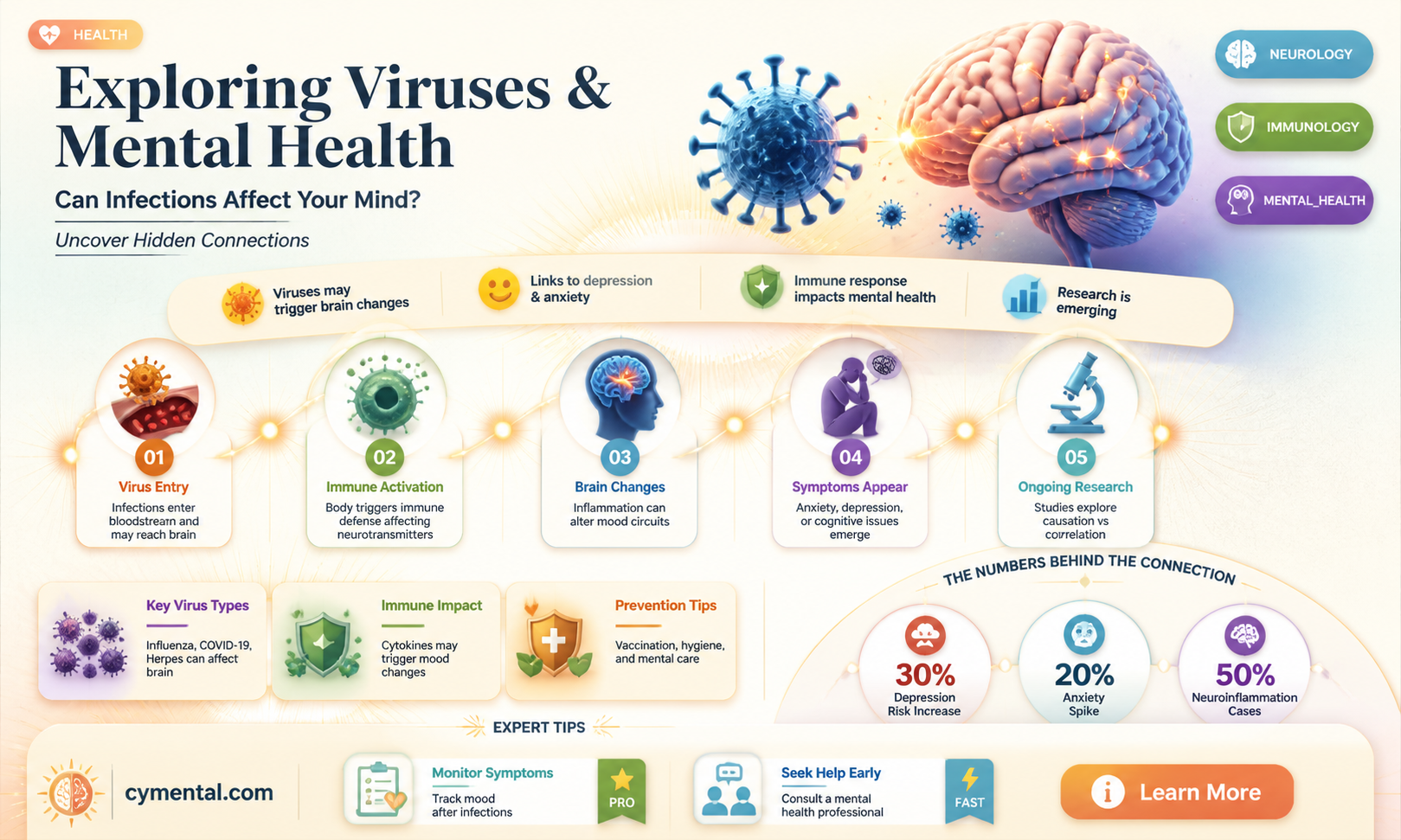
The question of whether a virus can cause mental illness is a complex and evolving area of research. While it's long been recognized that certain viral infections can affect the brain and lead to neurological symptoms, the link between viral infections and mental health disorders is less understood. Recent studies have suggested that some viruses may play a role in the development of mental illnesses such as depression, anxiety, and even psychosis. For example, research has shown that the herpes simplex virus (HSV) and the Epstein-Barr virus (EBV) may be associated with an increased risk of depression and bipolar disorder. Additionally, the COVID-19 pandemic has highlighted the potential for viral infections to have a significant impact on mental health, with many individuals experiencing anxiety, depression, and other mental health challenges during the outbreak. However, it's important to note that the relationship between viruses and mental illness is likely to be complex and multifaceted, involving interactions between the virus, the immune system, and various environmental and genetic factors. Further research is needed to fully understand the mechanisms by which viruses may contribute to mental health disorders and to develop effective strategies for prevention and treatment.
| Characteristics | Values |
|---|---|
| Definition | A virus is a small infectious agent that replicates inside the cells of an organism. Mental illness refers to a wide range of mental health conditions that affect mood, thinking, and behavior. |
| Types of Viruses | Viruses such as herpes simplex virus (HSV), varicella-zoster virus (VZV), and Epstein-Barr virus (EBV) have been linked to mental health symptoms. |
| Transmission | Viruses can be transmitted through various routes, including direct contact, airborne particles, contaminated surfaces, and bodily fluids. |
| Symptoms | Mental health symptoms associated with viral infections can include anxiety, depression, mood swings, cognitive impairment, and psychosis. |
| Diagnosis | Diagnosis of a viral infection often involves laboratory tests such as PCR, antibody tests, and viral culture. Mental health conditions are typically diagnosed through clinical evaluation and psychological assessments. |
| Treatment | Antiviral medications may be used to treat viral infections. Mental health conditions may be treated with psychotherapy, medications, and lifestyle changes. |
| Prevention | Preventive measures for viral infections include vaccination, good hygiene practices, and avoiding close contact with infected individuals. Maintaining good mental health can involve stress management, social support, and healthy lifestyle choices. |
| Research | Ongoing research is exploring the complex relationship between viral infections and mental health, including the potential role of inflammation and immune system dysfunction. |
| Public Health Impact | Viral infections and mental health conditions both have significant public health impacts, affecting millions of people worldwide and contributing to morbidity and mortality. |
| Future Directions | Future research may lead to the development of new treatments and preventive strategies that target the intersection of viral infections and mental health. |
Explore related products


What You'll Learn
- Viral infections and psychiatric symptoms: Exploring the link between common viruses and the onset of mental health issues
- Neurological impact of viruses: How viruses can affect brain function and potentially lead to mental disorders
- Inflammation and mental health: The role of viral-induced inflammation in the development of psychiatric conditions
- Genetic predisposition and viral triggers: Investigating how genetic factors may interact with viral infections to cause mental illness
- Treatment and prevention strategies: Examining potential ways to mitigate the psychiatric effects of viral infections through medical interventions

Viral infections and psychiatric symptoms: Exploring the link between common viruses and the onset of mental health issues
Recent research has uncovered a fascinating link between viral infections and the onset of psychiatric symptoms, shedding light on the complex interplay between physical and mental health. Studies have shown that certain viruses, such as the herpes simplex virus (HSV), may trigger or exacerbate mental health issues like depression, anxiety, and bipolar disorder. This connection is thought to be due to the virus's ability to cause inflammation in the brain, disrupt neurotransmitter function, and alter gene expression.
One particularly intriguing finding is the association between HSV and the development of bipolar disorder. Research suggests that individuals infected with HSV are more likely to experience manic episodes, and that the virus may play a role in the progression of the disorder. This discovery has significant implications for the treatment and management of bipolar disorder, as it may lead to the development of new antiviral therapies that target the underlying viral infection.
Furthermore, the link between viral infections and psychiatric symptoms is not limited to HSV. Other viruses, such as the Epstein-Barr virus (EBV) and the human papillomavirus (HPV), have also been implicated in the onset of mental health issues. EBV, for example, has been linked to an increased risk of depression and anxiety, while HPV has been associated with a higher prevalence of mood disorders.
The mechanisms by which these viruses contribute to psychiatric symptoms are still under investigation, but several theories have been proposed. One possibility is that viral infections cause an imbalance in the immune system, leading to increased inflammation and oxidative stress in the brain. This, in turn, may disrupt the delicate balance of neurotransmitters and other brain chemicals that regulate mood and behavior.
Another theory suggests that viral infections may alter gene expression in the brain, leading to changes in the way that genes involved in mental health are regulated. This could result in the development of psychiatric symptoms or the exacerbation of existing mental health conditions.
Understanding the link between viral infections and psychiatric symptoms is crucial for the development of effective treatments and prevention strategies. By targeting the underlying viral infection, it may be possible to alleviate or even prevent the onset of mental health issues. Additionally, this research highlights the importance of a holistic approach to healthcare, one that recognizes the intricate connections between physical and mental well-being.
Exploring the Link: Chest Infections and Mental Confusion
You may want to see also
Explore related products


Neurological impact of viruses: How viruses can affect brain function and potentially lead to mental disorders
Viruses have long been recognized for their ability to invade and disrupt the central nervous system, leading to a range of neurological symptoms. Recent research has shed light on the potential long-term effects of viral infections on brain function, suggesting a possible link to the development of mental disorders. This connection is particularly intriguing given the growing awareness of the gut-brain axis and the role of the immune system in mental health.
One of the primary mechanisms by which viruses can affect the brain is through neuroinflammation. When a virus enters the body, it triggers an immune response that can lead to the production of pro-inflammatory cytokines. These cytokines can cross the blood-brain barrier and activate microglia, the brain's resident immune cells, causing them to release additional inflammatory molecules. This neuroinflammatory cascade can disrupt normal brain function, leading to symptoms such as cognitive impairment, mood disturbances, and even psychosis.
Studies have shown that certain viruses, such as the herpes simplex virus (HSV) and the Epstein-Barr virus (EBV), can persist in the brain and cause chronic neuroinflammation. This persistent inflammation has been linked to an increased risk of developing mental disorders such as depression, anxiety, and bipolar disorder. Furthermore, research has suggested that viral infections during critical periods of brain development, such as early childhood or adolescence, may be particularly detrimental and could contribute to the onset of mental illness later in life.
The neurological impact of viruses is not limited to neuroinflammation. Some viruses, such as the rabies virus and the West Nile virus, can directly infect neurons and cause cell death. This can lead to severe neurological symptoms, including encephalitis, meningitis, and even death. In addition, viruses can disrupt the normal functioning of neurotransmitter systems in the brain, leading to imbalances that can contribute to mental health issues.
Understanding the complex interplay between viruses and the brain is crucial for developing effective treatments and prevention strategies. Researchers are currently exploring the use of antiviral medications, immunotherapy, and other interventions to mitigate the neurological effects of viral infections. Additionally, public health efforts aimed at reducing the spread of viruses through vaccination and other measures may also play a role in protecting mental health.
In conclusion, the neurological impact of viruses is a multifaceted and complex issue that warrants further investigation. The potential link between viral infections and mental disorders highlights the importance of considering the immune system and its interactions with the brain in the context of mental health. By deepening our understanding of these relationships, we may uncover new avenues for the diagnosis, treatment, and prevention of mental illness.
The Impact of Toxic Relationships on Mental Health: Unraveling the Connection
You may want to see also
Explore related products


Inflammation and mental health: The role of viral-induced inflammation in the development of psychiatric conditions
Recent research has uncovered a compelling link between inflammation and mental health, suggesting that viral-induced inflammation may play a significant role in the development of psychiatric conditions. This connection is rooted in the body's immune response to viral infections, which can trigger a cascade of inflammatory processes that impact the brain and central nervous system. Studies have shown that individuals with chronic viral infections, such as herpes simplex virus (HSV) or Epstein-Barr virus (EBV), are at an increased risk of developing mental health disorders like depression, anxiety, and bipolar disorder.
One possible mechanism by which viral-induced inflammation contributes to mental illness is through the activation of the immune system's cytokine response. Cytokines are signaling molecules that regulate inflammation and immune responses, and their overproduction has been linked to various psychiatric conditions. In particular, pro-inflammatory cytokines like interleukin-6 (IL-6) and tumor necrosis factor-alpha (TNF-alpha) have been shown to influence mood and behavior, potentially leading to the development of depression and anxiety disorders.
Another potential pathway involves the disruption of the blood-brain barrier (BBB) by viral infections. The BBB is a critical structure that separates the brain from the rest of the body, protecting it from harmful substances and pathogens. However, viral infections can compromise the integrity of the BBB, allowing inflammatory molecules and immune cells to enter the brain and exert their effects on mental health. This disruption has been implicated in the development of conditions like schizophrenia and autism spectrum disorder.
Furthermore, viral-induced inflammation may also impact mental health by affecting the gut-brain axis. The gut microbiome plays a crucial role in regulating immune responses and inflammation, and viral infections can alter the composition of the gut microbiota, leading to increased inflammation and potential mental health consequences. This connection is supported by studies showing that individuals with mental health disorders often exhibit alterations in their gut microbiome.
In conclusion, the relationship between viral-induced inflammation and mental health is complex and multifaceted, involving various biological pathways and mechanisms. Further research is needed to fully understand this connection and to develop effective therapeutic strategies for addressing mental health disorders associated with viral infections. However, the emerging evidence suggests that viral-induced inflammation may be a critical factor in the development of psychiatric conditions, highlighting the importance of considering the immune system's role in mental health.
The Lingering Impact: PTSD and Mental Abuse in Relationships
You may want to see also
Explore related products


Genetic predisposition and viral triggers: Investigating how genetic factors may interact with viral infections to cause mental illness
Recent studies have uncovered compelling evidence suggesting that genetic predispositions can significantly influence an individual's susceptibility to developing mental illnesses following viral infections. This intricate interplay between genetics and viral triggers is a burgeoning area of research, offering insights into the complex etiology of psychiatric disorders.
One key area of investigation is the role of genetic variations in immune response genes. These variations can affect how the body responds to viral infections, potentially leading to an increased risk of mental illness. For instance, certain genetic variants have been linked to an exaggerated inflammatory response, which may contribute to the development of depression or anxiety disorders following a viral infection.
Another important aspect is the impact of viral infections on gene expression. Viruses can alter the expression of genes involved in neurotransmitter regulation, synaptic plasticity, and other critical neural processes. This dysregulation can have long-lasting effects on brain function, potentially leading to the onset of mental health issues.
Furthermore, researchers are exploring the possibility that viral infections may interact with genetic factors to influence the risk of developing more severe or treatment-resistant forms of mental illness. For example, a study found that individuals with a specific genetic variant were more likely to experience severe depression following a bout of the flu, highlighting the potential for gene-virus interactions to exacerbate mental health outcomes.
Understanding these complex interactions is crucial for developing more effective prevention and treatment strategies for mental illnesses. By identifying individuals who are genetically predisposed to developing mental health issues following viral infections, healthcare providers can implement targeted interventions to mitigate risk and improve outcomes. Additionally, this research may lead to the development of novel therapies that address the underlying genetic and viral factors contributing to mental illness.
Unraveling the Complex Link Between Mental Illness and Violence
You may want to see also
Explore related products


Treatment and prevention strategies: Examining potential ways to mitigate the psychiatric effects of viral infections through medical interventions
Antiviral medications are often the first line of defense against viral infections that may have psychiatric manifestations. For instance, in the case of the herpes simplex virus, which has been linked to encephalitis and subsequent psychiatric symptoms, antiviral drugs like acyclovir, valacyclovir, and famciclovir can help reduce the severity and duration of the infection. These medications work by inhibiting the virus's ability to replicate, thus reducing the viral load in the body and potentially alleviating associated psychiatric symptoms.
In addition to antiviral medications, symptomatic treatment is also crucial in managing the psychiatric effects of viral infections. This may include the use of antipsychotic medications, antidepressants, or anxiolytics to address specific symptoms such as psychosis, depression, or anxiety. For example, in the case of COVID-19, which has been associated with a range of psychiatric symptoms including anxiety, depression, and psychosis, selective serotonin reuptake inhibitors (SSRIs) like fluoxetine or sertraline may be prescribed to help manage depressive symptoms.
Preventive strategies are also essential in mitigating the psychiatric effects of viral infections. Vaccination is a key preventive measure, as it can help reduce the risk of contracting certain viral infections in the first place. For instance, the measles, mumps, and rubella (MMR) vaccine has been shown to reduce the risk of developing psychiatric disorders such as autism and schizophrenia. Additionally, practicing good hygiene, such as regular handwashing and wearing masks during outbreaks, can help prevent the spread of viral infections and subsequently reduce the risk of developing associated psychiatric symptoms.
Another important preventive strategy is to address underlying risk factors that may increase the likelihood of developing psychiatric symptoms following a viral infection. This may include managing chronic medical conditions, such as diabetes or hypertension, which have been linked to an increased risk of psychiatric disorders. Additionally, addressing social determinants of health, such as poverty and lack of access to healthcare, can help reduce the overall burden of viral infections and associated psychiatric symptoms in vulnerable populations.
Finally, it is crucial to consider the role of early intervention in mitigating the psychiatric effects of viral infections. Early diagnosis and treatment of viral infections can help prevent the development of severe psychiatric symptoms. Additionally, early identification and treatment of psychiatric symptoms can help improve outcomes and reduce the risk of long-term complications. This may involve screening for psychiatric symptoms in patients with viral infections and providing prompt referrals to mental health professionals when necessary.
Unraveling the Link: Depression and Mental Confusion Explored
You may want to see also
Frequently asked questions
While viruses can affect the brain and lead to neurological symptoms, there is no conclusive evidence that they directly cause mental illnesses such as depression or anxiety. However, viral infections can exacerbate existing mental health conditions or contribute to the development of mental health issues indirectly through factors like inflammation or immune response.
Some examples of viruses that can affect the brain include the herpes simplex virus (HSV), which can cause encephalitis; the human immunodeficiency virus (HIV), which can lead to cognitive impairment; and the Zika virus, which has been linked to neurological disorders such as microcephaly in infants.
Viral infections can impact mental health in several ways. For instance, the immune response triggered by the infection can lead to inflammation in the brain, which may affect mood and cognitive function. Additionally, the stress of dealing with a chronic illness can contribute to anxiety and depression. In some cases, viral infections can also cause neurological symptoms that may be mistaken for mental health issues.
Research suggests that there may be a link between certain viral infections and the development of psychiatric conditions like schizophrenia and bipolar disorder. For example, some studies have found that exposure to viruses such as influenza or herpes during pregnancy may increase the risk of these conditions in offspring. However, more research is needed to fully understand the relationship between viral infections and these complex mental health disorders.
Antiviral medications can have side effects that may impact mental health. For example, some antiviral drugs can cause symptoms such as anxiety, depression, or confusion. It is important for individuals taking antiviral medications to be aware of these potential side effects and to discuss any concerns with their healthcare provider. In some cases, adjusting the dosage or switching to a different medication may be necessary to minimize these effects.