Caleb Wright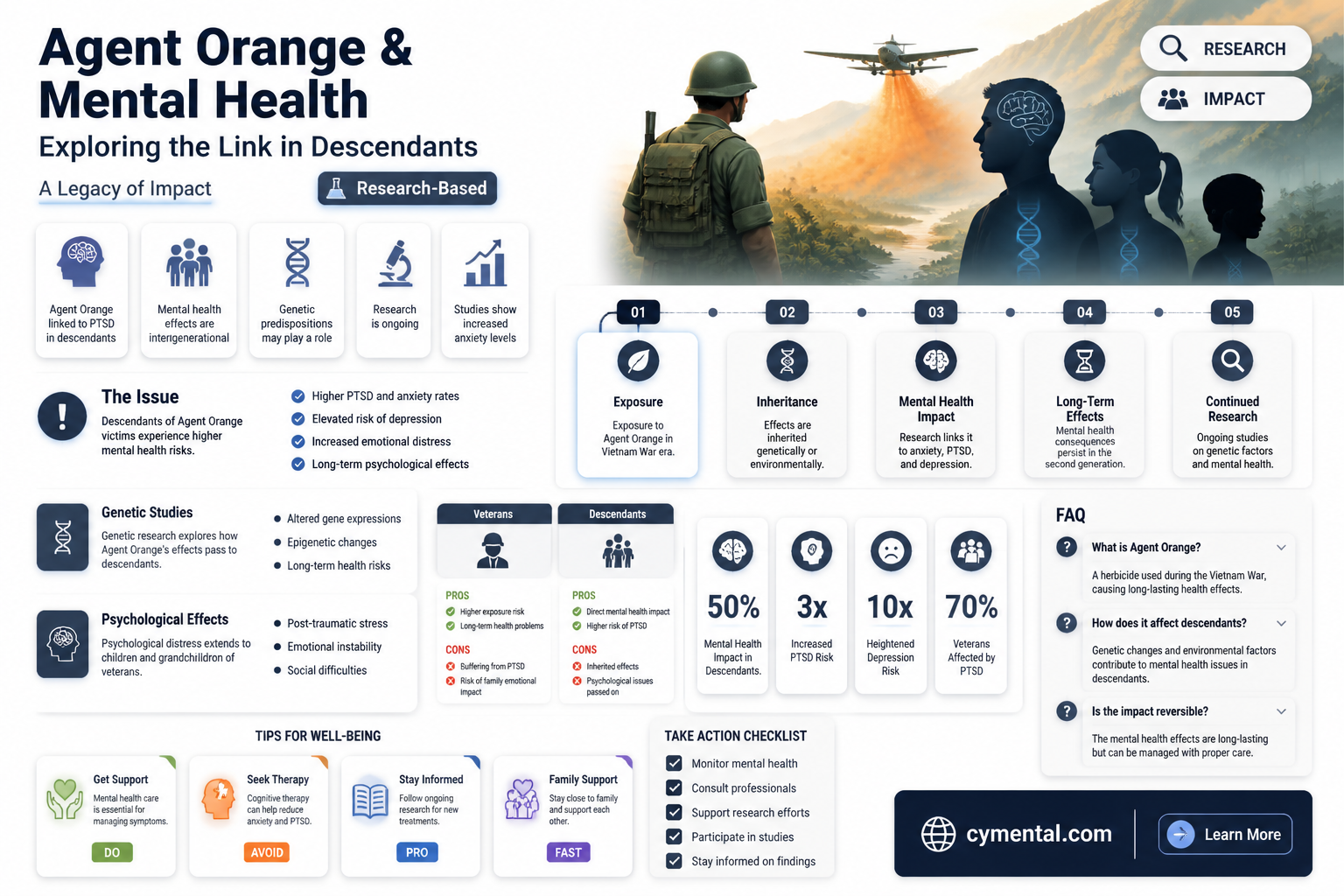
Agent Orange, a herbicide used extensively during the Vietnam War, has been linked to various health issues in both veterans and their offspring. One area of concern is its potential impact on mental health. Studies have suggested that exposure to Agent Orange may increase the risk of mental illness in the children of those who were exposed, including conditions such as schizophrenia, depression, and anxiety disorders. The mechanism behind this potential link is still under investigation, but it is believed that the toxic chemicals in Agent Orange may affect brain development and function, leading to long-term psychological effects. Further research is needed to fully understand the extent of this risk and to develop appropriate interventions and support for affected individuals.
Explore related products


What You'll Learn
- Overview of Agent Orange: Brief introduction to Agent Orange, its use, and known health effects
- Mental Illness in Offspring: Discussion on the potential link between Agent Orange exposure and mental health issues in children
- Scientific Studies: Summary of key studies investigating the effects of Agent Orange on mental health across generations
- Mechanisms of Action: Explanation of how Agent Orange might influence mental health, including any biological or genetic pathways
- Conclusion and Implications: Final thoughts on the topic, including the implications for public health and policy

Overview of Agent Orange: Brief introduction to Agent Orange, its use, and known health effects
Agent Orange is a herbicide and defoliant chemical that was used extensively by the United States military during the Vietnam War. It was sprayed over large areas of Vietnam, Laos, and Cambodia to clear vegetation and expose enemy hiding spots. The chemical contains a mixture of two phenoxy herbicides, 2,4-dichlorophenoxyacetic acid (2,4-D) and 2,4,5-trichlorophenoxyacetic acid (2,4,5-T), as well as a petroleum-based solvent and a surfactant.
Exposure to Agent Orange has been linked to a range of serious health problems, including various cancers, birth defects, and neurological disorders. The health effects of Agent Orange can be particularly severe for veterans who were directly exposed to the chemical during their service. However, research has also suggested that the effects of Agent Orange may extend to the offspring of those who were exposed, potentially causing mental illness and other health issues.
Studies have shown that the children of veterans who were exposed to Agent Orange may be at increased risk of developing mental health disorders such as depression, anxiety, and post-traumatic stress disorder (PTSD). These effects may be due to the fact that Agent Orange can interfere with the development of the brain and nervous system, leading to long-lasting changes in brain function and behavior.
In addition to its potential effects on mental health, Agent Orange has also been linked to a range of physical health problems in offspring, including birth defects, developmental delays, and increased risk of certain cancers. These effects may be due to the fact that Agent Orange can damage DNA and disrupt normal cellular processes, leading to a range of developmental and health issues.
Overall, the use of Agent Orange during the Vietnam War has had a lasting impact on the health and well-being of both veterans and their offspring. While the full extent of these effects is still being studied, it is clear that Agent Orange is a potent and dangerous chemical that can have serious consequences for human health.
Exploring the Link: Can Severe Mental Distress Trigger Seizures?
You may want to see also
Explore related products


Mental Illness in Offspring: Discussion on the potential link between Agent Orange exposure and mental health issues in children
Recent studies have brought to light a concerning potential link between Agent Orange exposure and mental health issues in offspring. This connection raises critical questions about the long-term impacts of chemical exposure on future generations.
Research indicates that children of individuals exposed to Agent Orange may exhibit a higher prevalence of mental health disorders, including depression, anxiety, and post-traumatic stress disorder (PTSD). The mechanisms behind this link are complex and multifaceted, involving both biological and environmental factors.
One possible explanation is the epigenetic changes induced by Agent Orange exposure. Epigenetics refers to alterations in gene expression that do not involve changes to the DNA sequence itself. These changes can be passed down through generations, potentially affecting the mental health of offspring.
Another factor to consider is the psychological impact of Agent Orange exposure on parents. Individuals who have been exposed to this toxic herbicide may experience mental health issues themselves, which can influence their parenting style and the overall family environment. This, in turn, can have a profound impact on the mental well-being of their children.
It is essential to note that while the evidence is mounting, more research is needed to fully understand the relationship between Agent Orange exposure and mental illness in offspring. Longitudinal studies that track the mental health of exposed individuals and their children over time would provide invaluable insights into this critical issue.
In conclusion, the potential link between Agent Orange exposure and mental health issues in offspring is a pressing concern that warrants further investigation. Understanding this connection is crucial for developing effective prevention and intervention strategies to support the mental well-being of future generations.
Tenant behavior and landlord mental health: Understanding the impact
You may want to see also
Explore related products


Scientific Studies: Summary of key studies investigating the effects of Agent Orange on mental health across generations
A growing body of scientific research has investigated the intergenerational effects of Agent Orange exposure on mental health. One key study published in the Journal of Occupational and Environmental Medicine found that offspring of Vietnam veterans exposed to Agent Orange exhibited higher rates of depression and anxiety disorders compared to the general population. This study highlighted the potential for epigenetic inheritance of mental health vulnerabilities resulting from environmental toxins.
Another significant study, conducted by the National Institute of Environmental Health Sciences, examined the relationship between Agent Orange exposure and the development of post-traumatic stress disorder (PTSD) in both veterans and their children. The findings suggested that exposure to Agent Orange may increase the risk of PTSD in offspring, potentially through alterations in gene expression and neurobiological pathways.
Furthermore, research published in the journal Environmental Health Perspectives has indicated that Agent Orange exposure may lead to long-term changes in brain structure and function, which could contribute to the development of mental health disorders in subsequent generations. This study utilized advanced neuroimaging techniques to identify specific regions of the brain affected by Agent Orange exposure and suggested potential biomarkers for early detection of mental health risks.
While these studies provide valuable insights into the potential mental health impacts of Agent Orange exposure on offspring, further research is needed to fully understand the underlying mechanisms and to develop effective prevention and treatment strategies. It is crucial for policymakers and healthcare providers to consider the intergenerational effects of environmental toxins when developing public health initiatives and providing care to affected individuals and their families.
Unraveling the Link: Opioid Addiction and Mental Illness
You may want to see also
Explore related products


Mechanisms of Action: Explanation of how Agent Orange might influence mental health, including any biological or genetic pathways
Agent Orange, a herbicide used during the Vietnam War, has been linked to various health issues, including mental health disorders. One possible mechanism of action is through the disruption of the endocrine system. Agent Orange contains dioxins, which are known endocrine disruptors. These chemicals can interfere with the normal functioning of hormones, particularly those involved in brain development and function, such as serotonin and dopamine. This disruption can lead to imbalances in neurotransmitters, which are crucial for maintaining mental health.
Another potential pathway is through the induction of oxidative stress. Agent Orange exposure has been shown to increase the production of reactive oxygen species (ROS) in the brain. These ROS can damage brain cells and disrupt neural signaling, contributing to the development of mental health disorders. Furthermore, oxidative stress can activate inflammatory pathways, leading to neuroinflammation, which is also implicated in mental illness.
Epigenetic modifications are another area of interest. Exposure to Agent Orange has been associated with changes in DNA methylation patterns, particularly in genes involved in brain function and mental health. These epigenetic changes can affect gene expression, leading to alterations in neural development and function. This could potentially result in long-term mental health consequences, including in offspring of exposed individuals.
The impact of Agent Orange on mental health may also involve genetic factors. Certain genetic polymorphisms have been identified that may increase susceptibility to the toxic effects of Agent Orange. For example, variations in genes involved in the metabolism of xenobiotics or in the antioxidant defense system may predispose individuals to greater oxidative stress and subsequent mental health issues following exposure.
In summary, the mechanisms by which Agent Orange might influence mental health are complex and multifaceted. They involve endocrine disruption, oxidative stress, epigenetic modifications, and genetic factors. Understanding these pathways is crucial for developing effective prevention and treatment strategies for mental health disorders associated with Agent Orange exposure.
Unraveling the Link: Abuse and Its Impact on Mental Health
You may want to see also
Explore related products


$23.85 $29.95


Conclusion and Implications: Final thoughts on the topic, including the implications for public health and policy
The conclusion that Agent Orange exposure can cause mental illness in offspring carries profound implications for public health and policy. This finding underscores the need for comprehensive screening and support programs for individuals with a family history of Agent Orange exposure. Public health initiatives should focus on early detection and intervention to mitigate the long-term impacts of these mental health conditions.
From a policy perspective, governments and international organizations must prioritize the regulation of toxic chemicals used in warfare and industrial activities. Stricter guidelines and enforcement mechanisms are essential to prevent future generations from suffering the consequences of chemical exposure. Additionally, policies should address the socioeconomic disparities that often accompany mental health issues, ensuring that affected individuals have access to quality healthcare and social support systems.
The implications of this research also extend to the realm of environmental health. It highlights the importance of monitoring and controlling environmental pollutants that can have intergenerational effects on human health. This includes not only chemicals used in warfare but also industrial pollutants and pesticides that may have similar long-term impacts.
In terms of practical steps, healthcare providers should be trained to recognize the signs of mental health conditions associated with Agent Orange exposure and to provide appropriate referrals and treatment plans. Community-based organizations can play a crucial role in raising awareness and offering support to affected families. Furthermore, educational programs should be developed to inform the public about the risks of chemical exposure and the importance of environmental stewardship.
Ultimately, the findings on the link between Agent Orange and mental illness in offspring serve as a stark reminder of the far-reaching consequences of human actions on the environment and future generations. It is imperative that we learn from this history and take decisive action to protect public health and the environment from the harmful effects of toxic chemicals.
Unraveling the Complex Causes of Obesity: Physical vs. Mental
You may want to see also
Frequently asked questions
Research suggests that exposure to Agent Orange, a herbicide used during the Vietnam War, may be linked to an increased risk of mental health issues in both those directly exposed and potentially in their offspring. Studies have shown associations with conditions such as depression, anxiety, and post-traumatic stress disorder (PTSD). However, establishing a direct causal link specifically to offspring can be complex due to various confounding factors.
One of the primary challenges in studying the transgenerational effects of Agent Orange on mental health is the difficulty in isolating the herbicide's impact from other environmental and genetic factors. Additionally, the latency period between exposure and the onset of mental health symptoms can be long, making it hard to establish a clear temporal relationship. Furthermore, the lack of comprehensive data on exposure levels and the heterogeneous nature of mental health disorders complicate the research.
Yes, there are ongoing studies and support programs for individuals affected by Agent Orange exposure. Organizations such as the U.S. Department of Veterans Affairs and various non-governmental organizations provide resources and support for veterans and their families. Research continues to explore the long-term effects of Agent Orange exposure, including its potential impact on mental health across generations. Support programs often include mental health services, counseling, and educational resources to help affected individuals and their families.