Caleb Wright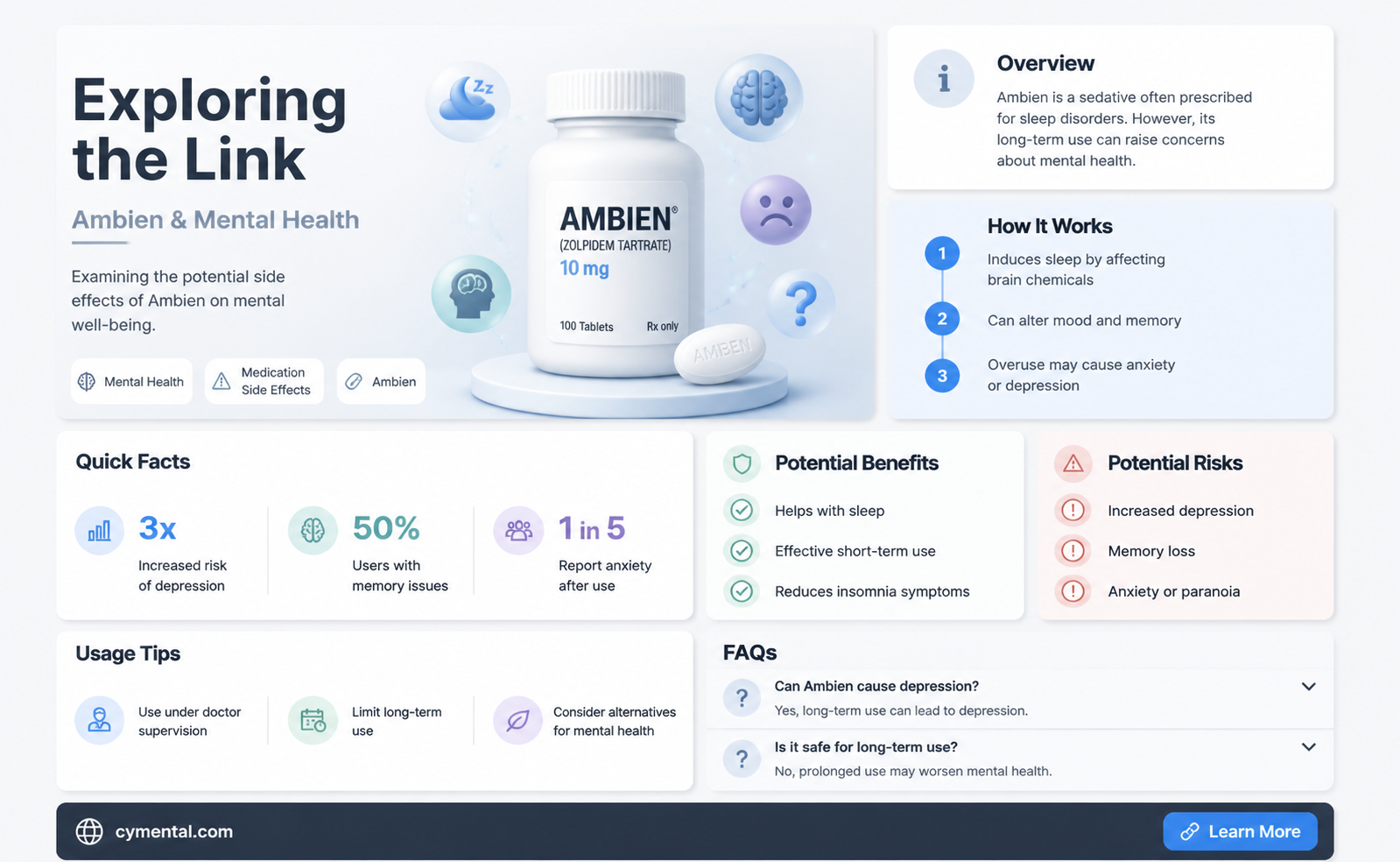
Ambien, a prescription medication commonly used to treat insomnia, has been associated with potential mental health concerns. While it can be effective in helping individuals fall asleep, there is ongoing debate about its long-term effects on mental well-being. Some studies suggest that Ambien may contribute to the development or exacerbation of mental health issues such as anxiety, depression, and even suicidal thoughts. However, it is essential to note that the relationship between Ambien and mental health is complex and influenced by various factors, including dosage, duration of use, and individual predispositions. As with any medication, it is crucial for users to consult with their healthcare providers to weigh the benefits and risks and to monitor their mental health closely while taking Ambien.
What You'll Learn
- Short-term memory loss: Ambien can impair memory formation, leading to forgetfulness and difficulty recalling recent events
- Dependency and addiction: Prolonged use may result in physical dependence, making it challenging to stop taking the medication
- Hallucinations and delusions: In some cases, Ambien can cause hallucinations or delusions, particularly in older adults
- Increased anxiety: Paradoxically, Ambien can exacerbate anxiety symptoms, especially during withdrawal or when used in high doses
- Sleepwalking and nocturnal behaviors: Ambien may induce sleepwalking or other nocturnal behaviors, potentially leading to accidents or injuries

Short-term memory loss: Ambien can impair memory formation, leading to forgetfulness and difficulty recalling recent events
Ambien, a commonly prescribed sleep aid, has been linked to short-term memory loss. This side effect can manifest as forgetfulness and difficulty recalling recent events, which can be particularly concerning for individuals who rely on their memory for daily tasks and responsibilities. The impairment of memory formation is a significant issue that warrants further investigation and understanding.
One unique angle to explore is the potential long-term consequences of short-term memory loss induced by Ambien. While the drug is typically used for short-term treatment of insomnia, repeated use can lead to a cumulative effect on memory function. This could result in more severe cognitive impairments, such as difficulty learning new information, problems with concentration, and even an increased risk of developing dementia.
Another aspect to consider is the impact of Ambien-induced memory loss on mental health. Forgetfulness and difficulty recalling recent events can lead to feelings of anxiety, frustration, and depression. These emotional consequences can further exacerbate the memory problems, creating a vicious cycle that is challenging to break. It is essential to address the psychological effects of memory loss in addition to the cognitive impairments.
Furthermore, it is crucial to examine the mechanisms by which Ambien affects memory formation. Research suggests that the drug may interfere with the normal functioning of neurotransmitters in the brain, particularly those involved in memory consolidation. Understanding these underlying mechanisms can help in developing strategies to mitigate the memory-impairing effects of Ambien and inform the development of safer sleep aids.
In conclusion, the short-term memory loss associated with Ambien use is a complex issue with potential long-term consequences and significant implications for mental health. A comprehensive approach that addresses the cognitive, emotional, and neurobiological aspects of this side effect is necessary to fully understand and manage the risks associated with Ambien use.
Unraveling the Link: Mental Illness and Pathological Lying Explored
You may want to see also
Dependency and addiction: Prolonged use may result in physical dependence, making it challenging to stop taking the medication
Prolonged use of Ambien can lead to physical dependence, making it difficult for individuals to stop taking the medication without experiencing withdrawal symptoms. This dependence can develop even when the drug is taken as prescribed, highlighting the importance of careful monitoring and limited use. Withdrawal symptoms can range from mild to severe and may include anxiety, insomnia, and seizures.
One of the challenges in addressing Ambien dependence is the potential for rebound insomnia, where individuals experience worse sleep problems than before starting the medication. This can create a cycle of dependence, as users may feel compelled to continue taking Ambien to avoid these unpleasant side effects. To mitigate this risk, healthcare providers often recommend a gradual tapering of the medication rather than abrupt discontinuation.
In addition to physical dependence, prolonged Ambien use can also contribute to the development of mental health issues. Research has shown a potential link between long-term benzodiazepine use and an increased risk of cognitive impairment, depression, and anxiety disorders. These findings underscore the need for caution when prescribing Ambien for extended periods and emphasize the importance of exploring alternative sleep aids and addressing underlying sleep disorders.
To minimize the risk of dependence and addiction, it is crucial for individuals to follow their healthcare provider's instructions carefully and to communicate openly about any concerns or side effects. Ambien should be used for short-term treatment of sleep problems and not as a long-term solution. By adopting a cautious and informed approach, individuals can reduce the likelihood of developing dependence and improve their overall sleep health.
Exploring the Link: Can Tooth Infections Impact Mental Health?
You may want to see also
Hallucinations and delusions: In some cases, Ambien can cause hallucinations or delusions, particularly in older adults
Ambien, a medication commonly prescribed for insomnia, has been associated with an increased risk of hallucinations and delusions, particularly in older adults. These side effects can be distressing and may lead to confusion, fear, and anxiety in affected individuals. It is essential to understand the mechanisms behind these symptoms and to identify strategies for mitigating their impact.
One possible explanation for the development of hallucinations and delusions in older adults taking Ambien is the drug's effect on the brain's neurotransmitter systems. Ambien works by enhancing the activity of gamma-aminobutyric acid (GABA), a neurotransmitter that inhibits neuronal activity. In older adults, whose brains may already be experiencing age-related changes in neurotransmitter function, the additional impact of Ambien on GABA receptors could lead to an imbalance in brain activity, resulting in hallucinations and delusions.
Several factors may increase the likelihood of experiencing these side effects. For example, older adults with a history of mental health conditions, such as depression or anxiety, may be more susceptible to the development of hallucinations and delusions while taking Ambien. Additionally, individuals with impaired liver or kidney function may be at increased risk, as these organs play a crucial role in metabolizing the drug. It is also important to note that the risk of experiencing these side effects may be higher when Ambien is taken in combination with other medications that affect the central nervous system.
To minimize the risk of hallucinations and delusions in older adults taking Ambien, healthcare providers should carefully monitor patients for signs of these symptoms and adjust the dosage or discontinue the medication if necessary. It may also be helpful to provide patients with education about the potential side effects of Ambien and to encourage them to report any unusual experiences to their healthcare provider. In some cases, alternative medications or non-pharmacological treatments for insomnia may be more appropriate for older adults, particularly those with a history of mental health conditions or impaired organ function.
In conclusion, while Ambien can be an effective treatment for insomnia, it is essential to be aware of the potential risk of hallucinations and delusions, particularly in older adults. By understanding the mechanisms behind these side effects and taking steps to mitigate their impact, healthcare providers can help ensure that patients receive safe and effective treatment for their sleep disorders.
Exploring the Link: Acid Reflux and Mental Confusion
You may want to see also
Increased anxiety: Paradoxically, Ambien can exacerbate anxiety symptoms, especially during withdrawal or when used in high doses
Ambien, a medication commonly prescribed for insomnia, has a complex relationship with anxiety. While it is intended to promote relaxation and sleep, there is a paradoxical effect where Ambien can actually exacerbate anxiety symptoms under certain conditions. This phenomenon is particularly notable during the withdrawal phase or when the medication is used in high doses.
During withdrawal, individuals may experience a rebound effect where their anxiety symptoms return with increased intensity. This can be attributed to the body's dependence on the medication and the subsequent disruption of neurotransmitter balance when the drug is discontinued. The rebound anxiety can be severe and may lead to a cycle of dependence, where the individual feels compelled to continue taking Ambien to alleviate the anxiety symptoms it has inadvertently caused.
High doses of Ambien can also lead to increased anxiety. This is because the medication affects the central nervous system, and excessive amounts can cause over-sedation, leading to a state of heightened anxiety and agitation. Furthermore, the impairing effects of high doses on cognitive function and memory can contribute to feelings of anxiety and distress, as individuals may struggle to perform daily tasks or recall important information.
It is crucial for healthcare providers to carefully monitor patients taking Ambien, especially those with a history of anxiety disorders. Dosage adjustments and gradual tapering may be necessary to minimize the risk of increased anxiety symptoms. Additionally, patients should be educated about the potential risks and encouraged to report any changes in their anxiety levels to their healthcare provider.
In conclusion, while Ambien can be an effective treatment for insomnia, its potential to exacerbate anxiety symptoms should not be overlooked. Awareness of this paradoxical effect is essential for both healthcare providers and patients to ensure safe and effective use of the medication.
Unraveling the Link: Allergies and Mental Confusion Explored
You may want to see also
Sleepwalking and nocturnal behaviors: Ambien may induce sleepwalking or other nocturnal behaviors, potentially leading to accidents or injuries
Ambien, a commonly prescribed sleep aid, has been associated with an increased risk of sleepwalking and other nocturnal behaviors. These behaviors can range from simple activities like walking or talking in one's sleep to more complex and potentially dangerous actions such as driving or engaging in risky behaviors. The exact mechanism by which Ambien induces these behaviors is not fully understood, but it is believed to be related to the drug's effect on certain neurotransmitters in the brain that regulate sleep and wakefulness.
One of the most concerning aspects of Ambien-induced sleepwalking is the potential for accidents or injuries. Individuals who sleepwalk may not be aware of their surroundings or actions, which can lead to falls, burns, or other injuries. In some cases, sleepwalkers may even leave their homes and wander into dangerous areas, such as busy streets or unfamiliar neighborhoods. The risk of accidents is particularly high for individuals who take Ambien in combination with other sedatives or alcohol, as these substances can further impair judgment and coordination.
It is important for individuals who are prescribed Ambien to be aware of the potential risks associated with sleepwalking and other nocturnal behaviors. Patients should be advised to take Ambien only as directed and to avoid engaging in activities that require alertness or coordination until they are fully awake and aware of their surroundings. Additionally, individuals who experience sleepwalking or other unusual behaviors while taking Ambien should consult their healthcare provider immediately, as these symptoms may indicate a need for a change in medication or dosage.
In conclusion, while Ambien can be an effective treatment for insomnia, it is crucial for patients and healthcare providers to be aware of the potential risks associated with sleepwalking and other nocturnal behaviors. By taking appropriate precautions and closely monitoring patients for signs of these behaviors, the risks associated with Ambien can be minimized, ensuring that individuals can safely and effectively manage their sleep disorders.
Exploring the Link: Vertigo and Mental Confusion Explained
You may want to see also
Frequently asked questions
Ambien, a medication used to treat insomnia, has been associated with potential mental health side effects. While it is generally prescribed for short-term use, prolonged or excessive use can lead to dependence, anxiety, depression, and in rare cases, suicidal thoughts. It is essential to use Ambien under the guidance of a healthcare professional and report any concerning side effects immediately.
Common mental health side effects of Ambien include anxiety, depression, and mood swings. Some users may also experience confusion, irritability, and in severe cases, hallucinations or suicidal thoughts. It is crucial to monitor these side effects and consult a healthcare provider if they persist or worsen.
Ambien works by enhancing the activity of gamma-aminobutyric acid (GABA), a neurotransmitter that inhibits brain activity and promotes relaxation and sleep. However, prolonged use can lead to changes in brain chemistry, potentially causing mental health issues such as anxiety, depression, and dependence.
Yes, Ambien can be addictive, especially when used for extended periods or in higher doses than prescribed. Dependence on Ambien can lead to withdrawal symptoms when trying to stop the medication, which may include anxiety, insomnia, and in some cases, seizures. It is important to follow the prescribed dosage and duration of treatment to minimize the risk of addiction.
If you experience mental health side effects while taking Ambien, it is crucial to consult your healthcare provider immediately. They can assess the severity of your symptoms and adjust your treatment plan accordingly. In some cases, they may recommend gradually tapering off the medication or switching to an alternative sleep aid. Do not stop taking Ambien abruptly without medical guidance, as this can lead to withdrawal symptoms.