Caleb Wright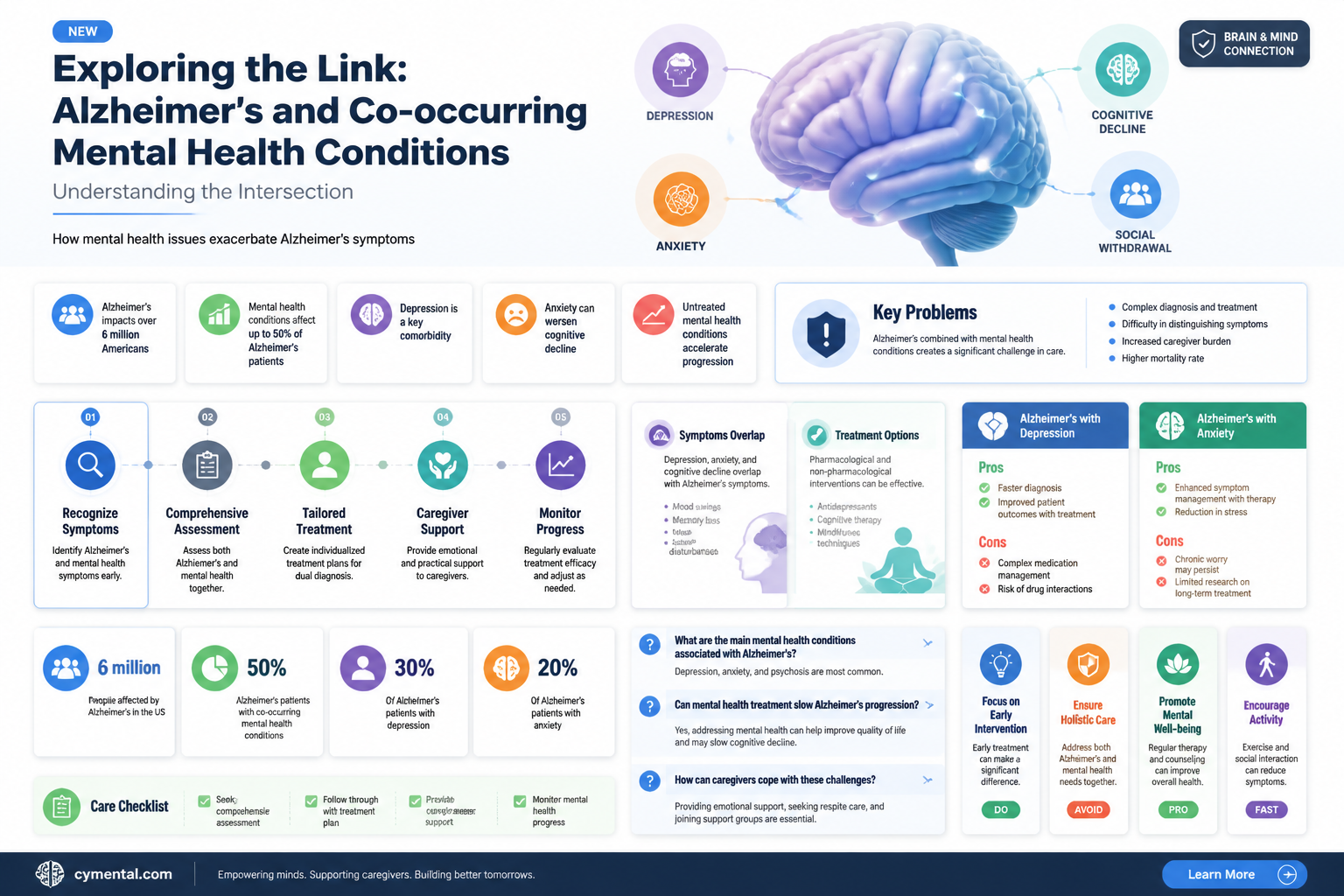
Alzheimer's disease, a progressive neurodegenerative condition, primarily affects memory and cognitive functions. However, its impact can extend beyond these areas, potentially contributing to the development of other mental illnesses. Research suggests that individuals with Alzheimer's may experience symptoms of depression, anxiety, and psychosis, among other psychiatric conditions. These comorbidities can significantly impact the quality of life for both patients and their caregivers. Understanding the relationship between Alzheimer's and other mental illnesses is crucial for developing comprehensive treatment strategies that address the full spectrum of symptoms and improve overall patient outcomes.
| Characteristics | Values |
|---|---|
| Direct causation | Alzheimer's disease can directly cause symptoms of depression, anxiety, and psychosis. |
| Indirect causation | The stress of caregiving for someone with Alzheimer's can lead to mental health issues in family members. |
| Comorbidity | Patients with Alzheimer's are at higher risk of developing other mental illnesses such as depression. |
| Neurobiological basis | Changes in brain chemistry and structure due to Alzheimer's can contribute to the development of other mental illnesses. |
| Early detection | Identifying Alzheimer's early can help in managing and potentially preventing associated mental illnesses. |
| Treatment approach | A multidisciplinary approach, including medication and therapy, is often needed to address both Alzheimer's and co-occurring mental illnesses. |
| Impact on caregivers | Caregivers may experience stress, anxiety, and depression due to the demands of caring for someone with Alzheimer's. |
| Quality of life | The presence of other mental illnesses can significantly impact the quality of life for individuals with Alzheimer's. |
| Research findings | Studies have shown a correlation between Alzheimer's and an increased risk of developing other mental health conditions. |
| Public awareness | Raising awareness about the link between Alzheimer's and mental illnesses can lead to better support and resources for affected individuals and families. |
| Healthcare implications | Understanding the relationship between Alzheimer's and mental illnesses is crucial for developing comprehensive healthcare plans. |
| Therapeutic interventions | Cognitive-behavioral therapy and other forms of counseling can be beneficial in managing mental illnesses in Alzheimer's patients. |
| Pharmacological management | Medications used to treat Alzheimer's may also help in managing associated mental health symptoms. |
| Caregiver support | Providing support and resources for caregivers can help mitigate the mental health impact of caring for someone with Alzheimer's. |
| Patient education | Educating patients and families about the potential mental health impacts of Alzheimer's can lead to earlier intervention and better outcomes. |
Explore related products

$12.99 $17.95


What You'll Learn
- Depression: Alzheimer's patients often experience depression due to cognitive decline and loss of function
- Anxiety: The uncertainty and confusion associated with Alzheimer's can lead to heightened anxiety levels
- Psychosis: Some Alzheimer's patients may exhibit psychotic symptoms, such as hallucinations or delusions
- Agitation: Agitation is common in Alzheimer's, manifesting as restlessness, pacing, or aggressive behavior
- Sleep Disturbances: Alzheimer's can disrupt sleep patterns, leading to insomnia or excessive daytime sleepiness

Depression: Alzheimer's patients often experience depression due to cognitive decline and loss of function
Alzheimer's disease, a progressive neurodegenerative condition, is primarily known for its impact on memory and cognitive function. However, it can also lead to a range of other mental health issues, including depression. This is often due to the cognitive decline and loss of function that are hallmarks of the disease. As patients struggle with memory loss, confusion, and the inability to perform daily tasks, they may experience feelings of sadness, hopelessness, and a loss of interest in activities they once enjoyed.
Depression in Alzheimer's patients can manifest in various ways. Some patients may become withdrawn and isolated, while others may exhibit irritability or agitation. Changes in appetite and sleep patterns are also common, as are thoughts of suicide in more severe cases. It's important to note that depression can occur at any stage of Alzheimer's disease, from the early stages of mild cognitive impairment to the later stages of severe dementia.
The relationship between Alzheimer's disease and depression is complex and not fully understood. Some theories suggest that the biological changes associated with Alzheimer's, such as the buildup of amyloid plaques and tau tangles in the brain, may contribute to the development of depression. Others propose that the psychological stress of dealing with cognitive decline and the loss of independence may trigger depressive symptoms.
Treating depression in Alzheimer's patients can be challenging. Traditional antidepressant medications may not be as effective in this population, and their use can be complicated by potential side effects and interactions with other medications. Non-pharmacological interventions, such as cognitive-behavioral therapy, light therapy, and social support, may be more beneficial. These approaches can help patients cope with the emotional and psychological challenges of Alzheimer's disease, improve their quality of life, and reduce the severity of depressive symptoms.
In conclusion, depression is a significant and often overlooked issue in Alzheimer's disease. It can have a profound impact on patients' well-being and quality of life, and it presents unique challenges for caregivers and healthcare providers. By increasing awareness of this issue and developing effective strategies for prevention and treatment, we can improve the overall care and support for individuals affected by Alzheimer's disease.
Unraveling the Link: Alcohol's Impact on Mental Health Explored
You may want to see also
Explore related products


$14.9 $18.99


Anxiety: The uncertainty and confusion associated with Alzheimer's can lead to heightened anxiety levels
The onset of Alzheimer's disease brings with it a myriad of challenges, not the least of which is the profound uncertainty and confusion that can grip both the patient and their caregivers. This emotional turmoil often manifests as heightened anxiety levels, a common but frequently overlooked symptom of the disease. As the cognitive faculties decline, individuals with Alzheimer's may find themselves increasingly unable to make sense of their surroundings, leading to a constant state of unease and apprehension.
This anxiety can be exacerbated by the progressive nature of the disease, as patients become aware of their diminishing abilities and the impending loss of independence. The fear of the unknown, coupled with the frustration of not being able to perform once-simple tasks, can create a vicious cycle of anxiety and distress. Moreover, the physical changes associated with Alzheimer's, such as sleep disturbances and hormonal imbalances, can further contribute to the development of anxiety disorders.
Caregivers, too, are not immune to the anxiety-inducing effects of Alzheimer's. The responsibility of caring for a loved one with the disease can be overwhelming, leading to feelings of guilt, helplessness, and exhaustion. As they navigate the complex emotional landscape of their role, caregivers may also experience anxiety about the future, both for themselves and for the person they are caring for. This shared anxiety can create a challenging environment, where both patient and caregiver struggle to find respite from their worries.
In addressing the anxiety associated with Alzheimer's, it is crucial to adopt a multifaceted approach that considers both the psychological and physiological aspects of the disease. Cognitive-behavioral therapy, for instance, can be a valuable tool in helping patients and caregivers manage their anxiety by identifying and challenging negative thought patterns. Additionally, pharmacological interventions, such as selective serotonin reuptake inhibitors (SSRIs), may be necessary to alleviate the more severe symptoms of anxiety.
Ultimately, understanding and addressing the anxiety associated with Alzheimer's is essential for improving the quality of life for both patients and caregivers. By acknowledging the emotional toll of the disease and providing appropriate support and resources, we can help mitigate the anxiety that often accompanies this challenging condition.
Exploring the Link: UTI's Impact on Mental Status in Young Adults
You may want to see also
Explore related products


Psychosis: Some Alzheimer's patients may exhibit psychotic symptoms, such as hallucinations or delusions
Alzheimer's disease, primarily known for its impact on memory and cognitive function, can also manifest with a range of psychiatric symptoms. Among these, psychosis is a significant and often distressing complication. Psychotic symptoms in Alzheimer's patients can include hallucinations, where individuals see, hear, or feel things that are not present, and delusions, which are firmly held false beliefs. These symptoms can be particularly challenging for both patients and caregivers, as they can lead to increased agitation, aggression, and a further decline in the patient's ability to function independently.
The prevalence of psychosis in Alzheimer's disease varies, but it is estimated that up to 50% of patients may experience these symptoms at some point during the course of their illness. The exact cause of psychosis in Alzheimer's is not fully understood, but it is thought to be related to the underlying neurodegenerative processes that affect the brain's structure and function. Changes in the levels of certain neurotransmitters, such as dopamine and serotonin, may also play a role in the development of psychotic symptoms.
Diagnosing psychosis in Alzheimer's patients can be complex, as the symptoms may overlap with other psychiatric conditions or be mistaken for the natural progression of the disease. A thorough evaluation by a healthcare professional is necessary to determine the presence and severity of psychotic symptoms and to rule out other potential causes. Treatment options for psychosis in Alzheimer's disease are limited, and the approach is often tailored to the individual patient's needs and circumstances. Medications such as antipsychotics may be used to manage symptoms, but they must be prescribed with caution due to the risk of serious side effects, particularly in elderly patients.
In addition to pharmacological interventions, non-drug treatments can also be beneficial in managing psychotic symptoms in Alzheimer's patients. These may include behavioral therapy, environmental modifications to reduce triggers and stressors, and support for caregivers to help them cope with the challenges of caring for a loved one with psychosis. It is essential to adopt a comprehensive and multidisciplinary approach to the management of Alzheimer's disease, addressing not only the cognitive and functional impairments but also the psychiatric symptoms that can significantly impact the quality of life for both patients and their families.
Exploring the Link Between Mental Health Crises and Memory Loss
You may want to see also
Explore related products


Agitation: Agitation is common in Alzheimer's, manifesting as restlessness, pacing, or aggressive behavior
Agitation is a common symptom in Alzheimer's disease, often manifesting as restlessness, pacing, or aggressive behavior. This can be particularly challenging for caregivers and healthcare professionals, as it may lead to increased stress and potential harm to both the individual with Alzheimer's and those around them. Understanding the underlying causes of agitation in Alzheimer's is crucial for developing effective management strategies.
One approach to addressing agitation in Alzheimer's is through pharmacological interventions. Medications such as antipsychotics and benzodiazepines may be prescribed to help manage symptoms. However, it is important to note that these medications should be used with caution, as they can have significant side effects and may not be suitable for all individuals. Non-pharmacological interventions, such as behavioral therapy and environmental modifications, can also be effective in reducing agitation. For example, creating a calm and structured environment, providing opportunities for physical activity, and engaging in activities that stimulate the mind can all help to alleviate symptoms of agitation.
In addition to these interventions, it is important for caregivers and healthcare professionals to understand the triggers of agitation in individuals with Alzheimer's. This can include factors such as pain, discomfort, hunger, thirst, or even boredom. By identifying and addressing these triggers, it may be possible to prevent or reduce episodes of agitation. Furthermore, providing education and support to caregivers can help them to better manage the challenges associated with caring for an individual with Alzheimer's who experiences agitation.
Overall, managing agitation in Alzheimer's requires a multifaceted approach that takes into account the individual's unique needs and circumstances. By combining pharmacological and non-pharmacological interventions, as well as providing education and support to caregivers, it is possible to improve the quality of life for individuals with Alzheimer's and reduce the burden on those who care for them.
Exploring the Link: Brain Tumors and Mental Health Symptoms
You may want to see also
Explore related products


Sleep Disturbances: Alzheimer's can disrupt sleep patterns, leading to insomnia or excessive daytime sleepiness
Alzheimer's disease, a progressive neurodegenerative condition, is known for its impact on memory and cognitive function. However, it also has a significant effect on sleep patterns, which can lead to various sleep disturbances. These disturbances can manifest as insomnia, where individuals have difficulty falling asleep or staying asleep, or excessive daytime sleepiness, where they feel an overwhelming need to sleep during the day.
The disruption of sleep patterns in Alzheimer's patients can be attributed to several factors. One key factor is the degeneration of the brain's suprachiasmatic nucleus (SCN), which is responsible for regulating the body's internal clock. As the SCN degenerates, it becomes less effective at signaling when it's time to sleep and when it's time to be awake. Additionally, Alzheimer's disease can lead to an imbalance in the production of melatonin, a hormone that plays a crucial role in regulating sleep-wake cycles.
Sleep disturbances in Alzheimer's patients can have a significant impact on their overall health and well-being. Chronic sleep deprivation can exacerbate cognitive decline, increase the risk of falls and accidents, and contribute to mood disorders such as depression and anxiety. Furthermore, sleep disturbances can also affect caregivers, who may experience increased stress and fatigue due to the need to provide constant care and supervision.
Managing sleep disturbances in Alzheimer's patients can be challenging, but there are several strategies that can be employed to improve sleep quality. These include establishing a consistent sleep schedule, creating a relaxing bedtime routine, ensuring a comfortable sleep environment, and limiting exposure to screens and bright lights before bedtime. In some cases, medication may be necessary to help regulate sleep patterns, but this should be discussed with a healthcare professional to determine the most appropriate treatment plan.
In conclusion, sleep disturbances are a common and significant symptom of Alzheimer's disease, and they can have a profound impact on both patients and caregivers. By understanding the underlying causes of these disturbances and implementing effective management strategies, it is possible to improve sleep quality and overall well-being for those affected by Alzheimer's disease.
Unraveling the Link: Mental Illness and Excessive Talking
You may want to see also
Frequently asked questions
Alzheimer's disease is primarily a neurodegenerative disorder that affects memory and cognitive function. While it doesn't directly cause other mental illnesses, the cognitive decline and changes in brain structure associated with Alzheimer's can contribute to the development of other mental health issues such as depression, anxiety, and psychosis.
Common mental health issues that can arise alongside Alzheimer's disease include depression, anxiety disorders, psychosis, and sleep disturbances. These conditions can be a result of the cognitive and emotional changes brought on by Alzheimer's, as well as the stress and challenges faced by individuals and their caregivers.
Caregivers can support individuals with Alzheimer's disease who are experiencing mental health issues by providing a stable and supportive environment, encouraging open communication, and helping them maintain a sense of purpose and engagement. It's also important to seek professional help from healthcare providers who can offer guidance on managing mental health symptoms and recommend appropriate treatments or therapies.
While there is no surefire way to prevent mental health issues from developing alongside Alzheimer's disease, there are some strategies that may help reduce the risk. These include maintaining a healthy lifestyle with regular exercise, a balanced diet, and adequate sleep, as well as engaging in mentally stimulating activities and social interactions. Additionally, managing stress and seeking support from healthcare providers and caregivers can be beneficial in maintaining overall mental well-being.






![Fun and Relaxing Activities for Adults: Puzzles for People with Dementia [Large-Print] (Easy Activities)](https://m.media-amazon.com/images/I/71TZXb-jUEL._AC_UL320_.jpg)