Caleb Wright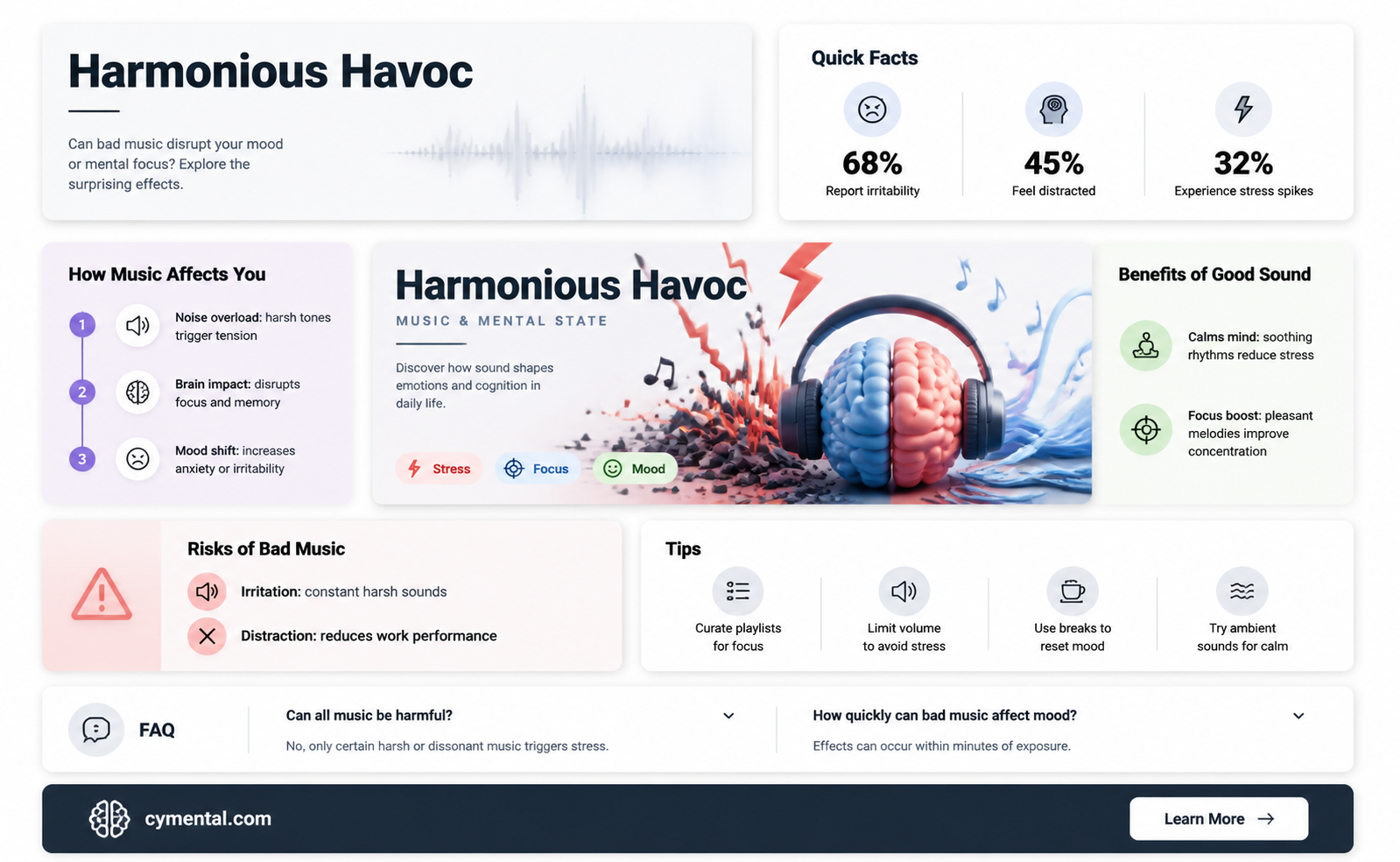
Music has a profound impact on our emotions and mental state, with the ability to uplift, soothe, or energize us. However, the question arises: can bad music have a negative effect on our mental well-being? While the concept of bad music is subjective and varies greatly from person to person, research suggests that certain types of music can indeed have detrimental effects on our mood and mental health. For instance, music with aggressive lyrics or discordant melodies may increase feelings of anxiety, stress, or agitation in some individuals. Additionally, excessive exposure to loud or chaotic music can lead to auditory fatigue and even contribute to conditions like tinnitus. On the other hand, some argue that even music perceived as bad can have cathartic effects, allowing listeners to process and release negative emotions. Ultimately, the relationship between music and mental state is complex and multifaceted, influenced by a variety of factors including personal taste, cultural background, and individual psychological makeup.
Explore related products


What You'll Learn
- Auditory Processing: How the brain interprets sound waves and the potential negative impact of dissonant music
- Emotional Response: The psychological reactions triggered by unpleasant music, such as stress or anxiety
- Memory Association: The role of music in memory formation and how bad music might influence recall and mood
- Physiological Effects: The physical responses to bad music, including changes in heart rate and blood pressure
- Cultural Influences: How cultural background and personal taste affect the perception of what constitutes 'bad' music

Auditory Processing: How the brain interprets sound waves and the potential negative impact of dissonant music
The human brain is a remarkable organ, capable of interpreting a wide range of sensory information. When it comes to auditory processing, the brain is responsible for converting sound waves into meaningful information that we can understand and respond to. This process is complex and involves multiple stages, from the initial reception of sound waves by the ear to the interpretation of these waves by the brain.
One of the key aspects of auditory processing is the brain's ability to distinguish between different types of sounds. This includes the ability to differentiate between consonant and dissonant music. Consonant music is characterized by harmonious sounds that are pleasing to the ear, while dissonant music is characterized by clashing sounds that can be unpleasant or even jarring.
Research has shown that listening to dissonant music can have a negative impact on mental state. This is because the brain is constantly trying to make sense of the conflicting sounds, which can lead to feelings of anxiety, stress, and discomfort. In contrast, listening to consonant music can have a calming effect on the brain, promoting relaxation and reducing stress levels.
The negative impact of dissonant music on mental state can be particularly pronounced in individuals who are already experiencing high levels of stress or anxiety. For these individuals, listening to dissonant music can exacerbate their symptoms and make it more difficult for them to cope with their emotions.
In conclusion, auditory processing is a complex and important function of the brain. The way in which the brain interprets sound waves can have a significant impact on our mental state, particularly when it comes to the distinction between consonant and dissonant music. While consonant music can have a calming effect, dissonant music can lead to feelings of anxiety and stress, especially in individuals who are already experiencing high levels of emotional distress.
Exploring the Link: Mental Health and Alcohol Absorption
You may want to see also
Explore related products


Emotional Response: The psychological reactions triggered by unpleasant music, such as stress or anxiety
Unpleasant music can elicit a range of negative emotional responses, significantly impacting one's mental state. Research indicates that listening to music that is perceived as bad or unpleasant can trigger psychological reactions such as stress, anxiety, and even mild depression. This is primarily due to the dissonance and lack of harmony in the music, which can disrupt the brain's natural rhythm and create a sense of unease.
The emotional response to unpleasant music is deeply rooted in the brain's auditory processing centers. When we listen to music that we find disagreeable, our brains struggle to process the auditory information, leading to increased activity in the amygdala, the region responsible for emotional processing. This heightened activity can result in the release of stress hormones like cortisol, which can exacerbate feelings of anxiety and tension.
Moreover, the psychological impact of unpleasant music can be long-lasting. Prolonged exposure to such music can lead to chronic stress, which can have detrimental effects on both mental and physical health. It can also influence our mood and behavior, making us more irritable and less able to cope with daily stressors.
Interestingly, the emotional response to unpleasant music can vary greatly from person to person. Factors such as personal taste, cultural background, and even past experiences can influence how we perceive and react to different types of music. For example, a piece of music that one person finds soothing might be perceived as jarring or unpleasant by another.
In conclusion, the emotional response triggered by unpleasant music is a complex phenomenon that involves both psychological and physiological processes. Understanding this response can help us better manage our exposure to such music and mitigate its potential negative effects on our mental state. By being mindful of the music we choose to listen to, we can create a more harmonious and stress-free environment for ourselves.
The Impact of Beauty Standards on Mental Health: A Comprehensive Look
You may want to see also
Explore related products


Memory Association: The role of music in memory formation and how bad music might influence recall and mood
Music has a profound impact on memory formation, with the ability to evoke strong emotions and associations. This is due to the fact that music activates multiple areas of the brain, including the hippocampus, which is responsible for memory consolidation. When we listen to music, our brains create connections between the auditory information and our emotional state, as well as any accompanying memories or experiences. This can lead to powerful recall of past events, even if the music itself is not explicitly remembered.
However, the influence of music on memory is not always positive. Bad music, or music that is dissonant, unpleasant, or poorly composed, can have a negative impact on our mental state and memory recall. This is because bad music can create feelings of discomfort, anxiety, or frustration, which can interfere with the formation and retrieval of memories. In extreme cases, exposure to bad music can even lead to a decrease in cognitive performance and an increase in stress levels.
One possible explanation for the negative effects of bad music on memory is that it disrupts the normal functioning of the brain's memory networks. When we are exposed to unpleasant music, our brains may be forced to focus on the negative emotional response rather than the task of memory formation. This can lead to a decrease in the quality of memories that are formed, as well as difficulties in recalling previously stored information.
It is important to note that the impact of bad music on memory and mental state can vary depending on individual preferences and experiences. Some people may be more resilient to the negative effects of bad music, while others may be more susceptible. Additionally, the context in which the music is listened to can also play a role. For example, listening to bad music in a noisy environment may be less detrimental than listening to it in a quiet, focused setting.
In conclusion, while music can have a powerful positive impact on memory formation and emotional state, bad music can have the opposite effect. By understanding the ways in which music influences our brains, we can make more informed choices about the types of music we listen to and the contexts in which we listen to them. This can help us to optimize our memory function and maintain a positive mental state.
Navigating Work Life with Mental Illness: Challenges and Triumphs
You may want to see also
Explore related products


Physiological Effects: The physical responses to bad music, including changes in heart rate and blood pressure
Listening to bad music can trigger a cascade of physiological responses that impact your overall well-being. One of the most immediate effects is on your cardiovascular system. Research has shown that exposure to unpleasant music can lead to an increase in heart rate and blood pressure. This is often accompanied by a rise in stress hormones like cortisol, which can further exacerbate the negative impact on your body.
The physical symptoms don't stop there. Bad music can also cause muscle tension, particularly in the neck, shoulders, and jaw. This tension can lead to headaches, back pain, and even temporomandibular joint (TMJ) disorders. Additionally, the stress response triggered by bad music can weaken your immune system, making you more susceptible to illnesses.
Interestingly, the physiological effects of bad music can vary depending on individual preferences and cultural background. For example, a study found that listening to music that is considered "bad" by Western standards can actually have a calming effect on individuals from certain African cultures. This suggests that the perception of music as "good" or "bad" is subjective and can influence the physiological response.
To mitigate the negative effects of bad music, it's important to be mindful of your listening habits. If you find yourself frequently exposed to unpleasant music, consider using noise-cancelling headphones or earplugs to reduce the impact. Additionally, incorporating relaxation techniques such as deep breathing or meditation can help counteract the stress response triggered by bad music.
In conclusion, the physiological effects of bad music can be significant, impacting your cardiovascular system, musculoskeletal health, and immune function. By understanding these effects and taking steps to minimize exposure, you can better protect your overall well-being.
Exploring the Complex Relationship Between Cannabis and Mental Health
You may want to see also
Explore related products

$14.15 $20




Cultural Influences: How cultural background and personal taste affect the perception of what constitutes 'bad' music
Cultural background plays a significant role in shaping our musical preferences and, consequently, our perception of what constitutes "bad" music. What may be considered unpleasant or unappealing in one culture might be highly regarded in another. For instance, certain genres like heavy metal or punk rock, which are often associated with rebellion and counterculture in Western societies, might be viewed as disruptive or offensive in more traditional or conservative cultures. Conversely, music that is celebrated in one cultural context, such as classical or folk music, might be seen as outdated or irrelevant in another.
Personal taste also heavily influences our musical judgments. Individual preferences are shaped by a myriad of factors, including upbringing, social environment, and personal experiences. Someone who grew up listening to a particular genre may develop a strong affinity for it, while another person with a different background might find the same genre unappealing. Moreover, personal taste can evolve over time as individuals are exposed to new musical styles or undergo changes in their personal lives.
The perception of bad music can also be affected by social and peer influences. People often look to their social circles for validation of their musical choices, and this can lead to a homogenization of taste within certain groups. For example, a teenager might be more likely to enjoy and promote music that is popular among their peers, even if they personally find it mediocre, to fit in and gain social acceptance.
Furthermore, the context in which music is consumed can alter its perceived quality. Music that might be enjoyable in a relaxed, casual setting could be deemed inappropriate or distracting in a more formal or professional environment. For instance, while loud, energetic music might be perfect for a workout session, it could be considered bad music for a dinner party or a study session.
In conclusion, the notion of bad music is highly subjective and influenced by a complex interplay of cultural, personal, and social factors. Understanding these influences can help us appreciate the diversity of musical tastes and recognize that what constitutes bad music is not universal but rather a matter of individual and cultural perspective.
Nourishing Your Mind: The Impact of Healthy Eating on Mental Health
You may want to see also
Frequently asked questions
Yes, listening to music that you perceive as bad or unpleasant can have a negative impact on your mental state. It can lead to feelings of annoyance, stress, or even sadness, depending on the individual's preferences and emotional responses to music.
The perception of 'bad' music is highly subjective and varies greatly among different people. What one person considers to be bad music might be enjoyable to another. Factors such as personal taste, cultural background, and past experiences can all influence how someone perceives music.
While there is limited research specifically on the effects of 'bad' music on mental health, studies have shown that music in general can have a significant impact on mood and emotions. For example, listening to music that you enjoy can release dopamine, a neurotransmitter associated with pleasure and reward, while listening to music that you don't enjoy may lead to the release of stress hormones like cortisol.