Caleb Wright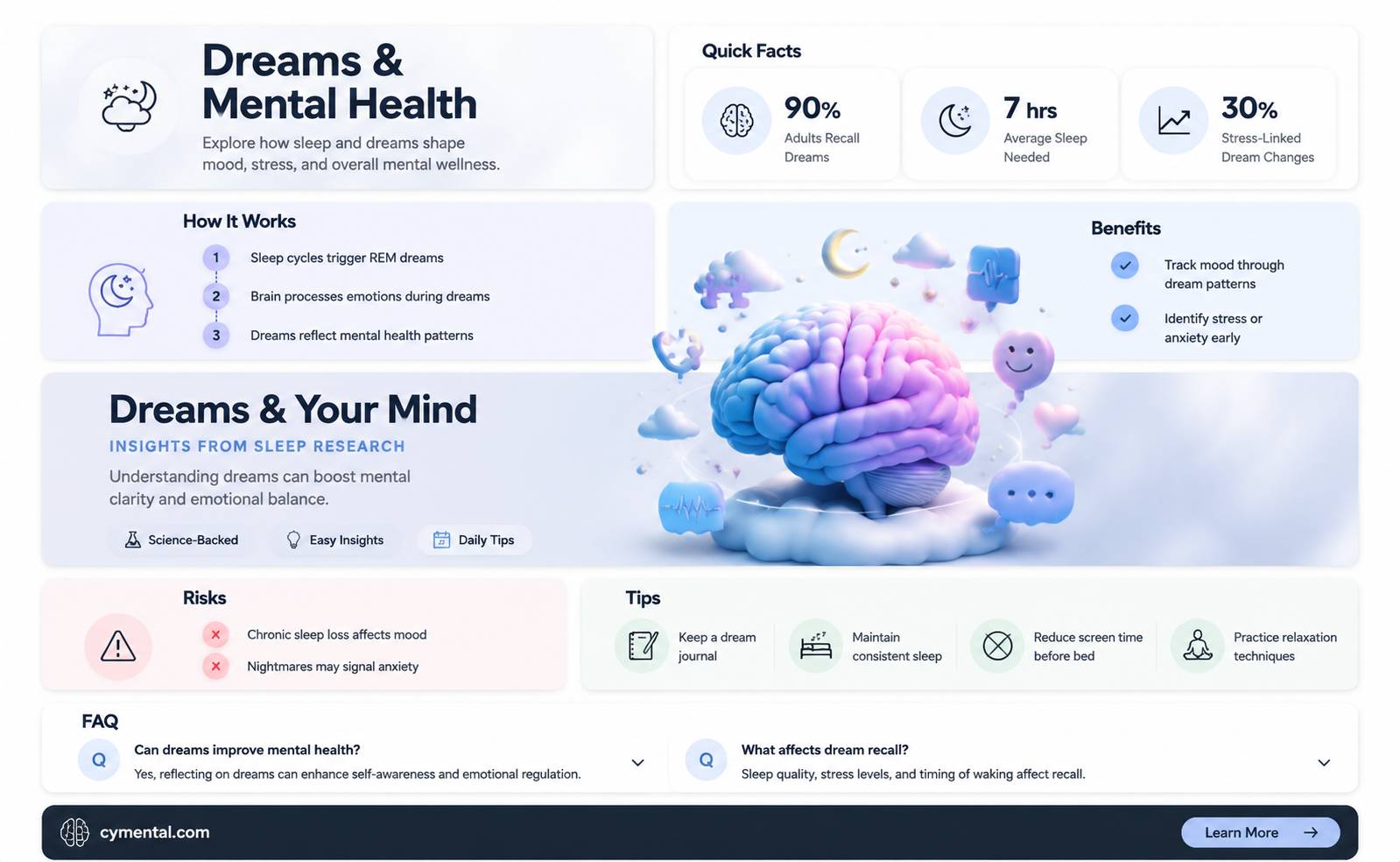
Dreams have long been a subject of fascination and speculation, with many people wondering about their impact on mental health and well-being. Research suggests that dreams can indeed have a significant effect on our mental state, influencing our emotions, thoughts, and even our behavior. For instance, vivid and recurring nightmares can lead to anxiety and stress, while positive dreams can boost our mood and self-esteem. Furthermore, dreams can serve as a reflection of our subconscious thoughts and desires, providing valuable insights into our psychological state. Understanding the complex relationship between dreams and mental health can help us better navigate our inner world and improve our overall well-being.
Explore related products


What You'll Learn
- Emotional Impact: Dreams can evoke strong emotions, influencing mood and mental well-being
- Memory Consolidation: Dreams may aid in processing and storing memories, affecting mental clarity
- Problem-Solving: Dreams can help in finding creative solutions to problems, enhancing mental flexibility
- Sleep Quality: Nightmares or vivid dreams can disrupt sleep, impacting mental health and cognition
- Psychological Insights: Dreams may reveal subconscious thoughts and desires, offering insights into mental state

Emotional Impact: Dreams can evoke strong emotions, influencing mood and mental well-being
Dreams have a profound capacity to stir emotions, often leaving us feeling exhilarated, anxious, or deeply contemplative. The emotional resonance of dreams can significantly impact our mood and mental well-being, sometimes lingering long after we've awoken. For instance, a vivid nightmare might leave us feeling unsettled and vulnerable, while a joyful dream can uplift our spirits and provide a sense of hope.
Research suggests that the emotional content of dreams is closely linked to our waking emotions and experiences. Dreams can serve as a reflection of our subconscious thoughts and feelings, offering insight into our psychological state. This emotional mirroring can be particularly powerful for individuals experiencing stress, trauma, or emotional turmoil, as dreams may amplify these feelings and bring them to the forefront of our consciousness.
Moreover, dreams can influence our mental well-being by affecting our sleep quality and overall mood. Nightmares, for example, can lead to disrupted sleep patterns, contributing to fatigue and irritability during the day. Conversely, positive dreams can enhance our mood and provide a sense of emotional relief, potentially improving our overall mental health.
It's also worth noting that dreams can have a lasting impact on our emotional state by shaping our memories and influencing our future experiences. For instance, a recurring nightmare might create a sense of dread or anxiety that persists even when we're awake, while a cherished dream memory can serve as a source of comfort and inspiration.
In conclusion, the emotional impact of dreams should not be underestimated. By understanding the complex interplay between our dreams and emotions, we can gain valuable insights into our mental well-being and develop strategies to harness the power of our dreams for emotional growth and healing.
Exploring the Link: Dehydration's Impact on Mental Health Revealed
You may want to see also
Explore related products


Memory Consolidation: Dreams may aid in processing and storing memories, affecting mental clarity
During sleep, the brain undergoes a process known as memory consolidation, where it strengthens and stabilizes memories formed during the day. Dreams play a crucial role in this process, as they allow the brain to replay and reprocess memories in a safe, simulated environment. This reprocessing helps to solidify memories and improve mental clarity, making it easier to recall information and make connections between different pieces of knowledge.
Research has shown that dreams can have a significant impact on memory consolidation. In one study, participants were asked to learn a new skill, such as playing a musical instrument or solving a puzzle. Those who dreamed about the task during the night showed improved performance the following day, compared to those who did not dream about it. This suggests that dreams can help to reinforce learning and improve memory retention.
Dreams can also help to process and store emotional memories. During REM sleep, the brain is more active and emotions are more intense, allowing for a deeper processing of emotional experiences. This can lead to a greater understanding and acceptance of emotions, which can improve mental clarity and overall well-being.
However, it is important to note that not all dreams are beneficial for memory consolidation. Nightmares, for example, can have a negative impact on mental clarity and memory retention. This is because nightmares can cause stress and anxiety, which can interfere with the normal process of memory consolidation.
In conclusion, dreams play a vital role in memory consolidation and can have a significant impact on mental clarity. By understanding the process of memory consolidation and the role that dreams play in it, we can better appreciate the importance of getting a good night's sleep and the potential benefits of dream therapy for improving mental health and cognitive function.
Exploring the Impact of Chemotherapy on Mental Well-being
You may want to see also
Explore related products

![Dream Psychology [1917]](https://m.media-amazon.com/images/I/51BurXHRXwL._AC_UY218_.jpg)


Problem-Solving: Dreams can help in finding creative solutions to problems, enhancing mental flexibility
Dreams have long been a source of fascination and mystery, but recent research suggests they may also play a crucial role in problem-solving and enhancing mental flexibility. During sleep, our brains continue to process information and consolidate memories, often making connections between seemingly unrelated concepts. This process can lead to novel insights and creative solutions that may not have been apparent during waking hours.
One study conducted by the University of California, Berkeley, found that individuals who were able to recall their dreams more vividly also demonstrated greater mental flexibility and problem-solving abilities. This suggests that dreams may serve as a kind of mental rehearsal, allowing us to explore different scenarios and outcomes in a safe, simulated environment. By engaging with our dreams, we may be able to tap into this creative potential and apply it to real-world challenges.
To harness the problem-solving power of dreams, it's essential to develop good dream recall habits. Keeping a dream journal can be an effective way to train your brain to remember dreams more vividly. Additionally, practicing mindfulness and meditation can help to quiet the mind and make it easier to access the subconscious thoughts and ideas that surface during sleep.
It's also important to note that not all dreams are created equal when it comes to problem-solving. Dreams that are more vivid, emotionally charged, and contain elements of surprise or novelty are more likely to offer creative insights. By paying attention to these types of dreams and reflecting on their symbolism and themes, we can unlock new perspectives and approaches to tackling complex problems.
In conclusion, dreams can be a valuable tool for enhancing mental flexibility and finding creative solutions to problems. By developing good dream recall habits and paying attention to the content and themes of our dreams, we can tap into this powerful resource and apply it to our waking lives.
Unveiling the Impact: Smoking and Mental Health Connection
You may want to see also
Explore related products


Sleep Quality: Nightmares or vivid dreams can disrupt sleep, impacting mental health and cognition
Nightmares and vivid dreams can significantly disrupt sleep quality, leading to a cascade of effects on mental health and cognitive function. Research indicates that poor sleep quality is linked to increased symptoms of anxiety and depression, as well as impairments in memory, attention, and decision-making abilities. When dreams are particularly distressing or intense, they can trigger the body's stress response, causing elevated heart rate, sweating, and other physiological reactions that can make it difficult to fall back asleep.
One of the key mechanisms by which nightmares and vivid dreams impact mental health is through the activation of the amygdala, the brain's emotional center. During REM sleep, when most dreaming occurs, the amygdala is highly active, processing emotions and consolidating memories. In individuals prone to nightmares, this heightened amygdala activity can lead to increased emotional reactivity and difficulty regulating emotions during waking hours.
Cognitive function is also affected by disrupted sleep caused by nightmares and vivid dreams. Studies have shown that individuals who experience frequent nightmares have poorer performance on tasks requiring sustained attention, working memory, and problem-solving skills. This is likely due to the fact that poor sleep quality impairs the brain's ability to consolidate and retrieve information, leading to cognitive deficits.
To mitigate the impact of nightmares and vivid dreams on sleep quality and mental health, several strategies can be employed. One approach is to practice relaxation techniques, such as deep breathing or progressive muscle relaxation, before bedtime to reduce stress and anxiety. Another strategy is to maintain a consistent sleep schedule and create a sleep-conducive environment, which can help regulate the body's internal clock and improve sleep quality.
In some cases, medication may be prescribed to help manage nightmares, particularly in individuals with conditions such as post-traumatic stress disorder (PTSD). However, it is important to note that medication should be used in conjunction with other therapeutic approaches, such as cognitive-behavioral therapy, to address the underlying causes of nightmares and promote long-term mental health.
In conclusion, nightmares and vivid dreams can have a significant impact on sleep quality, mental health, and cognitive function. By understanding the mechanisms by which these dreams affect the brain and employing strategies to improve sleep quality, individuals can better manage the negative effects of nightmares and promote overall well-being.
Exploring the Impact of Chronic Pain on Mental Capacity
You may want to see also
Explore related products


Psychological Insights: Dreams may reveal subconscious thoughts and desires, offering insights into mental state
Dreams have long been a subject of fascination and study in the field of psychology. Recent research suggests that our dreams may be more than just random images and sensations; they could be a window into our subconscious thoughts and desires. This idea is supported by the fact that dreams often contain symbols and themes that are personally significant to the dreamer, even if they are not immediately apparent.
One way to gain insight into our mental state through dreams is by practicing dream journaling. This involves writing down our dreams as soon as we wake up, in as much detail as possible. Over time, patterns and themes may emerge that can provide valuable information about our subconscious thoughts and feelings. For example, recurring dreams about a particular person or situation may indicate unresolved issues or unacknowledged desires.
Another approach is to engage in dream analysis with a therapist or counselor. This can help us to identify and explore the underlying emotions and conflicts that may be influencing our dreams. Techniques such as cognitive behavioral therapy for insomnia (CBT-I) can also be helpful in addressing any sleep-related issues that may be impacting our dream quality and recall.
It is important to note that while dreams can offer valuable insights into our mental state, they should not be taken as literal representations of our thoughts and desires. Dreams are complex and multifaceted, and their meanings can be influenced by a variety of factors, including our waking experiences, emotions, and even our physical health.
In conclusion, exploring our dreams can be a useful tool for gaining a deeper understanding of our subconscious thoughts and desires. By paying attention to our dreams and engaging in practices such as dream journaling and analysis, we can unlock valuable insights into our mental state and overall well-being.
Hormonal Harmony: The Intricate Link Between Hormones and Mental Health
You may want to see also
Frequently asked questions
Yes, dreams can have an impact on your mental health. While dreams are a natural part of the sleep cycle, their content can sometimes reflect underlying emotional or psychological issues. For example, recurring nightmares may be a sign of anxiety, depression, or post-traumatic stress disorder (PTSD). On the other hand, positive dreams can boost your mood and self-esteem. It's essential to pay attention to your dreams and seek professional help if they are causing you distress.
Interpreting dreams can be a complex process, as dream symbols and themes can have multiple meanings. One approach is to keep a dream journal and look for patterns or recurring themes. You can also try to identify any emotions or sensations you experienced during the dream. Some people find it helpful to consult dream interpretation books or websites, or to discuss their dreams with a therapist or counselor. Remember that dream interpretation is subjective, and what works for one person may not work for another.
Lucid dreaming, or the ability to become aware that you are dreaming while still in the dream state, can potentially improve your mental well-being. By becoming more aware of your dreams, you can learn to control them and overcome any negative or frightening elements. This can lead to a sense of empowerment and self-confidence. Additionally, lucid dreaming can help you process and work through emotional issues, leading to improved mental health.
Yes, there are several techniques that can help induce lucid dreaming. One popular method is reality checking, which involves regularly checking your surroundings to see if you are dreaming. This can help train your brain to become more aware of your dream state. Another technique is to keep a dream journal and look for patterns or recurring themes, which can help you identify when you are dreaming. Additionally, some people find that meditation, visualization, or certain supplements can help induce lucid dreaming. It's important to note that lucid dreaming takes practice and patience, and not everyone will be able to achieve it.