Madison Cole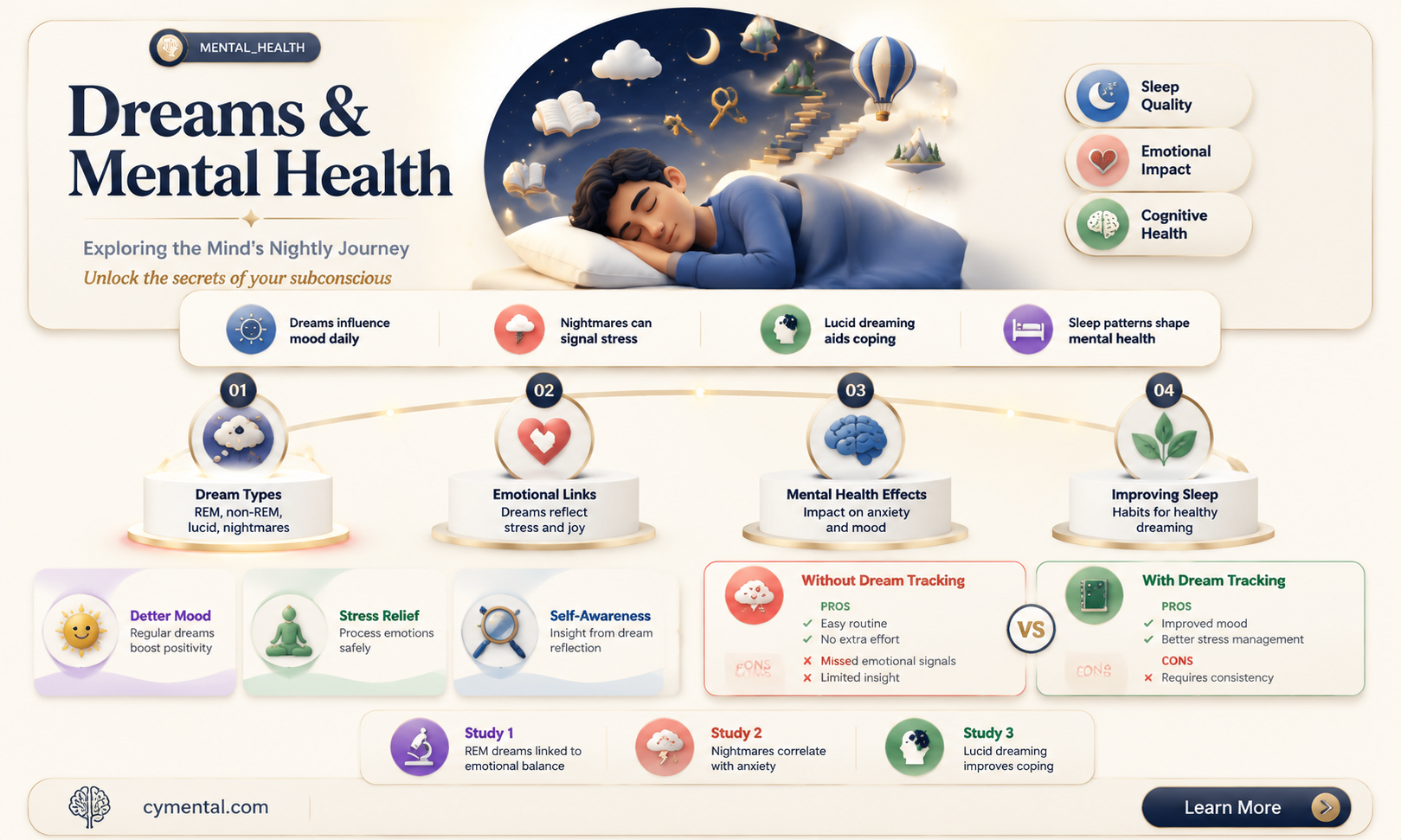
Dreams have long been a subject of fascination and speculation, with many people believing that they hold significant meaning or insight into our subconscious thoughts and emotions. But can dreams actually affect our mental health? Research suggests that dreams may play a role in processing and consolidating emotions, memories, and experiences, which can in turn impact our mood, stress levels, and overall well-being. For example, vivid or disturbing dreams can lead to increased anxiety or fear, while recurring nightmares may be a sign of underlying psychological distress. On the other hand, positive dreams can boost mood and self-esteem. While the exact mechanisms by which dreams influence mental health are still not fully understood, it is clear that they are an important aspect of our psychological lives that warrant further investigation.
Explore related products


What You'll Learn
- Emotional Processing: Dreams can help process emotions, reducing stress and anxiety by dealing with unresolved feelings
- Memory Consolidation: Dreams may strengthen memories, including traumatic ones, impacting mental health by reinforcing negative experiences
- Problem-Solving: Dreams can aid in problem-solving, offering creative solutions and insights that improve mental well-being
- Sleep Quality: Nightmares and vivid dreams can disrupt sleep, leading to fatigue and exacerbating mental health issues
- Self-Reflection: Dreams provide a platform for self-reflection, helping individuals confront and manage their inner thoughts and fears

Emotional Processing: Dreams can help process emotions, reducing stress and anxiety by dealing with unresolved feelings
Dreams serve as a nocturnal sanctuary for emotional processing, offering a unique therapeutic avenue for addressing unresolved feelings. During sleep, the brain consolidates emotional memories, often manifesting them in dream scenarios that allow for safe confrontation and resolution. This process can be particularly beneficial for individuals grappling with stress and anxiety, as it provides an opportunity to work through troubling emotions in a controlled environment.
Research suggests that dreaming can activate the brain's emotional centers, including the amygdala and hippocampus, which play crucial roles in memory formation and emotional regulation. By engaging these regions during sleep, dreams can help to diffuse intense emotions, reduce reactivity, and promote a sense of emotional balance. This is especially important for those who struggle with anxiety disorders, as it can help to alleviate the overwhelming sense of worry and fear that often accompanies such conditions.
One of the most significant benefits of dream-based emotional processing is its ability to bypass the conscious mind's defenses. In waking life, individuals may avoid confronting painful emotions or traumatic memories, but in dreams, these issues can be addressed more directly. This can lead to a greater sense of self-awareness and emotional insight, as well as improved coping mechanisms for dealing with stress and anxiety.
To harness the emotional processing power of dreams, it can be helpful to practice dream recall and reflection. Keeping a dream journal can aid in remembering and analyzing dreams, allowing individuals to identify recurring themes and unresolved emotions. Additionally, engaging in relaxation techniques before sleep, such as meditation or deep breathing exercises, can help to create a conducive environment for dreaming and emotional processing.
In conclusion, dreams offer a valuable tool for emotional processing, providing a safe and therapeutic space for addressing unresolved feelings and reducing stress and anxiety. By understanding and leveraging the emotional benefits of dreaming, individuals can improve their mental health and overall well-being.
Exploring the Complex Link Between Birth Control and Mental Health
You may want to see also
Explore related products


Memory Consolidation: Dreams may strengthen memories, including traumatic ones, impacting mental health by reinforcing negative experiences
During sleep, our brains process and consolidate memories, a crucial function for learning and emotional regulation. However, this process can also have a darker side. Research suggests that dreams can intensify traumatic memories, potentially exacerbating mental health issues such as post-traumatic stress disorder (PTSD). This phenomenon, known as memory consolidation, involves the strengthening of neural connections associated with specific memories, making them more vivid and emotionally charged.
One study published in the journal Nature Neuroscience found that during REM sleep, the brain reactivates traumatic memories, leading to increased activity in the amygdala, a region associated with fear and emotional processing. This reactivation can reinforce negative emotional responses, making it more difficult for individuals to cope with traumatic experiences. Furthermore, the study revealed that the intensity of dreams can be correlated with the severity of PTSD symptoms, suggesting that vivid, distressing dreams may be a significant factor in the development and maintenance of the disorder.
The implications of these findings are profound. They suggest that dreams are not merely a byproduct of sleep but play an active role in shaping our mental health. This knowledge could lead to the development of new therapeutic approaches aimed at reducing the impact of traumatic dreams. For example, techniques such as lucid dreaming, where individuals become aware that they are dreaming and can actively change the narrative, may offer a way to mitigate the negative effects of memory consolidation.
Moreover, these findings highlight the importance of addressing sleep disturbances in individuals with mental health issues. By improving sleep quality and reducing the frequency of traumatic dreams, it may be possible to alleviate some of the symptoms associated with PTSD and other anxiety disorders. This could involve the use of sleep aids, cognitive-behavioral therapy for insomnia, or other interventions aimed at promoting restful sleep.
In conclusion, the relationship between dreams and mental health is complex and multifaceted. While dreams can be a source of creativity and inspiration, they can also reinforce negative memories and emotions, potentially exacerbating mental health issues. By understanding the mechanisms underlying memory consolidation during sleep, we can develop new strategies for promoting mental well-being and addressing the challenges posed by traumatic dreams.
Unveiling the Mental Impact: A Deep Dive into Depressants' Effects
You may want to see also
Explore related products


Problem-Solving: Dreams can aid in problem-solving, offering creative solutions and insights that improve mental well-being
Dreams have long been a source of fascination and mystery, but recent research suggests they may play a significant role in problem-solving and mental well-being. During sleep, our brains process and consolidate information, often leading to new insights and creative solutions that may not have been apparent during waking hours. This process, known as "incubation," allows the mind to work on problems in the background, potentially leading to breakthroughs and improved mental clarity.
One study published in the journal "Sleep" found that participants who were asked to solve a complex puzzle before bed were more likely to find the solution if they dreamed about the problem. This suggests that dreams can facilitate cognitive processes that aid in problem-solving, such as pattern recognition and memory consolidation. Furthermore, the study found that participants who reported having vivid and memorable dreams were more likely to experience improved mental well-being, including reduced stress and anxiety.
The mechanism behind this phenomenon is thought to involve the activation of the brain's default mode network (DMN) during sleep. The DMN is responsible for introspection, self-reflection, and mind-wandering, and is believed to play a crucial role in creative thinking and problem-solving. During sleep, the DMN is more active, allowing the brain to make novel connections and generate new ideas that may not have been possible during waking hours.
To harness the power of dreams for problem-solving, it is important to create an environment conducive to restful sleep. This includes maintaining a consistent sleep schedule, creating a relaxing bedtime routine, and ensuring a comfortable sleep environment. Additionally, keeping a dream journal can help individuals become more aware of their dreams and identify patterns or themes that may be related to their waking life concerns.
In conclusion, dreams can be a valuable tool for problem-solving and improving mental well-being. By understanding the cognitive processes that occur during sleep and taking steps to optimize sleep quality, individuals can tap into the creative potential of their dreams and wake up to new insights and solutions.
Navigating Choices: The Impact of Stress and Mental Health on Decision-Making
You may want to see also
Explore related products





Sleep Quality: Nightmares and vivid dreams can disrupt sleep, leading to fatigue and exacerbating mental health issues
Nightmares and vivid dreams can significantly disrupt sleep quality, leading to daytime fatigue and exacerbating existing mental health issues. This disruption occurs because such dreams can cause emotional distress, increase heart rate, and elevate cortisol levels, making it difficult to fall back asleep or maintain restful sleep. Over time, this can lead to chronic sleep deprivation, which is linked to a range of mental health problems, including anxiety, depression, and cognitive impairment.
One unique angle to consider is the impact of nightmares and vivid dreams on individuals with post-traumatic stress disorder (PTSD). For these individuals, nightmares can be a common and distressing symptom, often replaying traumatic events and causing significant emotional turmoil. This can lead to a vicious cycle where the fear of having nightmares disrupts sleep, and the resulting fatigue and emotional distress worsen PTSD symptoms. Effective management of nightmares, therefore, is crucial for improving sleep quality and overall mental health in individuals with PTSD.
Another important consideration is the role of substance use in nightmare frequency and intensity. Certain substances, such as alcohol and some medications, can increase the likelihood of vivid dreams and nightmares. This is because these substances can disrupt the normal sleep cycle, leading to more frequent awakenings and a higher likelihood of remembering dreams. For individuals struggling with substance use disorders, addressing nightmare-related sleep disruptions may require a comprehensive approach that includes both mental health treatment and substance abuse counseling.
In terms of practical tips, there are several strategies that can help mitigate the impact of nightmares and vivid dreams on sleep quality. These include maintaining a consistent sleep schedule, creating a relaxing bedtime routine, avoiding stimulating activities before bed, and limiting exposure to screens. Additionally, techniques such as imagery rehearsal therapy, which involves practicing alternative, non-threatening dream scenarios, can be effective in reducing nightmare frequency and severity.
Overall, understanding the relationship between sleep quality, nightmares, and mental health is crucial for developing effective interventions and improving overall well-being. By addressing the specific factors that contribute to nightmare-related sleep disruptions, individuals can take steps to enhance their sleep quality and mitigate the negative impact of vivid dreams on their mental health.
The Pandemic's Impact: Unraveling the Mental Health Consequences
You may want to see also
Explore related products


Self-Reflection: Dreams provide a platform for self-reflection, helping individuals confront and manage their inner thoughts and fears
Dreams serve as a nocturnal canvas, painting vivid scenarios that often reflect our deepest fears, desires, and unresolved thoughts. This introspective quality of dreams can be harnessed as a tool for self-reflection, allowing individuals to confront and manage their inner psyche. By delving into the symbolism and narratives of our dreams, we can uncover hidden aspects of our mental state that may not be immediately apparent in our waking lives.
One of the primary ways dreams facilitate self-reflection is by presenting us with scenarios that trigger strong emotional responses. These emotions can range from fear and anxiety to joy and excitement, each offering a window into our subconscious mind. For instance, a recurring dream about being chased might indicate underlying fears or anxieties that need to be addressed. By acknowledging and examining these emotions within the dream state, individuals can begin to understand and manage their fears more effectively in reality.
Moreover, dreams can act as a problem-solving mechanism, providing creative solutions to challenges we face in our daily lives. The relaxed state of the brain during sleep allows for free-flowing thoughts and associations that are not bound by the logical constraints of the waking mind. This can lead to innovative insights and breakthroughs that might not have been possible through conscious deliberation alone.
To leverage the self-reflective potential of dreams, it is essential to develop the habit of dream journaling. Keeping a detailed record of dreams can help individuals identify patterns, themes, and recurring symbols that may hold significant meaning. Over time, this practice can lead to a deeper understanding of one's inner thoughts and fears, enabling more effective self-management and personal growth.
In conclusion, dreams offer a unique platform for self-reflection, allowing individuals to explore their inner thoughts and fears in a safe and controlled environment. By tapping into the symbolic language of dreams and engaging in practices like dream journaling, individuals can gain valuable insights into their mental state and develop strategies for managing their emotions and challenges more effectively.
How Your Home's Blueprint Might Be Impacting Your Mental Well-being
You may want to see also
Frequently asked questions
While dreams themselves are a natural part of the sleep cycle and generally do not directly impact mental health, the content and emotions experienced in dreams can sometimes influence your mood and thoughts upon waking. Recurring nightmares or distressing dreams may contribute to anxiety or stress, while positive dreams can boost mood.
Nightmares can be a symptom of various mental health conditions, such as post-traumatic stress disorder (PTSD), anxiety, or depression. However, they can also occur without any underlying mental health issue, particularly in response to stress or trauma. If nightmares are frequent and interfere with sleep, it may be helpful to consult a healthcare professional.
Lucid dreaming, where the dreamer is aware they are dreaming, can potentially be beneficial for mental health. It may help individuals develop better control over their dreams, reducing the impact of nightmares. Additionally, lucid dreaming can foster a sense of empowerment and self-awareness, which can be positive for overall mental well-being.
To improve dream recall, try keeping a dream journal by your bed and writing down your dreams as soon as you wake up. This practice can help you remember dreams more vividly and identify recurring themes or patterns. Understanding dreams often involves exploring personal associations and emotions connected to the dream content, and reflecting on how these might relate to your waking life.
Yes, there are therapies and treatments that can help address dream-related mental health concerns. Cognitive-behavioral therapy for insomnia (CBT-I) can be effective in reducing nightmares and improving sleep quality. Additionally, exposure therapy and relaxation techniques may help individuals cope with distressing dreams. Consulting a mental health professional can provide guidance on appropriate treatments based on individual needs.