Noah Parker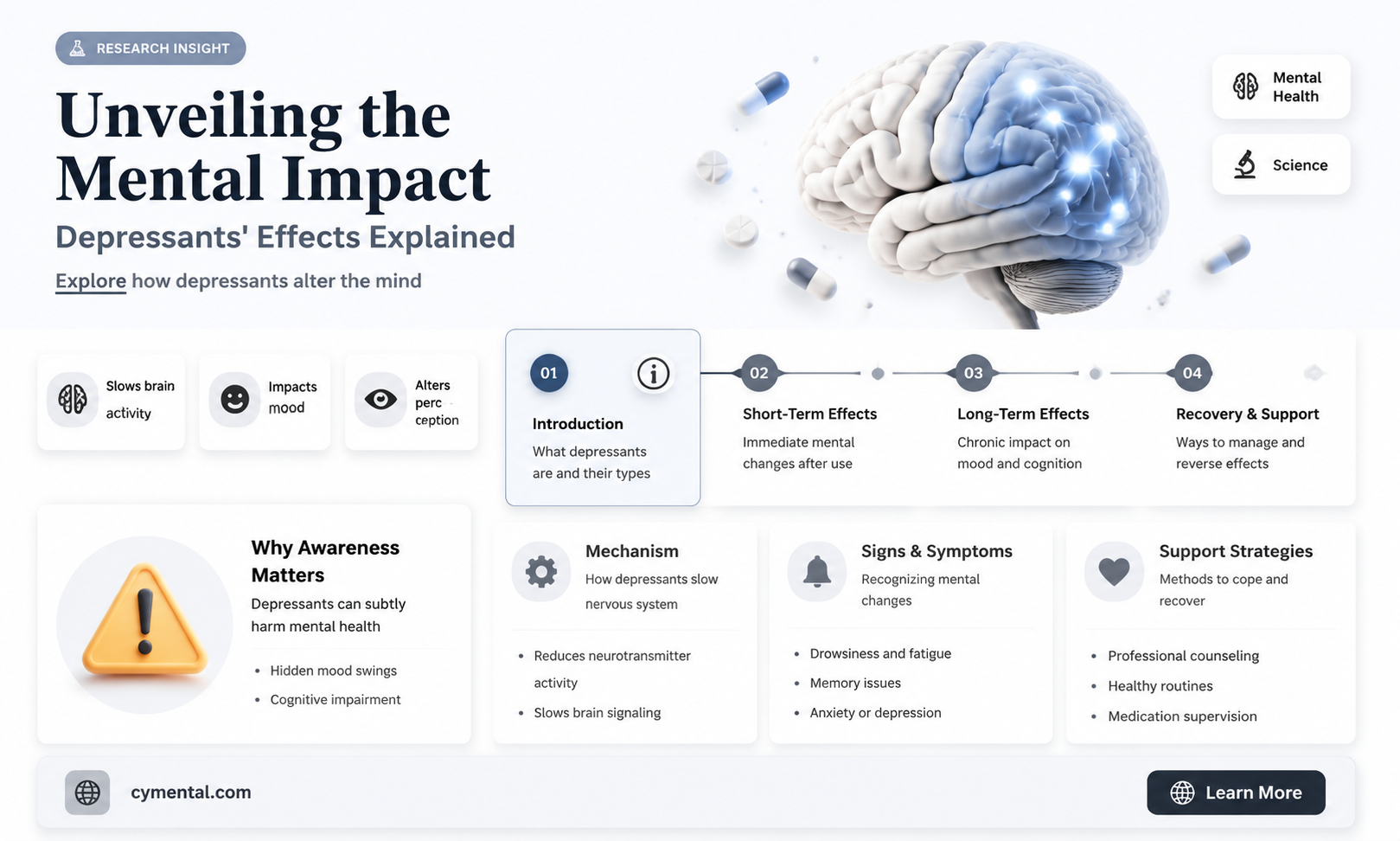
Depressants, a class of psychoactive substances, can significantly impact an individual's mental health. These substances, which include alcohol, barbiturates, and benzodiazepines, work by slowing down the central nervous system. While they may provide short-term relief from anxiety or stress, prolonged use can lead to a range of negative mental health effects. Dependence and addiction are common risks, as the brain can become accustomed to the presence of these substances, making it difficult to function without them. Furthermore, depressants can exacerbate underlying mental health conditions, such as depression and anxiety disorders, and may even increase the risk of suicidal thoughts and behaviors. It is crucial to understand the potential mental health implications of depressant use and to seek professional help if needed.
| Characteristics | Values |
|---|---|
| Mood | Depressed, sad, or hopeless |
| Energy | Fatigued or lacking motivation |
| Sleep | Insomnia or hypersomnia |
| Appetite | Decreased or increased |
| Concentration | Difficulty focusing or making decisions |
| Memory | Impaired or forgetful |
| Thoughts | Negative or suicidal ideation |
| Emotions | Numb or irritable |
| Social Interaction | Withdrawn or isolated |
| Physical Symptoms | Headaches, stomachaches, or muscle pain |
What You'll Learn
- Mood Alteration: Depressants can deepen feelings of sadness, hopelessness, and emptiness, intensifying depressive episodes
- Cognitive Impairment: These substances may hinder concentration, memory, and decision-making abilities, leading to mental fog
- Anxiety and Fear: Paradoxically, depressants can heighten anxiety levels, causing panic attacks and irrational fears
- Sleep Disturbances: Depressants often disrupt sleep patterns, leading to insomnia or hypersomnia, further affecting mental health
- Suicidal Thoughts: In severe cases, the mental strain from depressants can culminate in suicidal ideation and attempts

Mood Alteration: Depressants can deepen feelings of sadness, hopelessness, and emptiness, intensifying depressive episodes
Depressants, a class of psychoactive substances, are known for their ability to slow down brain activity. While they may provide temporary relief from anxiety or stress, their impact on mood can be profound and detrimental. One of the most concerning effects of depressants is their tendency to deepen feelings of sadness, hopelessness, and emptiness, which can intensify depressive episodes.
This mood alteration occurs because depressants affect the levels of certain neurotransmitters in the brain, such as serotonin and norepinephrine, which play a crucial role in regulating mood. When these neurotransmitter levels are disrupted, it can lead to a significant decline in mental well-being. Individuals may find themselves experiencing more frequent and severe episodes of depression, characterized by persistent feelings of sadness, loss of interest in activities, and a general sense of worthlessness.
The risk of mood alteration is particularly high for those who already struggle with depression or have a history of mental health issues. Depressants can exacerbate these conditions, making symptoms more severe and treatment more challenging. Furthermore, the development of tolerance to depressants can lead to increased consumption, which in turn can worsen mood symptoms and create a vicious cycle of dependency and despair.
It is essential for individuals to be aware of the potential risks associated with depressant use, especially if they have a history of depression or other mental health concerns. Seeking professional help and exploring alternative treatment options, such as therapy or medication with a lower risk of mood alteration, can be crucial steps in managing mental health effectively.
In conclusion, while depressants may offer short-term relief from certain symptoms, their long-term impact on mood can be devastating. Understanding the risks and seeking appropriate support is vital for those struggling with mental health issues, as it can help prevent the deepening of feelings of sadness, hopelessness, and emptiness that can result from depressant use.
The Unseen Impact: How Injuries Shape Athletes' Mental Health
You may want to see also
Cognitive Impairment: These substances may hinder concentration, memory, and decision-making abilities, leading to mental fog
Depressants, a class of psychoactive substances, can significantly impact cognitive functions. One of the primary ways they affect individuals is by impairing concentration. This can manifest as difficulty focusing on tasks, easily getting distracted, or struggling to maintain attention for extended periods. Such concentration issues can lead to decreased productivity and performance in both professional and personal settings.
Memory is another critical cognitive function affected by depressants. These substances can interfere with the formation of new memories and the retrieval of existing ones. This may result in forgetfulness, misplacing items, or struggling to recall important information. In severe cases, it can lead to conditions like anterograde amnesia, where individuals cannot form new memories.
Decision-making abilities are also hindered by depressants. This impairment can range from difficulty making simple choices, like what to eat, to more complex decisions involving financial or personal matters. The reduced ability to weigh options, consider consequences, and make informed choices can lead to poor decision-making, which may have long-term negative effects on an individual's life.
The cumulative effect of these cognitive impairments is often referred to as "mental fog." This term encapsulates the overall feeling of confusion, disorientation, and decreased mental clarity that can result from depressant use. Mental fog can make everyday tasks feel overwhelming and can significantly reduce an individual's quality of life.
It's important to note that the severity of cognitive impairment can vary depending on factors such as the type of depressant, dosage, duration of use, and individual tolerance. However, even in mild cases, these effects can be disruptive and warrant attention. Understanding these risks is crucial for individuals who use depressants, as well as for healthcare providers and caregivers who support them.
The Silent Struggle: Poverty's Impact on Mental Health
You may want to see also
Anxiety and Fear: Paradoxically, depressants can heighten anxiety levels, causing panic attacks and irrational fears
Depressants, commonly prescribed to alleviate symptoms of anxiety and stress, can paradoxically exacerbate these very symptoms in some individuals. This phenomenon is particularly concerning as it can lead to heightened anxiety levels, panic attacks, and the development of irrational fears. The mechanism behind this effect is complex and multifaceted, involving changes in brain chemistry and the body's response to stress.
One possible explanation for this paradoxical effect is the impact of depressants on the brain's GABA (gamma-aminobutyric acid) receptors. While these medications are intended to enhance the inhibitory effects of GABA, thereby reducing anxiety, they can sometimes have the opposite effect. In certain individuals, depressants may lead to a downregulation of GABA receptors, resulting in increased anxiety and fear responses. This can create a vicious cycle, where the medication intended to alleviate anxiety actually worsens the symptoms.
Furthermore, depressants can also affect the body's stress response system, particularly the hypothalamic-pituitary-adrenal (HPA) axis. Chronic use of these medications can lead to an overactive HPA axis, resulting in increased cortisol levels and heightened anxiety. This effect can be particularly pronounced in individuals with a history of trauma or stress, as their HPA axis may already be dysregulated.
In addition to these physiological effects, depressants can also contribute to the development of irrational fears and phobias. This may occur as a result of the medication's impact on cognitive functioning, particularly in the areas of attention and memory. Depressants can impair the ability to focus and process information, leading to distorted perceptions and the formation of irrational fears.
It is crucial for healthcare providers to be aware of these potential side effects when prescribing depressants for anxiety. Close monitoring of patients is essential, and alternative treatments should be considered if anxiety symptoms worsen. Cognitive-behavioral therapy (CBT) and other non-pharmacological interventions can be effective in addressing anxiety and fear, particularly in cases where depressants have been ineffective or have exacerbated symptoms.
In conclusion, while depressants can be a valuable tool in the treatment of anxiety, their potential to heighten anxiety levels and cause panic attacks and irrational fears must be carefully considered. A comprehensive understanding of the underlying mechanisms and individual patient factors is essential for safe and effective treatment.
Unveiling the Impact: Mental Health's Influence on Daily Living
You may want to see also
Sleep Disturbances: Depressants often disrupt sleep patterns, leading to insomnia or hypersomnia, further affecting mental health
Depressants, commonly prescribed to manage anxiety and sleep disorders, can paradoxically disrupt sleep patterns, leading to a vicious cycle of mental health issues. This disruption manifests as either insomnia, where individuals struggle to fall asleep or stay asleep, or hypersomnia, characterized by excessive daytime sleepiness and prolonged nighttime sleep. Both conditions can exacerbate underlying mental health problems, making it crucial to understand and address these sleep disturbances.
Insomnia, often caused by the stimulating effects of depressants on the central nervous system, can lead to a range of mental health complications. These include increased anxiety, irritability, and cognitive impairment, which can further deteriorate a person's quality of life. On the other hand, hypersomnia, resulting from the sedative properties of depressants, can cause individuals to feel groggy and disoriented upon waking, leading to difficulties in concentration and memory retention. This can significantly impact daily functioning and overall mental well-being.
To mitigate these effects, it is essential to adopt a multifaceted approach. Firstly, individuals should consult their healthcare providers to discuss potential adjustments to their medication regimen. This may involve reducing the dosage, switching to a different medication with fewer sleep-disrupting side effects, or incorporating additional treatments such as cognitive-behavioral therapy for insomnia (CBT-I). Secondly, establishing a consistent sleep schedule and creating a relaxing bedtime routine can help regulate sleep patterns. This includes avoiding caffeine and alcohol close to bedtime, as well as limiting exposure to screens and engaging in regular physical activity.
Moreover, it is important to address any underlying mental health conditions that may be contributing to sleep disturbances. This can involve seeking professional help for anxiety, depression, or other disorders, and engaging in evidence-based treatments such as psychotherapy or medication management. By taking a comprehensive approach that addresses both the sleep disturbances and the underlying mental health issues, individuals can improve their overall well-being and quality of life.
In conclusion, the impact of depressants on sleep patterns is a significant concern that requires careful attention and management. By understanding the mechanisms behind these sleep disturbances and implementing targeted interventions, individuals can break the cycle of mental health issues exacerbated by disrupted sleep. This highlights the importance of a holistic approach to mental health care, one that considers the complex interplay between medication, sleep, and overall well-being.
The Impact of Beauty Standards on Mental Health: A Comprehensive Look
You may want to see also
Suicidal Thoughts: In severe cases, the mental strain from depressants can culminate in suicidal ideation and attempts
Suicidal thoughts can emerge as a severe consequence of the mental strain caused by depressants. This risk is particularly heightened in individuals who are already predisposed to mental health issues or who have a history of substance abuse. The insidious nature of depressants, which can gradually worsen symptoms of depression and anxiety, often leads individuals down a path where they feel increasingly hopeless and helpless.
One of the most alarming aspects of depressant-induced suicidal thoughts is that they can occur even in individuals who have never previously experienced suicidal ideation. This underscores the critical importance of monitoring mental health changes in anyone using depressants, especially during the initial stages of treatment or when dosages are altered. Healthcare providers must be vigilant in assessing for signs of suicidal thoughts, such as changes in mood, increased withdrawal, or expressions of hopelessness.
In addition to the direct impact of depressants on mental health, there are several indirect factors that can exacerbate the risk of suicidal thoughts. For instance, the social isolation that often accompanies substance abuse can further erode an individual's support network, leaving them feeling alone and without resources. Moreover, the physical health consequences of depressant use, such as chronic pain or sleep disturbances, can contribute to a sense of overall well-being that makes suicidal thoughts more appealing.
Preventing suicidal thoughts in individuals using depressants requires a multifaceted approach. Firstly, it is essential to ensure that mental health professionals are involved in the treatment plan from the outset, providing regular monitoring and support. Secondly, individuals should be educated about the potential risks of depressant use and encouraged to report any changes in their mental state. Finally, fostering a strong support network and promoting healthy lifestyle choices can help mitigate the risk of suicidal thoughts by improving overall well-being and resilience.
In conclusion, the risk of suicidal thoughts is a serious concern for individuals using depressants, particularly in severe cases where mental strain is already high. By understanding the complex interplay between depressant use, mental health, and social factors, we can develop more effective strategies for preventing and addressing this critical issue.
Exploring the Complex Link Between Abortion and Mental Health
You may want to see also
Frequently asked questions
Depressants are a class of drugs that slow down the central nervous system. They can affect the brain by reducing the activity of certain neurotransmitters, leading to a decrease in alertness, reaction time, and motor skills.
Yes, long-term use of depressants can lead to mental health issues such as depression, anxiety, and sleep disorders. They can also exacerbate existing mental health conditions.
Depressants can impact mood and emotions by altering the balance of neurotransmitters in the brain. This can lead to feelings of sadness, hopelessness, and a lack of motivation.
Some common examples of depressants include alcohol, barbiturates, and benzodiazepines. These substances are often used to treat anxiety and sleep disorders, but they can also be misused and lead to dependence.