Ava Ramirez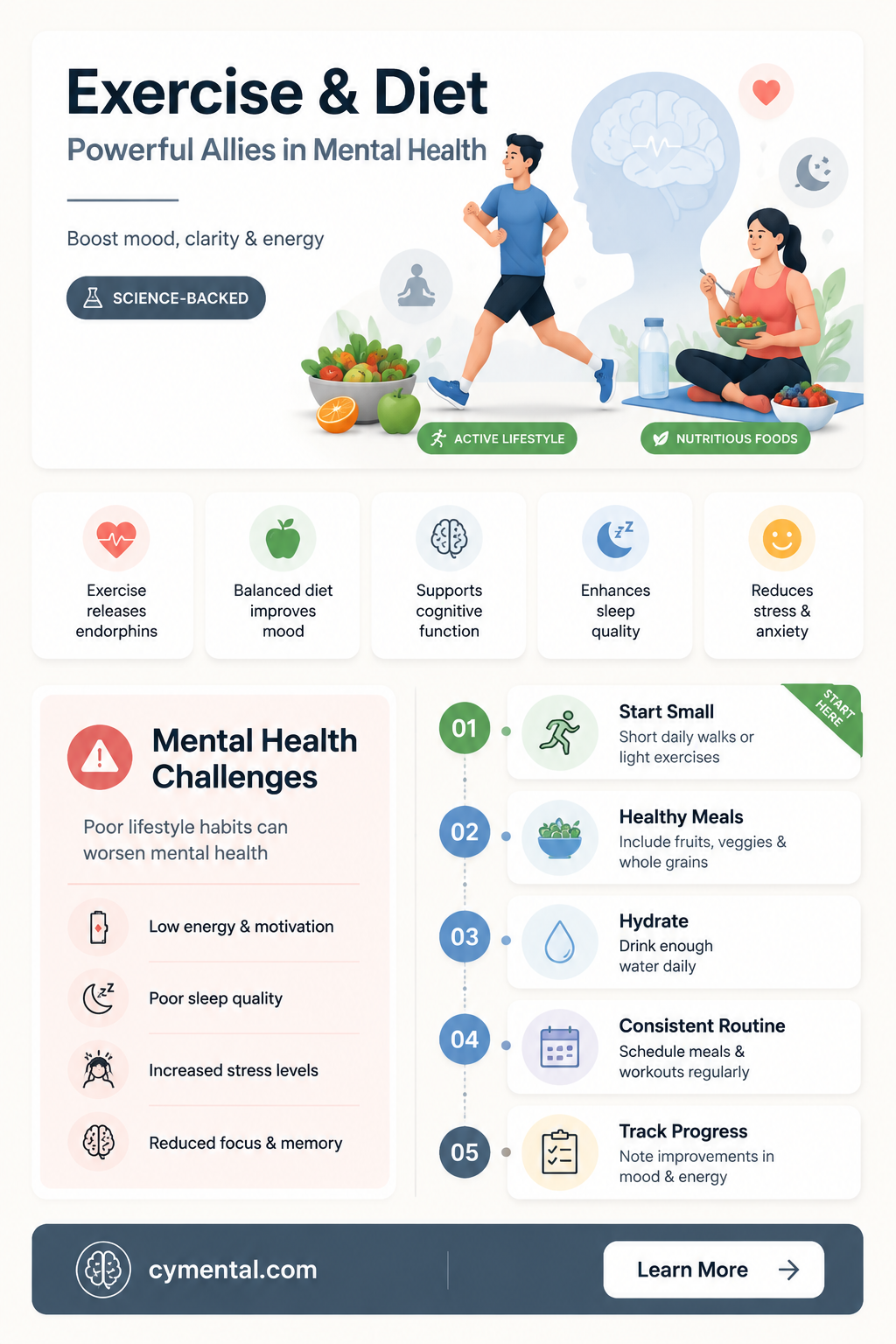
Exercise and diet are increasingly recognized as powerful tools in managing mental illness, complementing traditional therapies like medication and psychotherapy. Physical activity, such as aerobic exercise, has been shown to reduce symptoms of depression and anxiety by releasing endorphins, improving sleep, and boosting self-esteem. Similarly, a balanced diet rich in nutrients like omega-3 fatty acids, vitamins, and minerals can support brain health and stabilize mood. Research suggests that these lifestyle changes may help alleviate symptoms of conditions like depression, anxiety, and even ADHD, while also reducing the risk of chronic mental health issues. By incorporating regular exercise and mindful eating habits, individuals can take a proactive approach to mental well-being, fostering resilience and improving overall quality of life.
| Characteristics | Values |
|---|---|
| Impact on Depression | Regular exercise (e.g., aerobic, resistance training) significantly reduces symptoms of depression, comparable to antidepressants in mild to moderate cases. Dietary patterns like the Mediterranean diet, rich in omega-3s, vitamins, and minerals, are linked to lower depression risk. |
| Effect on Anxiety | Exercise, particularly mindfulness-based movement (e.g., yoga, tai chi), reduces anxiety symptoms by regulating stress hormones like cortisol. Diets low in processed foods and high in magnesium, zinc, and probiotics improve gut-brain health, reducing anxiety. |
| Role in Stress Management | Physical activity increases endorphins, reduces stress hormones, and improves sleep quality. Anti-inflammatory diets (e.g., whole foods, low sugar) mitigate stress-induced inflammation. |
| Cognitive Benefits | Exercise enhances neuroplasticity, memory, and executive function via increased BDNF (brain-derived neurotrophic factor). Diets rich in antioxidants (e.g., berries, nuts) protect against cognitive decline. |
| Impact on ADHD | Regular exercise improves focus, impulse control, and reduces hyperactivity by boosting dopamine and norepinephrine. Diets eliminating artificial additives and high in protein/healthy fats support ADHD management. |
| Effect on PTSD | Exercise, especially aerobic activities, reduces PTSD symptoms by regulating the hypothalamic-pituitary-adrenal (HPA) axis. Omega-3-rich diets and vitamin D supplementation aid recovery. |
| Role in Bipolar Disorder | Structured exercise stabilizes mood and reduces manic/depressive episodes. Low-glycemic diets minimize blood sugar fluctuations, supporting mood regulation. |
| Influence on Schizophrenia | Exercise improves cognitive deficits and reduces antipsychotic side effects. Anti-inflammatory diets (e.g., turmeric, leafy greens) may alleviate symptoms. |
| Gut-Brain Axis | Dietary fiber, prebiotics, and probiotics (e.g., fermented foods) improve gut microbiome, reducing inflammation and mental health symptoms. |
| Long-Term Benefits | Consistent exercise and healthy eating reduce the risk of chronic mental illness, improve resilience, and enhance overall quality of life. |
| Mechanisms | Exercise increases neurotransmitters (serotonin, dopamine), reduces inflammation, and promotes hippocampal growth. Diet modulates inflammation, oxidative stress, and mitochondrial function. |
| Limitations | Exercise and diet are adjunctive treatments, not replacements for therapy or medication. Individual responses vary based on genetics, severity, and adherence. |
| Latest Research (2023) | Studies emphasize personalized nutrition (e.g., based on genetic profiles) and combined exercise-diet interventions for optimal mental health outcomes. |
Explore related products



What You'll Learn

Physical Activity and Mood Regulation
Regular physical activity isn't just about building muscle or losing weight; it's a powerful tool for regulating mood and alleviating symptoms of mental illness. Numerous studies have demonstrated that exercise can reduce anxiety, depression, and stress while improving overall emotional well-being. This effect is attributed to the release of endorphins, often referred to as "feel-good" hormones, which act as natural painkillers and mood elevators. Even moderate exercise, such as a 30-minute brisk walk, can trigger this response, making it an accessible and cost-effective intervention for mental health.
Consider the case of individuals with mild to moderate depression. Research suggests that engaging in aerobic exercise, like jogging or cycling, for 30 minutes, three to five times a week, can significantly reduce depressive symptoms. This is comparable to the effects of some antidepressant medications, though without the potential side effects. For older adults, low-impact activities such as swimming or yoga can be equally beneficial, improving not only mood but also cognitive function and overall quality of life. The key is consistency; regular exercise builds resilience against mood fluctuations over time.
However, incorporating physical activity into a mental health routine isn’t always straightforward. For those experiencing severe depression or anxiety, starting an exercise regimen can feel overwhelming. In such cases, breaking activities into smaller, manageable chunks—like 10-minute sessions—can make the task less daunting. Pairing exercise with social interaction, such as joining a group fitness class or walking with a friend, can also enhance motivation and enjoyment. It’s essential to choose activities that align with personal interests and abilities to ensure long-term adherence.
While exercise is a potent mood regulator, it’s not a one-size-fits-all solution. Factors like age, fitness level, and the specific mental health condition play a role in determining the most effective approach. For instance, mindfulness-based exercises like tai chi or qigong may be particularly beneficial for individuals with anxiety disorders, as they combine physical movement with relaxation techniques. Conversely, high-intensity interval training (HIIT) might be more suitable for those seeking a quick endorphin boost. Consulting a healthcare professional can help tailor an exercise plan to individual needs.
Incorporating physical activity into daily life doesn’t require a gym membership or expensive equipment. Simple changes, like taking the stairs instead of the elevator, walking during lunch breaks, or doing bodyweight exercises at home, can accumulate significant mental health benefits. The goal is to make movement a habitual part of one’s routine, rather than a chore. By doing so, exercise becomes not just a tool for mood regulation, but a sustainable practice that fosters overall mental and emotional resilience.
Boost Focus and Calm: Strategies for Achieving Mental Clarity
You may want to see also
Explore related products


Nutrition’s Impact on Brain Health
The brain, a voracious energy consumer, demands a constant supply of nutrients to function optimally. Its intricate network of neurons relies on a delicate balance of vitamins, minerals, and fatty acids to transmit signals, regulate mood, and forge memories. Neglecting this nutritional foundation can have profound consequences, potentially exacerbating symptoms of mental illness.
Imagine a car attempting to run on low-grade fuel; it sputters, stalls, and ultimately fails. Similarly, a brain deprived of essential nutrients struggles to perform its complex tasks, leaving individuals vulnerable to anxiety, depression, and cognitive decline.
Consider the role of omega-3 fatty acids, found abundantly in fatty fish like salmon and sardines. These essential fats are building blocks for brain cell membranes, facilitating communication between neurons. Studies suggest that omega-3 deficiency is linked to an increased risk of depression and cognitive impairment. Aiming for at least two servings of fatty fish per week, or supplementing with fish oil capsules (consulting a healthcare professional for dosage), can be a powerful step towards supporting brain health.
Similarly, the B-vitamin complex plays a crucial role in neurotransmitter production, the brain's chemical messengers. Deficiencies in vitamins like B6, B9 (folate), and B12 have been associated with depression, anxiety, and even dementia. Incorporating leafy greens, whole grains, and lean proteins into your diet ensures an adequate intake of these vital nutrients.
However, it's not just about individual nutrients; it's about the symphony of a balanced diet. The Mediterranean diet, rich in fruits, vegetables, whole grains, and healthy fats, has been consistently linked to reduced risk of depression and improved cognitive function. This dietary pattern emphasizes whole, unprocessed foods, minimizing the intake of refined sugars and saturated fats, which can promote inflammation and negatively impact brain health.
Think of your diet as a toolkit for brain optimization. Each nutrient, each food choice, contributes to the overall resilience and functionality of this vital organ. By prioritizing a nutrient-rich diet, you're not just feeding your body; you're nourishing your mind, fostering a foundation for mental well-being and cognitive vitality.
Creatine's Surprising Role in Boosting Mental Health and Well-Being
You may want to see also
Explore related products


$14.59 $18.99



Exercise as Anxiety Relief
Physical activity has a profound impact on anxiety, often rivaling medication in its effectiveness. Studies show that regular exercise can reduce symptoms of anxiety by up to 20%, with aerobic exercises like jogging, swimming, or cycling being particularly potent. The key lies in its ability to regulate stress hormones, such as cortisol, while boosting endorphins, the body’s natural mood elevators. For instance, a 30-minute brisk walk five days a week can significantly lower anxiety levels, making it a simple yet powerful tool for mental health management.
To harness exercise as anxiety relief, consistency is crucial. Aim for at least 150 minutes of moderate-intensity exercise weekly, as recommended by the World Health Organization. Breaking this into smaller, manageable sessions—like three 10-minute bursts of activity daily—can be just as effective. Incorporate mindfulness during workouts, such as focusing on your breath or the rhythm of your movements, to amplify the calming effects. For those new to exercise, start slow; even gentle activities like yoga or tai chi can provide immediate relief while building stamina for more intense routines.
Not all exercises are created equal when it comes to anxiety relief. High-intensity interval training (HIIT) may exacerbate stress in some individuals, while steady-state cardio or strength training often yields more consistent results. Age and fitness level play a role too: younger adults might benefit from dynamic activities like dance or team sports, while older adults may find low-impact exercises like swimming or walking more sustainable. Experiment with different types to discover what works best for your body and mind.
Practical tips can make integrating exercise into your routine seamless. Schedule workouts as non-negotiable appointments, just like work meetings or doctor visits. Pair exercise with activities you enjoy, such as listening to music or podcasts, to make it more engaging. Keep equipment minimal—a pair of sneakers and a yoga mat can suffice for many routines. Finally, track progress not just in physical changes but in how you feel emotionally; noticing reduced anxiety can be a powerful motivator to keep going.
While exercise is a cornerstone of anxiety relief, it’s not a standalone solution. Combine it with other strategies like deep breathing, adequate sleep, and a balanced diet for comprehensive mental health support. Remember, the goal isn’t perfection but progress. Even on days when anxiety feels overwhelming, a short walk or stretch can make a difference. Over time, exercise becomes not just a remedy but a ritual, fostering resilience and calm in the face of life’s stressors.
Finding Support: A Guide to Getting Help for Schizophrenia
You may want to see also
Explore related products




Dietary Supplements for Mental Health
Omega-3 fatty acids, particularly EPA and DHA, are among the most researched dietary supplements for mental health. Studies suggest they can alleviate symptoms of depression and anxiety, with dosages ranging from 1,000 to 2,000 mg daily often recommended for adults. For children and adolescents, consult a healthcare provider for age-appropriate dosing. Incorporate omega-3-rich foods like fatty fish (salmon, mackerel) alongside supplements for optimal results, as dietary sources enhance absorption and overall efficacy.
Next, consider vitamin D, often referred to as the "sunshine vitamin." Deficiency is linked to mood disorders, including depression and seasonal affective disorder (SAD). Adults typically benefit from 1,000 to 4,000 IU daily, though blood tests can guide personalized dosing. Pair supplementation with sunlight exposure (10–30 minutes daily) and dietary sources like fortified dairy or egg yolks. Caution: Excessive intake can lead to toxicity, so avoid exceeding 4,000 IU without medical supervision.
Magnesium glycinate or threonate supplements are gaining attention for their role in reducing anxiety and improving sleep quality. A daily dose of 200–400 mg is commonly recommended for adults, taken in the evening to promote relaxation. For those with digestive sensitivity, start with lower doses and gradually increase. Magnesium-rich foods (spinach, almonds, black beans) can complement supplementation, but the bioavailability of supplemental forms like glycinate is often superior for mental health benefits.
Probiotics, specifically strains like *Lactobacillus* and *Bifidobacterium*, are emerging as allies in mental health due to the gut-brain axis. Look for products with at least 10 billion CFUs (colony-forming units) and take them consistently for 4–6 weeks to observe effects. Pair probiotics with prebiotic-rich foods (garlic, bananas, oats) to nourish beneficial gut bacteria. While generally safe, individuals with compromised immune systems should consult a healthcare provider before starting.
Finally, S-adenosylmethionine (SAM-e) is a lesser-known but potent supplement for depression, often compared to prescription antidepressants in efficacy. Adults typically start with 400–800 mg daily, gradually increasing under professional guidance. SAM-e works best when paired with vitamin B12 and folate, as these nutrients support its metabolic pathway. Note: It may interact with medications, so always consult a healthcare provider before use.
Incorporating these supplements thoughtfully, alongside a balanced diet and lifestyle, can offer meaningful support for mental health. However, they are not a substitute for professional treatment—use them as adjunctive tools in a comprehensive care plan.
Supporting Loved Ones: Practical Ways to Help Family with Mental Illness
You may want to see also
Explore related products


Lifestyle Changes vs. Medication
Exercise and diet aren’t just buzzwords for physical health—they’re increasingly recognized as powerful tools in managing mental illness. Studies show that regular physical activity can reduce symptoms of depression and anxiety by up to 26%, while a Mediterranean diet rich in omega-3s, whole grains, and vegetables has been linked to a 30% lower risk of depression. These lifestyle changes don’t replace medication but can complement it, offering a holistic approach to mental health.
Consider this: a 30-minute brisk walk five days a week can boost serotonin and endorphin levels, which are often depleted in depression. Pair that with a diet low in processed foods and high in leafy greens, nuts, and fatty fish, and you’ve got a recipe for improved mood regulation. For instance, a 2019 study in *JAMA Psychiatry* found that participants with moderate depression who followed a structured diet and exercise plan saw significant symptom reduction after 12 weeks. However, these changes require consistency—think of them as daily prescriptions for mental wellness.
Medication, on the other hand, acts faster and more directly on brain chemistry. Antidepressants like SSRIs can increase serotonin availability within weeks, often providing relief when lifestyle changes alone feel insufficient. For severe cases, medication is often non-negotiable. But here’s the catch: side effects like weight gain, fatigue, or emotional numbing can deter long-term use. A 2020 review in *The Lancet* highlighted that while 40-60% of patients respond to first-line antidepressants, many discontinue due to intolerance or incomplete symptom relief.
The key lies in integration. For mild to moderate conditions, starting with lifestyle changes can delay or reduce the need for medication. For example, adolescents with anxiety may benefit from mindfulness-based yoga and a reduced sugar diet before trying SSRIs. Adults with bipolar disorder, however, often require mood stabilizers but can use exercise to manage stress and sleep patterns. Always consult a healthcare provider to tailor this balance—combining a 10 mg daily dose of Lexapro with a structured fitness routine might work better than either alone.
Practicality matters. Not everyone has access to fresh produce or a gym, and mental illness itself can sap the energy needed to cook or exercise. Start small: swap sugary snacks for berries, take a 10-minute walk daily, or try free online yoga videos. Apps like MyFitnessPal or Headspace can track progress and keep motivation high. Remember, lifestyle changes are a marathon, not a sprint, while medication provides immediate support. Together, they create a sustainable framework for mental health—one that acknowledges the complexity of the mind-body connection.
Accessing Mental Health Support: Affordable Options for the Uninsured
You may want to see also
Frequently asked questions
Yes, exercise and diet can significantly support mental health. Regular physical activity releases endorphins, reduces stress hormones, and improves mood, while a balanced diet provides essential nutrients that support brain function and emotional well-being.
Aerobic exercises like walking, running, swimming, and cycling are particularly effective for reducing symptoms of anxiety and depression. Mind-body practices such as yoga and tai chi can also improve mental clarity and reduce stress.
A diet rich in fruits, vegetables, whole grains, lean proteins, and healthy fats (like omega-3 fatty acids) supports brain health and reduces inflammation, which is linked to mental health conditions. Avoiding processed foods, sugar, and excessive caffeine can also help stabilize mood.
Improvements can vary, but many people notice positive changes within a few weeks of consistent exercise and dietary adjustments. Long-term benefits, such as reduced symptoms of depression or anxiety, may take several months of sustained effort.