Harper Lewis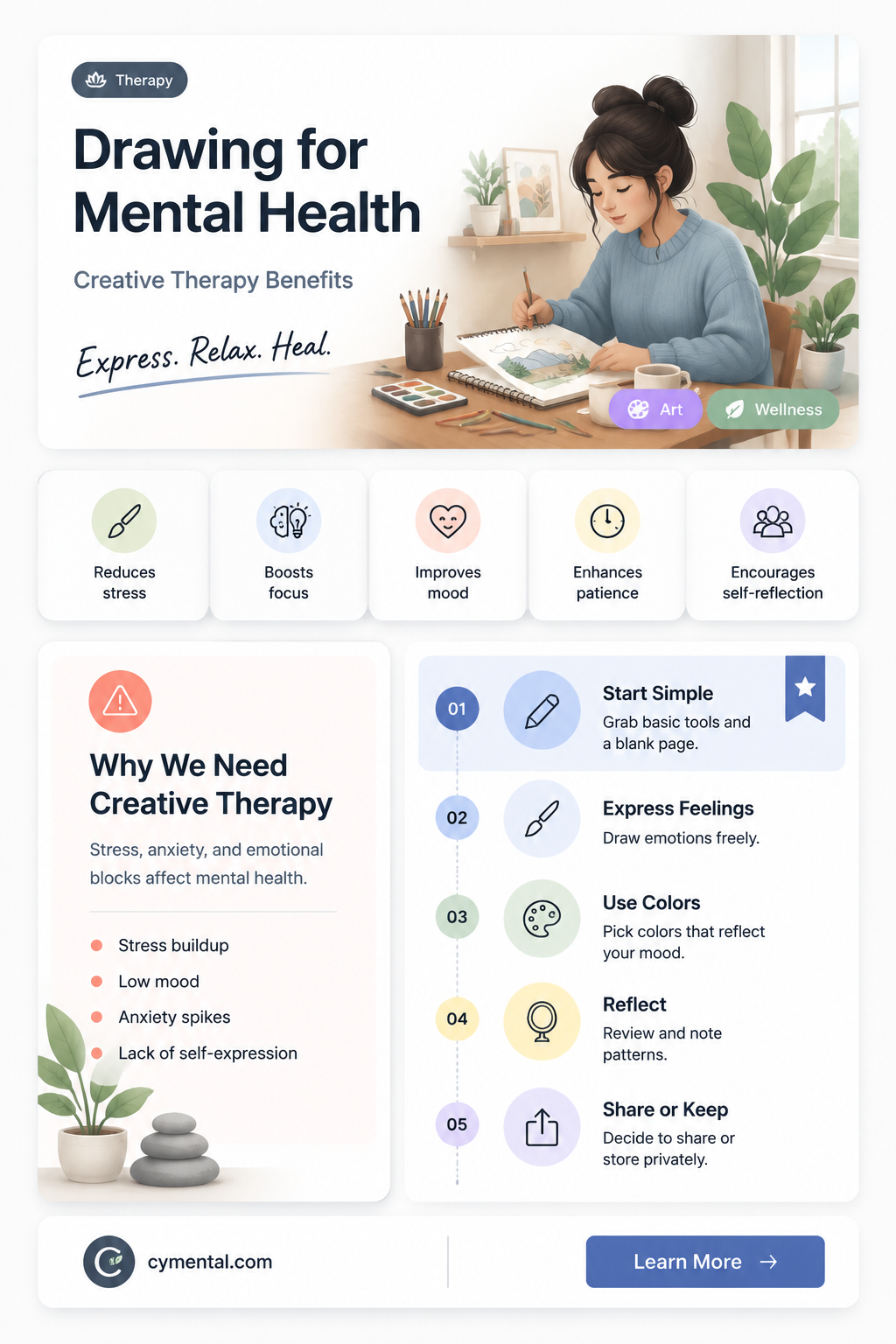
Drawing has emerged as a powerful tool for supporting mental health, offering a creative outlet that fosters self-expression, reduces stress, and promotes mindfulness. Engaging in the act of drawing allows individuals to channel their emotions into a tangible form, providing a sense of release and clarity. Studies have shown that the repetitive and focused nature of drawing can induce a meditative state, helping to calm the mind and alleviate symptoms of anxiety and depression. Additionally, the non-verbal nature of art enables individuals to communicate complex feelings that may be difficult to articulate through words. Whether practiced as a hobby or integrated into therapeutic settings, drawing has the potential to enhance emotional well-being and serve as a valuable complement to traditional mental health interventions.
| Characteristics | Values |
|---|---|
| Stress Reduction | Drawing activates the brain’s reward pathways, reducing cortisol levels and promoting relaxation. |
| Emotional Expression | Provides a non-verbal outlet for emotions, helping individuals process and release feelings. |
| Mindfulness Practice | Encourages present-moment awareness, reducing anxiety and improving focus. |
| Cognitive Improvement | Enhances problem-solving skills, creativity, and fine motor skills. |
| Self-Esteem Boost | Completing a drawing fosters a sense of accomplishment and pride. |
| Therapeutic Tool | Used in art therapy to address trauma, depression, and other mental health issues. |
| Accessible Activity | Requires minimal materials, making it an affordable and inclusive coping mechanism. |
| Mood Enhancement | Engaging in creative activities like drawing increases dopamine levels, improving mood. |
| Memory and Reflection | Drawing can help in processing and recalling memories, aiding in emotional healing. |
| Social Connection | Group drawing activities can reduce feelings of isolation and foster community. |
Explore related products


$8.99 $19.99


What You'll Learn

Stress Reduction Through Art
Drawing, even for just 20 minutes a day, can act as a powerful stress reliever by engaging the brain in a focused, calming activity. Research shows that creating art lowers cortisol levels, the body’s primary stress hormone, by shifting attention away from anxious thoughts and into the present moment. Unlike passive activities like scrolling through social media, drawing requires active engagement, making it particularly effective for stress reduction. For maximum benefit, set aside a dedicated time each day, such as during a lunch break or before bed, and use simple materials like a sketchpad and pencil to avoid feeling overwhelmed.
Consider the process of drawing as a form of meditation in motion. The repetitive motions of shading, outlining, or doodling induce a state of flow, where the mind becomes fully absorbed in the task at hand. This flow state not only reduces stress but also enhances feelings of accomplishment and mindfulness. Beginners can start with basic shapes or patterns, gradually moving to more complex subjects as confidence grows. Pairing drawing with calming music or a quiet environment amplifies its stress-relieving effects, creating a multi-sensory escape from daily pressures.
For those who feel intimidated by the idea of drawing, structured art therapy exercises can provide a guided approach. Techniques like "mandala drawing" or "emotional sketching," where individuals draw their feelings rather than a specific object, are particularly effective for stress relief. Art therapists often recommend these methods for all age groups, from children dealing with school anxiety to adults managing workplace stress. The key is not to focus on the end result but to embrace the process as a tool for emotional release and relaxation.
Comparing drawing to other stress-reduction methods highlights its unique advantages. While exercise releases endorphins and journaling clarifies thoughts, drawing combines cognitive focus with creative expression, offering a dual benefit. It’s also accessible—requiring minimal equipment and no prior skill—making it an ideal option for anyone, anywhere. Unlike digital activities, drawing is screen-free, reducing additional stressors like blue light exposure and notifications, further enhancing its calming impact.
Incorporating drawing into a stress-reduction routine doesn’t require a drastic lifestyle change. Start small: keep a sketchbook in your bag or by your bedside, and dedicate 10–15 minutes daily to doodle or sketch. Over time, this practice can become a reliable coping mechanism, helping to manage stress proactively rather than reactively. Whether you’re sketching a tree outside your window or abstractly expressing your emotions, the act of drawing offers a tangible way to unwind and reconnect with yourself.
AI's Role in Mental Health: Support, Challenges, and Future Potential
You may want to see also
Explore related products


Drawing as Emotional Expression
Drawing as a form of emotional expression taps into the nonverbal language of the mind, offering a unique pathway to process and release complex feelings. Unlike journaling, which relies on words, drawing allows individuals to externalize emotions through shapes, colors, and lines, often bypassing the limitations of verbal communication. For instance, a study published in *Art Therapy: Journal of the American Art Therapy Association* found that participants who engaged in free-drawing sessions reported a significant reduction in anxiety levels compared to those who wrote about their stressors. This suggests that the act of drawing can serve as a visceral outlet for emotions that words may fail to capture.
Consider the process of drawing as a structured yet intuitive practice. Start with a blank page and a set of basic tools—pencils, markers, or even digital brushes. Set a timer for 10–15 minutes to create without judgment or intention. Allow the hand to move freely, letting emotions guide the marks rather than focusing on creating a "finished" piece. For children, this approach can be particularly effective, as their natural inclination toward play and imagination aligns with the spontaneity required for emotional expression. Adults, however, may benefit from incorporating prompts, such as drawing a "mood landscape" where colors and forms reflect their current emotional state.
One of the most compelling aspects of drawing as emotional expression is its ability to reveal subconscious thoughts. For example, a person experiencing grief might find themselves repeatedly drawing dark, fragmented shapes, while someone feeling hopeful may gravitate toward bright, expansive patterns. Analyzing these visual cues can provide insights into underlying emotions, often more directly than verbal reflection. Art therapists often use this technique to help clients identify and articulate feelings they may not consciously recognize. Even without professional guidance, individuals can practice this by journaling about their drawings afterward, bridging the gap between the visual and the verbal.
Practical integration of drawing into daily life requires minimal effort but yields significant emotional benefits. Dedicate a small notebook as an "emotion sketchbook" and commit to spending 5–10 minutes daily drawing whatever comes to mind. Over time, patterns may emerge, offering a visual diary of emotional shifts. For those hesitant to draw due to self-criticism, remember that the goal is not aesthetic perfection but emotional release. Start with simple exercises, like doodling abstract representations of emotions (e.g., anger as jagged lines, calmness as smooth curves). Gradually, this practice can become a reliable tool for managing stress, processing trauma, or simply checking in with oneself.
Incorporating drawing into mental health routines is not about becoming an artist but about reclaiming a fundamental human capacity for expression. Whether used as a standalone practice or in conjunction with other therapies, drawing offers a tangible way to externalize and confront emotions. Its accessibility—requiring only paper and a writing tool—makes it a versatile option for all ages and backgrounds. By embracing the imperfect, intuitive nature of drawing, individuals can unlock a powerful means of emotional exploration and healing.
Suicidal Individuals: Are They Receiving Adequate Mental Health Support?
You may want to see also
Explore related products


Mindfulness and Focus in Sketching
Sketching demands presence. Unlike passive activities, it anchors you in the now, forcing attention onto the interplay of line, shadow, and form. This act of sustained focus becomes a form of mindfulness meditation, where the chatter of worries quiets as your consciousness narrows to the tip of your pencil and the texture of the paper. Studies show that even brief periods of focused drawing (15-20 minutes daily) can significantly reduce cortisol levels, the body's primary stress hormone, offering a tangible physiological benefit to this seemingly simple act.
Consider the process: You observe, translate, refine. This cyclical engagement trains your brain to concentrate, to filter out distractions, to embrace the iterative nature of creation. It's not about perfection, but about the journey of marks becoming meaning. For children, this focus-building aspect is particularly valuable. A study published in *Art Therapy: Journal of the American Art Therapy Association* found that regular drawing sessions improved attention spans and reduced hyperactivity in children aged 6-12, suggesting sketching as a valuable tool for developing concentration skills.
The beauty lies in its accessibility. You need only paper and a writing utensil. No special skills required, just willingness to engage. Start with simple subjects: a leaf, a cup, your own hand. Observe edges, curves, light and dark. Let go of judgment, embrace the process. Over time, this practice cultivates a mindset of patient observation, translating to improved focus in other areas of life.
However, mindfulness in sketching isn't about emptying the mind, but about directing it. It's about choosing where to place your attention, training your gaze to see beyond the obvious. This intentional focus becomes a form of mental exercise, strengthening your ability to concentrate and fostering a sense of calm amidst the chaos of daily life. So, pick up a pencil, not as a means to an end, but as a gateway to the present moment, where focus and mindfulness intertwine in the simple act of creating.
Helping Others, Hurting Yourself: The Mental Health Toll of Caregiving
You may want to see also
Explore related products


Boosting Self-Esteem with Creativity
Drawing isn’t just a pastime; it’s a tool for self-discovery and empowerment. When you put pencil to paper, you externalize thoughts and emotions, often uncovering insights about yourself that were previously hidden. This process of creation fosters a sense of accomplishment, particularly when you complete a piece that reflects your unique perspective. For instance, a study published in *Art Therapy: Journal of the American Art Therapy Association* found that participants who engaged in regular drawing sessions reported higher levels of self-awareness and confidence. The act of creating something tangible from your imagination challenges self-doubt, proving to yourself that you are capable of bringing ideas to life.
To harness this benefit, start small. Dedicate 15–20 minutes daily to sketching, even if it’s just doodles or abstract shapes. Use prompts like “draw something that represents how you feel today” to deepen the connection between your art and your emotions. Keep a sketchbook to track progress, not for perfection but for consistency. Over time, this practice builds a portfolio of your growth, serving as a visual reminder of your evolving skills and self-expression. For children and teens, this routine can be particularly impactful, as it encourages them to value their creativity during formative years when self-esteem is often fragile.
However, it’s crucial to manage expectations. Drawing won’t instantly transform self-esteem, and comparing your work to others can be counterproductive. Instead, focus on the process, not the product. Celebrate the act of creating rather than critiquing the outcome. If you find yourself stuck, try collaborative drawing exercises with friends or family. Sharing the creative process reduces pressure and highlights the joy of making art together, reinforcing the idea that creativity is inherently valuable, regardless of skill level.
For those new to drawing, begin with basic tools: a sketchpad, pencils, and erasers. Avoid overinvesting in expensive supplies until you’ve established a routine. Online tutorials or local classes can provide structure, but don’t feel obligated to follow them rigidly. The goal is to explore, experiment, and enjoy. Incorporate mindfulness techniques by focusing on the sensation of the pencil on paper or the colors you choose, grounding yourself in the present moment. This dual focus on creativity and mindfulness amplifies the self-esteem boost, as it combines the pride of creation with the calming effects of being fully present.
Finally, integrate drawing into your self-care routine. Pair it with activities that already nourish your mental health, such as journaling or meditation. For example, spend 10 minutes drawing after journaling to visually represent your thoughts. This combination enhances self-reflection and reinforces positive self-perception. Remember, the goal isn’t to become a professional artist but to use creativity as a mirror, reflecting your strengths and potential back to you. With consistent practice, drawing becomes more than an activity—it’s a pathway to embracing your worth.
Metabolic Screening: A New Tool for Mental Health Diagnosis?
You may want to see also
Explore related products


Art Therapy for Anxiety Relief
Drawing as a therapeutic tool has gained recognition for its profound impact on mental well-being, particularly in alleviating anxiety. Art therapy, a structured approach to this practice, offers a unique avenue for individuals to express and process their emotions, often when words fall short. This method is not merely about creating art; it's a therapeutic process that can significantly reduce anxiety symptoms and promote emotional healing.
The Science Behind Art Therapy and Anxiety Relief
Research suggests that engaging in creative activities like drawing can activate the brain's reward system, releasing dopamine, a neurotransmitter associated with pleasure and motivation. This neurological response can help counteract the effects of anxiety, which often involves an overactive stress response. A study published in the *Journal of the American Art Therapy Association* found that art therapy significantly reduced anxiety levels in participants, with effects comparable to traditional talk therapy. The act of drawing allows individuals to externalize their internal struggles, providing a sense of control and distance from overwhelming emotions.
Practical Application: A Step-by-Step Guide
- Choose Your Medium: Start with simple tools like pencils, charcoal, or crayons. For those new to art, these are forgiving and allow for easy corrections, reducing the pressure to create a perfect piece.
- Set a Timer: Dedicate 15–30 minutes daily for drawing. Consistency is key; regular practice can help establish a routine, providing a predictable outlet for anxiety relief.
- Focus on Emotion, Not Skill: Encourage the expression of feelings rather than aiming for artistic perfection. Abstract shapes, colors, or even doodles can effectively convey emotions.
- Reflect and Interpret: After drawing, take time to analyze your creation. What emotions does it evoke? This reflection can offer insights into your anxiety triggers and patterns.
Tailoring Art Therapy for Different Age Groups
Art therapy's versatility makes it accessible across various age categories. For children, drawing can be a natural form of communication, helping them express anxieties they might struggle to verbalize. Teenagers may find it a safe outlet for the intense emotions often accompanying adolescence. In adults, art therapy can provide a non-verbal means to process complex emotions and traumatic experiences. Each age group may require different approaches; for instance, younger children might benefit from structured activities, while adults may prefer open-ended prompts.
Incorporating Art Therapy into Daily Life
Integrating art therapy into daily routines can be a powerful tool for long-term anxiety management. Consider keeping a sketchbook for spontaneous drawing sessions or setting aside time for more structured art therapy exercises. For those in therapy, combining traditional talk therapy with art therapy can offer a comprehensive approach to mental health treatment. Additionally, group art therapy sessions can foster a sense of community and support, further enhancing the therapeutic benefits.
In conclusion, art therapy provides a unique and accessible method for anxiety relief, offering a creative outlet that complements traditional therapeutic techniques. Its effectiveness lies in its ability to engage the mind and body, providing a holistic approach to emotional healing. By understanding and utilizing these principles, individuals can harness the power of drawing to manage anxiety and promote overall mental well-being.
Gratitude's Power: Enhancing Mental Health and Emotional Well-being
You may want to see also
Frequently asked questions
Yes, drawing can help reduce stress and anxiety by promoting relaxation, mindfulness, and emotional expression. The repetitive motions and focus required in drawing can calm the mind, while creating art allows for the release of pent-up emotions.
Drawing stimulates the release of dopamine, a feel-good neurotransmitter, which can boost mood and reduce feelings of sadness. It also provides a sense of accomplishment and self-expression, fostering emotional resilience and positivity.
Yes, drawing can be a powerful way to process trauma or difficult emotions, as it allows individuals to externalize and visualize their feelings without needing words. Art therapy often uses drawing to help people explore and heal from painful experiences.
Absolutely, drawing enhances focus and mental clarity by engaging the brain in a creative, detail-oriented task. It encourages mindfulness, as the artist becomes fully absorbed in the present moment, reducing mental clutter and improving concentration.