Ava Ramirez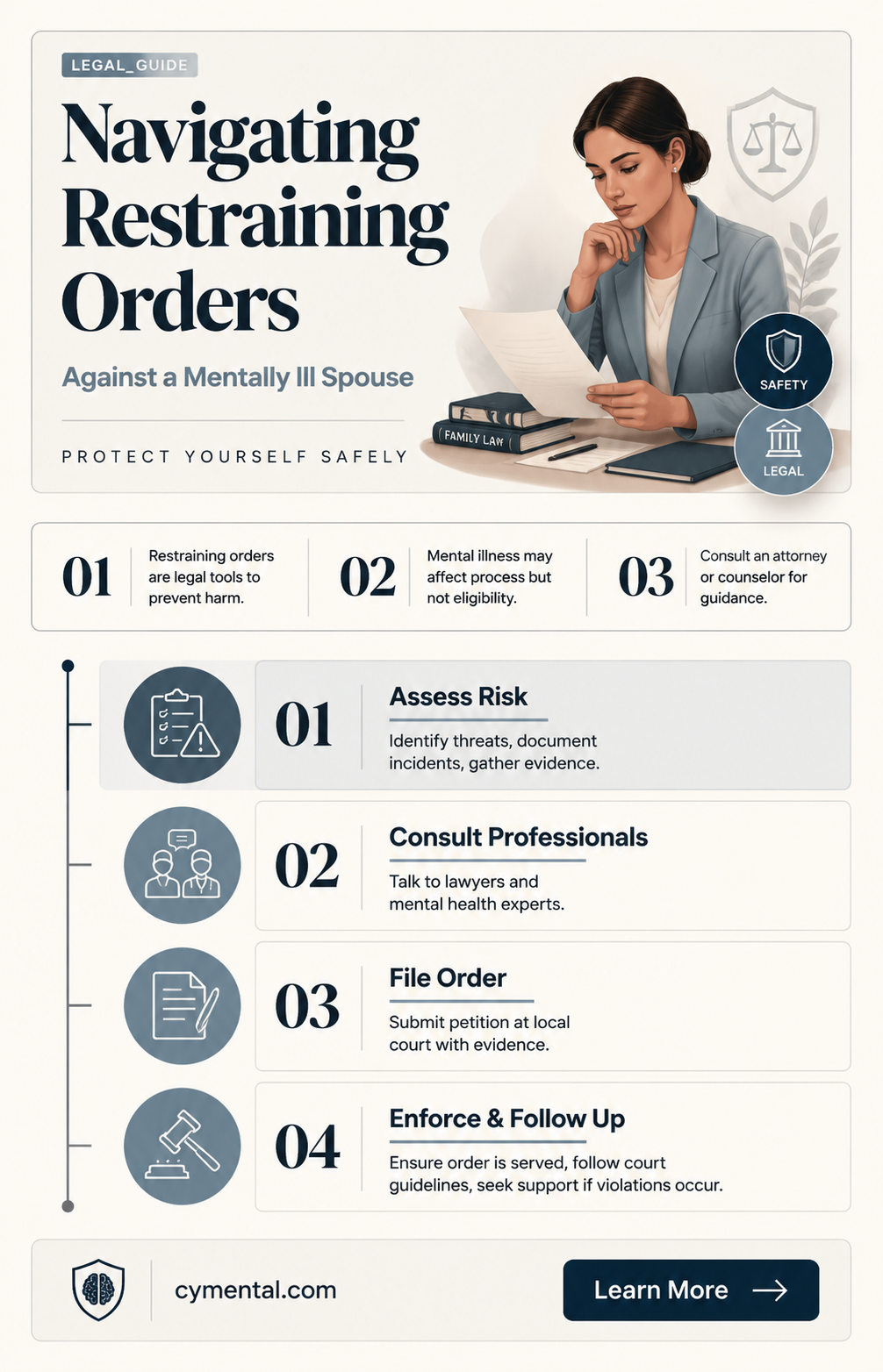
Navigating the complexities of a relationship with a mentally ill spouse can be incredibly challenging, and in some cases, it may become necessary to consider legal measures to ensure personal safety. One such measure is a restraining order, which is a legal injunction that prohibits an individual from engaging in certain behaviors or coming within a specified distance of another person. When dealing with a mentally ill spouse, the decision to seek a restraining order is often made with a heavy heart and after exhausting other avenues of support and intervention. It is important to approach this topic with sensitivity and an understanding of the unique circumstances that can arise in such situations. Seeking a restraining order against a mentally ill spouse involves careful consideration of the legal criteria, the potential impact on the spouse's mental health, and the overall well-being of both parties involved.
Explore related products


What You'll Learn
- Eligibility for a Restraining Order: Requirements vary by jurisdiction; typically, a victim of domestic violence or harassment may qualify
- Documenting Evidence: Keeping a detailed record of incidents, including dates, times, and descriptions of abusive behavior, is crucial
- Seeking Legal Counsel: Consulting with an attorney specializing in family law can provide guidance on the legal process and improve the chance of success
- Filing the Petition: The victim must fill out and file a petition for a restraining order at the local courthouse, providing all necessary documentation
- Temporary vs. Permanent Orders: Temporary orders are issued without a hearing and last until a permanent order can be decided upon; permanent orders require a court hearing

Eligibility for a Restraining Order: Requirements vary by jurisdiction; typically, a victim of domestic violence or harassment may qualify
To obtain a restraining order against a mentally ill spouse, understanding the eligibility criteria is crucial. The requirements for a restraining order can vary significantly by jurisdiction, but generally, a victim of domestic violence or harassment may qualify. Domestic violence can encompass a range of behaviors, including physical abuse, emotional abuse, and threats of harm. Harassment involves repeated, unwanted contact or behavior that causes fear, anxiety, or distress.
In cases involving a mentally ill spouse, the dynamics can be complex. Mental illness does not automatically disqualify someone from being subject to a restraining order, but it may influence the court's considerations. For instance, if the spouse's mental illness contributes to the abusive behavior, the court may take this into account when determining the necessity and terms of the restraining order. It's important to document any incidents of abuse or harassment, including dates, times, and details of what occurred.
The process of obtaining a restraining order typically involves filing a petition with the court, providing evidence of the abuse or harassment, and attending a hearing. During the hearing, both parties will have the opportunity to present their case, and the court will decide whether to grant the restraining order. If the restraining order is granted, it will outline specific terms and conditions that the abusive spouse must follow, such as maintaining a certain distance from the victim and refraining from contact.
In some jurisdictions, there may be additional resources available for victims of domestic violence or harassment, such as counseling services, support groups, and legal assistance. These resources can provide valuable help and guidance throughout the process of obtaining a restraining order. It's important to reach out for support and to prioritize safety when dealing with an abusive situation.
Ultimately, the decision to seek a restraining order is a personal one, and it's important to consider the specific circumstances and needs of each individual case. By understanding the eligibility criteria and the process involved, victims of domestic violence or harassment can make informed decisions about how to protect themselves and seek the help they need.
Healing from Mental Abuse: A Journey to Reclaim Your Mind and Life
You may want to see also
Explore related products


Documenting Evidence: Keeping a detailed record of incidents, including dates, times, and descriptions of abusive behavior, is crucial
Documenting evidence of abusive behavior is a critical step in obtaining a restraining order against a mentally ill spouse. This process involves keeping a meticulous record of incidents, including the date, time, and a detailed description of the abusive behavior. Such documentation serves as tangible proof of the abuse and can significantly strengthen your case in court.
To document evidence effectively, it's essential to be as specific as possible. For instance, instead of simply stating that your spouse was verbally abusive, note down the exact words used and the context in which they were said. If there are witnesses to the abuse, include their names and contact information in your records. Additionally, any physical evidence, such as photographs of injuries or damaged property, should be preserved and included in your documentation.
It's also important to record the emotional and psychological impact of the abuse on you. Keeping a journal of your feelings and experiences can provide valuable insight into the severity and frequency of the abuse. This personal account can be a powerful tool in demonstrating the need for a restraining order.
When documenting evidence, it's crucial to remain objective and factual. Avoid embellishing or exaggerating the incidents, as this can undermine the credibility of your case. Stick to the facts and let the evidence speak for itself.
Finally, it's advisable to consult with a legal professional who can guide you on the specific requirements for documenting evidence in your jurisdiction. They can provide valuable advice on what types of evidence are most compelling and how to present them effectively in court.
In summary, documenting evidence is a crucial step in obtaining a restraining order against a mentally ill spouse. By keeping a detailed and accurate record of incidents, you can provide the court with the necessary proof to protect yourself from further abuse.
Addressing the Gap: Mental Health Care for Americans in Crisis
You may want to see also
Explore related products


Seeking Legal Counsel: Consulting with an attorney specializing in family law can provide guidance on the legal process and improve the chance of success
Navigating the complexities of family law, especially when dealing with a mentally ill spouse, can be overwhelming. Seeking legal counsel from an attorney who specializes in family law is a crucial step that can significantly impact the outcome of your case. These professionals are well-versed in the intricacies of the legal system and can provide the guidance and support needed to successfully obtain a restraining order.
One of the primary benefits of consulting with a family law attorney is their ability to assess your situation and provide tailored advice. They can help you understand the specific criteria that must be met to obtain a restraining order against a mentally ill spouse, such as demonstrating a history of abuse or threats. Your attorney will also be able to guide you through the necessary documentation and evidence collection, ensuring that your case is presented in the most compelling manner possible.
Furthermore, a family law attorney can help you navigate the often confusing and emotional process of dealing with a mentally ill spouse. They can provide emotional support and help you make difficult decisions, such as determining the best course of action for your safety and the safety of your children. Additionally, your attorney can represent you in court, advocating on your behalf and ensuring that your rights are protected throughout the legal process.
It is important to note that when seeking legal counsel, it is crucial to find an attorney who has experience dealing with cases involving mentally ill individuals. This specialized knowledge can make a significant difference in the outcome of your case, as it allows your attorney to better understand the unique challenges and considerations that come with such situations.
In conclusion, seeking legal counsel from a family law attorney is a vital step in the process of obtaining a restraining order against a mentally ill spouse. Their expertise, guidance, and support can greatly improve your chances of success and help you navigate the complex and often emotional legal process.
Navigating Mental Health Documentation: Your Guide to Obtaining a Medical Certificate
You may want to see also
Explore related products


$12.4 $32.95


Filing the Petition: The victim must fill out and file a petition for a restraining order at the local courthouse, providing all necessary documentation
To initiate the process of obtaining a restraining order against a mentally ill spouse, the victim must first fill out and file a petition at the local courthouse. This step is crucial and requires careful attention to detail. The petition typically includes personal information about both the victim and the spouse, a detailed account of the abuse or harassment, and any supporting documentation such as police reports, medical records, or witness statements.
The victim should ensure they have all necessary documentation before filing the petition. This may include evidence of the spouse's mental illness, such as psychiatric evaluations or medication lists, as well as any relevant communication between the parties, like emails or text messages. It is also important to provide information about any previous restraining orders or legal proceedings involving the spouse.
Once the petition is filed, the courthouse will review the documentation and may schedule a hearing. During this hearing, the victim will have the opportunity to present their case and provide additional evidence or testimony. The spouse will also be given the chance to respond and present their own evidence. If the court finds sufficient grounds for a restraining order, it will be issued and the spouse will be legally required to cease all contact with the victim.
It is important to note that the process of obtaining a restraining order can be complex and emotionally draining. Victims should consider seeking support from a legal advocate or a mental health professional to help them navigate the legal system and cope with the stress of the situation. Additionally, victims should be aware that restraining orders are not always foolproof and may not prevent all forms of abuse or harassment. However, they can provide a valuable layer of protection and help victims regain control of their lives.
Navigating Workers' Comp for Mental Health: A Comprehensive Guide
You may want to see also
Explore related products


Temporary vs. Permanent Orders: Temporary orders are issued without a hearing and last until a permanent order can be decided upon; permanent orders require a court hearing
In the context of seeking a restraining order against a mentally ill spouse, understanding the distinction between temporary and permanent orders is crucial. Temporary orders, also known as ex parte orders, are issued by a judge without a hearing and are designed to provide immediate protection. These orders are typically granted when there is a clear and present danger to the petitioner, and they remain in effect until a permanent order can be decided upon.
Permanent orders, on the other hand, require a court hearing where both parties have the opportunity to present evidence and testimony. This process allows for a more thorough examination of the situation and ensures that both sides are heard before a final decision is made. Permanent orders can last for an extended period, sometimes indefinitely, depending on the circumstances and the judge's discretion.
When dealing with a mentally ill spouse, temporary orders can be particularly important. In situations where the spouse's mental health condition poses an immediate threat to the petitioner's safety, a temporary order can provide a necessary buffer zone. This can be especially critical in cases where the spouse is experiencing acute symptoms or is non-compliant with treatment.
However, it's important to note that temporary orders are not a substitute for permanent orders. While they can provide immediate relief, they are intended to be a short-term solution. In order to obtain a permanent order, the petitioner must demonstrate that there is a continuing need for protection and that the spouse's mental health condition poses a long-term risk.
In conclusion, when seeking a restraining order against a mentally ill spouse, it's essential to understand the differences between temporary and permanent orders. Temporary orders can provide immediate protection in emergency situations, but permanent orders are necessary for long-term safety and security. By navigating the legal process effectively, petitioners can ensure that they receive the appropriate level of protection while also considering the unique challenges posed by their spouse's mental health condition.
Navigating Mental Health Commitments: A Compassionate Guide for Families
You may want to see also
Frequently asked questions
Yes, you can seek a restraining order against a mentally ill spouse if they have engaged in abusive behavior towards you. Mental illness alone is not a reason to deny a restraining order, but the court will consider the specific circumstances and evidence of abuse.
To obtain a restraining order, you will need to provide evidence of abuse, which can include physical harm, emotional abuse, stalking, or threats. Documenting incidents, keeping records of communications, and gathering witness statements can all be helpful in supporting your case.
Yes, your spouse's mental illness will likely be considered by the court. The judge may order a mental health evaluation to assess your spouse's condition and determine if it impacts their ability to understand the proceedings or poses a risk to you. This evaluation can help inform the court's decision regarding the restraining order.