Ava Ramirez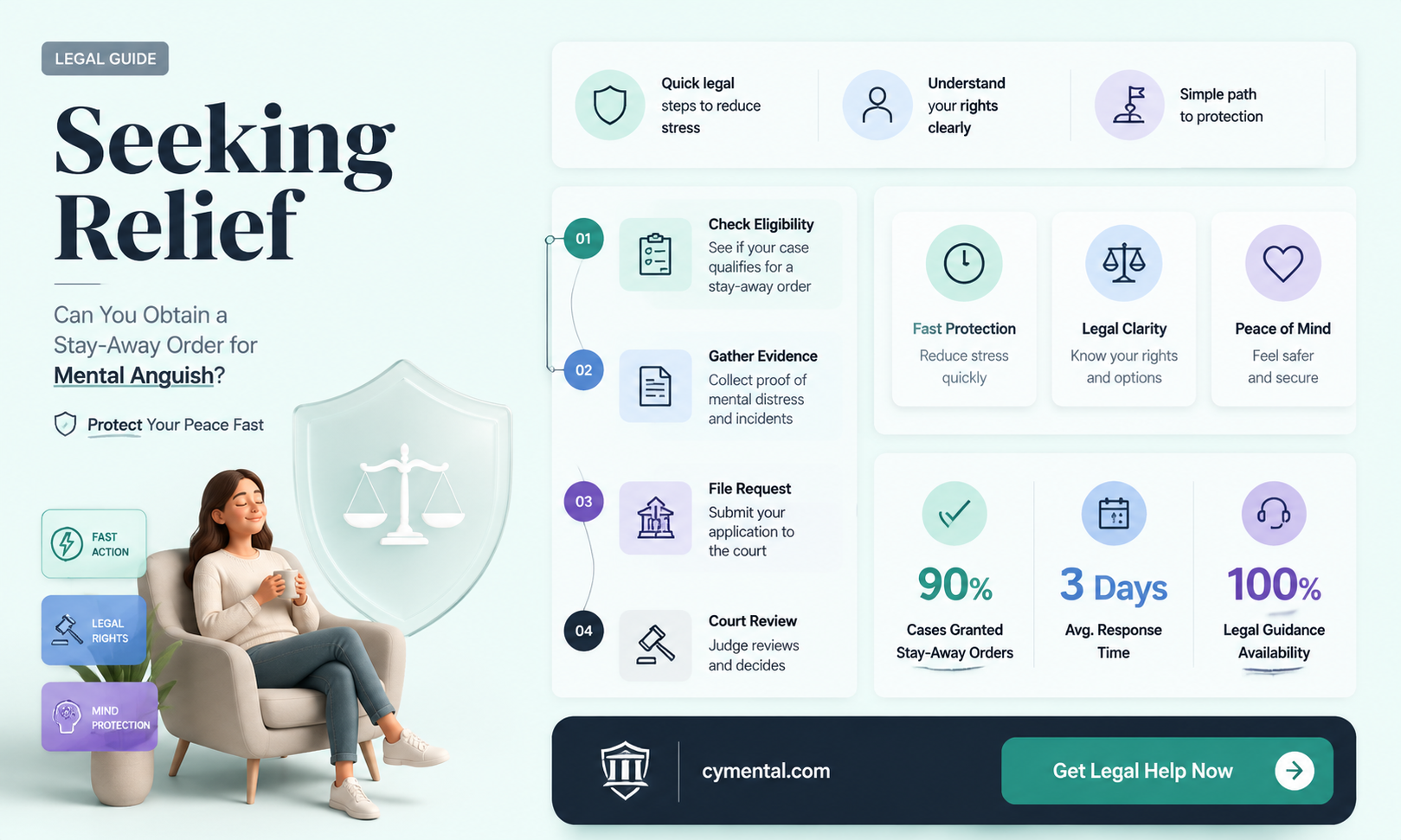
A stay away order, often referred to as a restraining order or protection order, is a legal measure designed to protect individuals from harm or harassment. While these orders are commonly associated with physical threats or domestic violence, they can also be sought for mental anguish or emotional distress. If you're experiencing severe emotional suffering due to the actions of another person, you may be wondering if a stay away order can provide relief. The answer depends on the specifics of your situation and the laws in your jurisdiction. Generally, to obtain a stay away order for mental anguish, you would need to demonstrate that the respondent's behavior is causing you significant emotional harm and that there is a reasonable fear of continued or imminent harm. This might include behaviors such as stalking, harassment, or other forms of emotional abuse. Consulting with a legal professional who specializes in domestic violence or mental health law can provide you with guidance on the best course of action and help you understand the legal requirements in your area.
| Characteristics | Values |
|---|---|
| Legal Basis | A restraining order for mental anguish is typically sought under domestic violence laws or harassment statutes. |
| Eligibility | Individuals experiencing severe emotional distress or psychological harm due to the actions of another may be eligible. |
| Evidence Required | Evidence may include medical records, therapy notes, witness statements, and documentation of incidents causing mental anguish. |
| Filing Process | The process involves filing a petition with the court, detailing the reasons for the request and providing supporting evidence. |
| Temporary vs. Permanent | Courts may issue temporary orders immediately if there is an imminent threat, followed by a hearing for a permanent order. |
| Protection Measures | The order may include provisions such as no contact, maintaining a certain distance, and avoiding specific locations. |
| Consequences of Violation | Violating the order can result in legal penalties, including fines and imprisonment. |
| Duration | The duration of the order varies by jurisdiction but can be extended if necessary. |
| Appeals | Both parties have the right to appeal the court's decision. |
| Legal Representation | It is advisable to seek legal representation to navigate the complexities of obtaining a restraining order for mental anguish. |
| Emotional Support | Victims may also seek support from mental health professionals, support groups, and advocacy organizations. |
| Documentation | Keeping a detailed record of incidents, including dates, times, and descriptions, can strengthen the case for a restraining order. |
| Jurisdiction | The specific laws and procedures for obtaining a restraining order for mental anguish vary by jurisdiction. |
| Burden of Proof | The petitioner must typically prove their case by a preponderance of the evidence. |
| Court Discretion | The decision to grant a restraining order ultimately lies with the court's discretion based on the presented evidence and testimony. |
Explore related products


$136 $136


What You'll Learn
- Eligibility Criteria: Understand the legal requirements and evidence needed to qualify for a restraining order due to mental anguish
- Documentation: Gather necessary documents, such as medical records, police reports, and witness statements, to support your case
- Legal Process: Familiarize yourself with the court process, including filing a petition, serving the respondent, and attending a hearing
- Types of Protection: Learn about different types of restraining orders available, such as temporary, permanent, and emergency orders
- Seeking Legal Help: Consider consulting with an attorney specializing in domestic violence or mental health law for guidance and representation

Eligibility Criteria: Understand the legal requirements and evidence needed to qualify for a restraining order due to mental anguish
To qualify for a restraining order due to mental anguish, you must meet specific legal criteria and provide sufficient evidence. The eligibility requirements vary by jurisdiction, but generally, you must demonstrate that you have suffered severe emotional distress as a result of the respondent's actions. This can include threats, harassment, stalking, or other forms of abusive behavior. It's crucial to document all incidents, including dates, times, and details of the interactions, as well as any witnesses or corroborating evidence.
The legal process for obtaining a restraining order typically involves filing a petition with the court, which will then schedule a hearing. At the hearing, you must present your evidence and testify about the mental anguish you have experienced. The respondent will also have the opportunity to present their case and cross-examine you. If the court finds in your favor, it will issue a restraining order, which may include provisions such as no contact, limited contact, or supervised contact between you and the respondent.
In addition to the legal requirements, it's important to consider the practical aspects of obtaining a restraining order. For example, you may need to take time off work or arrange for childcare during the court proceedings. You may also need to seek counseling or other forms of support to help you cope with the emotional impact of the situation.
It's worth noting that restraining orders are not always the best solution for every situation. In some cases, alternative approaches such as mediation or therapy may be more effective in addressing the underlying issues and promoting healing. However, if you are experiencing severe mental anguish and feel that a restraining order is necessary to protect yourself, it's important to understand the eligibility criteria and take the necessary steps to pursue this legal remedy.
Navigating Restraining Orders Against a Mentally Ill Spouse: A Guide
You may want to see also
Explore related products


Documentation: Gather necessary documents, such as medical records, police reports, and witness statements, to support your case
Gathering comprehensive documentation is a critical step in substantiating a claim for a stay-away order based on mental anguish. This involves collecting a variety of documents that can corroborate the incidents of harassment or abuse and the resulting psychological impact. Medical records, including psychiatric evaluations and treatment notes, can provide powerful evidence of the mental health effects suffered by the victim. Police reports are also essential, as they offer an official account of any reported incidents and can include statements from witnesses or corroborating evidence such as photographs or audio recordings.
In addition to these primary sources, witness statements can be invaluable. These should be obtained from individuals who have directly observed the abusive behavior or its effects on the victim. It is important to ensure that these statements are detailed, signed, and dated, as they can serve as crucial corroboration in court. Other relevant documents might include emails, text messages, or social media posts that demonstrate a pattern of harassment or threats.
When compiling this documentation, it is essential to be thorough and organized. Each piece of evidence should be carefully reviewed to ensure it is relevant and admissible in court. It can be helpful to create a timeline of events, highlighting key incidents and the corresponding evidence. This not only aids in building a clear narrative but also helps in identifying any gaps in the documentation that may need to be addressed.
Victims should also be aware of the potential need for expert testimony. In some cases, a mental health professional may be called upon to provide an expert opinion on the psychological impact of the harassment or abuse. This can be particularly important in cases where the mental anguish is severe or long-lasting. Preparing for this possibility by identifying potential experts and understanding their qualifications and areas of expertise can be a significant advantage in court.
Ultimately, the strength of a case for a stay-away order based on mental anguish hinges on the quality and comprehensiveness of the documentation presented. By diligently gathering and organizing relevant documents, victims can significantly enhance their chances of obtaining the protection they need.
Navigating Short-Term Disability Benefits for Mental Health Conditions
You may want to see also
Explore related products




Legal Process: Familiarize yourself with the court process, including filing a petition, serving the respondent, and attending a hearing
Navigating the legal process for obtaining a stay-away order due to mental anguish involves several critical steps. The first step is to file a petition with the appropriate court, detailing the reasons for the request and providing evidence of the mental anguish suffered. This petition should be filed in the jurisdiction where the respondent resides or where the incidents occurred. It is essential to include all relevant documentation, such as medical records, witness statements, and any other evidence that supports the claim of mental anguish.
Once the petition is filed, the respondent must be served with a copy of the petition and a summons to appear in court. This service can be done through various methods, including personal service, mail, or publication, depending on the jurisdiction and the circumstances. It is crucial to ensure that the respondent is properly served, as failure to do so can result in the case being dismissed.
After the respondent is served, both parties must prepare for the court hearing. This involves gathering additional evidence, preparing witness testimony, and researching relevant legal precedents. It is also important to understand the legal standards that apply to stay-away orders in the specific jurisdiction, as these can vary significantly.
During the hearing, both parties will present their arguments and evidence to the judge. The petitioner will need to demonstrate that they have suffered mental anguish and that the respondent's actions are the cause of this suffering. The respondent will have the opportunity to defend themselves and present their own evidence. The judge will then make a decision based on the evidence presented and the legal standards applicable to the case.
If the judge grants the stay-away order, it is important to understand the terms and conditions of the order, including the duration, the specific actions prohibited, and any other requirements. Both parties must comply with the terms of the order, and failure to do so can result in legal consequences.
In conclusion, obtaining a stay-away order for mental anguish requires a thorough understanding of the legal process, including filing a petition, serving the respondent, and attending a court hearing. It is essential to gather strong evidence, prepare thoroughly for the hearing, and comply with the terms of the order if granted. This process can be complex and emotionally challenging, but it is a crucial step in protecting oneself from further mental anguish.
Navigating Love and Mental Health: Can Marriage Be a Reality?
You may want to see also
Explore related products


Types of Protection: Learn about different types of restraining orders available, such as temporary, permanent, and emergency orders
In the realm of legal protection, various types of restraining orders serve as crucial tools for safeguarding individuals from harm. Temporary restraining orders (TROs) are often the first line of defense, providing immediate protection until a more permanent solution can be established. These orders are typically granted ex parte, meaning without a hearing, and are intended to prevent imminent harm.
Permanent restraining orders, on the other hand, offer long-term protection and are usually issued after a formal hearing where both parties have the opportunity to present their case. These orders can last for several years or even a lifetime, depending on the severity of the situation and the specific circumstances involved.
Emergency restraining orders are designed for situations that require urgent intervention, such as when there is an immediate threat of violence or abuse. These orders are often granted by judges outside of regular court hours and can be obtained without prior notice to the respondent.
In the context of seeking a stay-away order for mental anguish, understanding the different types of restraining orders available is essential. Each type of order has its own unique requirements and procedures, and choosing the appropriate one can significantly impact the outcome of your case. By familiarizing yourself with the distinctions between temporary, permanent, and emergency restraining orders, you can better navigate the legal system and obtain the protection you need.
Exploring the Mind: A Guide to Brain Scans for Mental Health
You may want to see also
Explore related products


Seeking Legal Help: Consider consulting with an attorney specializing in domestic violence or mental health law for guidance and representation
Navigating the complexities of legal systems can be daunting, especially when dealing with sensitive issues like domestic violence or mental health. Seeking legal help from an attorney who specializes in these areas can provide you with the necessary guidance and representation to ensure your rights are protected. Such professionals are well-versed in the intricacies of the law and can help you understand the legal processes involved in obtaining a restraining order for mental anguish.
When considering legal representation, it's crucial to find an attorney who not only has expertise in domestic violence or mental health law but also has a track record of successfully handling similar cases. This can involve researching local law firms, reading reviews, and asking for referrals from trusted sources. During your initial consultation, be prepared to discuss the specifics of your situation, including any incidents of abuse, threats, or harassment that have caused you mental anguish. Your attorney will then be able to advise you on the best course of action and help you gather the necessary evidence to support your case.
In addition to providing legal representation, an attorney specializing in domestic violence or mental health law can also offer emotional support and connect you with resources such as counseling services, support groups, and shelters. They can help you navigate the often confusing and overwhelming legal system, ensuring that you are treated fairly and that your voice is heard. By seeking legal help, you can take the first step towards protecting yourself and regaining control of your life.
It's important to note that the process of obtaining a restraining order for mental anguish can vary depending on your location and the specific circumstances of your case. An experienced attorney will be able to guide you through the process, explain your rights, and help you prepare for any legal proceedings. They can also assist you in filing for a temporary restraining order (TRO) if immediate protection is necessary, and represent you at hearings to ensure that your case is presented effectively to the court.
In conclusion, seeking legal help from an attorney specializing in domestic violence or mental health law is a crucial step in protecting yourself from further harm and obtaining the legal remedies you deserve. By finding a knowledgeable and compassionate attorney, you can ensure that your case is handled with the care and expertise it requires, giving you the best possible chance of achieving a favorable outcome.
Cultivating Mental Resilience: A Guide to a Stronger Mindset
You may want to see also
Frequently asked questions
A stay away order is a legal directive issued by a court that prohibits an individual from contacting or approaching another person, often due to concerns for safety or well-being.
Yes, it is possible to obtain a stay away order if you are experiencing mental anguish due to harassment, threats, or other forms of abuse from another individual.
To obtain a stay away order, you will typically need to provide evidence of the behavior causing you mental anguish, such as threatening messages, witness statements, or documentation of incidents.
To get a stay away order, you should consult with a legal professional or contact your local courthouse for guidance on the specific process and requirements in your jurisdiction.