Harper Lewis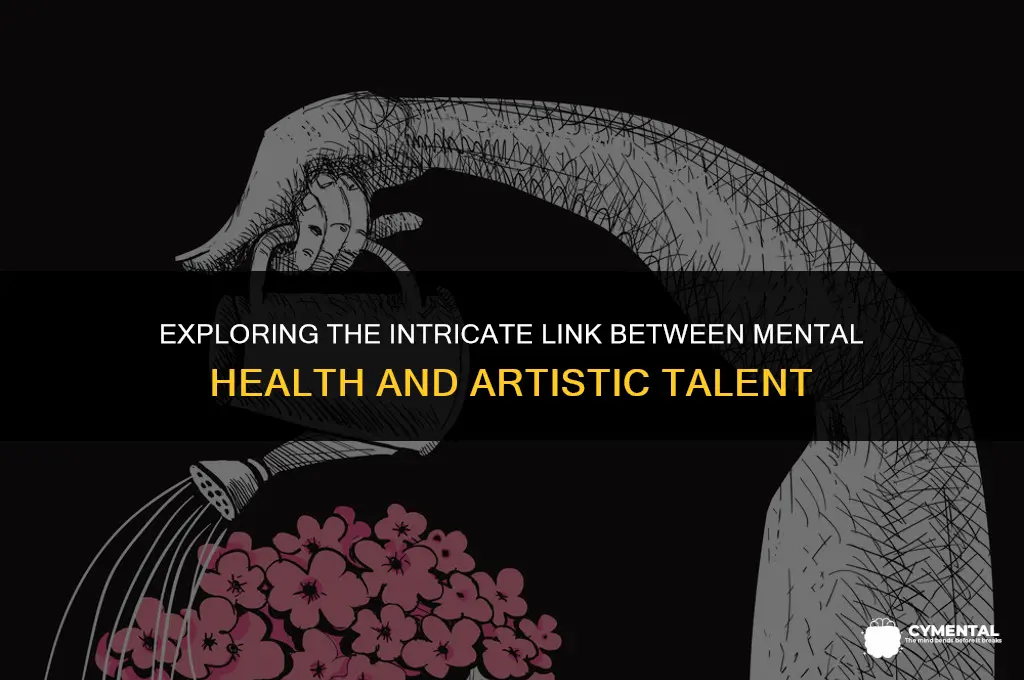
Mental health can significantly influence an individual's artistic abilities, as the two are deeply interconnected. The emotional and psychological states of an artist can shape their creative process, impacting the themes they explore, the techniques they employ, and the overall quality of their work. For instance, periods of heightened emotional intensity, whether positive or negative, can lead to bursts of creativity and the production of highly expressive pieces. Conversely, mental health challenges such as depression or anxiety can hinder artistic output, making it difficult for artists to find inspiration or maintain the focus needed to complete their projects. Understanding this relationship is crucial for both artists and mental health professionals, as it highlights the importance of addressing mental health issues to support artistic growth and well-being.
Explore related products

$18.63 $19.99

$14.79 $15.99

$7.34 $19.99

$49.95 $45


What You'll Learn
- Creativity and Psychosis: Exploring the link between psychotic experiences and enhanced creative thinking in art
- Depression and Artistic Expression: Analyzing how depression can influence the themes and styles of artwork
- Anxiety and Performance: Discussing the impact of anxiety on artistic performance and public speaking in art contexts
- Trauma and Visual Arts: Investigating how traumatic experiences can be processed and expressed through visual art forms
- Bipolar Disorder and Artistic Genius: Examining the potential connection between bipolar disorder and exceptional artistic talent

Creativity and Psychosis: Exploring the link between psychotic experiences and enhanced creative thinking in art
The relationship between creativity and psychosis has long been a subject of fascination and study. Research suggests that individuals with psychotic experiences may exhibit enhanced creative thinking, particularly in artistic domains. This phenomenon is often attributed to the unique cognitive processes and perceptual experiences associated with psychosis, which can lead to novel insights and innovative artistic expressions.
One notable example of this link is the work of Vincent van Gogh, who is widely regarded as one of the most influential artists in history. Van Gogh's struggles with mental health, including episodes of psychosis, are well-documented. His artistic style, characterized by bold colors, expressive brushstrokes, and unconventional perspectives, is often seen as a reflection of his unique mental state. Studies have shown that individuals with psychotic experiences may be more likely to engage in creative activities, such as painting, writing, and music composition, and may produce work that is more original and innovative than that of their non-psychotic counterparts.
However, it is important to note that the relationship between creativity and psychosis is complex and multifaceted. While some individuals with psychotic experiences may exhibit enhanced creative thinking, others may struggle with cognitive impairments that can hinder their artistic abilities. Additionally, the impact of psychosis on creativity may vary depending on the individual's specific symptoms, treatment, and support system.
Recent research has begun to explore the neural mechanisms underlying the link between creativity and psychosis. Studies using functional magnetic resonance imaging (fMRI) have shown that individuals with psychotic experiences may exhibit altered brain activity in regions associated with creativity, such as the prefrontal cortex and the default mode network. These findings suggest that the unique cognitive processes associated with psychosis may be related to changes in brain function that can influence creative thinking.
In conclusion, the link between creativity and psychosis is a fascinating and complex topic that continues to be the subject of research and debate. While there is evidence to suggest that individuals with psychotic experiences may exhibit enhanced creative thinking, particularly in artistic domains, it is important to consider the multifaceted nature of this relationship and the potential impact of various factors, such as symptoms, treatment, and support, on an individual's artistic abilities.
Exploring the Link: Kidney Disease and Mental Health Connection
You may want to see also
Explore related products


$15.5 $40


Depression and Artistic Expression: Analyzing how depression can influence the themes and styles of artwork
Depression can profoundly impact an artist's work, often leading to a distinctive style or thematic focus that reflects their emotional state. One notable example is the artwork of Vincent van Gogh, whose struggles with depression and anxiety are well-documented. His paintings often feature bold, swirling patterns and a vibrant use of color, which some art historians interpret as a visual representation of his turbulent mental state.
Research has shown that depression can alter an individual's perception of the world, leading to a more negative outlook and a heightened sensitivity to emotional stimuli. This can manifest in artwork through the use of darker colors, more somber themes, and a greater emphasis on introspection and self-reflection. For instance, the works of Frida Kahlo, who battled depression throughout her life, often depict her physical and emotional pain, as well as her struggles with identity and self-worth.
However, depression can also serve as a catalyst for creativity, as artists may turn to their work as a form of therapy or self-expression. The process of creating art can provide a sense of purpose and control, which can be particularly beneficial for individuals struggling with depression. This is evident in the works of artists like Edvard Munch, whose iconic painting "The Scream" is often interpreted as a visual representation of his own anxiety and despair.
It is important to note that the relationship between depression and artistic expression is complex and multifaceted. While depression can certainly influence an artist's work, it is not the sole determinant of their style or themes. Other factors, such as personal experiences, cultural background, and artistic training, also play a significant role in shaping an artist's creative output.
In conclusion, depression can have a profound impact on an artist's work, leading to distinctive styles and themes that reflect their emotional state. However, it is essential to approach this topic with nuance and sensitivity, recognizing that depression is just one of many factors that can influence artistic expression. By understanding the complex interplay between mental health and creativity, we can gain a deeper appreciation for the works of artists who have struggled with depression and the unique perspectives they bring to the world of art.
The Hidden Impact: Bed Bugs and Mental Health Connection
You may want to see also
Explore related products

$22.65 $26.95


Anxiety and Performance: Discussing the impact of anxiety on artistic performance and public speaking in art contexts
Anxiety can significantly impact artistic performance and public speaking in art contexts. For artists, the pressure to create and present their work can trigger anxiety, which may manifest as nervousness, self-doubt, or fear of failure. This can lead to a decrease in confidence and, ultimately, affect the quality of their performance or presentation.
One way anxiety can affect artistic performance is by impairing cognitive functions such as memory and concentration. Artists may struggle to recall important details or lose focus during critical moments, leading to mistakes or a lack of coherence in their work. Additionally, anxiety can cause physical symptoms like increased heart rate, sweating, and trembling, which can further disrupt an artist's ability to perform at their best.
In the context of public speaking, anxiety can make it difficult for artists to articulate their thoughts and ideas effectively. They may stumble over words, speak too quickly or slowly, or fail to engage with their audience. This can undermine the impact of their message and leave a negative impression on listeners.
To mitigate the effects of anxiety on artistic performance and public speaking, artists can employ various strategies. These may include practicing relaxation techniques like deep breathing or meditation, engaging in regular exercise to reduce stress, and seeking support from friends, family, or mental health professionals. Additionally, artists can benefit from developing a growth mindset, focusing on learning and improvement rather than perfection, and reframing negative thoughts and experiences as opportunities for growth.
Ultimately, while anxiety can pose significant challenges to artistic performance and public speaking, it is not insurmountable. By understanding the impact of anxiety and employing effective coping strategies, artists can learn to manage their anxiety and perform at their best, even in high-pressure situations.
The Impact of Smartphones on Mental Health: A Growing Concern
You may want to see also
Explore related products


$11.99 $17.99

$20.49 $21.99


Trauma and Visual Arts: Investigating how traumatic experiences can be processed and expressed through visual art forms
Traumatic experiences can significantly impact an individual's mental health, often leaving them struggling to process and express their emotions. Visual arts provide a powerful medium for individuals to communicate their experiences and emotions, offering a form of catharsis and healing. Through the creation of art, individuals can externalize their internal struggles, making sense of their experiences and finding a way to move forward.
Research has shown that engaging in visual arts can have a positive impact on mental health, particularly for those who have experienced trauma. Art therapy, a form of psychotherapy that uses art as a means of expression, has been found to be effective in reducing symptoms of anxiety, depression, and post-traumatic stress disorder (PTSD). By providing a safe and supportive environment for individuals to explore their emotions through art, art therapy can help individuals to develop coping mechanisms and improve their overall well-being.
The process of creating art can be particularly beneficial for individuals who have experienced trauma, as it allows them to tap into their subconscious mind and express emotions that may be difficult to put into words. Art can serve as a form of non-verbal communication, enabling individuals to convey complex emotions and experiences in a way that is both powerful and accessible. Additionally, the act of creating art can be meditative and calming, providing a sense of focus and purpose that can be particularly helpful for individuals who are struggling with mental health issues.
In conclusion, the relationship between trauma and visual arts is a complex and multifaceted one. By providing a means of expression and communication, visual arts can play a significant role in the healing process for individuals who have experienced trauma. Art therapy, in particular, has been shown to be an effective tool for improving mental health outcomes and helping individuals to move forward from their experiences. As such, it is important to recognize the value of visual arts in promoting mental health and well-being, particularly for those who have experienced trauma.
Unveiling the Impact: Smoking and Mental Health Connection
You may want to see also
Explore related products




Bipolar Disorder and Artistic Genius: Examining the potential connection between bipolar disorder and exceptional artistic talent
The relationship between bipolar disorder and artistic genius has long been a subject of fascination and speculation. While it is important to approach this topic with sensitivity and avoid romanticizing mental illness, research suggests that there may be a correlation between the two. Bipolar disorder, characterized by extreme mood swings ranging from manic highs to depressive lows, can potentially influence an individual's creativity and artistic expression.
One possible explanation for this connection lies in the way bipolar disorder affects cognitive processes. During manic episodes, individuals may experience increased energy, heightened senses, and a heightened sense of self-confidence, which can lead to a surge in creative ideas and productivity. The rapid cycling of thoughts and emotions can also contribute to a unique perspective and innovative thinking. However, it is crucial to note that these potential benefits are often outweighed by the challenges and risks associated with bipolar disorder, including impaired judgment, impulsivity, and the potential for self-harm.
Several prominent artists and writers have been diagnosed with bipolar disorder, including Vincent van Gogh, Ernest Hemingway, and Sylvia Plath. While it is impossible to definitively attribute their artistic achievements to their mental health condition, it is undeniable that their work has had a profound impact on the art world. The intense emotional experiences associated with bipolar disorder may have contributed to the depth and complexity of their creative output.
Despite the potential link between bipolar disorder and artistic talent, it is essential to recognize that mental illness is not a prerequisite for creativity. Many artists and writers without mental health conditions have produced exceptional work, and it is important to avoid perpetuating the stereotype that mental illness is necessary for artistic success. Furthermore, the challenges associated with bipolar disorder, including the risk of suicide and the impact on personal relationships, should not be overlooked or minimized.
In conclusion, while there may be a connection between bipolar disorder and artistic genius, it is a complex and multifaceted issue that requires careful consideration. It is crucial to approach this topic with empathy and understanding, recognizing both the potential benefits and the significant challenges associated with mental illness. Ultimately, the relationship between mental health and artistic ability is a nuanced one, and it is important to avoid oversimplifying or romanticizing the connection between the two.
Exploring the Impact of Caffeine on Mental Health: A Comprehensive Guide
You may want to see also
Frequently asked questions
While some studies suggest that certain mental health conditions, like bipolar disorder, might be associated with increased creativity, it's important to note that these findings are not conclusive. Mental health conditions can have a complex relationship with artistic abilities, and individual experiences vary widely.
Mental health struggles can significantly impact an artist's productivity by affecting their motivation, focus, and overall well-being. Conditions like depression or anxiety can make it challenging to concentrate on creative tasks, leading to decreased output and potentially affecting the quality of the work.
Research has explored potential links between certain mental health conditions, such as bipolar disorder and schizophrenia, and heightened creativity. However, it's crucial to emphasize that these associations are not definitive, and many artists without such conditions exhibit exceptional talent.
Therapy or treatment for mental health conditions can have both positive and negative effects on an artist's creative process. While some artists may find that addressing their mental health improves their focus and overall well-being, others may experience changes in their creative expression or face challenges in maintaining their artistic momentum during treatment.