Caleb Wright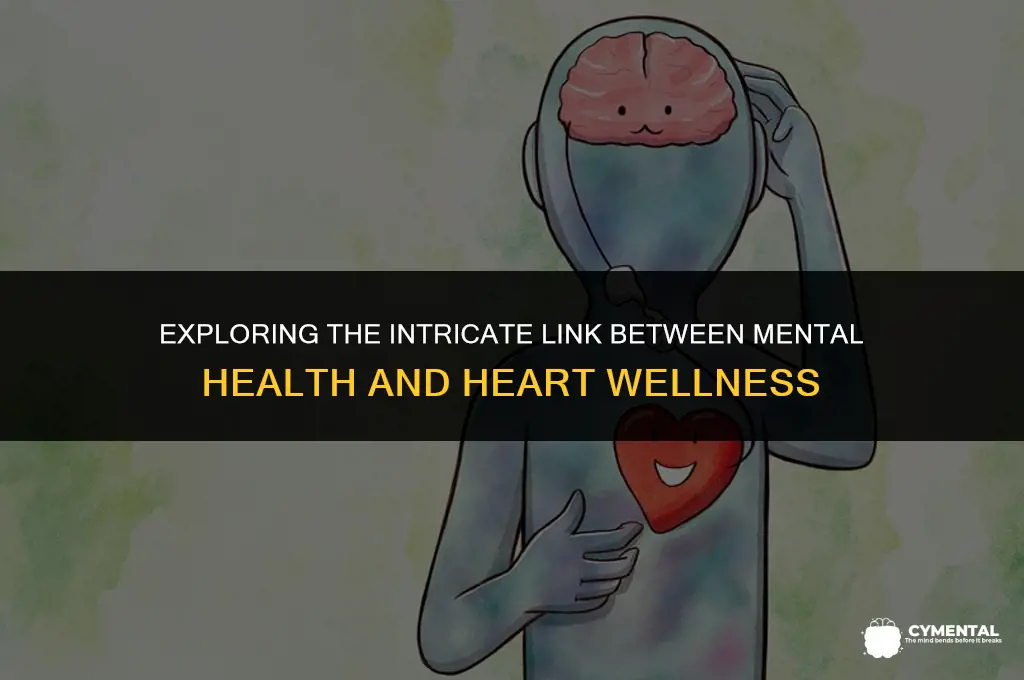
Mental health and heart health are deeply interconnected, with research increasingly highlighting the significant impact that psychological well-being can have on cardiovascular health. Conditions such as depression, anxiety, and stress have been shown to influence heart function and overall cardiovascular risk. This connection is mediated through various physiological pathways, including the release of stress hormones like cortisol, which can lead to increased blood pressure and heart rate, as well as changes in blood clotting factors and inflammation. Understanding this link is crucial for developing comprehensive approaches to healthcare that address both mental and physical well-being. By recognizing the interplay between mental health and heart health, individuals and healthcare providers can work together to implement strategies that promote holistic wellness and reduce the risk of cardiovascular disease.
Explore related products


What You'll Learn
- Stress and Anxiety: Chronic stress can lead to increased heart rate, blood pressure, and risk of heart disease
- Depression and Heart Disease: Depression is linked to an increased risk of developing heart disease and worsening existing conditions
- Psychological Trauma: Trauma can have long-term effects on heart health, including increased risk of heart attacks and strokes
- Mental Health and Lifestyle: Poor mental health can lead to unhealthy behaviors such as smoking, overeating, and lack of exercise, affecting heart health
- Treatment and Management: Addressing mental health issues through therapy and medication can help improve heart health outcomes

Stress and Anxiety: Chronic stress can lead to increased heart rate, blood pressure, and risk of heart disease
Chronic stress and anxiety are silent killers that can wreak havoc on our cardiovascular health. When we experience prolonged periods of stress, our body's fight-or-flight response is constantly activated, leading to a cascade of physiological changes that can have detrimental effects on our heart. One of the most significant impacts of chronic stress is the increase in heart rate and blood pressure. Over time, this can lead to a heightened risk of developing heart disease, including conditions such as hypertension, coronary artery disease, and even heart failure.
The link between stress and heart health is complex and multifaceted. Stress can lead to the release of stress hormones such as cortisol and adrenaline, which can cause blood vessels to constrict and increase blood pressure. Additionally, chronic stress can lead to unhealthy coping mechanisms such as overeating, smoking, and physical inactivity, all of which can further exacerbate cardiovascular risk factors. Furthermore, stress can also impact our sleep patterns, leading to insomnia or disrupted sleep, which has been shown to increase the risk of heart disease.
It's important to note that the effects of stress on heart health can vary depending on the individual. Factors such as age, gender, genetics, and overall health can all play a role in how stress affects our cardiovascular system. However, the good news is that there are steps we can take to mitigate the negative impacts of stress on our heart health. Regular exercise, a healthy diet, adequate sleep, and stress management techniques such as meditation and deep breathing can all help to reduce stress levels and improve cardiovascular health.
In conclusion, chronic stress and anxiety can have a profound impact on our heart health, leading to increased heart rate, blood pressure, and risk of heart disease. It's crucial that we take steps to manage our stress levels and adopt healthy lifestyle habits to protect our cardiovascular health. By doing so, we can reduce our risk of developing heart disease and improve our overall well-being.
Exploring the Connection: How Mental Health Impacts Your Eyesight
You may want to see also
Explore related products


Depression and Heart Disease: Depression is linked to an increased risk of developing heart disease and worsening existing conditions
Depression has a profound impact on physical health, particularly on the cardiovascular system. Research has consistently shown that individuals suffering from depression are at a higher risk of developing heart disease. This risk is not only elevated during depressive episodes but remains increased even after symptoms of depression have subsided. The link between depression and heart disease is multifaceted, involving both psychological and physiological factors.
One of the primary mechanisms by which depression affects heart health is through the chronic activation of the body's stress response. Prolonged exposure to stress hormones like cortisol can lead to inflammation, which is a known contributor to the development of heart disease. Additionally, depression often results in unhealthy lifestyle choices, such as poor diet, lack of exercise, and smoking, all of which are independent risk factors for cardiovascular disease.
Furthermore, depression can exacerbate existing heart conditions. Patients with heart disease who also suffer from depression tend to have worse outcomes, including higher rates of hospitalization and mortality. This is partly due to the fact that depression can impair adherence to medical treatment regimens, leading to inadequate management of heart disease symptoms and risk factors.
The impact of depression on heart health is not limited to adults. Studies have shown that children and adolescents with depression are also at an increased risk of developing cardiovascular disease later in life. This highlights the importance of early intervention and treatment of depression to prevent long-term physical health consequences.
In conclusion, the relationship between depression and heart disease is complex and bidirectional. Depression increases the risk of developing heart disease and worsens existing conditions, while heart disease can also contribute to the development of depression. Recognizing and addressing this link is crucial for improving both mental and physical health outcomes.
Festive Blues: Unwrapping the Impact of Holidays on Mental Health
You may want to see also
Explore related products


$11.85 $19


Psychological Trauma: Trauma can have long-term effects on heart health, including increased risk of heart attacks and strokes
Psychological trauma can have profound and lasting effects on an individual's heart health. Research has shown that experiencing trauma can increase the risk of developing cardiovascular diseases, including heart attacks and strokes. This connection is believed to be due to the body's stress response, which can lead to chronic inflammation, elevated blood pressure, and changes in blood clotting factors. These physiological changes can, over time, contribute to the development of heart disease.
One of the key mechanisms by which trauma affects heart health is through the activation of the body's fight-or-flight response. When an individual experiences trauma, their body releases stress hormones such as cortisol and adrenaline. These hormones can cause the heart to beat faster and the blood vessels to constrict, leading to increased blood pressure. Chronic exposure to these stress hormones can damage the blood vessels and increase the risk of heart disease.
In addition to the physiological effects, psychological trauma can also lead to behavioral changes that can negatively impact heart health. For example, individuals who have experienced trauma may be more likely to engage in unhealthy behaviors such as smoking, excessive drinking, or overeating. These behaviors can further increase the risk of developing heart disease.
It is important to note that the effects of trauma on heart health can be long-lasting, even if the traumatic event occurred many years prior. This highlights the importance of addressing psychological trauma as a critical component of overall heart health. By providing support and treatment for individuals who have experienced trauma, we can help to reduce their risk of developing heart disease and improve their overall well-being.
In conclusion, psychological trauma can have significant and long-term effects on heart health, increasing the risk of heart attacks and strokes. The connection between trauma and heart disease is complex, involving both physiological and behavioral factors. Addressing psychological trauma is essential for maintaining heart health and reducing the risk of cardiovascular diseases.
Exploring the Link: Dehydration's Impact on Mental Health Revealed
You may want to see also
Explore related products


Mental Health and Lifestyle: Poor mental health can lead to unhealthy behaviors such as smoking, overeating, and lack of exercise, affecting heart health
Poor mental health can significantly impact an individual's lifestyle choices, leading to a range of unhealthy behaviors that can negatively affect heart health. One of the most common unhealthy behaviors associated with poor mental health is smoking. Smoking is often used as a coping mechanism for stress and anxiety, but it is well-known to increase the risk of heart disease and stroke. In fact, smoking is responsible for approximately 1 in 4 deaths from heart disease in the United States.
Overeating is another unhealthy behavior that can stem from poor mental health. Emotional eating, where individuals consume food in response to feelings of stress, sadness, or anxiety, can lead to weight gain and obesity. Obesity is a major risk factor for heart disease, as it can increase blood pressure, cholesterol levels, and inflammation in the body. Furthermore, a diet high in processed and unhealthy foods, which is often associated with emotional eating, can also contribute to poor heart health.
Lack of exercise is a third unhealthy behavior that can result from poor mental health. Depression and anxiety can make it difficult for individuals to find the motivation to engage in physical activity, leading to a sedentary lifestyle. Regular exercise is crucial for maintaining good heart health, as it can help to lower blood pressure, improve cholesterol levels, and reduce the risk of heart disease. In addition, exercise has been shown to have a positive impact on mental health, reducing symptoms of depression and anxiety.
It is important to note that the relationship between mental health and heart health is complex and bidirectional. Not only can poor mental health lead to unhealthy behaviors that affect heart health, but heart disease can also have a negative impact on mental health. Individuals with heart disease may experience depression, anxiety, and other mental health issues as a result of their condition. Therefore, it is crucial to address both mental and physical health in order to maintain overall well-being.
In conclusion, poor mental health can lead to a range of unhealthy behaviors, including smoking, overeating, and lack of exercise, which can negatively impact heart health. Addressing mental health issues and promoting healthy lifestyle choices are essential for maintaining good heart health and overall well-being.
The Impact of Excessive Gaming on Mental Health: A Comprehensive Analysis
You may want to see also
Explore related products


Treatment and Management: Addressing mental health issues through therapy and medication can help improve heart health outcomes
Addressing mental health issues through therapy and medication can have a profound impact on improving heart health outcomes. Research has shown that untreated mental health conditions, such as depression and anxiety, can increase the risk of heart disease and stroke. However, by actively managing these conditions, individuals can reduce their cardiovascular risk factors and improve their overall heart health.
Therapy, particularly cognitive-behavioral therapy (CBT), has been shown to be effective in reducing symptoms of depression and anxiety, which in turn can lead to improvements in heart health. CBT works by helping individuals identify and change negative thought patterns and behaviors, which can contribute to both mental and physical health issues. In addition to CBT, other forms of therapy, such as interpersonal therapy and psychodynamic therapy, may also be beneficial in addressing mental health issues related to heart health.
Medication can also play a crucial role in managing mental health conditions and improving heart health outcomes. Antidepressants, such as selective serotonin reuptake inhibitors (SSRIs), have been shown to reduce symptoms of depression and anxiety, as well as lower blood pressure and improve other cardiovascular risk factors. It is important to note that medication should be used in conjunction with therapy, as a comprehensive treatment approach is often most effective.
In addition to therapy and medication, lifestyle changes can also contribute to improved heart health outcomes. Regular exercise, a healthy diet, and stress management techniques can all help to reduce cardiovascular risk factors. It is important for individuals to work with their healthcare providers to develop a personalized treatment plan that addresses both their mental and physical health needs.
In conclusion, addressing mental health issues through therapy and medication can have a significant impact on improving heart health outcomes. By actively managing mental health conditions, individuals can reduce their cardiovascular risk factors and improve their overall well-being. It is essential for healthcare providers to recognize the connection between mental and physical health and to provide comprehensive care that addresses both aspects.
Exploring the Intricate Link Between Dreams and Mental Health
You may want to see also
Frequently asked questions
Yes, mental health issues can directly impact heart health. Conditions like depression, anxiety, and stress can lead to increased heart rate, higher blood pressure, and other cardiovascular problems.
Specific mental health conditions that can affect the heart include depression, anxiety disorders, post-traumatic stress disorder (PTSD), and chronic stress. These conditions can contribute to the development of heart disease and other cardiovascular issues.
Stress affects the heart by causing the body to release stress hormones like cortisol and adrenaline. These hormones can increase heart rate and blood pressure, leading to strain on the heart muscle. Over time, chronic stress can contribute to the development of heart disease.
Yes, there are physical symptoms of mental health issues that can be mistaken for heart problems. For example, anxiety can cause chest pain, palpitations, and shortness of breath, which can be similar to symptoms of heart disease. It's important to consult with a healthcare professional to determine the underlying cause of these symptoms.
Some ways to manage mental health issues to protect heart health include practicing stress-reduction techniques like meditation and yoga, engaging in regular physical activity, maintaining a healthy diet, getting enough sleep, and seeking professional help from a therapist or counselor. By managing mental health issues, individuals can reduce their risk of developing heart problems.