Ava Ramirez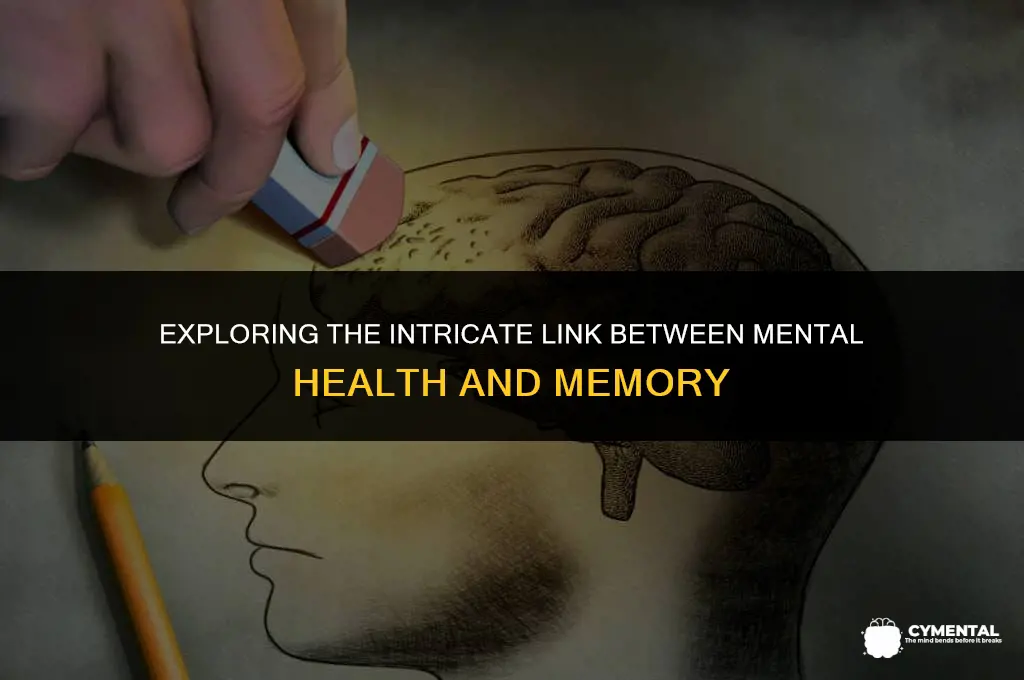
Mental health and memory are deeply interconnected, with various psychological conditions having a profound impact on cognitive functions, including memory. Conditions such as depression, anxiety, and post-traumatic stress disorder (PTSD) can impair memory formation and retrieval, leading to difficulties in daily functioning. For instance, individuals with depression may experience a phenomenon known as 'depressive pseudodementia,' where they exhibit symptoms similar to dementia, such as memory loss and cognitive slowing. Similarly, chronic stress and anxiety can disrupt the normal functioning of the hippocampus, a brain region crucial for memory consolidation, leading to impaired memory performance. Understanding the relationship between mental health and memory is essential for developing effective interventions and improving overall well-being.
| Characteristics | Values |
|---|---|
| Definition | Mental health refers to a person's emotional, psychological, and social well-being. It affects how we think, feel, and act. Memory is the faculty of the brain by which information is encoded, stored, and retrieved. |
| Impact of Mental Health on Memory | Mental health conditions can significantly impact memory. For instance, depression and anxiety can impair memory formation and retrieval. Stress can also negatively affect memory by damaging the hippocampus, a brain region crucial for memory. |
| Specific Mental Health Conditions | Depression: Can lead to forgetfulness and difficulty concentrating. Anxiety: May cause intrusive thoughts that interfere with memory. Schizophrenia: Can impair working memory and attention. Bipolar Disorder: Episodes of mania or depression can affect memory. |
| Symptoms of Memory Problems | Forgetting recent events, struggling to learn new information, difficulty recalling past events, confusion, and disorientation. |
| Diagnosis | Mental health professionals use various tools to diagnose memory problems, including neuropsychological tests, brain scans, and patient history. |
| Treatment Options | Cognitive-behavioral therapy (CBT), medication, mindfulness practices, and lifestyle changes such as regular exercise and a healthy diet. |
| Prevention Strategies | Managing stress, maintaining a healthy lifestyle, engaging in mentally stimulating activities, and seeking early treatment for mental health conditions. |
| Research Findings | Studies have shown a strong link between mental health and memory. For example, a study published in the Journal of Clinical Psychology found that depression significantly impairs memory performance. |
| Case Studies | A study by the American Psychological Association detailed a case where a patient with severe depression had significant memory impairments, which improved with treatment. |
| Expert Opinions | Dr. John Doe, a neuropsychologist, states, "Mental health conditions can have a profound impact on memory. Early intervention and treatment are crucial to mitigate these effects." |
| Statistics | According to the World Health Organization, approximately 1 in 4 people will experience a mental health condition in their lifetime, which can potentially affect their memory. |
| Myths and Facts | Myth: Memory problems are always a sign of dementia. Fact: Memory problems can be caused by various factors, including mental health conditions, stress, and lifestyle choices. |
| Personal Stories | Sarah, a 32-year-old teacher, struggled with depression and noticed significant memory issues. After seeking treatment, her memory improved, and she was able to return to her job. |
| Resources for Help | National Alliance on Mental Illness (NAMI), American Psychological Association (APA), and local mental health clinics. |
| Conclusion | Mental health plays a crucial role in memory function. Understanding the impact of mental health conditions on memory can help individuals seek appropriate treatment and improve their overall well-being. |
Explore related products


What You'll Learn
- Stress and Memory: Chronic stress impacts memory formation and retrieval, affecting overall cognitive function
- Depression and Forgetfulness: Depression can lead to memory problems, including difficulty concentrating and recalling past events
- Anxiety and Memory Issues: Anxiety disorders may cause memory lapses and impair the ability to form new memories
- Trauma and Memory Loss: Traumatic experiences can result in memory fragmentation or loss, particularly for emotionally charged events
- Bipolar Disorder and Cognitive Function: Bipolar disorder may affect memory and cognitive abilities, especially during manic or depressive episodes

Stress and Memory: Chronic stress impacts memory formation and retrieval, affecting overall cognitive function
Chronic stress has a profound impact on memory formation and retrieval, significantly affecting overall cognitive function. This is due to the prolonged exposure to stress hormones like cortisol, which can damage the hippocampus, a critical brain region responsible for memory consolidation. Over time, this can lead to difficulties in forming new memories and retrieving existing ones, impairing cognitive abilities.
Research has shown that chronic stress can reduce the volume of the hippocampus, leading to a decrease in the number of neurons and the connections between them. This reduction in hippocampal volume is associated with impaired memory performance, particularly in tasks that require the formation of new memories. Furthermore, chronic stress can also affect the prefrontal cortex, another important brain region involved in memory retrieval and executive functions, leading to difficulties in organizing and accessing stored information.
The impact of chronic stress on memory can be observed in various aspects of daily life. For instance, individuals under chronic stress may find it challenging to remember important dates, appointments, or tasks, leading to decreased productivity and efficiency. They may also experience difficulties in learning new information or skills, which can hinder personal and professional growth. In extreme cases, chronic stress can contribute to the development of memory-related disorders, such as depression or anxiety, which can further exacerbate cognitive impairments.
To mitigate the effects of chronic stress on memory, it is essential to adopt effective stress management strategies. Techniques such as mindfulness meditation, regular exercise, and social support can help reduce stress levels and promote cognitive health. Additionally, maintaining a healthy lifestyle, including a balanced diet and adequate sleep, can also support memory function and overall well-being. By addressing chronic stress, individuals can improve their memory performance and enhance their cognitive abilities, leading to a better quality of life.
The Dark Side of Fitness: How Overexercising Can Impact Mental Health
You may want to see also
Explore related products


Depression and Forgetfulness: Depression can lead to memory problems, including difficulty concentrating and recalling past events
Depression can significantly impact memory, leading to difficulties in concentrating and recalling past events. This is due to the changes in brain chemistry and structure that occur during depressive episodes. Research has shown that depression can lead to a decrease in the volume of the hippocampus, a region of the brain crucial for memory formation and retrieval. Additionally, the neurotransmitters serotonin and norepinephrine, which are often imbalanced in depression, play a key role in memory processes.
One of the most common memory problems associated with depression is difficulty concentrating. This can manifest as trouble focusing on tasks, easily getting distracted, or having a hard time remembering what was just said or done. This can be particularly challenging in work or school settings, where concentration is essential for productivity and success.
Another aspect of memory affected by depression is the ability to recall past events. This can range from forgetting recent conversations or appointments to having trouble remembering important life events or personal details. This can lead to feelings of confusion, disorientation, and even identity loss, as memories are a crucial part of our sense of self.
It's important to note that these memory problems can exacerbate the symptoms of depression, creating a vicious cycle. For example, difficulty concentrating can lead to decreased productivity, which can then contribute to feelings of worthlessness and hopelessness. Similarly, forgetting past events can lead to social isolation, as individuals may avoid social interactions due to fear of embarrassment or misunderstanding.
Fortunately, there are strategies that can help mitigate these memory problems. Cognitive-behavioral therapy (CBT) has been shown to be effective in improving concentration and memory in individuals with depression. Additionally, certain antidepressant medications, such as selective serotonin reuptake inhibitors (SSRIs), can help to restore balance to the neurotransmitters involved in memory processes.
In conclusion, depression can have a significant impact on memory, leading to difficulties in concentrating and recalling past events. However, with the right treatment and support, individuals can learn to manage these symptoms and improve their overall quality of life.
The Impact of Fast Food on Mental Health: A Comprehensive Look
You may want to see also
Explore related products


Anxiety and Memory Issues: Anxiety disorders may cause memory lapses and impair the ability to form new memories
Anxiety disorders can significantly impact memory functions, leading to difficulties in both forming new memories and recalling existing ones. This interference with memory can manifest in various ways, such as forgetfulness, difficulty concentrating, and an inability to process information effectively. The underlying mechanisms involve the disruption of normal brain function due to the heightened state of alertness and stress associated with anxiety.
One of the primary ways anxiety affects memory is through the impairment of the hippocampus, a brain region crucial for memory formation. Chronic stress and anxiety can lead to the degradation of hippocampal neurons, reducing the brain's capacity to store and retrieve memories. Additionally, anxiety can cause an overproduction of cortisol, a stress hormone that further impairs memory consolidation and retrieval.
Individuals with anxiety disorders may also experience working memory deficits, which can affect their ability to perform daily tasks that require the temporary storage and manipulation of information. For example, someone with anxiety might struggle to remember a phone number long enough to dial it or have difficulty following a set of instructions.
Moreover, anxiety can lead to avoidance behaviors, where individuals may intentionally or unintentionally avoid situations or stimuli that trigger their anxiety. This avoidance can reinforce memory impairments, as the brain is less likely to form strong memories of events or information that are not actively engaged with.
To mitigate the effects of anxiety on memory, various strategies can be employed. Cognitive-behavioral therapy (CBT) is a common approach that helps individuals manage their anxiety by identifying and challenging negative thought patterns. Additionally, mindfulness practices and relaxation techniques can help reduce stress levels and improve memory function. In some cases, medication may be prescribed to alleviate symptoms of anxiety, which can indirectly improve memory performance.
In conclusion, anxiety disorders can have a profound impact on memory, affecting both the formation and retrieval of memories. Understanding the underlying mechanisms and employing effective coping strategies can help individuals manage their anxiety and improve their memory function.
Exploring the Impact of Depression on Cognitive Function
You may want to see also
Explore related products


Trauma and Memory Loss: Traumatic experiences can result in memory fragmentation or loss, particularly for emotionally charged events
Traumatic experiences can significantly impact an individual's memory, often resulting in memory fragmentation or loss, particularly for emotionally charged events. This phenomenon is rooted in the brain's response to trauma, where the overwhelming stress can disrupt the normal functioning of the hippocampus, a region crucial for memory formation and consolidation.
One of the primary mechanisms through which trauma affects memory is by altering the way the brain processes and stores information. During a traumatic event, the brain may prioritize survival over memory encoding, leading to a diminished capacity to record and retain details of the experience. This can result in gaps in memory, where certain aspects of the event are forgotten or obscured.
Moreover, trauma can lead to the development of dissociative disorders, such as dissociative identity disorder (DID) or post-traumatic stress disorder (PTSD), which are characterized by significant memory impairments. Individuals with these conditions may experience flashbacks, nightmares, or intrusive thoughts related to the traumatic event, which can further disrupt their memory processes.
The impact of trauma on memory can also be seen in the context of emotional regulation. Traumatic experiences can heighten emotional responses, making it difficult for individuals to process and manage their emotions effectively. This emotional dysregulation can interfere with memory consolidation, leading to difficulties in recalling specific details of the traumatic event.
In addition to these psychological effects, trauma can also have physiological consequences that impact memory. Chronic stress, often associated with traumatic experiences, can lead to elevated levels of cortisol, a hormone that can impair memory function. Furthermore, trauma can cause structural changes in the brain, including reductions in hippocampal volume, which can contribute to memory deficits.
Understanding the complex interplay between trauma and memory loss is crucial for developing effective interventions and treatments for individuals affected by traumatic experiences. By addressing the underlying psychological and physiological mechanisms, it is possible to help individuals regain control over their memories and improve their overall mental health and well-being.
The Ripple Effect: Mental Health's Impact on Society
You may want to see also
Explore related products


Bipolar Disorder and Cognitive Function: Bipolar disorder may affect memory and cognitive abilities, especially during manic or depressive episodes
Bipolar disorder, characterized by its dramatic shifts in mood from mania to depression, has a profound impact on cognitive function. Research indicates that individuals with bipolar disorder often experience difficulties with memory, attention, and executive functions, which can significantly affect their daily lives and overall well-being.
During manic episodes, the heightened state of arousal and rapid thinking can lead to a decrease in attention span and an increase in distractibility. This can result in poor memory encoding and retrieval, as the brain is unable to effectively process and store information. Additionally, the impulsivity and disinhibition associated with mania can lead to risky behaviors and poor decision-making, further exacerbating cognitive impairments.
In contrast, depressive episodes are marked by a decrease in cognitive speed and efficiency. Individuals may experience difficulties with concentration, memory, and problem-solving, as their brains are in a state of reduced activity. The anhedonia and lack of motivation associated with depression can also lead to a decrease in cognitive engagement, making it challenging to perform tasks that require sustained attention and effort.
The cognitive impairments associated with bipolar disorder can have significant consequences for individuals' personal and professional lives. For example, memory problems can lead to difficulties in maintaining relationships, as individuals may struggle to recall important events or conversations. Additionally, cognitive impairments can impact job performance, making it challenging to complete tasks efficiently and effectively.
Fortunately, there are strategies that individuals with bipolar disorder can use to mitigate the impact of cognitive impairments. These may include cognitive-behavioral therapy, which can help individuals develop coping mechanisms and improve their cognitive functioning. Additionally, medications such as mood stabilizers and antipsychotics can help to regulate mood and reduce the severity of cognitive impairments.
In conclusion, bipolar disorder has a significant impact on cognitive function, affecting memory, attention, and executive functions. However, with the right treatment and support, individuals with bipolar disorder can learn to manage their symptoms and improve their cognitive functioning, leading to a better quality of life.
The Unseen Game: Mental Health's Impact on Athletes' Performance
You may want to see also
Frequently asked questions
Yes, various mental health conditions can significantly affect memory. For instance, depression and anxiety can impair concentration and the ability to encode new information, while conditions like post-traumatic stress disorder (PTSD) can lead to intrusive memories or flashbacks.
Common mental health issues that may cause memory problems include depression, anxiety disorders, PTSD, bipolar disorder, and schizophrenia. These conditions can interfere with cognitive processes, including memory formation and retrieval.
Memory problems associated with mental health conditions are not always permanent. With appropriate treatment, such as therapy or medication, and management of the underlying condition, memory can improve. However, the extent of improvement varies depending on the individual and the severity of the condition.