Madison Cole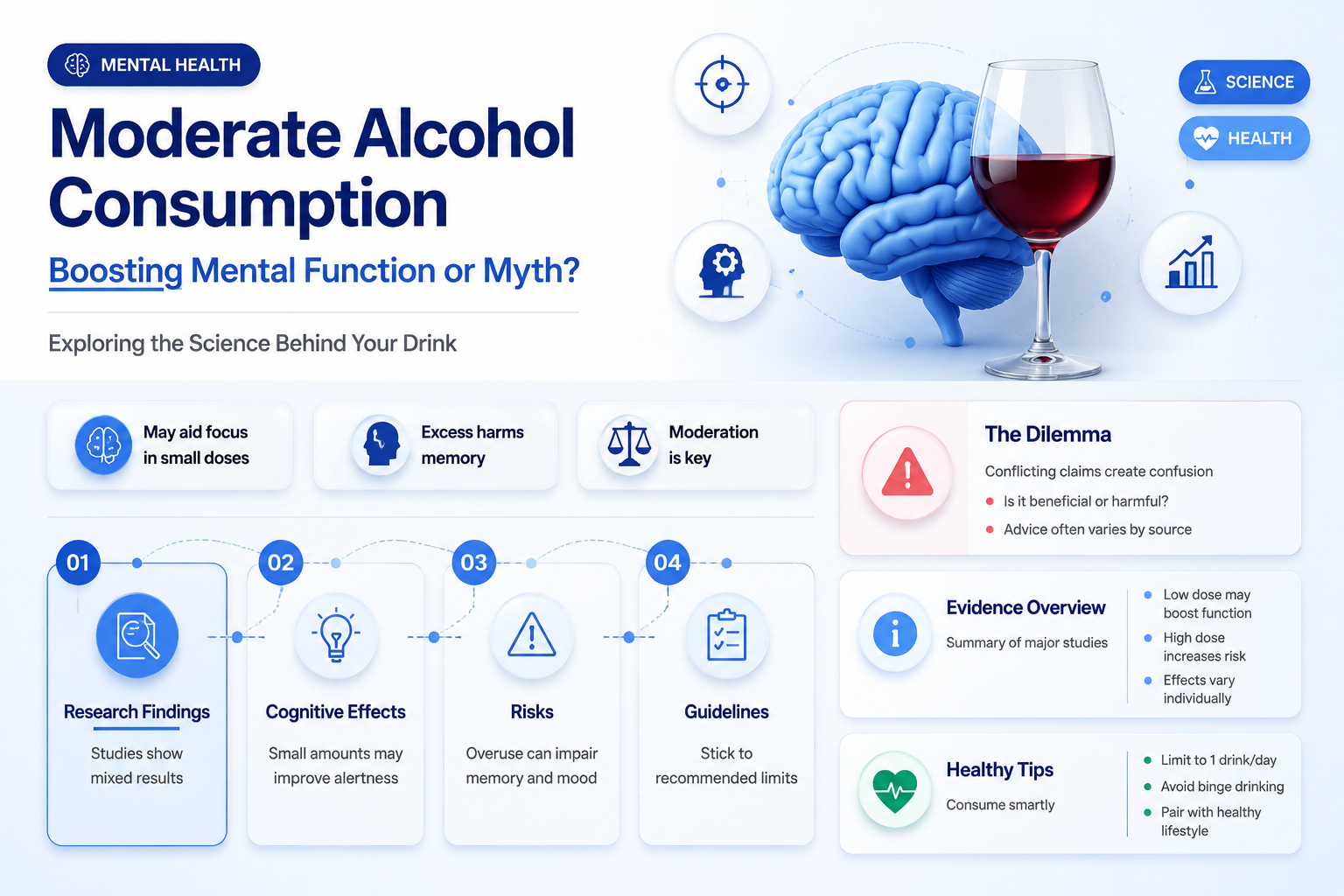
The idea that a single alcoholic drink might enhance mental function has been a topic of both scientific inquiry and popular discussion. While moderate alcohol consumption, particularly of beverages like red wine, has been associated with potential cognitive benefits such as improved memory and reduced risk of dementia, the evidence remains nuanced and context-dependent. Alcohol’s effects on the brain are complex, with even small amounts potentially impairing immediate cognitive performance while possibly offering long-term neuroprotective effects. However, the risks of alcohol, including dependency and negative health impacts, often outweigh any potential cognitive benefits. As such, the question of whether one alcoholic drink can genuinely aid mental function highlights the need for careful consideration of both the scientific data and individual health factors.
| Characteristics | Values |
|---|---|
| Moderate Alcohol Consumption | Some studies suggest that low to moderate alcohol intake (e.g., 1 drink per day for women, 2 for men) may have cognitive benefits, such as improved memory and reduced risk of dementia. |
| Neuroprotective Effects | Alcohol in small amounts may increase brain blood flow and stimulate the release of acetylcholine, a neurotransmitter linked to learning and memory. |
| Antioxidant Properties | Red wine, in particular, contains antioxidants like resveratrol, which may protect brain cells from oxidative stress and inflammation. |
| Social and Psychological Factors | One drink may reduce stress and anxiety, indirectly improving mental function by enhancing mood and social interaction. |
| Individual Variability | Effects vary based on age, genetics, overall health, and drinking patterns. Some individuals may experience no benefits or even negative effects. |
| Short-Term vs. Long-Term Effects | While one drink may temporarily enhance relaxation and sociability, long-term moderate drinking may have cumulative cognitive benefits, though evidence is mixed. |
| Risks of Overconsumption | Even moderate drinking can lead to dependence, liver damage, and increased risk of cognitive decline if consumption exceeds recommended limits. |
| Controversial Evidence | Research is inconsistent; some studies show no cognitive benefits, while others suggest potential harm, especially in older adults or those with pre-existing health conditions. |
| Alternative Options | Similar cognitive benefits can be achieved through exercise, a healthy diet, and social engagement without the risks associated with alcohol. |
| Conclusion | While one alcoholic drink may offer minor cognitive benefits for some, the overall evidence is inconclusive, and potential risks must be weighed against any perceived advantages. |
Explore related products




What You'll Learn
- Moderate alcohol's impact on cognitive flexibility and problem-solving skills
- Effects of one drink on memory retention and recall abilities
- Alcohol's role in reducing stress and improving focus temporarily
- Potential neuroprotective benefits of low alcohol consumption on brain health
- Risks vs. benefits: Does one drink enhance or impair mental clarity

Moderate alcohol's impact on cognitive flexibility and problem-solving skills
A single alcoholic drink can subtly enhance cognitive flexibility, the mental agility required to switch between tasks or perspectives. Studies suggest that low doses of alcohol, typically defined as one drink (12 ounces of beer, 5 ounces of wine, or 1.5 ounces of distilled spirits) for women and up to two drinks for men, may temporarily reduce cognitive inhibition. This effect can make individuals more open to exploring unconventional solutions during problem-solving tasks. For instance, a 2012 study published in *Consciousness and Cognition* found that participants with a blood alcohol content (BAC) of approximately 0.03% performed better on creative problem-solving tests compared to sober counterparts. However, this benefit is dose-dependent; exceeding moderate levels quickly reverses these effects, impairing both flexibility and problem-solving.
To leverage this potential cognitive boost, consider timing and context. For adults aged 25–65, consuming one drink 30–60 minutes before a brainstorming session or creative task may enhance divergent thinking. Pair this with structured activities, such as mind-mapping or lateral thinking exercises, to channel the reduced inhibition productively. Avoid tasks requiring precision or memory recall, as even moderate alcohol can impair these functions. For example, a software developer might use this window to ideate solutions to a coding problem but should delay debugging or writing code until the effects wear off.
While the idea of alcohol as a cognitive enhancer is intriguing, it’s not without risks. Regular reliance on alcohol for mental stimulation can lead to tolerance, dependency, or long-term cognitive decline. Individuals with a history of substance abuse, certain medical conditions, or those taking medications metabolized by the liver should avoid this practice altogether. Instead, healthier alternatives like moderate caffeine intake, mindfulness exercises, or physical activity can achieve similar cognitive flexibility without the downsides.
Comparatively, the effects of moderate alcohol on cognitive flexibility resemble those of "psychological distance"—a mental state where individuals detach from immediate constraints to think more freely. However, unlike alcohol, techniques like imagining a problem from a third-person perspective or delaying decision-making carry no health risks. For those intrigued by alcohol’s temporary benefits, treat it as an occasional tool rather than a habit. Monitor your response closely; if you notice diminished returns or negative side effects, discontinue use and explore safer alternatives.
In practice, the key to harnessing moderate alcohol’s impact lies in precision and restraint. Limit consumption to one drink for women and two for men, ensuring your BAC remains below 0.05%. Combine this with tasks that benefit from reduced inhibition, such as ideation or conceptual planning. Always prioritize long-term cognitive health by balancing occasional use with consistent habits like sleep, exercise, and mental training. While a single drink may offer a fleeting edge in cognitive flexibility, it’s the disciplined approach that sustains problem-solving prowess over time.
Music's Power: Boosting Middle Schoolers' Mental Health and Well-Being
You may want to see also
Explore related products


Effects of one drink on memory retention and recall abilities
A single alcoholic drink can have a nuanced impact on memory retention and recall abilities, depending on factors like dosage, timing, and individual physiology. Research suggests that low to moderate alcohol consumption—typically defined as one drink (12 ounces of beer, 5 ounces of wine, or 1.5 ounces of distilled spirits) for women and up to two drinks for men—may temporarily enhance certain cognitive functions, including creativity and social cognition. However, its effects on memory are less straightforward. While some studies indicate that small amounts of alcohol can reduce stress and improve mood, which might indirectly aid memory, others show that even one drink can impair short-term memory consolidation and recall. The key lies in the delicate balance between alcohol’s depressant effects on the brain and its potential to lower inhibitions, which can influence how information is processed and stored.
To understand the practical implications, consider a scenario where an individual consumes one glass of wine before studying or engaging in a memory-intensive task. Alcohol’s impact on the hippocampus, the brain region critical for memory formation, can vary based on dosage. A 2018 study published in *Scientific Reports* found that low doses of alcohol (equivalent to one drink) did not significantly impair memory in young adults aged 18–25 but noted individual differences in response. However, even slight impairment in memory consolidation could mean that newly learned information is less likely to be retained long-term. For older adults, particularly those over 65, the effects may be more pronounced due to age-related changes in metabolism and brain function, making one drink more likely to hinder recall abilities.
If you’re considering using one drink as a cognitive aid, proceed with caution. Start by assessing your personal tolerance and health status, as factors like body weight, medication use, and pre-existing conditions can amplify alcohol’s effects. For instance, individuals with liver conditions or those taking sedatives should avoid this practice altogether. Timing is also critical: consuming one drink at least 2–3 hours before a memory-focused task may minimize immediate impairment, as peak blood alcohol concentration occurs within 30–90 minutes of consumption. Pairing the drink with food can slow absorption and reduce its impact on cognitive function. However, relying on alcohol as a memory enhancer is not advisable, as consistent use, even in small amounts, can lead to dependency and long-term cognitive decline.
Comparing the effects of one drink to other memory-enhancing strategies highlights its limitations. For example, aerobic exercise, mindfulness meditation, and adequate sleep have been consistently shown to improve memory retention and recall without the risks associated with alcohol. While one drink might offer a temporary mood boost, its potential to impair memory consolidation makes it a poor choice for those seeking sustained cognitive benefits. Instead, focus on lifestyle habits that promote brain health, such as staying hydrated, maintaining a balanced diet, and engaging in regular mental stimulation. These methods provide long-term advantages without the drawbacks of alcohol consumption.
In conclusion, while one alcoholic drink may not severely impair memory retention and recall for most individuals, its effects are inconsistent and depend on numerous variables. For those seeking to optimize cognitive function, the risks outweigh the potential benefits. Practical alternatives, such as strategic study techniques, stress management, and healthy lifestyle choices, offer more reliable and sustainable ways to enhance memory. If you choose to consume alcohol, do so mindfully, prioritizing moderation and awareness of its impact on your cognitive abilities.
Mental Health History: Boosting Temporary Insanity Claims in Court?
You may want to see also
Explore related products


Alcohol's role in reducing stress and improving focus temporarily
A single alcoholic drink can temporarily reduce stress and enhance focus by modulating neurotransmitter activity in the brain. When consumed in moderation—typically defined as one drink (12 ounces of beer, 5 ounces of wine, or 1.5 ounces of distilled spirits) for women and up to two for men—alcohol acts as a mild central nervous system depressant. This effect can dampen the brain’s stress response by increasing GABA activity, which inhibits overactivity in the nervous system, while simultaneously reducing glutamate, an excitatory neurotransmitter. The result is a calming sensation that can temporarily alleviate anxiety and improve mental clarity for some individuals.
However, this effect is highly dose-dependent. At low doses, alcohol’s interaction with the brain’s dopamine system can create a sense of reward and relaxation, fostering a temporary improvement in focus and mood. For example, a 2013 study published in *Alcoholism: Clinical & Experimental Research* found that light alcohol consumption (equivalent to one drink) improved performance on cognitive tasks requiring focus in older adults. Yet, exceeding this threshold quickly reverses these benefits, as higher doses impair coordination, memory, and decision-making. The key lies in precision: one drink may act as a temporary cognitive enhancer, but two or more can lead to cognitive decline.
Practical application of this phenomenon requires awareness of individual tolerance and context. Younger adults (ages 21–35) may experience more pronounced stress reduction due to higher baseline stress levels, but they must also consider the risks of developing dependency patterns. Older adults (ages 65+) might benefit from the cognitive boost but should monitor interactions with medications. Timing matters too: consuming alcohol during a work break or before a high-pressure task could temporarily sharpen focus, but post-task consumption is safer to avoid impairing follow-up responsibilities. Pairing the drink with food slows absorption, prolonging the mild effects and reducing the risk of overconsumption.
The comparative analysis of alcohol’s role in stress reduction versus other methods highlights its dual nature. Unlike mindfulness or exercise, which offer sustained benefits without negative side effects, alcohol’s effects are fleeting and come with risks. For instance, chronic reliance on alcohol for stress relief can lead to tolerance, dependence, and long-term cognitive impairment. Yet, in controlled scenarios—such as a single drink at a networking event to ease social anxiety—it can serve as a temporary tool. The takeaway is clear: alcohol’s role in reducing stress and improving focus is a delicate balance, best reserved for occasional, mindful use rather than a habitual strategy.
Massage Therapy: A Powerful Tool for Mental Health and Wellness
You may want to see also
Explore related products


Potential neuroprotective benefits of low alcohol consumption on brain health
Moderate alcohol consumption, typically defined as one drink per day for women and up to two for men, has been a subject of intrigue in neuroscience. Studies suggest that low doses of alcohol, particularly from sources like red wine, may offer neuroprotective effects. This phenomenon is often attributed to polyphenols, such as resveratrol, which combat oxidative stress and inflammation—key contributors to neurodegenerative diseases like Alzheimer’s and Parkinson’s. However, the line between benefit and harm is razor-thin, as exceeding these limits swiftly negates any potential advantages.
Consider the mechanism: alcohol in moderation can enhance cerebral blood flow and stimulate the release of acetylcholine, a neurotransmitter vital for memory and learning. A 2018 study in *Neurology* found that light drinkers (1-3 drinks weekly) had a 50% lower risk of dementia compared to abstainers, though confounding factors like lifestyle were not fully controlled. This isn’t a green light for nondrinkers to start; rather, it highlights the complexity of alcohol’s interaction with brain chemistry. For those who already consume alcohol, staying within recommended limits may preserve cognitive function without introducing risks.
Practical application requires precision. A "drink" is standardized as 14 grams of pure alcohol—equivalent to 5 ounces of wine (12% ABV), 12 ounces of beer (5% ABV), or 1.5 ounces of distilled spirits (40% ABV). Age is a critical factor; individuals over 65 metabolize alcohol slower and may benefit from halving these portions. Pairing alcohol with antioxidant-rich foods, like berries or nuts, can amplify its neuroprotective potential while minimizing liver strain.
Contrast this with excessive consumption, which is unequivocally detrimental. Binge drinking (4+ drinks for women, 5+ for men in 2 hours) accelerates brain atrophy, impairs synaptic plasticity, and increases dementia risk by 300%. The neuroprotective hypothesis thus hinges on strict moderation—a delicate balance rarely maintained in real-world scenarios. For those with a family history of addiction or brain disorders, even minimal alcohol intake may pose unwarranted risks.
In conclusion, while low alcohol consumption may offer transient neuroprotective benefits, it is not a prescription for brain health. The evidence is associative, not causal, and individual variability in genetics, metabolism, and lifestyle complicates generalization. If you choose to drink, do so mindfully, adhering to guidelines and prioritizing alternatives like exercise, cognitive training, and a Mediterranean diet for sustained brain vitality.
Reading the Bible: A Path to Mental Health and Healing?
You may want to see also
Explore related products


Risks vs. benefits: Does one drink enhance or impair mental clarity?
Alcohol's effects on the brain are a double-edged sword, particularly when considering the impact of a single drink. Research suggests that moderate alcohol consumption, defined as up to one drink per day for women and up to two drinks per day for men, may have some cognitive benefits. For instance, a study published in the *New England Journal of Medicine* found that light to moderate drinkers had a lower risk of dementia compared to both abstainers and heavy drinkers. This phenomenon is often attributed to the antioxidant properties of certain alcoholic beverages, like red wine, which contains resveratrol, a compound linked to improved brain health. However, the key lies in moderation—a single drink may offer subtle cognitive perks, but exceeding this threshold quickly shifts the balance toward impairment.
Consider the immediate effects of one drink on mental clarity. For some individuals, a small amount of alcohol can reduce anxiety and increase sociability, which may enhance cognitive performance in certain social or creative tasks. This is because low doses of alcohol can stimulate the release of GABA, a neurotransmitter that promotes relaxation. However, this effect is highly individual; factors like age, weight, and tolerance play a role. For example, a 12-ounce beer (5% ABV), 5-ounce glass of wine (12% ABV), or 1.5-ounce shot of distilled spirits (40% ABV) constitutes one standard drink, but the impact varies based on metabolism. Younger adults or those with lower body weight may experience more pronounced effects, even from a single serving.
While the potential benefits of one drink are intriguing, the risks cannot be overlooked. Even a single alcoholic beverage can impair coordination, reaction time, and judgment, which are critical components of mental clarity. For instance, a blood alcohol concentration (BAC) of just 0.05%—achievable with one drink for many individuals—can reduce alertness and increase distraction. This is particularly concerning for tasks requiring precision, such as driving or operating machinery. Moreover, the cumulative effects of daily drinking, even at low levels, can lead to long-term cognitive decline, contradicting the short-term benefits often cited.
Practical considerations are essential when weighing the risks and benefits. If you’re contemplating whether to have one drink for potential cognitive perks, assess the context. Are you about to engage in a task requiring sharp focus? If so, abstaining might be wiser. Alternatively, if you’re in a low-stakes social setting, one drink could enhance your experience without significant drawbacks. For older adults, particularly those over 65, even one drink may pose higher risks due to age-related changes in metabolism and brain sensitivity. Always prioritize hydration and avoid drinking on an empty stomach to minimize adverse effects.
In conclusion, the question of whether one drink enhances or impairs mental clarity hinges on individual factors and context. While moderate alcohol consumption may offer minor cognitive benefits, the line between enhancement and impairment is thin. A single drink can provide a temporary boost in relaxation or sociability for some, but it also carries immediate and long-term risks. To maximize potential benefits while minimizing harm, adhere strictly to moderation guidelines, be mindful of personal health conditions, and always consider the demands of the task at hand.
Supporting Loved Ones: A Guide to Accessing Mental Health Care for Family
You may want to see also
Frequently asked questions
While some studies suggest low alcohol consumption (e.g., one drink) may have temporary cognitive benefits, such as reduced stress or increased sociability, the effects are minimal and not proven to enhance mental function long-term.
Alcohol may lower inhibitions, making some people feel more creative, but it impairs cognitive processes like memory, attention, and decision-making, which are essential for true problem-solving and creativity.
Some research suggests moderate drinking might be linked to a lower risk of cognitive decline in older adults, but the evidence is inconsistent. Other factors, like a healthy lifestyle, likely play a larger role.
No, even one alcoholic drink can impair focus and concentration due to its depressant effects on the central nervous system. It may temporarily reduce anxiety but does not improve mental clarity or productivity.