Noah Parker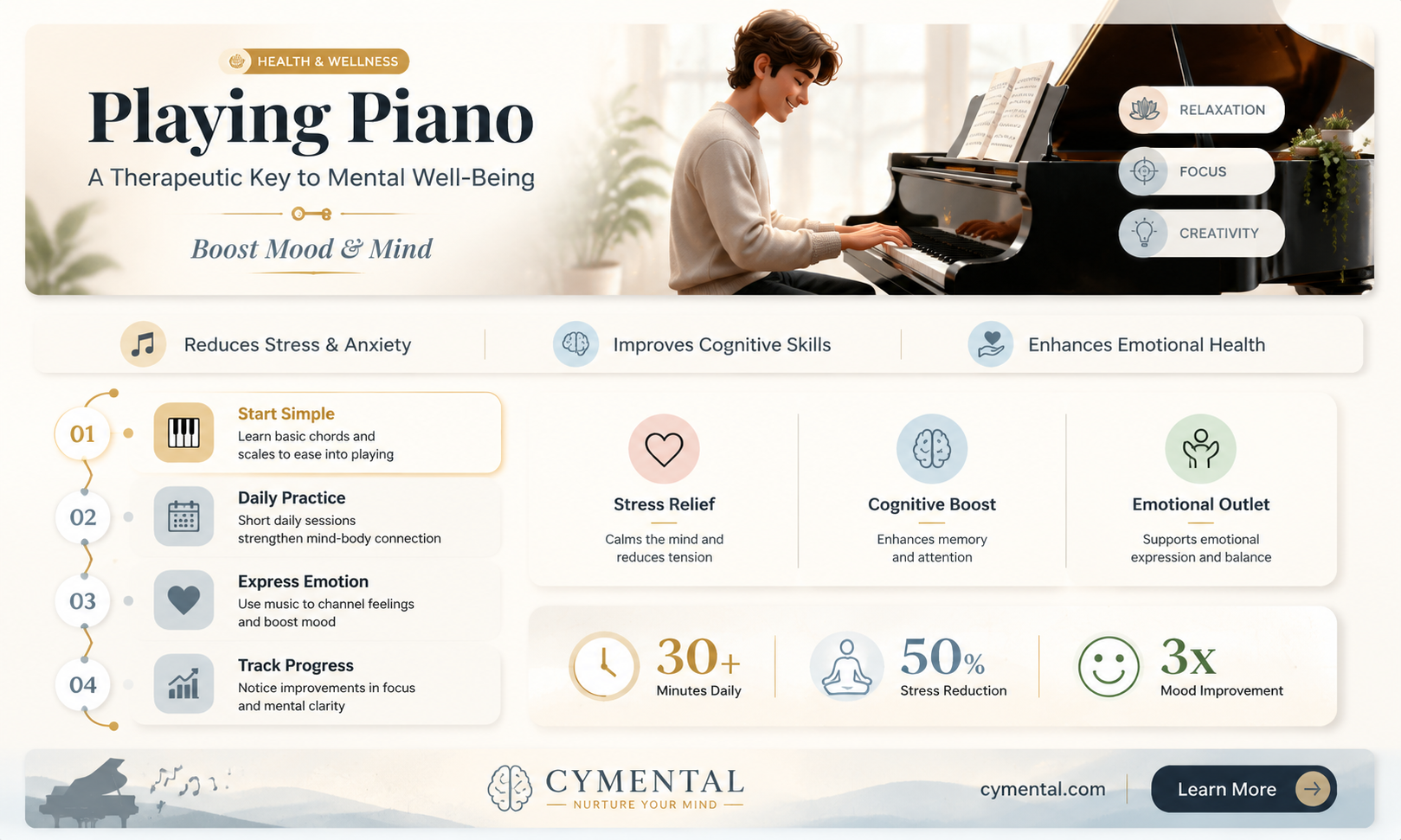
Playing the piano has been increasingly recognized as a beneficial activity for mental health, offering a unique blend of cognitive, emotional, and therapeutic advantages. Engaging with music, particularly through the structured and expressive nature of piano playing, can reduce stress, alleviate symptoms of anxiety and depression, and enhance overall emotional well-being. The act of learning and practicing piano stimulates the brain, improving focus, memory, and problem-solving skills, while the creative process of interpreting and performing music provides an outlet for self-expression and emotional release. Additionally, the rhythmic and repetitive aspects of playing can induce a meditative state, promoting relaxation and mindfulness. For these reasons, many mental health professionals and individuals alike are turning to piano playing as a complementary tool to support mental health and foster resilience.
| Characteristics | Values |
|---|---|
| Stress Reduction | Playing piano reduces cortisol levels, promoting relaxation and lowering stress. |
| Improved Mood | Engages the release of endorphins, enhancing mood and reducing symptoms of depression and anxiety. |
| Cognitive Enhancement | Enhances memory, attention, and problem-solving skills through complex neural engagement. |
| Emotional Expression | Provides a creative outlet for emotional expression, aiding in processing feelings. |
| Mindfulness | Encourages present-moment awareness, similar to meditative practices. |
| Social Connection | Group piano activities or performances foster social interaction and community. |
| Self-Esteem Boost | Mastering pieces and achieving musical goals increases confidence and self-worth. |
| Pain Management | Distracts from chronic pain and reduces perception of discomfort. |
| Better Sleep | Promotes relaxation, improving sleep quality and duration. |
| Neuroplasticity | Stimulates brain plasticity, supporting recovery from neurological conditions. |
| Reduced Anxiety | Structured practice and focus help manage anxiety symptoms. |
| Enhanced Focus | Improves concentration and sustained attention through disciplined practice. |
| Creative Outlet | Fosters creativity and innovation, benefiting overall mental well-being. |
| Therapeutic Tool | Used in music therapy to address mental health issues like PTSD and trauma. |
| Long-Term Benefits | Lifelong engagement with piano playing correlates with sustained mental health improvements. |
Explore related products


What You'll Learn
- Stress Reduction: Playing piano lowers cortisol, promotes relaxation, and reduces anxiety through rhythmic, focused activity
- Cognitive Enhancement: Improves memory, concentration, and problem-solving skills via complex neural engagement
- Emotional Expression: Allows emotional release, fostering self-awareness and mood regulation through music creation
- Mindfulness Practice: Encourages present-moment focus, reducing overthinking and enhancing mental clarity
- Social Connection: Group playing or performances combat loneliness, boosting self-esteem and community ties

Stress Reduction: Playing piano lowers cortisol, promotes relaxation, and reduces anxiety through rhythmic, focused activity
Playing piano isn’t just an artistic pursuit—it’s a physiological intervention for stress. Studies show that engaging in rhythmic, focused activities like piano playing triggers the parasympathetic nervous system, which counteracts the body’s stress response. Cortisol, the primary stress hormone, decreases measurably during and after sessions, particularly in individuals who practice for 20–30 minutes daily. This isn’t merely anecdotal; research published in the *Journal of Music Therapy* found that cortisol levels dropped by an average of 15% in participants after a structured piano session. For those seeking a tangible way to manage stress, this data-backed approach offers a clear starting point: sit at the piano, play deliberately, and let the science work in your favor.
Consider the mechanics of piano playing: it demands focus, coordination, and rhythm. These elements combine to create a meditative state, pulling the mind away from stressors and into the present moment. Beginners often find that mastering even a simple melody requires concentration, effectively crowding out intrusive thoughts. Advanced players experience this through complex pieces, where the challenge of interpreting dynamics and phrasing becomes all-consuming. The key is consistency—aim for daily practice, even if it’s just 10–15 minutes. Over time, this ritual trains the brain to associate piano playing with relaxation, making it a powerful tool for anxiety reduction.
For maximum stress-relief benefits, structure your piano sessions with intention. Start with slow, repetitive pieces or scales to ease into the activity, allowing your heart rate to stabilize. Incorporate deep breathing while playing; inhale for two counts, exhale for four, syncing breath with rhythm. Avoid perfectionism—the goal isn’t performance but presence. If you’re short on time, focus on a single phrase or chord progression rather than rushing through a full piece. Even children as young as six can benefit; simplified exercises or playful tunes engage their minds similarly, fostering relaxation habits early.
Comparing piano playing to other stress-reduction methods highlights its unique advantages. Unlike passive activities like watching TV, piano engages both hemispheres of the brain, fostering active relaxation. Unlike high-intensity exercise, it’s accessible to all ages and physical abilities, offering a low-impact way to unwind. While meditation requires stillness, piano combines movement and creativity, appealing to those who find traditional mindfulness practices challenging. Its versatility—whether playing classical, jazz, or improvisation—ensures it remains engaging, preventing the monotony that can diminish other stress-relief techniques over time.
Incorporating piano into a stress-management routine doesn’t require virtuosity. Start small: learn a few chords or a short melody, and gradually build complexity. Use apps or online tutorials if formal lessons aren’t feasible. Keep a practice journal to track progress and note how you feel before and after each session—this awareness reinforces the mind-body connection. For parents, encourage family “piano time” to model healthy coping strategies for children. The takeaway is clear: playing piano isn’t just about creating music; it’s about crafting calm, one note at a time.
Austin's Impact: How the City Boosts Mental Health and Well-Being
You may want to see also
Explore related products


$7.99 $7.99


Cognitive Enhancement: Improves memory, concentration, and problem-solving skills via complex neural engagement
Playing the piano is not just an artistic endeavor; it’s a cognitive workout that reshapes the brain. Research shows that pianists exhibit enhanced neural connectivity in areas responsible for memory, attention, and problem-solving. This complex engagement occurs because reading sheet music, coordinating hands, and interpreting rhythm simultaneously demands multitasking at a high level. For instance, a study published in *Psychological Science* found that musicians outperform non-musicians in memory recall tasks by up to 20%, likely due to the brain’s heightened ability to encode and retrieve information under pressure.
To harness these benefits, consistency is key. Aim for 30 minutes of focused practice daily, incorporating both technical exercises and expressive pieces. Beginners should start with simple scales and gradually introduce more intricate compositions to avoid overwhelm. For children, starting lessons between ages 6 and 9 can maximize cognitive gains, as this is when the brain is most plastic. Adults, however, can still achieve significant improvements by leveraging their stronger problem-solving abilities to tackle complex pieces.
One practical tip is to use mnemonic devices to memorize pieces, such as associating musical phrases with visual imagery or emotional narratives. This not only aids retention but also deepens the neural pathways involved in creative thinking. Additionally, alternating between hands during practice can improve bilateral coordination, which translates to better problem-solving in everyday tasks. For example, a pianist who regularly practices Bach’s two-part inventions will likely find it easier to juggle multiple priorities at work.
While the cognitive benefits are substantial, overloading the brain can backtrack progress. Avoid marathon practice sessions, as fatigue diminishes focus and retention. Instead, break practice into shorter, intentional blocks with clear goals. Incorporating mindfulness techniques, such as deep breathing before playing, can also enhance concentration by reducing anxiety. Finally, track progress by recording performances periodically—this not only highlights improvement but also reinforces memory and analytical skills.
Incorporating piano playing into your routine is a long-term investment in cognitive health. Unlike passive activities, it actively challenges the brain to adapt and grow. Whether you’re a novice or a seasoned player, the neural engagement required to master this instrument translates into sharper memory, sustained concentration, and more agile problem-solving. Start today, and let the science of music work in your favor.
Moving Out: A Mental Health Boost or Added Stress?
You may want to see also
Explore related products


Emotional Expression: Allows emotional release, fostering self-awareness and mood regulation through music creation
Playing the piano isn’t just about mastering scales or memorizing melodies—it’s a powerful tool for emotional expression. When fingers press keys, they translate unspoken feelings into sound, bypassing the limitations of words. This act of creation becomes a form of release, allowing pent-up emotions to flow freely. For instance, a person experiencing grief might find solace in the somber tones of a minor chord progression, while someone celebrating joy could channel it into a lively, upbeat rhythm. This immediate outlet for emotion is why therapists often recommend music as a complementary practice for mental health.
Consider the process of improvisation as a case study. Unlike structured pieces, improvisation demands presence and vulnerability. It requires the player to listen to their inner voice and respond in the moment, fostering self-awareness. Research suggests that this kind of spontaneous music-making activates the brain’s limbic system, which regulates emotions. A study published in *Music and Medicine* found that participants who engaged in piano improvisation reported reduced anxiety and improved mood within just 20 minutes of play. For beginners, starting with simple chord patterns or experimenting with single notes can be an accessible entry point to this practice.
Mood regulation is another critical benefit of piano playing. The repetitive nature of practicing scales or arpeggios can induce a meditative state, calming the mind and reducing stress. Advanced players often describe this as a form of "musical mindfulness," where focus on the task at hand crowds out intrusive thoughts. For those struggling with emotional volatility, structured practice can provide a sense of control and predictability. A practical tip: dedicate 10–15 minutes daily to playing a piece that matches your current emotional state, then gradually shift to a piece that reflects the mood you wish to cultivate.
However, emotional expression through piano isn’t without its challenges. For some, confronting raw emotions through music can feel overwhelming. It’s essential to approach this practice with self-compassion, especially for individuals with trauma histories. Pairing piano playing with guided journaling or therapy can help process any intense feelings that arise. Additionally, creating a safe, judgment-free environment—whether at home or in a studio—is crucial for fostering vulnerability.
Incorporating emotional expression into piano practice doesn’t require virtuosic skill. Even beginners can benefit by focusing on intention rather than perfection. Start by asking yourself, "What do I want to express today?" and let the music guide you. Over time, this practice can become a reliable tool for navigating life’s emotional landscape, offering both release and regulation in equal measure.
Pats and Mental Health: Unlocking the Healing Power of Touch
You may want to see also
Explore related products



Mindfulness Practice: Encourages present-moment focus, reducing overthinking and enhancing mental clarity
Playing the piano demands your full attention, a requirement that naturally fosters mindfulness. Unlike passive activities, it anchors you in the present moment through the tactile feedback of keys, the rhythm of notes, and the immediate auditory response. This sensory engagement acts as a mental reset, interrupting the cycle of rumination that often accompanies anxiety and depression. Research in *Music and Science* (2021) highlights that structured musical tasks, like practicing scales or learning a new piece, activate the prefrontal cortex, the brain region associated with focus and decision-making, while simultaneously calming the amygdala, which drives stress responses.
To harness this benefit, start with short, intentional sessions of 10–15 minutes daily. Focus on simple exercises, such as playing a single melody line or chord progression, and consciously observe the sensation of each keystroke and the sound it produces. Avoid multitasking—silence notifications, dim distractions, and create a dedicated space for practice. For beginners, apps like Simply Piano or Flowkey can provide guided exercises that emphasize mindfulness, ensuring you stay grounded in the process rather than fixating on perfection.
A comparative study in *Frontiers in Psychology* (2020) found that pianists who approached practice as a mindfulness exercise reported greater reductions in overthinking compared to those focused solely on technical improvement. The key difference? The former group prioritized awareness of breath and bodily sensations while playing, integrating mindfulness techniques traditionally used in meditation. Incorporate this by pausing between phrases to take deep breaths, syncing your inhalation and exhalation with the tempo of the piece. Over time, this practice trains your mind to default to presence rather than wandering into worries or regrets.
For children and adolescents, whose brains are more susceptible to overstimulation, piano practice can serve as a structured mindfulness tool. A 2019 study in *Behavioral Sciences* noted that 20 minutes of daily piano engagement improved focus and reduced anxiety in teens aged 13–17. Parents can encourage this by framing practice as "focus time" rather than a chore, emphasizing the enjoyment of sound creation over performance pressure. Adults, particularly those in high-stress professions, can benefit from evening sessions to unwind, using slower, meditative pieces to signal the brain’s transition from work mode to relaxation.
The takeaway? Piano playing isn’t just about mastering music—it’s a dynamic mindfulness practice. By intentionally focusing on the sensory and rhythmic elements, you rewire your brain to stay present, breaking the habit of overthinking. Whether you’re a novice or a seasoned player, approach the piano as a mental sanctuary, where each note is an opportunity to cultivate clarity and calm. Start small, stay consistent, and let the instrument guide you back to the now.
Hydrogen Water and Mental Health: Exploring Potential Benefits and Science
You may want to see also
Explore related products


$27.99


Social Connection: Group playing or performances combat loneliness, boosting self-esteem and community ties
Playing the piano in a group setting isn’t just about harmonizing notes—it’s about harmonizing lives. Research shows that group musical activities, such as ensemble playing or community performances, significantly reduce feelings of loneliness by fostering a sense of belonging. When individuals synchronize their playing, their brains release oxytocin, often called the "social bonding hormone," which strengthens emotional connections. For example, a study published in *Music & Science* found that participants in group piano sessions reported higher levels of social integration compared to those practicing solo. This isn’t limited to professionals; beginners and seniors alike benefit, as the focus shifts from perfection to shared experience.
To maximize these benefits, consider joining or forming a piano group tailored to your skill level. Start with simple duets or small ensembles, gradually progressing to more complex pieces. Aim for weekly sessions, as consistency builds both musical cohesion and social bonds. For those hesitant to perform, begin with low-pressure environments like community centers or retirement homes. Practical tip: Use platforms like Meetup or local music forums to find like-minded players. Remember, the goal isn’t virtuosity but connection—even mismatched rhythms can lead to laughter and camaraderie.
Contrast this with solo practice, which, while beneficial for focus and discipline, lacks the interpersonal rewards of group play. A comparative study in *Psychology of Music* revealed that group musicians scored higher on self-esteem scales than their solo counterparts. The reason? Public performances, even small-scale ones, provide immediate feedback and validation from peers and audiences. This external affirmation counters self-doubt, a common hurdle for many learners. For instance, a teenager struggling with confidence might find that performing in a school ensemble not only improves their playing but also earns them recognition from classmates.
However, there are cautions. Group dynamics can sometimes amplify anxiety, especially for introverts or those with performance fears. To mitigate this, establish ground rules that prioritize encouragement over criticism. Rotate leadership roles to ensure everyone feels valued, and incorporate icebreakers to ease tension. For children under 12, keep sessions under 45 minutes to maintain engagement. Adults, on the other hand, may benefit from longer, more structured rehearsals. The key is to balance challenge with support, ensuring the experience remains positive and inclusive.
In conclusion, group piano playing is a powerful antidote to loneliness, offering not just musical growth but emotional resilience. By combining creativity with collaboration, it strengthens self-esteem and community ties in ways solo practice cannot. Whether you’re a novice or a seasoned player, the shared rhythm of group music reminds us that we’re never truly alone—there’s always a chord waiting to be played together.
Yoga's Transformative Power: Enhancing Mental Health and Well-being Naturally
You may want to see also
Frequently asked questions
Yes, playing the piano has been shown to reduce stress and anxiety by lowering cortisol levels, promoting relaxation, and providing a creative outlet for emotional expression.
Absolutely, playing the piano enhances cognitive abilities such as memory, concentration, and problem-solving, which can improve mental clarity and overall brain health.
Yes, engaging with music through piano playing can boost mood by releasing endorphins, fostering a sense of accomplishment, and providing a therapeutic means of emotional release.
Yes, playing the piano requires concentration and presence, making it an excellent practice for mindfulness, helping to reduce distractions and improve focus.
Yes, playing the piano can benefit older adults by improving cognitive function, reducing feelings of loneliness, and providing a meaningful and engaging activity to support mental well-being.