Lucas Bennett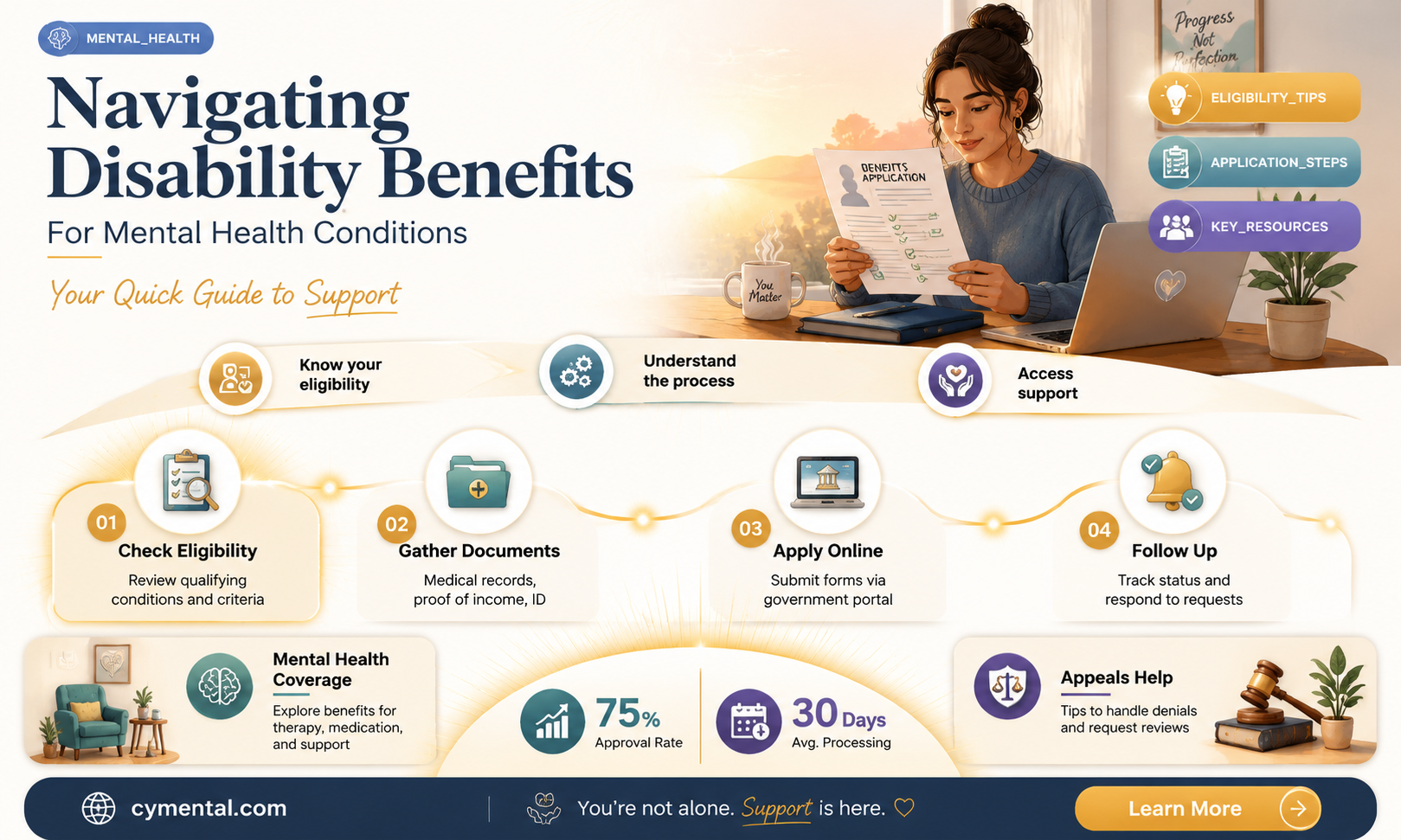
Mental illness can significantly impact a person's ability to function in daily life, including their capacity to work and maintain relationships. In many countries, mental health conditions are recognized as a valid reason for disability benefits. These benefits are designed to provide financial support to individuals who are unable to work due to their mental health symptoms. To qualify for disability benefits, a person typically needs to provide medical evidence of their condition and demonstrate how it affects their ability to perform work-related tasks. The process can be complex and may require the assistance of a healthcare professional or legal advocate. It's important to note that the criteria for disability benefits vary by country and even by state or province within a country, so it's essential to research the specific requirements in your area.
| Characteristics | Values |
|---|---|
| Definition | Mental illness refers to a wide range of mental health conditions that affect a person's mood, thinking, and behavior. |
| Types of Mental Illness | Depression, anxiety disorders, bipolar disorder, schizophrenia, post-traumatic stress disorder (PTSD), obsessive-compulsive disorder (OCD), and more. |
| Symptoms | Symptoms vary depending on the type of mental illness but can include persistent sadness, anxiety, mood swings, hallucinations, delusions, and changes in behavior. |
| Diagnosis | Diagnosis is typically made by a mental health professional through a combination of psychological evaluations, interviews, and sometimes medical tests. |
| Treatment | Treatment options include psychotherapy (talk therapy), medication, lifestyle changes, and sometimes hospitalization. |
| Prognosis | The prognosis varies depending on the type and severity of the mental illness, but many people can manage their symptoms and lead fulfilling lives with proper treatment. |
| Disability Eligibility | In many countries, mental illness can qualify for disability benefits if it significantly impacts a person's ability to work and perform daily activities. |
| Criteria for Disability | Criteria typically include the severity of symptoms, the impact on daily functioning, and the expected duration of the condition. |
| Applying for Disability | The process involves submitting an application, providing medical evidence, and sometimes attending a hearing to demonstrate eligibility. |
| Benefits of Disability | Disability benefits may include financial assistance, access to healthcare, and support services to help individuals manage their condition. |
| Stigma and Mental Illness | Stigma surrounding mental illness can lead to discrimination, social isolation, and reluctance to seek help. |
| Importance of Awareness | Raising awareness about mental illness can help reduce stigma, promote understanding, and encourage people to seek treatment. |
| Support Systems | Support systems can include family, friends, mental health professionals, and peer support groups. |
| Self-Care | Self-care practices can help manage symptoms and improve overall well-being, such as exercise, healthy eating, and stress management techniques. |
| Research and Development | Ongoing research is crucial for developing new treatments, improving existing ones, and advancing our understanding of mental health conditions. |
Explore related products

$19.99 $19.99


What You'll Learn
- Eligibility Criteria: Understand the specific mental health conditions that qualify for disability benefits
- Documentation Required: Gather necessary medical records and professional evaluations to support your claim
- Application Process: Navigate the steps involved in applying for disability benefits, including forms and deadlines
- Appeals and Denials: Learn about the appeals process if your initial application for disability benefits is denied
- Support Resources: Discover available resources and organizations that can assist you throughout the disability application process

Eligibility Criteria: Understand the specific mental health conditions that qualify for disability benefits
To qualify for disability benefits due to mental illness, individuals must meet specific eligibility criteria set forth by the governing body responsible for disability determinations, such as the Social Security Administration (SSA) in the United States. These criteria typically require that the mental health condition be severe enough to significantly limit the individual's ability to perform basic work activities.
The SSA uses a detailed set of guidelines known as the Blue Book to evaluate mental health conditions. Listed conditions include, but are not limited to, schizophrenia, bipolar disorder, major depressive disorder, obsessive-compulsive disorder, and anxiety disorders. Each condition has its own set of criteria that must be met, often requiring documentation of symptoms, treatment history, and the impact of the condition on daily functioning.
In addition to meeting the specific criteria for a listed condition, individuals must also demonstrate that their mental illness is expected to last for at least one year or result in death. This requirement ensures that disability benefits are reserved for those with long-term, severe impairments rather than short-term or less severe conditions.
It is important to note that the eligibility criteria for mental health conditions can be complex and may vary depending on the specific disorder and the individual's circumstances. Consulting with a mental health professional or a disability attorney can be helpful in navigating the application process and ensuring that all necessary documentation is provided.
Ultimately, understanding the eligibility criteria for disability benefits due to mental illness is crucial for individuals seeking support. By familiarizing themselves with the requirements and gathering the necessary evidence, applicants can increase their chances of successfully obtaining the benefits they need.
Emergency Contacts: Who to Call During a Mental Health Crisis
You may want to see also
Explore related products


Documentation Required: Gather necessary medical records and professional evaluations to support your claim
To successfully claim disability benefits for mental illness, it is crucial to compile comprehensive medical documentation. This includes detailed records of diagnoses, treatment plans, and professional evaluations. Such documentation serves as the foundation of your claim, providing the necessary evidence to support your eligibility for benefits.
Begin by obtaining all relevant medical records from your healthcare providers. This should include psychiatric evaluations, therapy session notes, medication prescriptions, and any hospitalizations or emergency room visits related to your mental health. Ensure that these records are up-to-date and cover the entire period of your mental health struggles.
In addition to medical records, professional evaluations are equally important. These evaluations should be conducted by licensed mental health professionals who can provide an objective assessment of your condition. They should include a thorough review of your medical history, a detailed interview, and any necessary psychological testing. The evaluations should address your ability to function in daily life, your capacity to work, and the impact of your mental illness on your overall well-being.
It is also beneficial to gather statements from family members, friends, or colleagues who can attest to the challenges you face due to your mental illness. These statements can provide valuable insight into how your condition affects your daily life and interactions with others.
Remember to keep all documentation organized and easily accessible. This will not only streamline the claims process but also ensure that you have a comprehensive record of your mental health journey. By gathering thorough and well-organized documentation, you significantly increase your chances of a successful disability claim for mental illness.
Seeking Help: Who to Call When Concerned About Someone's Mental Health
You may want to see also
Explore related products


Application Process: Navigate the steps involved in applying for disability benefits, including forms and deadlines
Navigating the application process for disability benefits due to mental illness can be complex and overwhelming. The first step is to gather all necessary medical documentation that supports your claim. This includes detailed reports from psychiatrists, psychologists, and any other mental health professionals involved in your treatment. Ensure that these documents clearly outline your diagnosis, symptoms, and how they impact your daily life and ability to work.
Once you have compiled your medical evidence, you will need to fill out the appropriate application forms. These forms can be obtained from the Social Security Administration (SSA) website or by contacting your local SSA office. It is crucial to fill out these forms accurately and completely, as any errors or omissions can delay the processing of your application. If you are unsure about any part of the form, consider seeking assistance from a legal professional or a disability advocate.
In addition to the application forms, you will also need to provide supplementary information such as your work history, education level, and any other relevant details that may support your claim. This information will help the SSA determine your eligibility for benefits based on your past contributions to the workforce and your current circumstances.
After submitting your application, it is important to be patient and prepared for a potentially lengthy review process. The SSA may request additional information or schedule a hearing to further evaluate your claim. During this time, it is essential to continue seeking treatment for your mental illness and to maintain open communication with your healthcare providers.
If your application is approved, you will begin receiving disability benefits, which can provide crucial financial support and access to healthcare services. However, if your application is denied, you have the right to appeal the decision. This involves requesting a reconsideration of your claim and potentially presenting additional evidence or arguments to support your eligibility for benefits.
Throughout the application process, it is important to stay organized, keep track of deadlines, and seek support from professionals and advocates who can guide you through the complexities of the system. Remember that you are not alone in this journey, and there are resources available to help you navigate the challenges of applying for disability benefits due to mental illness.
Navigating Mental Health in the Workplace: Employer's Dilemma
You may want to see also
Explore related products


Appeals and Denials: Learn about the appeals process if your initial application for disability benefits is denied
If your initial application for disability benefits due to mental illness is denied, it's crucial to understand the appeals process. This process allows you to challenge the decision and present additional evidence to support your claim. The first step is to request a reconsideration by the Social Security Administration (SSA). This involves submitting a written request within 60 days of the denial, explaining why you disagree with the decision and providing any new medical evidence or documentation that supports your claim.
During the reconsideration process, the SSA will review your case again, taking into account the new evidence you've provided. If your claim is still denied, you have the option to request a hearing before an administrative law judge (ALJ). This hearing provides an opportunity to present your case in person, call witnesses, and cross-examine any experts who testify against you. It's important to prepare thoroughly for this hearing, gathering all relevant medical records, statements from treating physicians, and any other documentation that supports your claim.
If the ALJ denies your claim, you can appeal to the Appeals Council, which is the highest level of review within the SSA. The Appeals Council will review the ALJ's decision and may grant your claim, deny it, or remand it back to the ALJ for further review. If the Appeals Council denies your claim, you have the option to file a lawsuit in federal court. However, it's important to note that the federal court's review is limited to determining whether the SSA's decision is supported by substantial evidence and whether the correct legal standards were applied.
Throughout the appeals process, it's essential to remain patient and persistent. Disability claims can take a long time to process, and it's not uncommon for claims to be denied initially. However, with the right evidence and legal representation, many claimants are ultimately successful in obtaining the benefits they deserve.
The Fatal Reality: Mental Illness and Its Deadly Consequences
You may want to see also
Explore related products





Support Resources: Discover available resources and organizations that can assist you throughout the disability application process
Navigating the disability application process can be complex and overwhelming, especially when dealing with mental illness. Fortunately, there are numerous support resources and organizations available to assist individuals throughout this challenging journey. These resources can provide invaluable guidance, emotional support, and practical assistance to help applicants successfully navigate the process and access the benefits they deserve.
One such resource is the National Alliance on Mental Illness (NAMI), which offers a wealth of information and support for individuals with mental illness and their families. NAMI provides educational resources, advocacy services, and a helpline that connects individuals with trained volunteers who can offer guidance and support. Additionally, NAMI has a comprehensive website that includes information on disability benefits, eligibility criteria, and the application process.
Another valuable resource is the Social Security Administration (SSA), which is responsible for administering disability benefits in the United States. The SSA website provides detailed information on the disability application process, including eligibility criteria, required documentation, and application forms. The SSA also offers a disability starter kit that can help individuals understand the process and gather the necessary information and documentation.
Furthermore, many states have their own disability advocacy organizations that can provide additional support and resources. These organizations often have experienced advocates who can help individuals navigate the application process, appeal denied claims, and access other support services. For example, the Disability Rights Education and Defense Fund (DREDF) in California offers legal assistance, advocacy services, and educational resources for individuals with disabilities.
In addition to these organizations, there are also online support groups and forums where individuals can connect with others who have gone through the disability application process. These communities can provide emotional support, practical advice, and a sense of camaraderie, which can be invaluable during this challenging time.
Overall, the key to successfully navigating the disability application process for mental illness is to utilize the available support resources and organizations. By doing so, individuals can access the guidance, emotional support, and practical assistance they need to overcome the challenges of the application process and access the benefits they deserve.
Understanding Mental Incompetency: A Guide to the Legal Process
You may want to see also
Frequently asked questions
Yes, it is possible to receive disability benefits for mental illness. Many countries have programs that provide financial assistance to individuals who are unable to work due to mental health conditions.
Various mental illnesses can qualify for disability benefits, including but not limited to depression, anxiety disorders, bipolar disorder, schizophrenia, and post-traumatic stress disorder (PTSD). The specific criteria may vary depending on the country and its disability evaluation process.
The application process for disability benefits typically involves submitting a claim to the relevant government agency. This may require providing medical documentation, a detailed description of the mental illness and its impact on daily life, and information about the applicant's work history. It's advisable to consult with a healthcare professional or a disability advocate for guidance on the application process.
Yes, there are often additional resources and support available. This may include mental health support groups, legal aid services, and disability advocacy organizations. These resources can provide assistance with the application process, help navigate the system, and offer emotional support during what can be a challenging time.