Caleb Wright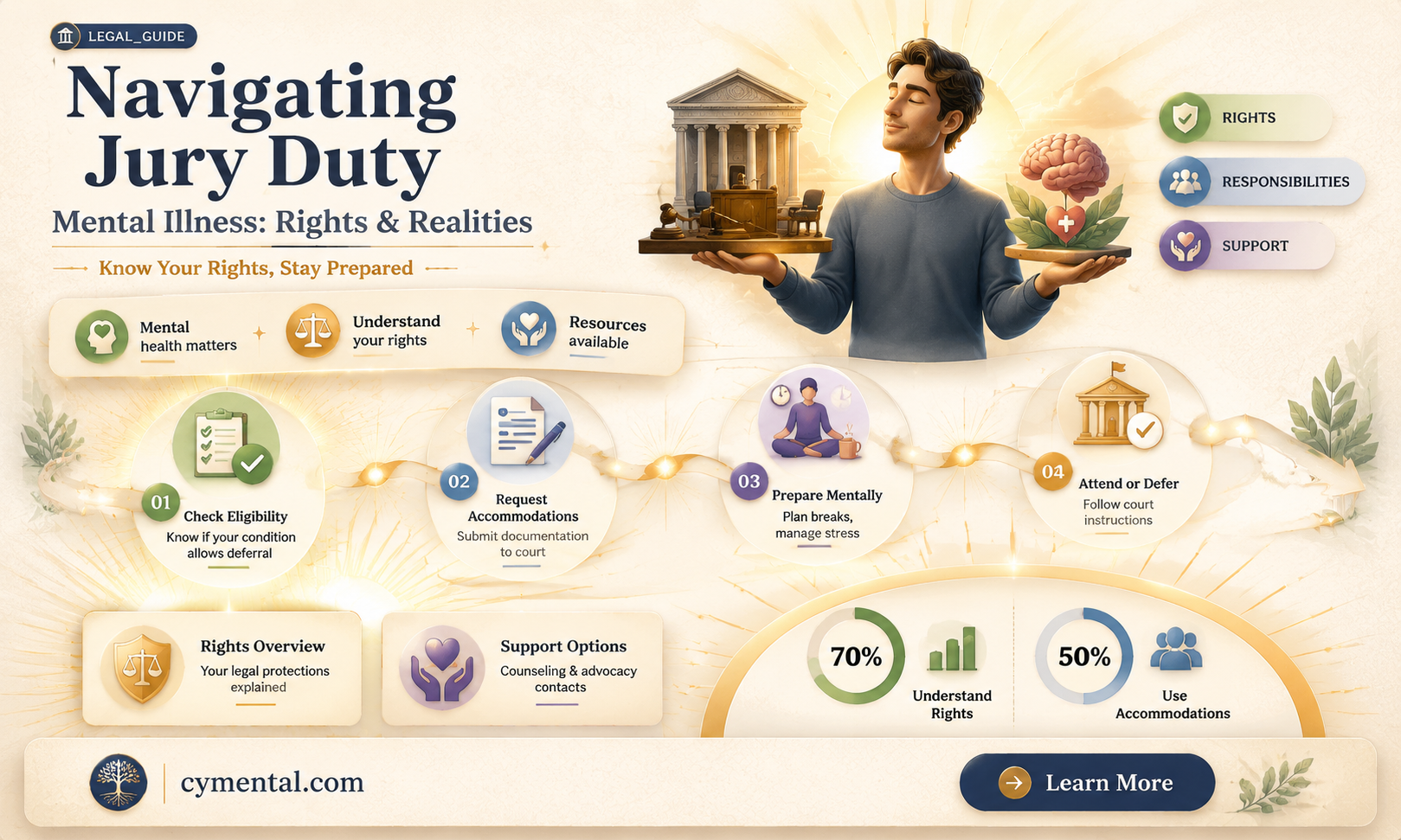
The question of whether someone with a mental illness can serve on jury duty is a complex and sensitive topic that intersects with legal, ethical, and psychological considerations. In many jurisdictions, individuals with mental illnesses are not automatically disqualified from serving on a jury, but their ability to fulfill the responsibilities of a juror may be evaluated on a case-by-case basis. Factors such as the nature and severity of the mental illness, the individual's ability to understand and follow legal proceedings, and their capacity to make impartial decisions are all relevant to this determination. It is important to balance the need for a fair and representative jury with the necessity of ensuring that all jurors are capable of performing their duties effectively and without bias.
Explore related products

What You'll Learn
- Eligibility Criteria: Understanding the legal requirements for jury duty and how mental illness may impact eligibility
- Reasonable Accommodations: Exploring the adjustments that can be made to ensure individuals with mental illness can serve effectively
- Legal Protections: Discussing the laws and regulations that protect individuals with mental illness from discrimination during jury selection
- Impact on Verdicts: Analyzing how the presence of jurors with mental illness might influence trial outcomes and deliberations
- Support Resources: Identifying the resources and support systems available for jurors with mental illness to manage their duties

Eligibility Criteria: Understanding the legal requirements for jury duty and how mental illness may impact eligibility
To determine eligibility for jury duty, individuals must meet specific legal criteria, which vary by jurisdiction. Generally, these criteria include being a U.S. citizen, residing in the county or district where the trial is held, being at least 18 years old, and having no felony convictions. Additionally, individuals must be deemed mentally competent to serve on a jury. This requirement is crucial as it ensures that jurors can understand the proceedings, deliberate effectively, and make sound decisions.
Mental illness can significantly impact an individual's eligibility for jury duty. While having a mental illness does not automatically disqualify someone from serving, certain conditions may render a person unfit for jury service. For instance, if a mental illness impairs a person's ability to understand complex information, concentrate for extended periods, or make rational judgments, they may be excused from jury duty. Conditions such as severe depression, schizophrenia, or bipolar disorder could potentially affect a person's competency to serve on a jury.
The process of determining mental competency for jury duty often involves a thorough evaluation by a mental health professional. This evaluation may include a review of the individual's medical history, a psychological assessment, and an interview to gauge their understanding of the legal process and their ability to fulfill the responsibilities of a juror. The decision to excuse a potential juror due to mental illness is typically made by a judge, based on the recommendations of the mental health professional.
It is important to note that the legal system aims to ensure fairness and impartiality in jury selection. While mental illness may impact eligibility, the determination is made on a case-by-case basis, considering the specific circumstances of each individual. The goal is to balance the need for competent jurors with the rights of individuals with mental illness to participate in the legal process.
In conclusion, understanding the eligibility criteria for jury duty, particularly in relation to mental illness, is essential for ensuring a fair and effective legal system. By carefully evaluating each individual's circumstances, the courts can maintain the integrity of the jury process while also respecting the rights and capabilities of those with mental health conditions.
Legal Guide: Establishing Mental Incompetence in a Loved One
You may want to see also
Reasonable Accommodations: Exploring the adjustments that can be made to ensure individuals with mental illness can serve effectively
Serving on a jury is a civic duty that requires individuals to be attentive, impartial, and capable of making sound judgments. For individuals with mental illness, these demands can sometimes pose significant challenges. However, with the right accommodations, many people with mental health conditions can effectively participate in jury duty.
One crucial accommodation is the provision of a quiet, private space where individuals can take breaks if needed. This can help reduce stress and anxiety, allowing them to better focus on the proceedings. Additionally, providing written transcripts of the trial can be beneficial for those who may have difficulty concentrating or remembering spoken information.
Another important consideration is the length of the trial. For some individuals with mental illness, prolonged periods of sitting and listening can be exhausting. Courts can accommodate these needs by allowing for more frequent breaks or by scheduling shorter trial days. Furthermore, the use of technology, such as tablets or laptops, can enable jurors to take notes or access information more easily, which can be particularly helpful for those with cognitive impairments.
Training and education for court staff and fellow jurors can also play a vital role in ensuring a supportive environment. By increasing awareness and understanding of mental health issues, potential stigma and discrimination can be minimized. This can help create a more inclusive and respectful atmosphere, allowing individuals with mental illness to feel more comfortable and confident in their roles as jurors.
Ultimately, the key to successfully accommodating individuals with mental illness in jury duty lies in flexibility and a willingness to adapt. By recognizing and addressing the unique challenges faced by these individuals, courts can ensure that everyone has the opportunity to fulfill their civic responsibilities in a fair and equitable manner.
Understanding Judicial Authority: Mental Health Sentencing Explained
You may want to see also
Legal Protections: Discussing the laws and regulations that protect individuals with mental illness from discrimination during jury selection
Individuals with mental illness are protected from discrimination during jury selection by a variety of laws and regulations. The Americans with Disabilities Act (ADA) is a federal law that prohibits discrimination against individuals with disabilities, including mental illness, in all aspects of public life, including jury duty. The ADA requires that individuals with mental illness be provided with reasonable accommodations to enable them to participate in jury duty, unless doing so would cause an undue hardship.
In addition to the ADA, many states have their own laws and regulations that protect individuals with mental illness from discrimination during jury selection. For example, California's Government Code Section 68152 prohibits the exclusion of individuals with mental illness from jury duty, unless they are unable to perform their duties. Similarly, New York's Judiciary Law Section 590 prohibits the exclusion of individuals with mental illness from jury duty, unless they are deemed unfit to serve.
Despite these legal protections, individuals with mental illness may still face discrimination during jury selection. This can take the form of outright exclusion, or more subtle forms of bias, such as being asked inappropriate questions about their mental health or being treated differently than other jurors. To combat this discrimination, it is important for individuals with mental illness to be aware of their rights and to advocate for themselves during the jury selection process.
One way to advocate for oneself is to educate the court about one's mental illness and how it may impact one's ability to serve on a jury. This can be done by providing documentation from a mental health professional or by explaining one's condition in detail. It is also important to be prepared to answer questions about one's mental illness in a clear and concise manner, and to be aware of any accommodations that may be necessary to enable one to participate in jury duty.
In conclusion, while individuals with mental illness are protected from discrimination during jury selection by a variety of laws and regulations, it is still important for them to be aware of their rights and to advocate for themselves during the process. By doing so, they can help to ensure that they are treated fairly and that their voices are heard in the legal system.
Empowering Mental Health Advocacy: A Guide to Petitioning for Support in Arizona
You may want to see also
Impact on Verdicts: Analyzing how the presence of jurors with mental illness might influence trial outcomes and deliberations
The presence of jurors with mental illness can significantly impact trial outcomes and deliberations. Research indicates that individuals with mental health conditions may bring unique perspectives to the jury, potentially leading to more empathetic and nuanced decision-making. However, concerns arise regarding the ability of such jurors to fully comprehend complex legal arguments and evidence, which could result in misunderstandings or misinterpretations during deliberations.
One study found that jurors with mental illness were more likely to focus on the emotional aspects of a case rather than the factual evidence presented. This could lead to verdicts that are more influenced by sympathy or personal biases rather than a strict adherence to the law. Additionally, the stress and pressure of jury duty may exacerbate symptoms of mental illness, potentially impairing a juror's ability to participate effectively in discussions and decision-making processes.
To mitigate these concerns, some jurisdictions have implemented screening processes to identify potential jurors with mental health conditions. These screenings aim to ensure that individuals selected for jury duty are capable of fulfilling their responsibilities without being unduly influenced by their mental health status. However, critics argue that such screenings may inadvertently discriminate against individuals with mental illness, perpetuating stigmas and limiting their opportunities to participate in civic duties.
Ultimately, the impact of jurors with mental illness on trial outcomes and deliberations is a complex issue that requires careful consideration. While their unique perspectives may contribute to more compassionate decision-making, it is essential to ensure that they are able to fulfill their roles effectively and without bias. As such, ongoing research and dialogue are necessary to develop strategies that balance the need for inclusivity with the imperative of maintaining a fair and impartial justice system.
Incarceration and Mental Illness: A Complex Intersection
You may want to see also
Support Resources: Identifying the resources and support systems available for jurors with mental illness to manage their duties
Jurors with mental illness may require additional support to effectively manage their duties. Fortunately, there are several resources and support systems available to assist them. These resources can help jurors with mental illness to better understand the legal process, manage their symptoms, and fulfill their civic responsibilities.
One important resource is the National Alliance on Mental Illness (NAMI), which offers a variety of support services, including a helpline, online resources, and local support groups. NAMI can provide jurors with mental illness with information on managing their symptoms, coping strategies, and connecting with mental health professionals.
Another resource is the American Bar Association's (ABA) Juror Information Center, which provides information on the jury system, including the rights and responsibilities of jurors. The ABA also offers a Juror Assistance Program, which can provide jurors with mental illness with access to mental health professionals and other support services.
In addition to these national resources, many local courts and mental health organizations offer support services specifically for jurors with mental illness. These services may include mental health screenings, counseling, and accommodations such as extra time or a quiet space to complete jury duty.
It is important for jurors with mental illness to be aware of these resources and to seek help if needed. By doing so, they can ensure that they are able to fulfill their civic responsibilities while also taking care of their mental health.
Navigating Involuntary Commitment: A Guide to Mental Health Support in Florida
You may want to see also
Frequently asked questions
It depends on the severity and nature of the mental illness. If the illness impairs the person's ability to understand the evidence, deliberate with other jurors, or make a fair and impartial decision, they may be excused from serving.
The judge and attorneys may ask follow-up questions to assess the impact of the mental illness on the person's ability to serve as a juror. If it's determined that the illness would significantly impair their duties, they may be excused.
Yes, under the Americans with Disabilities Act (ADA), jurors with mental illness are protected from discrimination. This means that they cannot be automatically excluded from serving solely based on their mental health status.
Courts are required to make reasonable accommodations for jurors with mental illness, such as providing additional time to deliberate or allowing them to take breaks as needed. They must also ensure that the voir dire process is conducted in a way that respects the juror's privacy and dignity.
Jurors with mental illness may struggle with the stress and pressure of the courtroom environment, the complexity of legal procedures, or the emotional impact of hearing sensitive testimony. They may also have difficulty concentrating or remembering details, which could affect their ability to make a fair decision.