Lucas Bennett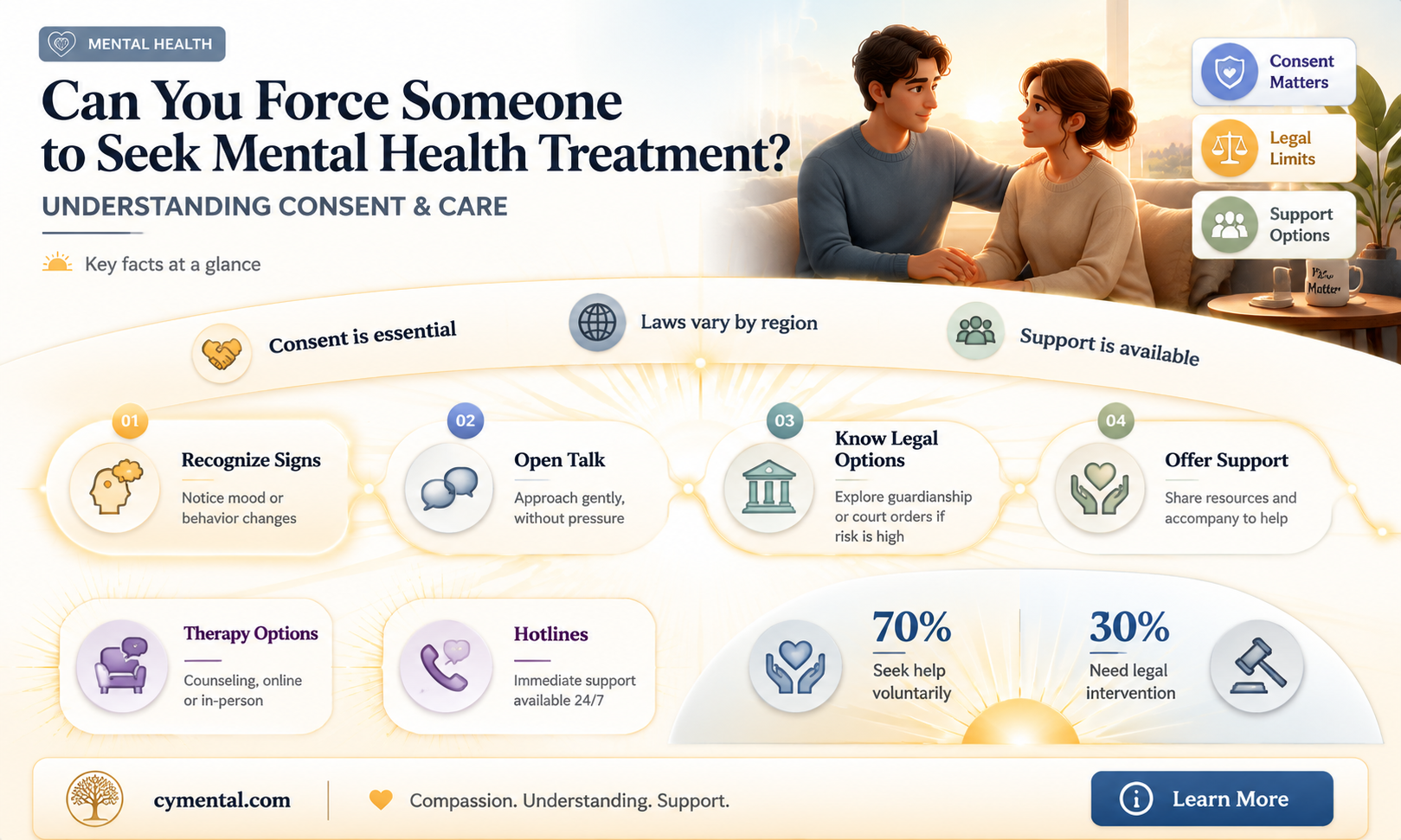
The question of whether you can make someone seek mental health treatment is complex and often fraught with ethical and legal considerations. While it’s natural to want to help a loved one struggling with mental health issues, forcing or coercing them into treatment can be counterproductive and may damage trust. In some cases, legal interventions like involuntary commitment exist for individuals deemed a danger to themselves or others, but these are typically last resorts and vary by jurisdiction. Ultimately, encouraging open communication, offering support, and gently guiding them toward professional resources are often more effective approaches. Understanding the balance between compassion and respect for autonomy is key when navigating this sensitive issue.
| Characteristics | Values |
|---|---|
| Voluntary Treatment | In most cases, mental health treatment is voluntary. Individuals have the right to refuse treatment unless they are deemed a danger to themselves or others. |
| Involuntary Commitment | Laws vary by jurisdiction, but generally, a person can be involuntarily committed to a mental health facility if they meet specific criteria, such as being a danger to themselves or others, or being unable to care for themselves due to mental illness. |
| Legal Process | Involuntary commitment typically requires a court order or a petition filed by a mental health professional, family member, or law enforcement officer. |
| Emergency Holds | Many regions allow for emergency holds (e.g., 72-hour holds) where a person can be temporarily detained for evaluation if they pose an immediate risk. |
| Capacity to Consent | If a person is deemed incapable of making informed decisions due to their mental state, a guardian or conservator may be appointed to make treatment decisions on their behalf. |
| Patient Rights | Even in involuntary treatment, individuals retain certain rights, such as the right to appeal their commitment, receive humane care, and be informed about their treatment. |
| Cultural and Ethical Considerations | Forced treatment raises ethical concerns and must balance individual autonomy with public safety and welfare. |
| Supportive Approaches | Encouraging someone to seek help through open communication, offering resources, and expressing concern is often more effective than coercion. |
| Community Resources | Many regions offer crisis intervention teams, mobile mental health units, and outreach programs to assist individuals in need without resorting to involuntary measures. |
| Stigma Reduction | Reducing stigma around mental health can encourage individuals to seek help voluntarily. |
Explore related products


What You'll Learn
- Legal Options for Intervention: Understanding laws allowing involuntary commitment for severe mental health risks
- Encouraging Voluntary Treatment: Strategies to motivate someone to seek help willingly
- Crisis Intervention Steps: Immediate actions to support someone in acute mental distress
- Role of Support Systems: How family, friends, and professionals can collectively assist
- Ethical Considerations: Balancing autonomy with the need for intervention in mental health care

Legal Options for Intervention: Understanding laws allowing involuntary commitment for severe mental health risks
Involuntary commitment laws exist in every U.S. state, but their criteria and processes vary widely, creating a complex landscape for those seeking to intervene in a loved one’s mental health crisis. These laws typically require proof of a severe mental illness, such as schizophrenia, bipolar disorder, or major depression, coupled with evidence that the individual poses a substantial risk of harm to themselves or others. For example, in California, the Lanterman-Petris-Short (LPS) Act mandates that a person must be "gravely disabled," meaning unable to provide for their basic needs, or imminently dangerous to qualify for a 72-hour psychiatric hold. Understanding these state-specific thresholds is the first step in navigating this legal pathway.
Initiating involuntary commitment often begins with filing a petition in court or contacting local law enforcement or mental health authorities. In Florida, for instance, a family member or three adults with personal knowledge of the individual’s behavior can file a petition for involuntary examination under the Baker Act. This triggers a 72-hour assessment period during which mental health professionals evaluate the person’s condition. If criteria are met, the court may order treatment for up to 90 days. However, the process is not without challenges; delays in court hearings or limited psychiatric bed availability can hinder timely intervention.
Critics argue that involuntary commitment laws can infringe on civil liberties, while proponents emphasize their role in preventing tragedies. A 2018 study in *Psychiatric Services* found that states with stricter commitment criteria had higher rates of untreated severe mental illness, suggesting a delicate balance between autonomy and public safety. To mitigate ethical concerns, many states require periodic judicial review of commitment orders and prioritize less restrictive alternatives, such as outpatient treatment programs. For families, documenting the individual’s behavior—including threats of self-harm, neglect of personal hygiene, or violent outbursts—can strengthen their case and demonstrate the necessity of intervention.
Practical tips for navigating this process include familiarizing oneself with local crisis intervention teams, which often serve as liaisons between families and mental health systems. In New York, for example, the Assisted Outpatient Treatment (AOT) program allows courts to mandate outpatient care for individuals with a history of noncompliance. Additionally, consulting an attorney specializing in mental health law can provide clarity on procedural nuances and increase the likelihood of a successful petition. While involuntary commitment is a last resort, it remains a critical tool for addressing severe mental health risks when voluntary treatment is not feasible.
Supporting Mental Health: Practical Ways to Help Someone in Need
You may want to see also
Explore related products





Encouraging Voluntary Treatment: Strategies to motivate someone to seek help willingly
Understanding Resistance: The Root of Reluctance
Resistance to mental health treatment often stems from stigma, fear of judgment, or a lack of awareness about available resources. For instance, a 2021 study found that 40% of individuals avoid seeking help due to concerns about being labeled as "weak" or "unstable." Addressing these barriers requires empathy and education. Start by normalizing mental health conversations, using language that destigmatizes therapy or medication. For example, instead of saying, “You need help,” try, “Many people find it helpful to talk to someone when they’re feeling this way.” This shifts the focus from deficiency to accessibility, making the idea of treatment less intimidating.
Building Trust Through Active Listening and Validation
One of the most effective ways to encourage voluntary treatment is by creating a safe, nonjudgmental space for the person to express their feelings. Practice active listening by reflecting their emotions without offering immediate solutions. For example, if someone mentions feeling overwhelmed, respond with, “It sounds like you’re carrying a lot right now—that must be really hard.” Validation reduces defensiveness and fosters trust. Pair this with specific, actionable suggestions, such as, “If you’re open to it, I’ve heard great things about this therapist who specializes in stress management.” This approach respects their autonomy while planting the seed of possibility.
Leveraging Social Support and Shared Experiences
Peer influence can be a powerful motivator. Share stories of individuals who have benefited from mental health treatment, ensuring the examples are relatable. For instance, if the person is a young adult, mention a college student who found relief through counseling. Alternatively, suggest attending a support group together, which can reduce the pressure of one-on-one therapy. Research shows that hearing about others’ positive experiences increases willingness to seek help by up to 30%. Be mindful of timing—avoid bringing up these stories during moments of heightened distress, as it may feel dismissive.
Practical Steps: Making Treatment Accessible and Appealing
Remove logistical barriers by offering concrete assistance. For example, help research therapists covered by their insurance, or suggest telehealth options for those with busy schedules. Provide a list of low-cost or sliding-scale clinics if affordability is a concern. For individuals hesitant to commit to long-term therapy, propose starting with a single session or a mental health workshop. Small, low-stakes steps can build confidence and reduce anxiety about the process. Remember, the goal is to make treatment feel approachable, not overwhelming.
Balancing Encouragement and Boundaries: When to Step Back
While persistence is important, it’s equally crucial to respect the person’s autonomy. Pushing too hard can backfire, reinforcing their reluctance. Set clear boundaries for yourself, such as, “I’m here to support you, but I won’t keep bringing this up if it’s not something you’re ready for.” Offer resources and check in periodically, but avoid making their decision about your own emotional needs. Ultimately, voluntary treatment is most effective when the individual feels empowered to take ownership of their journey. Patience and consistency, rather than force, are key to fostering lasting change.
Gardening for Mental Health: Cultivating Peace and Well-Being Naturally
You may want to see also
Explore related products


Crisis Intervention Steps: Immediate actions to support someone in acute mental distress
In moments of acute mental distress, immediate and thoughtful intervention can be a lifeline. The first step is to assess the situation calmly but urgently. Look for signs of severe agitation, suicidal ideation, or disconnection from reality. If the person is at risk of harming themselves or others, prioritize safety above all else. Remove any potential weapons or hazards from the immediate environment, but do so discreetly to avoid escalating tension. Your tone and body language should convey calmness and empathy, as panic can worsen the crisis. Remember, your role is to stabilize, not to diagnose or solve long-term issues.
Once safety is ensured, establish a connection through active listening and validation. Avoid dismissive phrases like "It’s not that bad" or "Just calm down." Instead, use open-ended questions like, "How can I help right now?" or "What’s making this feel so overwhelming?" Reflect their emotions to show you understand—for example, "It sounds like you’re feeling completely trapped." This validates their experience and builds trust. If they’re struggling to communicate, offer simple choices: "Would you like to sit here quietly, or should we go for a walk?" Providing agency, even in small ways, can help them regain a sense of control.
Encourage professional help while respecting autonomy, unless the situation is life-threatening. Suggest contacting a crisis hotline (e.g., 988 in the U.S.), a therapist, or a trusted healthcare provider. If they’re resistant, offer to accompany them or help make the call. In extreme cases, such as imminent self-harm, involuntary intervention may be necessary. Familiarize yourself with local emergency protocols, such as a 5150 hold in California, which allows for temporary psychiatric evaluation. However, use this as a last resort, as it can damage trust and worsen long-term cooperation.
Finally, follow up after the immediate crisis has passed. Check in the next day or within 48 hours to show ongoing support. Ask how they’re feeling and if they’ve connected with resources. Provide practical assistance, like helping schedule a therapy appointment or researching local support groups. Avoid pressuring them to "move on"—recovery is nonlinear, and your patience can make a significant difference. By combining immediate crisis management with sustained compassion, you can help bridge the gap between acute distress and long-term healing.
First Responders' Mental Health: Personal Struggles and Support Solutions
You may want to see also
Explore related products



Role of Support Systems: How family, friends, and professionals can collectively assist
Family and friends often notice the early signs of mental distress—subtle changes in behavior, mood, or routine—long before the individual themselves acknowledges the problem. This proximity makes them invaluable in initiating conversations about seeking help. However, approaching the topic requires sensitivity. Start by expressing concern without judgment, using "I" statements like, "I’ve noticed you seem more withdrawn lately, and I’m worried about you." Avoid labeling behaviors or diagnosing; instead, focus on observable actions and their emotional impact on you. For instance, instead of saying, "You’re depressed," try, "I’ve seen you struggling to get out of bed, and it’s hard for me to see you like this." Pair this with specific offers of support, such as, "Would you be open to talking to someone about this?" or "I can help you find a therapist if you’d like."
While emotional support from loved ones is critical, professional intervention is often necessary for effective treatment. Friends and family can bridge the gap by researching mental health resources—therapists, support groups, or crisis hotlines—and presenting them in a non-confrontational way. For example, saying, "I found a therapist who specializes in anxiety, and they have evening appointments," provides a concrete next step without overwhelming the individual. In cases of severe distress, such as suicidal ideation or self-harm, more assertive action may be required. This could involve accompanying the person to an emergency room or contacting a mental health professional for guidance. Remember, the goal is not to force compliance but to create a safety net that encourages voluntary engagement with help.
One of the most significant barriers to seeking mental health treatment is stigma, which can be perpetuated even by well-meaning loved ones. To counteract this, normalize conversations about mental health in everyday life. Share personal experiences with therapy or stress management, if applicable, to model vulnerability. For example, saying, "I started seeing a counselor last year, and it’s helped me a lot," can reduce the perceived shame around seeking help. Additionally, educate yourself and others about mental health conditions to dispel myths. For instance, explaining that depression is not just "feeling sad" but a treatable medical condition can shift perspectives. By fostering an environment of understanding, you make it easier for the individual to accept support.
Collective assistance thrives when family, friends, and professionals collaborate. For instance, a friend might encourage the individual to attend therapy while a family member handles logistical barriers, such as transportation or insurance paperwork. Professionals can involve loved ones in treatment plans, provided the individual consents, to ensure consistency in support. For adolescents, this might include parental involvement in therapy sessions or school counselors coordinating with teachers. In cases of chronic conditions like schizophrenia or bipolar disorder, establishing a "care team" that includes both personal and professional supporters can provide long-term stability. Regular check-ins among team members can help identify setbacks early and adjust strategies accordingly.
While the desire to help is commendable, it’s essential to recognize limits. You cannot force someone to accept help if they are not ready, and overstepping boundaries can damage relationships. For example, repeatedly pressuring someone to see a therapist when they’ve expressed reluctance can lead to resentment. Similarly, avoid enabling behaviors that hinder recovery, such as making excuses for harmful actions. Instead, focus on what you can control: your own behavior and the resources you provide. Self-care is also non-negotiable; supporting someone with mental health challenges can be emotionally taxing, so seek your own support through therapy, support groups, or trusted friends. Ultimately, the goal is to empower the individual to take ownership of their mental health journey, knowing they have a network ready to assist when needed.
Overcoming Mental Blocks: Strategies to Support Athletes' Performance and Resilience
You may want to see also
Explore related products


Ethical Considerations: Balancing autonomy with the need for intervention in mental health care
In mental health care, the tension between respecting individual autonomy and ensuring necessary intervention is a delicate ethical dilemma. On one hand, autonomy—the right to make decisions about one’s own life—is a cornerstone of human rights. On the other, untreated mental illness can lead to severe consequences, including harm to self or others. This paradox raises critical questions: When does the duty to protect override personal freedom? And how can professionals navigate this balance without infringing on dignity?
Consider the case of involuntary commitment, a legal process where individuals are compelled to receive treatment against their will. In the U.S., criteria for such intervention vary by state but often require evidence of imminent danger or inability to care for oneself. For instance, in California, a 72-hour psychiatric hold (known as a 5150) can be initiated if a person is deemed a threat to themselves or others due to mental illness. While this measure can be lifesaving, it also raises concerns about coercion and the potential for misuse. A 2020 study in *The Journal of Nervous and Mental Disease* highlighted that involuntary patients often experience feelings of violation, which can hinder long-term engagement with care.
To ethically navigate this terrain, mental health professionals must prioritize informed consent and least restrictive alternatives. For example, before resorting to involuntary measures, clinicians should explore voluntary treatment options, such as outpatient therapy or medication management. In cases where intervention is unavoidable, transparency is key. Explaining the rationale behind decisions and involving the individual in the process, when possible, can mitigate feelings of disempowerment. For adolescents, involving parents or guardians in decision-making can provide additional support, though this must be balanced with the young person’s emerging autonomy.
A comparative analysis of international approaches offers further insight. In countries like Norway, the emphasis on voluntary care and community-based support has reduced reliance on involuntary measures. Their model, which integrates mental health services into primary care, fosters trust and early intervention. Conversely, systems with limited resources or stigmatizing attitudes toward mental illness often lean more heavily on coercive practices. This underscores the importance of systemic change in promoting ethical care.
Ultimately, balancing autonomy and intervention requires a nuanced, context-specific approach. Professionals must weigh the immediacy of risk against the long-term impact of coercive actions, always striving to preserve dignity. Practical tips include documenting all efforts to engage the individual voluntarily, seeking second opinions in complex cases, and providing follow-up support to rebuild trust after involuntary interventions. By adopting these strategies, mental health care can honor autonomy while fulfilling its duty to protect.
Mental Health Classes: Empowering Students for Emotional Resilience and Success
You may want to see also
Frequently asked questions
In most cases, you cannot force someone to seek mental health treatment unless they pose an immediate danger to themselves or others, and even then, legal intervention is required.
Encourage open communication, express concern, and suggest professional help. If they remain resistant, consider consulting a mental health professional for guidance or staging an intervention with a therapist’s help.
Yes, some regions have laws (e.g., involuntary commitment or 5150 holds) that allow for temporary detention and evaluation if a person is deemed a risk to themselves or others, but these require legal or medical authorization.
Approach the conversation with empathy, avoid judgment, and focus on their well-being. Share specific examples of concerning behaviors and offer to help find a therapist or resources.
While you can’t force them to get help, you can set boundaries to protect yourself and others. Encourage them to seek help and consider involving a professional mediator or counselor to address the impact of their behavior.