Harper Lewis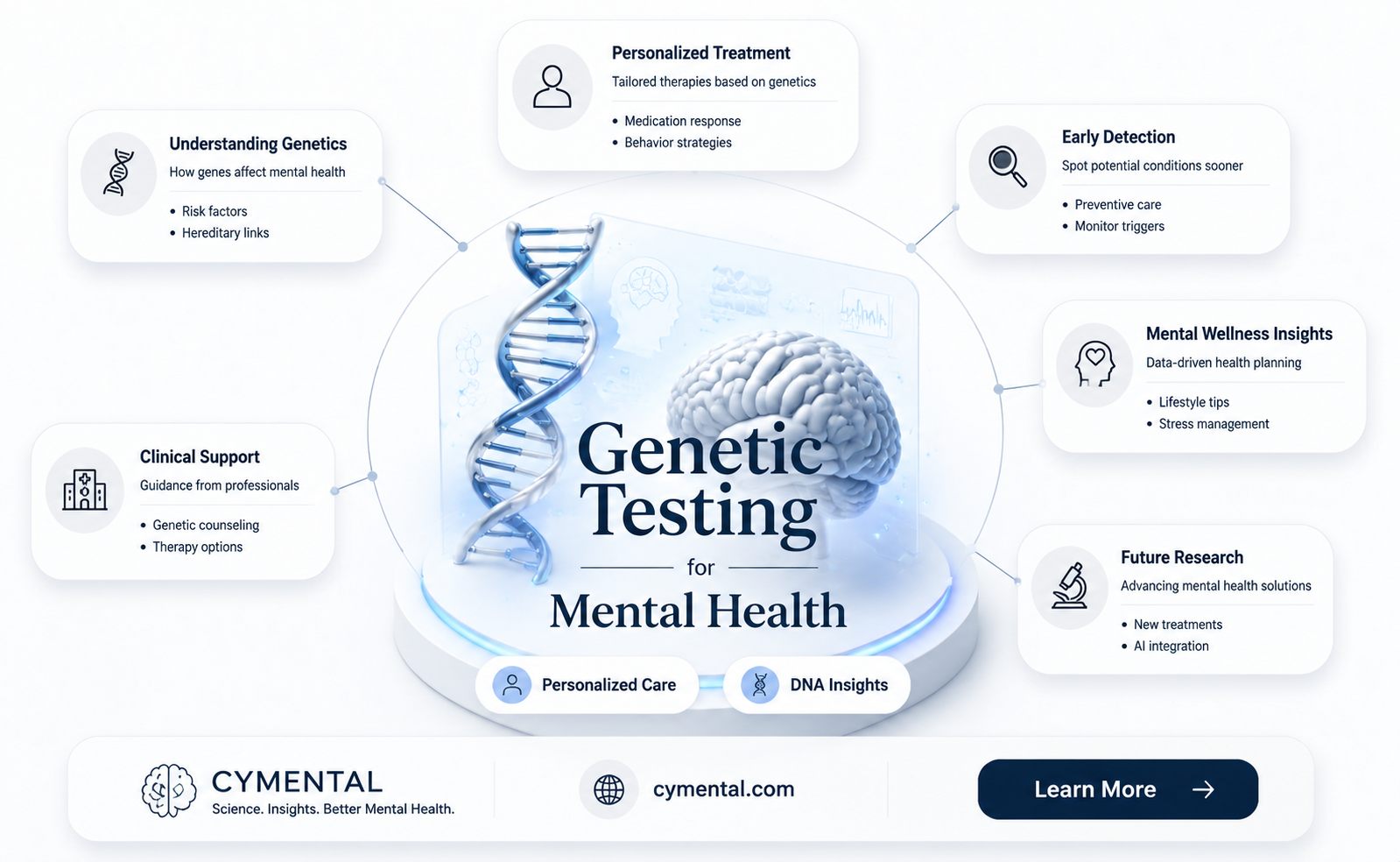
Genetic testing has emerged as a promising tool in the field of mental health, offering insights into the complex interplay between genetics and psychological well-being. By analyzing an individual's DNA, these tests aim to identify genetic markers associated with conditions like depression, anxiety, and schizophrenia, potentially enabling early intervention and personalized treatment plans. While proponents argue that genetic testing can reduce stigma, provide clarity, and guide therapy or medication choices, critics raise concerns about the limitations of current research, the risk of misinterpretation, and ethical issues surrounding privacy and genetic determinism. As the field continues to evolve, the question remains: can genetic testing truly revolutionize mental health care, or does it introduce more challenges than solutions?
Explore related products


What You'll Learn
- Accuracy of genetic tests in predicting mental health disorders
- Ethical concerns in using genetic testing for mental health
- Impact of genetic testing on personalized treatment plans
- Psychological effects of receiving genetic mental health results
- Accessibility and affordability of genetic testing for mental health

Accuracy of genetic tests in predicting mental health disorders
Genetic testing for mental health disorders has emerged as a promising tool, yet its accuracy remains a critical point of scrutiny. Unlike single-gene disorders such as Huntington’s disease, mental health conditions like depression, schizophrenia, and bipolar disorder are polygenic, influenced by hundreds or thousands of genetic variants, each contributing a small effect. Current genetic tests, often in the form of polygenic risk scores (PRS), aggregate these variants to estimate risk. However, the predictive power of PRS for mental health remains modest, typically explaining only 5–10% of the variance in risk. This limitation underscores the complexity of these disorders, which are also shaped by environmental and lifestyle factors.
Consider schizophrenia, a condition where genetic predisposition plays a significant role. Studies show that individuals in the top 10% of PRS for schizophrenia have roughly a 20% lifetime risk of developing the disorder, compared to 1% in the general population. While this elevated risk is notable, it falls short of clinical utility, as 80% of high-risk individuals never develop the condition. Similarly, for major depressive disorder, PRS can identify individuals at slightly higher risk, but the overlap between genetic risk and actual diagnosis is far from definitive. These examples highlight the challenge of translating genetic data into actionable predictions.
To improve accuracy, researchers are exploring ways to integrate genetic data with other biomarkers, such as neuroimaging or blood-based tests. For instance, combining PRS with measures of brain structure or function could enhance predictive models. Additionally, longitudinal studies tracking individuals from childhood to adulthood are crucial for understanding how genetic risk evolves over time. Practical tips for clinicians include interpreting genetic test results cautiously, avoiding deterministic conclusions, and emphasizing that genetic risk is just one piece of the puzzle. Patients should be counseled that a high PRS does not guarantee a disorder, nor does a low score rule one out.
Despite these challenges, genetic testing holds potential in personalized medicine, particularly in treatment selection. For example, pharmacogenomic testing can predict how individuals metabolize psychiatric medications, guiding dosage adjustments. A patient with a genetic variant affecting CYP450 enzymes might require lower doses of antidepressants to avoid side effects. However, this application is distinct from predicting disorder onset, where accuracy remains elusive. As research advances, the goal is not to replace clinical judgment but to complement it with nuanced genetic insights.
In conclusion, while genetic tests for mental health disorders offer valuable information, their accuracy in predicting risk is currently limited. Clinicians and patients must approach these tools with a critical eye, recognizing their potential while acknowledging their constraints. As the field evolves, integrating genetic data with other biomarkers and longitudinal studies will be key to unlocking their full potential. For now, genetic testing serves as a supplementary tool, not a definitive predictor, in the complex landscape of mental health.
Finding Mental Health Support in Bryan, TX: Resources and Guidance
You may want to see also
Explore related products


Ethical concerns in using genetic testing for mental health
Genetic testing for mental health raises profound ethical concerns that demand careful consideration. One of the most pressing issues is the potential for genetic determinism, where individuals and healthcare providers may overemphasize genetic predispositions at the expense of environmental and social factors. For example, a test revealing a variant associated with schizophrenia might lead to stigmatization or premature labeling, even though the condition’s onset is influenced by complex interactions beyond genetics. This reductionist view risks oversimplifying mental health, which thrives on nuanced understanding.
Another critical concern is privacy and data security. Genetic data is uniquely sensitive, as it not only pertains to the individual but also to their biological relatives. Misuse or unauthorized access to such information could lead to discrimination in employment, insurance, or social contexts. For instance, a teenager’s genetic test results indicating a higher risk for depression could be weaponized by insurers to deny coverage later in life. Ensuring robust data protection protocols is essential, yet current regulations often lag behind technological advancements.
The impact on autonomy and decision-making is equally troubling. Genetic testing may reveal predispositions to conditions without offering clear preventive measures or treatments. This uncertainty can create psychological distress, particularly for younger individuals. For example, a 25-year-old learning of a heightened genetic risk for bipolar disorder might experience anxiety without actionable steps to mitigate it. Balancing the right to know with the responsibility to avoid harm requires careful counseling and informed consent processes.
Finally, equity in access and interpretation poses significant ethical challenges. Genetic testing is often expensive and inaccessible to marginalized populations, exacerbating health disparities. Even when accessible, the interpretation of results varies widely among providers, leading to inconsistent advice. For instance, a low-income individual might receive a genetic risk assessment without access to follow-up mental health services, rendering the test more harmful than helpful. Addressing these disparities requires not only affordability but also culturally competent care and standardized guidelines.
In navigating these ethical concerns, stakeholders must prioritize transparency, equity, and the holistic well-being of individuals. Genetic testing, while promising, is not a panacea for mental health challenges. Its integration into clinical practice must be guided by ethical principles that protect vulnerable populations, safeguard privacy, and avoid reducing human complexity to a set of genetic markers.
Dance Therapy: Unlocking Mental Wellness Through Movement and Expression
You may want to see also
Explore related products





Impact of genetic testing on personalized treatment plans
Genetic testing has emerged as a transformative tool in mental health care, offering insights into an individual’s unique genetic makeup to tailor treatment plans. By identifying specific genetic variants associated with drug metabolism or disease susceptibility, clinicians can predict how a patient might respond to certain medications, reducing the trial-and-error approach that often characterizes psychiatric treatment. For instance, pharmacogenomic testing can reveal whether a patient metabolizes antidepressants like SSRIs as a "fast" or "slow" metabolizer, guiding dosage adjustments to optimize efficacy and minimize side effects. This precision not only improves outcomes but also enhances patient adherence to treatment regimens.
Consider the case of selective serotonin reuptake inhibitors (SSRIs), commonly prescribed for depression and anxiety. Genetic variations in the *CYP2D6* gene, which encodes an enzyme responsible for metabolizing these drugs, can significantly impact their effectiveness. A patient with a *CYP2D6* variant that results in ultra-metabolism may require higher doses of fluoxetine (e.g., 40–60 mg/day) to achieve therapeutic blood levels, while a poor metabolizer might experience adverse effects at standard doses (20 mg/day) and benefit from lower dosages or alternative medications like sertraline. Such personalized adjustments, informed by genetic testing, can expedite symptom relief and reduce the risk of treatment-resistant conditions.
However, integrating genetic testing into personalized treatment plans is not without challenges. Clinicians must balance the benefits of precision medicine with the complexity of interpreting genetic data, which often requires specialized training. For example, while a *COMT* gene variant may influence response to antipsychotics, its impact can be modulated by environmental factors like stress or caffeine intake, complicating straightforward recommendations. Additionally, the cost of genetic testing and limited insurance coverage can restrict access, particularly for younger adults (ages 18–25) or underserved populations who might benefit most from tailored interventions.
To maximize the utility of genetic testing in mental health, a structured approach is essential. Begin by identifying patients most likely to benefit, such as those with treatment-resistant depression or a family history of adverse drug reactions. Next, collaborate with genetic counselors or psychiatrists trained in pharmacogenomics to interpret results and adjust treatment plans accordingly. For instance, if a patient’s genetic profile suggests reduced efficacy of tricyclic antidepressants, consider switching to SNRIs or augmenting with psychotherapy. Finally, monitor outcomes closely, as genetic predispositions are not deterministic; environmental and lifestyle factors play a critical role in mental health.
In conclusion, genetic testing holds immense potential to revolutionize personalized treatment plans in mental health care. By leveraging pharmacogenomic insights, clinicians can refine medication selection, dosing, and combinations to improve patient outcomes. Yet, successful implementation requires addressing practical barriers, ensuring interdisciplinary collaboration, and recognizing the interplay between genetics and environment. As research advances and costs decline, genetic testing may become a standard component of psychiatric care, offering hope for more effective, individualized treatment strategies.
Cooking for Calm: How Kitchen Therapy Boosts Mental Well-Being
You may want to see also
Explore related products


Psychological effects of receiving genetic mental health results
Genetic testing for mental health conditions can reveal predispositions to disorders like depression, anxiety, or schizophrenia, but the psychological impact of receiving these results is complex and multifaceted. For some individuals, knowing their genetic risks can be empowering, offering a sense of control and direction for proactive management. For others, the information may trigger anxiety, hopelessness, or even stigmatization, particularly if the results suggest a high likelihood of developing a severe condition. This duality underscores the need for careful consideration of how genetic information is delivered and interpreted.
Consider the case of a 35-year-old woman who discovers she carries a variant of the *APOE-ε4* gene, associated with an increased risk of late-onset depression. Armed with this knowledge, she might adopt lifestyle changes—such as increasing physical activity, improving sleep hygiene, or seeking regular therapy—to mitigate her risk. Here, the genetic result serves as a catalyst for positive action. However, if the same information is presented without context or support, it could lead to catastrophizing thoughts, such as "I’m destined to be depressed," potentially exacerbating her mental health rather than improving it.
Clinicians play a critical role in shaping the psychological response to genetic mental health results. A structured approach, including pre-test counseling to set expectations and post-test support to interpret findings, can buffer against negative reactions. For instance, emphasizing that genetic risk is not genetic destiny—environmental factors and lifestyle choices often play a larger role—can reduce feelings of inevitability. Additionally, integrating genetic results into a broader mental health plan, rather than treating them as standalone information, can foster a more constructive mindset.
Age and developmental stage also influence how individuals process genetic mental health results. Younger adults, particularly those in their 20s and 30s, may view genetic insights as actionable data, aligning with their tech-savvy and health-conscious lifestyles. Conversely, older adults might perceive such results with more skepticism or fatalism, especially if they have pre-existing beliefs about the immutability of genetics. Tailoring communication to these age-specific perspectives—for example, framing results as opportunities for prevention rather than predictions—can enhance their psychological acceptance.
Ultimately, the psychological effects of receiving genetic mental health results depend on a delicate interplay between the individual’s mindset, the context of the information, and the support provided. While genetic testing can offer valuable insights, it is not a panacea. Practical tips for recipients include: seeking results only if prepared to act on them, discussing findings with a mental health professional, and focusing on modifiable factors rather than fixating on genetic predispositions. By approaching genetic mental health results with nuance and care, individuals can harness their potential benefits while minimizing psychological harm.
Can Psychiatrists Effectively Address and Resolve My Mental Health Issues?
You may want to see also
Explore related products





Accessibility and affordability of genetic testing for mental health
Genetic testing for mental health has emerged as a promising tool, offering insights into personalized treatment and risk assessment. However, its potential is hindered by significant barriers: accessibility and affordability. While the technology exists to analyze genetic markers linked to conditions like depression, anxiety, and schizophrenia, the cost of these tests often exceeds $1,000, placing them out of reach for many individuals. Insurance coverage is inconsistent, with some providers deeming such tests experimental or non-essential, leaving patients to bear the financial burden. This disparity exacerbates existing healthcare inequalities, as those with lower socioeconomic status are less likely to access these potentially life-altering insights.
Consider the practical implications for a 35-year-old patient with treatment-resistant depression. Genetic testing could identify variations in genes like *CYP2D6* or *SLC6A4*, which influence medication metabolism and serotonin regulation. Armed with this information, a psychiatrist could tailor a more effective treatment plan, potentially saving years of trial-and-error with antidepressants. Yet, without insurance coverage, this patient might forgo testing altogether, missing out on a critical tool for recovery. To address this, advocacy groups and policymakers must push for standardized insurance coverage, particularly for individuals with severe or treatment-resistant conditions.
A comparative analysis reveals that while genetic testing for physical health conditions, such as hereditary cancer syndromes, has become more accessible due to targeted advocacy and FDA approvals, mental health testing lags behind. Companies like 23andMe offer affordable direct-to-consumer genetic tests, but these often lack the depth and clinical validation needed for mental health applications. Clinically validated tests, such as those provided by Genomind or Myriad Genetics, remain costly and require physician involvement, creating additional barriers for underserved populations. Bridging this gap requires collaboration between biotech companies, insurers, and healthcare providers to develop tiered pricing models or subsidized programs for low-income individuals.
From an instructive standpoint, individuals seeking genetic testing for mental health should follow these steps: first, consult a psychiatrist or genetic counselor to determine if testing is clinically appropriate. Second, inquire about insurance coverage and explore financial assistance programs offered by testing companies. Third, consider participating in research studies that may provide free or low-cost testing in exchange for contributing to scientific knowledge. Finally, interpret results cautiously, as genetic predispositions do not guarantee outcomes and should be integrated into a holistic treatment plan.
In conclusion, while genetic testing holds transformative potential for mental health, its accessibility and affordability remain critical challenges. Addressing these barriers requires systemic changes, from insurance policy reforms to innovative pricing strategies. By making these tests more widely available, we can ensure that advancements in genetic science benefit all individuals, regardless of their financial circumstances, and pave the way for more personalized and effective mental healthcare.
College and Mental Health: A Path to Wellness or Stress?
You may want to see also
Frequently asked questions
Genetic testing can identify certain genetic variations associated with mental health disorders, but it cannot pinpoint the exact cause, as mental health is influenced by both genetic and environmental factors.
Genetic testing, such as pharmacogenomics, can provide insights into how an individual metabolizes medications, helping clinicians tailor treatment plans to improve efficacy and reduce side effects.
Coverage varies by insurance provider and policy. Some plans may cover genetic testing if it is deemed medically necessary, but it’s important to check with your insurer for specific details.
Genetic testing can identify predispositions to certain mental health conditions, but it cannot predict with certainty whether an individual will develop them, as lifestyle, environment, and other factors also play a role.
Yes, ethical concerns include privacy issues, potential discrimination based on genetic results, and the psychological impact of knowing one’s predisposition to mental health disorders. Informed consent and counseling are crucial.