Noah Parker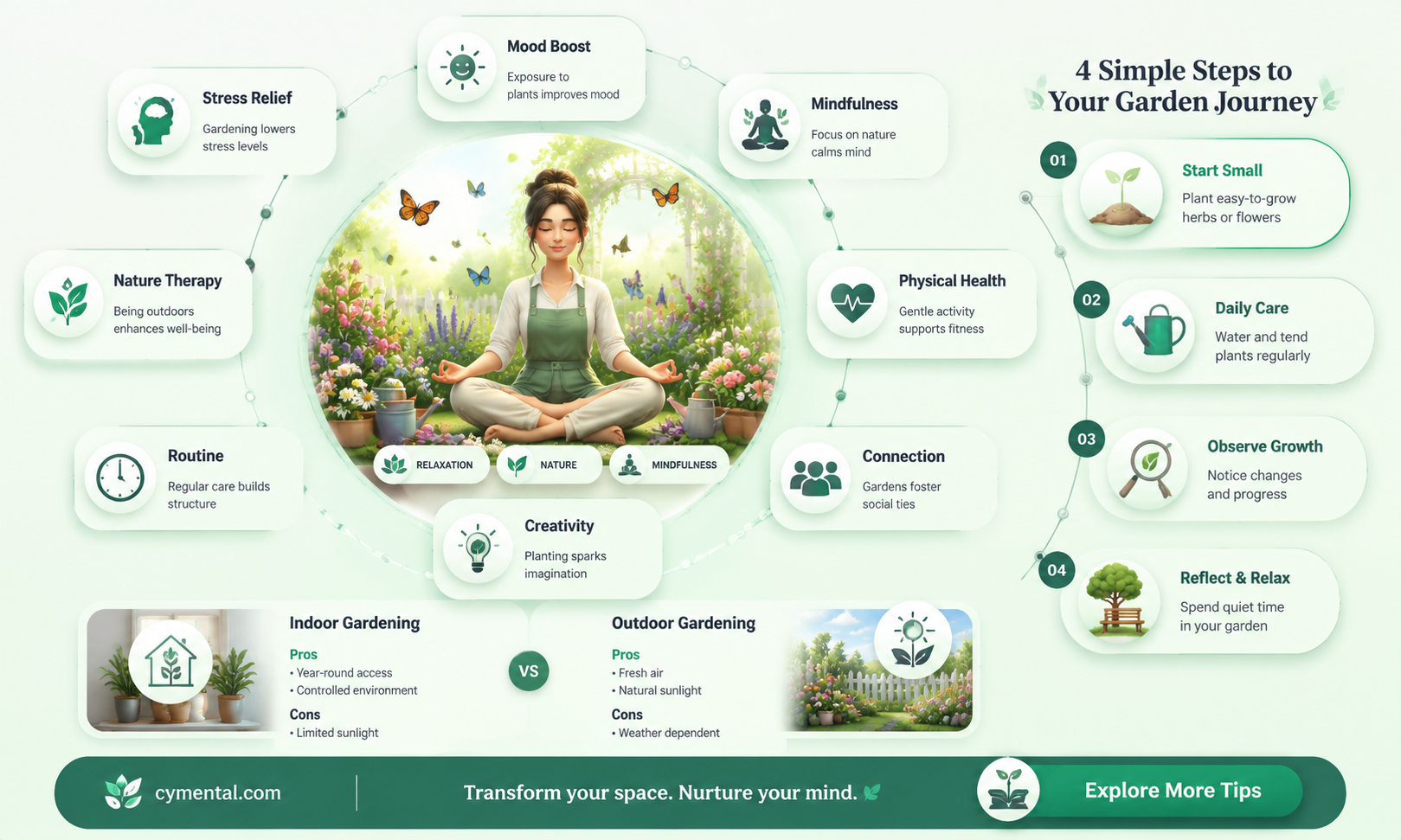
Gardening has long been celebrated for its ability to connect individuals with nature, but its impact on mental health is gaining increasing attention. Beyond the physical benefits of being outdoors and engaging in light exercise, gardening offers a therapeutic escape from the stresses of daily life. The act of nurturing plants, witnessing growth, and creating a vibrant space can foster a sense of accomplishment and purpose. Studies suggest that gardening reduces symptoms of anxiety and depression, lowers cortisol levels, and promotes mindfulness, as it encourages being present in the moment. Additionally, the exposure to sunlight boosts serotonin production, often referred to as the feel-good hormone. Whether tending to a small balcony garden or a sprawling backyard, gardening provides a calming and restorative activity that can significantly enhance mental well-being.
| Characteristics | Values |
|---|---|
| Stress Reduction | Gardening has been shown to significantly reduce cortisol levels, a key stress hormone, by up to 30% in some studies. |
| Mood Enhancement | Engaging in gardening activities can increase serotonin and dopamine levels, improving mood and reducing symptoms of depression and anxiety. |
| Physical Activity | Gardening involves moderate physical exercise, which releases endorphins, promoting mental well-being and reducing stress. |
| Mindfulness & Relaxation | The repetitive nature of gardening tasks (e.g., planting, weeding) encourages mindfulness, helping individuals stay present and reduce overthinking. |
| Sense of Accomplishment | Watching plants grow and flourish provides a tangible sense of achievement, boosting self-esteem and confidence. |
| Connection to Nature | Exposure to green spaces and soil has been linked to reduced symptoms of anxiety and depression, fostering a sense of calm and connection. |
| Cognitive Benefits | Gardening can improve cognitive function, particularly in older adults, by stimulating the brain through planning, problem-solving, and learning. |
| Social Interaction | Community gardening or sharing plants with others can reduce feelings of loneliness and foster social connections. |
| Therapeutic Horticulture | Structured gardening programs are increasingly used in therapy to treat mental health conditions like PTSD, depression, and addiction. |
| Improved Sleep | Physical activity and reduced stress from gardening can lead to better sleep quality, which is essential for mental health. |
| Access to Fresh Produce | Growing fruits and vegetables can improve diet, which is linked to better mental health outcomes. |
| Microbiome Exposure | Contact with soil bacteria (e.g., Mycobacterium vaccae) has been shown to activate serotonin release and reduce anxiety. |
Explore related products


What You'll Learn
- Stress Reduction: Gardening lowers cortisol, promotes relaxation, and reduces anxiety through mindful, nature-focused activities
- Physical Activity: Light exercise in gardening boosts endorphins, improves mood, and enhances overall mental well-being
- Connection to Nature: Being outdoors fosters a sense of calm, grounding, and connection to the environment
- Sense of Accomplishment: Growing plants provides purpose, pride, and tangible rewards, boosting self-esteem and confidence
- Mindfulness Practice: Gardening encourages presence, focus, and mindfulness, reducing overthinking and improving mental clarity

Stress Reduction: Gardening lowers cortisol, promotes relaxation, and reduces anxiety through mindful, nature-focused activities
Cortisol, often dubbed the stress hormone, spikes in response to pressure, anxiety, or fear. Gardening, however, has been shown to significantly lower cortisol levels. A study published in the *Journal of Health Psychology* found that participants who engaged in 30 minutes of gardening experienced a notable decrease in cortisol compared to those who performed a stressful task indoors. This reduction isn’t just a short-term fix; regular gardening can create a sustained calming effect, making it a powerful tool for managing chronic stress.
To harness this benefit, incorporate mindful practices into your gardening routine. Focus on the sensory experience—the feel of soil between your fingers, the scent of blooming flowers, or the sound of rustling leaves. These nature-focused activities ground you in the present moment, interrupting the cycle of anxious thoughts. Start with small tasks like pruning herbs or planting seeds, and gradually increase the duration as you build a habit. Even 15–20 minutes daily can yield noticeable results, particularly for adults aged 25–60 who often juggle work and personal pressures.
Compare gardening to other stress-relief methods, and its advantages become clear. Unlike passive activities like scrolling through social media, gardening is active and purposeful, providing a sense of accomplishment. Unlike high-intensity exercise, it’s accessible to most age groups and fitness levels, making it an inclusive option. Additionally, the combination of physical activity and exposure to greenery offers a dual benefit: lowering cortisol while boosting mood-enhancing neurotransmitters like serotonin.
For maximum stress reduction, pair gardening with intentional techniques. Practice deep breathing while weeding or watering plants, syncing your breath with the rhythm of the task. Create a dedicated "calm corner" in your garden with soothing elements like a small fountain or fragrant lavender. Avoid turning gardening into another chore by setting realistic goals—focus on enjoyment, not perfection. Families can involve children by assigning them simple tasks, fostering a shared sense of calm and connection.
Incorporating gardening into your routine doesn’t require a sprawling backyard. Container gardens, windowsill herb boxes, or even indoor plants can deliver similar benefits. The key is consistency and mindfulness. By lowering cortisol, promoting relaxation, and reducing anxiety, gardening becomes more than a hobby—it’s a therapeutic practice that nurtures both mind and soil. Start small, stay present, and let nature do the rest.
Finding Support: Where to Get Mental Health Help and Resources
You may want to see also
Explore related products


$22.99 $24.99


Physical Activity: Light exercise in gardening boosts endorphins, improves mood, and enhances overall mental well-being
Gardening is more than a hobby; it’s a gentle workout that doubles as a mental health ally. The physical activity involved—digging, planting, weeding, and watering—qualifies as light to moderate exercise, typically burning 200–400 calories per hour depending on intensity. This level of activity is enough to stimulate the release of endorphins, the body’s natural mood lifters, without causing fatigue or stress. For adults of all ages, especially those over 50, gardening offers a low-impact way to stay active, improve flexibility, and strengthen muscles, all while nurturing mental well-being.
Consider the mechanics: bending to prune, stretching to reach plants, and carrying pots engage multiple muscle groups, enhancing mobility and balance. Studies show that just 30 minutes of light gardening daily can reduce symptoms of anxiety and depression by promoting mindfulness and physical engagement. For instance, a 2017 meta-analysis published in *Preventive Medicine Reports* found that gardening activities significantly lowered cortisol levels, a key stress hormone. To maximize benefits, break tasks into 10–15 minute intervals throughout the day, ensuring sustained activity without overexertion.
The persuasive case for gardening lies in its accessibility and adaptability. Unlike structured workouts, gardening allows individuals to tailor their effort level to their physical capacity. For older adults or those with limited mobility, raised beds or container gardens eliminate the need for bending or heavy lifting. Even small-scale activities, like repotting plants or trimming herbs, contribute to the cumulative effect of light exercise. Pairing gardening with deep breathing exercises amplifies its calming effects, making it a holistic practice for both body and mind.
Comparatively, gardening stands out as a sustainable form of physical activity. Unlike gym routines that may feel monotonous, gardening offers variety—each season brings new tasks and rewards. This dynamic nature keeps motivation high, fostering a sense of accomplishment as plants grow and flourish. For example, a study in the *Journal of Health Psychology* found that participants who gardened regularly reported higher levels of satisfaction and lower stress compared to those who engaged in traditional exercise alone. The key takeaway? Gardening isn’t just about growing plants—it’s about growing resilience, one seed at a time.
AI's Role in Mental Health: Support, Challenges, and Future Potential
You may want to see also
Explore related products




Connection to Nature: Being outdoors fosters a sense of calm, grounding, and connection to the environment
Spending just 20–30 minutes daily in green spaces can measurably reduce cortisol levels, the body's primary stress hormone. This isn't merely anecdotal—studies, including research from the University of Exeter, demonstrate that exposure to nature lowers physiological markers of stress, fostering a sense of calm. Gardening, in particular, combines this natural immersion with purposeful activity, creating a dual benefit: the tranquility of being outdoors paired with the focus required to tend to plants. For those with anxiety or overwhelmed minds, this structured yet soothing engagement can act as a reset, grounding the individual in the present moment.
Consider the act of planting a seed. It demands attention to detail—preparing the soil, ensuring proper depth, and watering gently. These tasks anchor the mind in tangible, immediate actions, diverting it from cyclical worries. Unlike passive outdoor activities, gardening requires interaction with the environment, deepening the connection to nature. For instance, feeling the texture of soil, observing the color of leaves, or smelling blooming flowers engages multiple senses, intensifying the grounding effect. This sensory immersion is particularly beneficial for individuals experiencing dissociation or emotional numbness, as it gently pulls them back into their bodies.
A persuasive argument for this practice lies in its accessibility. Unlike therapy or medication, gardening requires minimal resources—a small plot of land, a few pots, or even a windowsill can suffice. For urban dwellers, micro-gardening with herbs or succulents offers a starting point. The key is consistency: dedicating 15–20 minutes daily to nurturing plants can build a routine that reinforces the connection to nature. Over time, this practice cultivates not just plants but also resilience, as the cyclical nature of gardening—growth, decay, and renewal—mirrors life’s rhythms, providing perspective on impermanence and renewal.
Comparatively, indoor activities, even those designed to reduce stress, often lack the dynamic interaction that gardening provides. Meditation apps or yoga, while valuable, cannot replicate the tactile and olfactory experiences of working with soil and plants. Gardening also introduces an element of responsibility—caring for living organisms—which can enhance feelings of purpose and accomplishment. For older adults or those with limited mobility, adaptive tools like raised beds or vertical gardens make this practice inclusive, ensuring that the benefits of nature connection are not bound by physical constraints.
Incorporating gardening into mental health routines need not be complex. Start small: plant a single pot of basil or a tray of sunflower seeds. Gradually expand as confidence grows. For maximum benefit, combine gardening with mindfulness—focus on the sensation of soil between fingers, the sound of water hitting leaves, or the warmth of sunlight on skin. This intentional engagement amplifies the calming and grounding effects, transforming gardening from a hobby into a therapeutic practice. By nurturing plants, individuals often find they are also nurturing themselves, fostering a deeper, more sustainable connection to both nature and their own well-being.
Can Dogs Provide Emotional Support for Mental Health Struggles?
You may want to see also
Explore related products


$12.23 $14.39



Sense of Accomplishment: Growing plants provides purpose, pride, and tangible rewards, boosting self-esteem and confidence
Watching a seed transform into a thriving plant is a powerful metaphor for personal growth. Each stage of cultivation—from the delicate sprouting to the eventual bloom or harvest—mirrors the incremental progress we often overlook in our own lives. This process provides a tangible, visible reminder that effort yields results, even when the changes seem imperceptible day-to-day. For individuals struggling with mental health, this can be a grounding experience, offering proof that patience and care can lead to something beautiful and meaningful.
To harness this sense of accomplishment, start small. Beginners should focus on low-maintenance plants like succulents, herbs, or marigolds, which require minimal care but still offer visible rewards. Dedicate 15–20 minutes daily to tending your garden, whether it’s watering, pruning, or simply observing growth. Keep a journal to track progress—noting the first leaf, the first flower, or the first harvest—to amplify the feeling of achievement. For those with limited space, container gardening or microgreens are excellent alternatives, proving that even small efforts can yield significant pride.
The psychological impact of this accomplishment is rooted in neuroscience. Completing tasks, no matter how modest, triggers the release of dopamine, a neurotransmitter associated with pleasure and reward. Gardening amplifies this effect by engaging multiple senses—the feel of soil, the scent of flowers, the sight of vibrant colors—creating a multisensory experience that deepens the emotional connection to the outcome. Studies show that individuals who engage in such purposeful activities report higher levels of self-efficacy, a key component of mental resilience.
However, it’s essential to manage expectations. Not every seed will sprout, and not every plant will thrive. Failure is part of the process, and reframing it as a learning opportunity rather than a setback is crucial. For instance, if a plant withers, analyze the conditions—was it overwatered? Did it receive enough sunlight?—and apply those lessons to future endeavors. This iterative approach fosters adaptability and reinforces the idea that growth, both in plants and in oneself, is a journey of trial and refinement.
Incorporating gardening into a mental health routine doesn’t require a green thumb, just a willingness to begin. For children and teenagers, planting fast-growing species like sunflowers or radishes can provide quick wins, boosting confidence. Adults might find solace in the meditative rhythm of weeding or the satisfaction of harvesting vegetables for a meal. Seniors can benefit from the gentle physical activity and the sense of continuity that comes from nurturing life. Regardless of age or experience, the act of growing something fosters a connection to the natural world and, in turn, to oneself.
Supporting Loved Ones: Strategies to Assist Those Denying Mental Health Struggles
You may want to see also
Explore related products


Mindfulness Practice: Gardening encourages presence, focus, and mindfulness, reducing overthinking and improving mental clarity
Gardening demands attention to the here and now—the feel of soil between fingers, the scent of damp earth, the precise angle needed for planting a seedling. These sensory details anchor the mind, pulling it away from abstract worries and into the tangible world. Unlike activities that allow the mind to wander, gardening requires focus on immediate tasks, such as pruning a branch or identifying a pest, naturally fostering mindfulness without forcing it.
Consider the act of weeding, a task often dismissed as mundane. It’s a practice in discernment—distinguishing between what nourishes and what drains, both in the garden and metaphorically in life. This process encourages a mental decluttering, where overthinking is replaced by deliberate, purposeful action. Studies suggest that even 30 minutes of such focused gardening can reduce cortisol levels, the body’s primary stress hormone, by up to 12%, according to a 2019 Dutch study. For maximum benefit, pair weeding or planting with deep breathing, inhaling for four counts and exhaling for six, to synchronize physical and mental rhythms.
The structure of gardening itself mirrors mindfulness techniques. It’s a cyclical practice—planning, planting, tending, harvesting—that teaches patience and presence. Unlike digital hobbies, which often fragment attention, gardening operates on nature’s timeline, demanding acceptance of what cannot be rushed. For instance, a tomato plant won’t fruit overnight, and this reality grounds the gardener in the present, reducing anxiety about outcomes. Beginners should start with low-maintenance plants like herbs or succulents, which offer immediate engagement without overwhelming complexity.
To deepen mindfulness, incorporate intentional pauses during gardening. After planting a row of seeds, take a moment to observe the soil’s texture or listen to the rustle of leaves. These micro-meditations, lasting as little as 1–2 minutes, reinforce the connection between action and awareness. For children or those with shorter attention spans, turn this into a game: challenge them to identify three sounds, two textures, and one scent in the garden before moving to the next task. This engages multiple senses, enhancing focus and presence.
Finally, gardening’s unpredictability—a sudden frost, an unexpected bloom—teaches adaptability, a core skill in mindfulness. When a plant withers despite care, the gardener learns to observe without judgment, letting go of control. This mindset translates to mental health, where overthinking often stems from trying to manage the uncontrollable. By embracing gardening’s lessons, individuals cultivate not just plants, but resilience and clarity. Start small, with a single pot or plot, and let the practice grow organically, mirroring the very essence of mindfulness.
First Responders' Mental Health: Personal Struggles and Support Solutions
You may want to see also
Frequently asked questions
Yes, gardening has been shown to improve mental health by reducing stress, anxiety, and symptoms of depression. It provides a sense of accomplishment, promotes mindfulness, and connects individuals with nature.
Gardening reduces stress by encouraging physical activity, fostering a calming environment, and releasing endorphins. The repetitive tasks involved, like planting or weeding, can also induce a meditative state.
Yes, gardening can help alleviate anxiety and depression by boosting mood through exposure to sunlight (which increases serotonin levels) and providing a purposeful activity that enhances self-esteem and a sense of control.
Yes, studies have found that gardening can lower cortisol (stress hormone) levels, improve cognitive function, and reduce symptoms of mental health disorders. It’s often used as a therapeutic tool in practices like horticultural therapy.