Lucas Bennett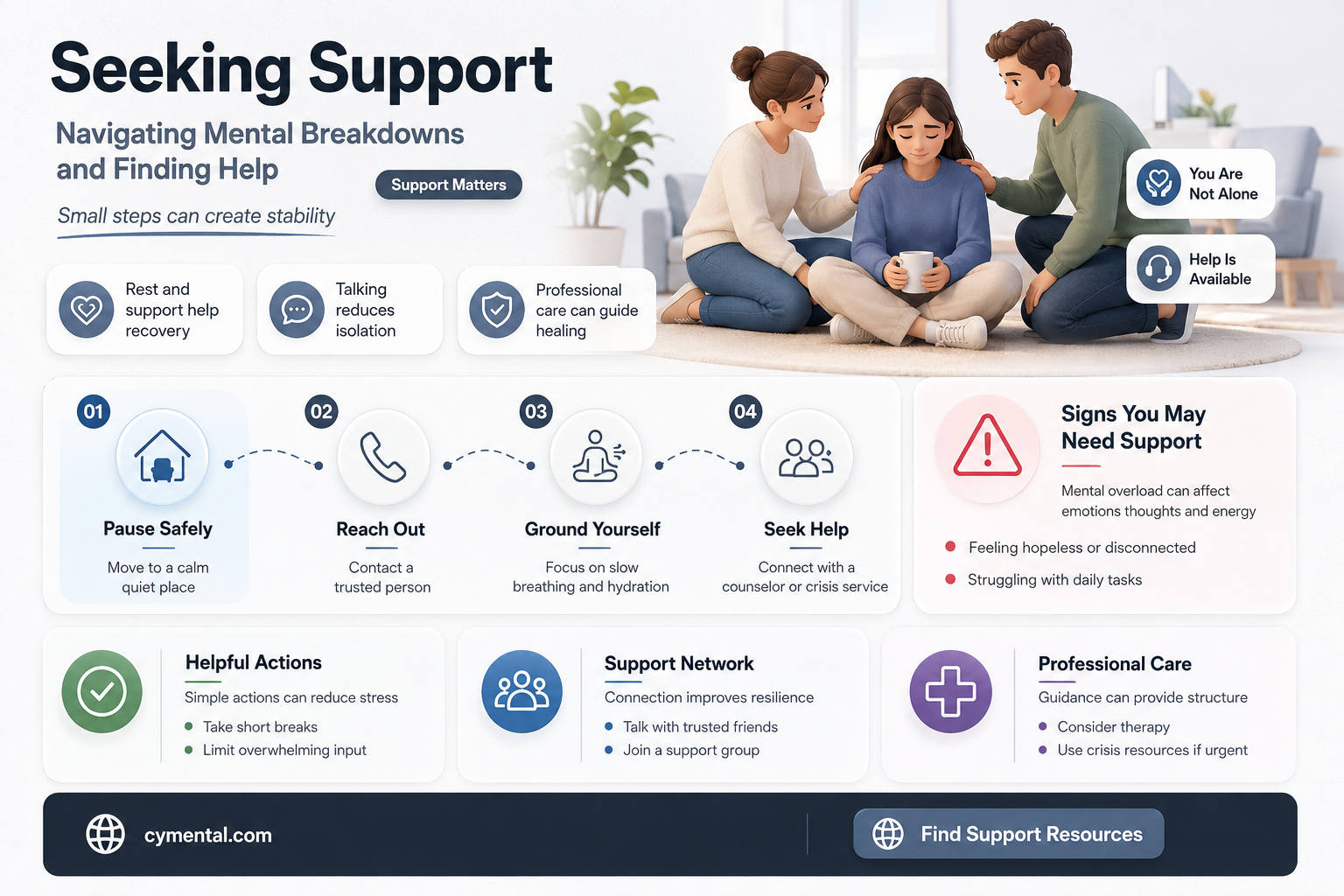
Experiencing a mental breakdown can be overwhelming and isolating, leaving individuals feeling paralyzed by intense emotions, stress, or anxiety. During such moments, it’s crucial to recognize that seeking help is not a sign of weakness but a necessary step toward recovery. Whether it’s reaching out to a trusted friend, family member, therapist, or crisis hotline, support can provide immediate relief, guidance, and a sense of connection. Ignoring the need for assistance can prolong suffering and exacerbate symptoms, making it essential to prioritize self-care and lean on available resources. Remember, you don’t have to face it alone—help is always within reach.
| Characteristics | Values |
|---|---|
| Difficulty functioning | Inability to perform daily tasks, work, or maintain relationships |
| Overwhelming emotions | Intense feelings of sadness, anxiety, anger, or hopelessness |
| Physical symptoms | Headaches, stomachaches, fatigue, changes in appetite or sleep |
| Disconnection from reality | Hallucinations, delusions, or difficulty distinguishing reality from fantasy |
| Thoughts of self-harm or suicide | Persistent thoughts of hurting oneself or ending one's life |
| Social withdrawal | Isolating oneself from friends, family, and social activities |
| Changes in behavior | Significant changes in personality, mood swings, or impulsive actions |
| Difficulty concentrating | Trouble focusing, making decisions, or remembering things |
| Substance abuse | Increased use of drugs or alcohol to cope with emotions |
| Feeling out of control | Overwhelmed by emotions and unable to manage them |
Explore related products


What You'll Learn
- Recognizing Breakdown Signs: Identify symptoms like panic, disorientation, or extreme emotions to act promptly
- Immediate Coping Strategies: Use deep breathing, grounding techniques, or safe spaces to stabilize
- Seeking Professional Support: Contact therapists, hotlines, or emergency services for expert assistance
- Building a Support Network: Lean on trusted friends, family, or peers for emotional backing
- Post-Breakdown Recovery: Focus on self-care, therapy, and routine to prevent future episodes

Recognizing Breakdown Signs: Identify symptoms like panic, disorientation, or extreme emotions to act promptly
A mental breakdown can manifest in various ways, often leaving individuals and those around them unsure of how to respond. Recognizing the signs early is crucial for timely intervention. Symptoms such as panic attacks, disorientation, or overwhelming emotions are not merely fleeting moments of stress but indicators of a deeper crisis. For instance, a person experiencing a panic attack may exhibit rapid breathing, chest pain, and an intense fear of losing control. These physical and emotional cues are the body’s distress signals, demanding attention and action.
Analyzing these symptoms requires a nuanced approach. Disorientation, for example, can range from mild confusion to a complete inability to recognize one’s surroundings. In extreme cases, individuals may struggle to recall basic information or follow simple instructions. Similarly, extreme emotions—whether uncontrollable crying, rage, or numbness—can disrupt daily functioning. A comparative perspective reveals that while stress is common, the intensity and duration of these symptoms during a breakdown are disproportionate and debilitating. Understanding this distinction is key to differentiating between everyday challenges and a mental health emergency.
To act promptly, follow these steps: first, observe the individual’s behavior for persistent or escalating symptoms. Second, create a calm environment to reduce sensory overload. For example, dimming lights or minimizing noise can help during a panic attack. Third, encourage the person to seek professional help, such as contacting a therapist or crisis hotline. Practical tips include keeping emergency contacts handy and familiarizing oneself with local mental health resources. For adults over 18, a crisis hotline like the National Suicide Prevention Lifeline (988) offers immediate support.
Caution must be exercised to avoid exacerbating the situation. Avoid dismissing the person’s feelings or offering simplistic solutions like “just stay positive.” Such responses can invalidate their experience and deepen their distress. Instead, use empathetic language and acknowledge their struggle. For instance, saying, “I see you’re in a lot of pain right now, and I’m here to help,” can provide reassurance. Additionally, be mindful of cultural or personal sensitivities that may influence how the individual expresses their distress.
In conclusion, recognizing the signs of a mental breakdown is a vital skill that empowers both individuals and their support systems. By identifying symptoms like panic, disorientation, or extreme emotions, one can intervene effectively and compassionately. Prompt action, combined with practical strategies and empathetic communication, can make a significant difference in someone’s recovery journey. Remember, acknowledging the crisis is the first step toward healing.
Setting Goals: A Powerful Tool for Enhancing Mental Wellness
You may want to see also
Explore related products





Immediate Coping Strategies: Use deep breathing, grounding techniques, or safe spaces to stabilize
During a mental breakdown, your body’s fight-or-flight response can hijack your rational thinking, leaving you overwhelmed and disconnected. Immediate coping strategies like deep breathing, grounding techniques, or retreating to a safe space act as emergency brakes, slowing the physiological cascade of stress hormones and restoring a sense of control. These tools don’t require therapy sessions or medication—they’re accessible, free, and can be deployed anywhere, making them essential for anyone experiencing acute distress.
Deep breathing isn’t just about inhaling and exhaling—it’s a deliberate reset for your nervous system. The 4-7-8 technique, for instance, involves inhaling for 4 seconds, holding for 7, and exhaling for 8. This pattern slows your heart rate and signals to your brain that you’re safe. Consistency is key; practicing this technique daily, even when calm, trains your body to respond more effectively during crises. For those with respiratory conditions or anxiety about breath control, start with shorter counts (e.g., 2-4-6) and gradually increase as comfort allows.
Grounding techniques anchor you in the present, pulling your focus away from spiraling thoughts. The 5-4-3-2-1 method is a popular choice: identify 5 things you can see, 4 you can touch, 3 you can hear, 2 you can smell, and 1 you can taste. This sensory inventory forces your mind to engage with your surroundings, breaking the cycle of rumination. For individuals with sensory sensitivities, modify the technique—focus on just two or three senses that feel safe and non-overwhelming.
A safe space doesn’t have to be physical—it can be a mental refuge or a trusted person. If you’re in a public place, visualize a calming location (e.g., a quiet beach or a cozy room) and mentally step into it. Alternatively, keep a small object with personal significance (like a smooth stone or a photo) in your pocket to hold during distress. For those with social support, a pre-arranged code word or phrase can signal to a friend or family member that you need immediate, non-judgmental assistance.
While these strategies are powerful, they’re not a substitute for professional help. If breakdowns occur frequently or intensify, consult a mental health professional. Think of these techniques as first aid—they stabilize you in the moment but don’t address underlying issues. By mastering these tools, you gain a measure of autonomy over your mental state, transforming moments of crisis into opportunities for resilience.
Positive Relationships and Mental Health: Insights from Scholarly Research
You may want to see also
Explore related products




Seeking Professional Support: Contact therapists, hotlines, or emergency services for expert assistance
During a mental breakdown, the intensity of emotions and thoughts can feel overwhelming, making it difficult to navigate alone. This is where professional support becomes crucial. Therapists, hotlines, and emergency services are trained to provide expert assistance tailored to your specific needs. Unlike well-meaning friends or family, these professionals offer evidence-based strategies and a non-judgmental space to process what you're experiencing. For instance, cognitive-behavioral therapy (CBT) has been shown to effectively manage acute distress by identifying and challenging negative thought patterns. If you’re unsure where to start, consider contacting a mental health hotline like the National Alliance on Mental Illness (NAMI) Helpline (1-800-950-NAMI) for immediate guidance.
When reaching out to a therapist, it’s essential to understand the types of support available. Individual therapy sessions typically last 45–60 minutes and can be conducted in person, over the phone, or via video call. For severe breakdowns, crisis intervention services or emergency psychiatric evaluations may be necessary. These services are designed to stabilize acute symptoms and ensure safety. For example, if you’re experiencing suicidal thoughts, calling 988 (the Suicide & Crisis Lifeline) connects you to trained counselors who can de-escalate the situation and provide resources for long-term care. Remember, seeking help is a sign of strength, not weakness.
Hotlines serve as a vital bridge between immediate crisis and ongoing treatment. They are accessible 24/7, free of charge, and staffed by professionals who can offer coping strategies, referrals, and emotional support. For instance, the Crisis Text Line (text HOME to 741741) allows you to communicate via text if speaking feels too daunting. These services are particularly useful for individuals who may not have access to a therapist immediately or who need someone to talk to outside of office hours. While hotlines are not a substitute for long-term therapy, they can provide critical relief during moments of intense distress.
Emergency services should be contacted when there’s an immediate threat to safety. This includes situations where self-harm, harm to others, or severe disconnection from reality is present. Dialing 911 or visiting an emergency room ensures access to medical and psychiatric professionals who can administer urgent care, such as medication or hospitalization if needed. For example, antipsychotics or benzodiazepines may be prescribed in controlled doses to manage severe symptoms like psychosis or panic attacks. While this step may feel drastic, it can be life-saving and often serves as a first step toward stabilization and recovery.
Incorporating professional support into your coping strategy doesn’t mean you’ve failed; it means you’re taking proactive steps to heal. Whether through therapy, hotlines, or emergency services, these resources provide the expertise and structure needed to navigate a mental breakdown effectively. Start by identifying which type of support aligns with your current needs—immediate crisis intervention, short-term coping strategies, or long-term therapeutic care. By doing so, you’re not just surviving the breakdown; you’re laying the groundwork for resilience and recovery.
Obama's Mental Health Legacy: Progress and Impact on Americans' Well-being
You may want to see also
Explore related products




Building a Support Network: Lean on trusted friends, family, or peers for emotional backing
During a mental breakdown, the instinct to isolate can be overwhelming, yet this is precisely when human connection becomes a lifeline. Building a support network isn’t just about having people around—it’s about cultivating relationships with trusted friends, family, or peers who can offer emotional backing when you’re unable to carry the weight alone. These individuals don’t need to be mental health professionals; they simply need to be reliable, empathetic, and willing to listen without judgment. Start by identifying 2–3 people in your life who’ve shown consistent care and understanding. These are your anchors, the ones you can text at 2 a.m. or call during a panic attack.
The process of leaning on others requires vulnerability, which can feel counterintuitive when you’re already fragile. Begin small: share a specific struggle rather than dumping your entire emotional load at once. For example, instead of saying, “I’m falling apart,” try, “I’m having a hard time getting out of bed today. Could we talk?” This approach makes it easier for both you and your support person to engage. Be clear about what you need—whether it’s a listening ear, a distraction, or practical help like picking up groceries. Remember, asking for help isn’t a sign of weakness; it’s a strategic move to stabilize yourself.
Comparing the impact of a support network to going it alone highlights its necessity. Studies show that social isolation exacerbates mental health issues, while even minimal social support can reduce symptoms of anxiety and depression by up to 25%. Think of your network as a safety net: it doesn’t prevent the fall, but it cushions the impact. For instance, a friend who checks in daily or a family member who reminds you to take your medication can create a sense of routine and accountability. These small, consistent actions accumulate into a foundation of emotional resilience.
However, not all support networks are created equal. Avoid relying on individuals who drain your energy or dismiss your struggles. If a friend responds to your vulnerability with phrases like, “Just think positive,” they may not be the best fit for this role. Instead, prioritize relationships where mutual respect and understanding are the norm. Consider joining peer support groups or online communities where members share similar experiences—these can supplement your personal network with additional perspectives and strategies.
In practice, maintaining a support network requires effort, but the payoff is immeasurable. Schedule regular check-ins, even when you’re feeling stable, to keep the lines of communication open. Keep a list of go-to phrases or questions to use when you’re too overwhelmed to articulate your feelings, such as, “I’m not okay right now. Can you just be here with me?” Finally, reciprocate when you’re able—offer support to others in your network, not out of obligation, but as a way to strengthen the bond. A support network isn’t a one-way street; it’s a circle of care that sustains everyone involved.
Sleep's Healing Power: Boosting Mental Health and Emotional Well-Being
You may want to see also
Explore related products


Post-Breakdown Recovery: Focus on self-care, therapy, and routine to prevent future episodes
Emerging from a mental breakdown is akin to piecing together a shattered mirror—each fragment represents a part of your resilience, but the reflection won’t stabilize without intentional effort. Post-breakdown recovery isn’t about erasing the past; it’s about rebuilding a foundation strong enough to withstand future storms. Self-care, therapy, and routine are the cornerstones of this process, each playing a distinct role in restoring balance and preventing relapse.
Self-care is not a luxury but a non-negotiable prescription for healing. Think of it as the daily maintenance that keeps your mental engine running smoothly. Start with the basics: 7–9 hours of sleep, hydration, and nutrition rich in omega-3s and antioxidants. Incorporate mindfulness practices like 10 minutes of deep breathing or journaling to ground yourself in the present. Physical activity, even a 20-minute walk, releases endorphins that counteract stress hormones. Avoid self-care trends that feel performative; instead, focus on activities that genuinely recharge you. For instance, if gardening calms your mind, allocate 30 minutes daily to tend to your plants. Consistency is key—small, deliberate acts of self-care compound over time, fortifying your emotional resilience.
Therapy is the diagnostic tool and repair kit for the psychological damage a breakdown leaves behind. Cognitive Behavioral Therapy (CBT) is particularly effective, with studies showing a 50–75% success rate in reducing symptoms of anxiety and depression. During sessions, work with your therapist to identify triggers and reframe negative thought patterns. For example, if work stress contributed to your breakdown, explore boundary-setting techniques like the "2-hour rule" (limit checking emails outside of work hours). Group therapy or support groups can also provide a sense of community, reminding you that you’re not alone. Aim for weekly sessions initially, tapering down as you stabilize. Remember, therapy isn’t a quick fix—it’s a long-term investment in understanding and managing your mental health.
Routine acts as the scaffolding that holds recovery together, providing structure in a world that often feels chaotic post-breakdown. Begin by anchoring your day with non-negotiable rituals: wake up at the same time, eat meals at consistent hours, and wind down with a calming activity before bed. Break larger tasks into manageable chunks using the "Pomodoro Technique" (25 minutes of focus followed by a 5-minute break). For those returning to work or school, start with reduced hours and gradually increase as stamina improves. Caution: avoid overscheduling, as this can lead to burnout. Instead, prioritize activities that align with your values and energy levels. A well-designed routine doesn’t restrict freedom—it creates a framework within which spontaneity can thrive without overwhelming you.
The interplay of self-care, therapy, and routine is what transforms recovery from a fragile state into a sustainable lifestyle. Self-care nourishes the body and mind, therapy addresses the root causes of distress, and routine provides the stability needed to integrate these changes. Together, they form a trifecta that not only aids healing but also acts as a prophylactic against future breakdowns. For instance, a person who combines daily meditation (self-care), weekly CBT sessions (therapy), and a structured morning routine (routine) is statistically less likely to experience recurrent episodes. Recovery isn’t linear, but with these tools, you can rebuild not just to your former self, but to a stronger, more resilient version.
Helping Families in Mental Health Crisis Act: Did It Pass?
You may want to see also
Frequently asked questions
Signs include extreme distress, inability to perform daily tasks, disconnection from reality, self-harm thoughts, or severe anxiety. If you notice these, offer support and encourage professional help.
Stay calm, listen without judgment, and validate their feelings. Encourage them to seek professional help, and if they’re in immediate danger, contact emergency services.
If the person is at risk of harming themselves or others, or if they’re unable to care for themselves, call emergency services immediately. It’s better to err on the side of caution.
While some may recover with self-care and support, professional help is often crucial for managing underlying issues and preventing future breakdowns. Encourage therapy or counseling.