Caleb Wright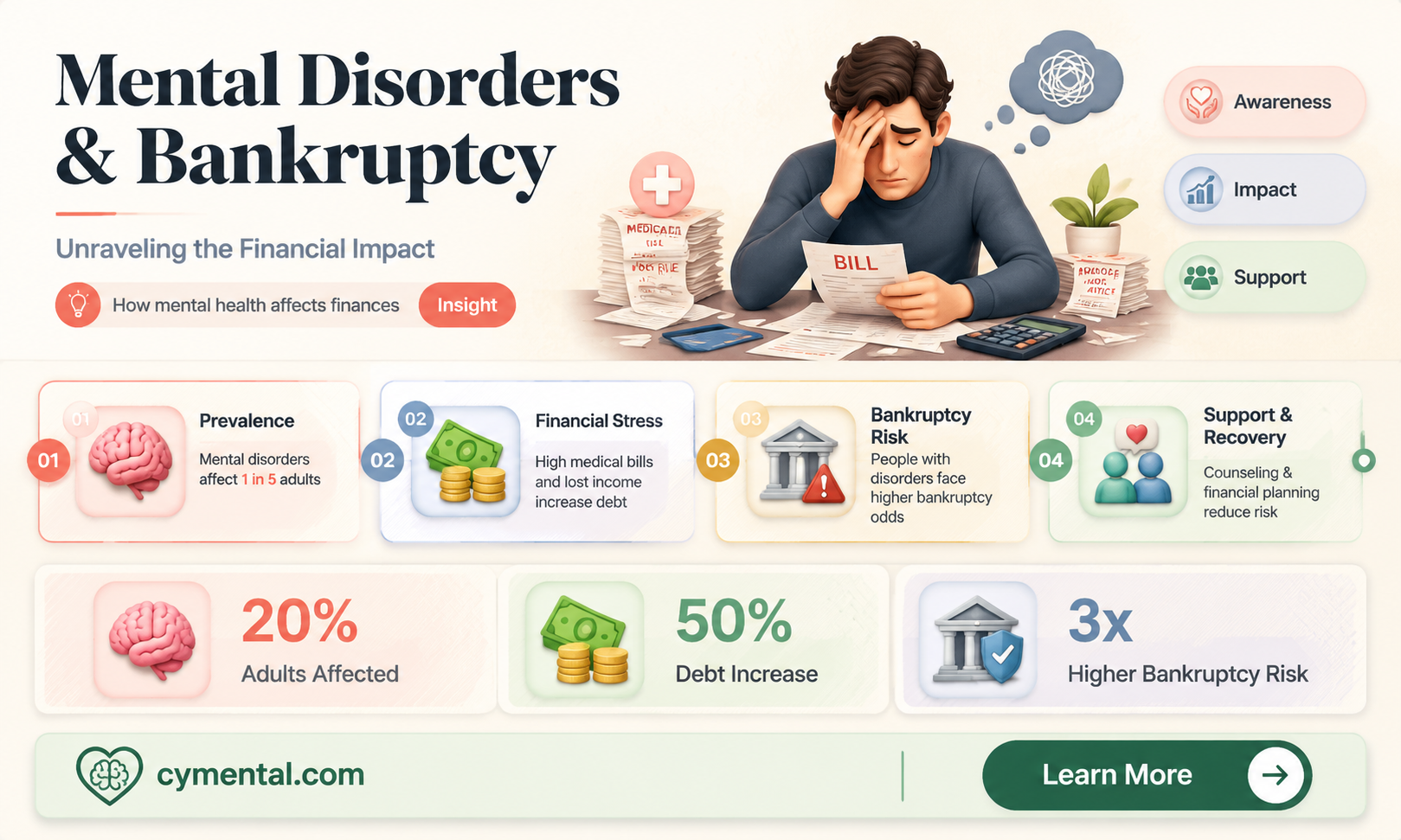
The relationship between mental disorders and bankruptcies is a complex and often overlooked area of study, raising questions about whether individuals with mental health conditions are disproportionately affected by financial distress. Research suggests that mental disorders, such as depression, anxiety, and bipolar disorder, can impair decision-making, reduce productivity, and increase medical expenses, all of which may contribute to financial instability. Conversely, the stress and stigma associated with bankruptcy can exacerbate mental health issues, creating a vicious cycle. While some argue that certain cognitive differences in individuals with mental disorders might offer unique problem-solving advantages, the evidence overwhelmingly points to the detrimental impact of mental health challenges on financial well-being. Understanding this dynamic is crucial for developing targeted interventions that address both mental health and financial literacy, potentially mitigating the risk of bankruptcy for vulnerable populations.
Explore related products


What You'll Learn

Impact of mental health on financial decision-making
Mental health disorders can significantly impair an individual’s ability to make sound financial decisions, often leading to behaviors that increase the risk of bankruptcy. Conditions such as depression, anxiety, and bipolar disorder are linked to cognitive distortions, impulsivity, and reduced executive functioning. For example, depressive episodes may cause individuals to neglect bill payments or avoid financial planning, while manic phases in bipolar disorder can lead to reckless spending sprees. Studies show that those with severe mental illness are three times more likely to experience financial distress, highlighting a direct correlation between mental health and economic instability.
Consider the practical steps individuals and caregivers can take to mitigate these risks. First, establish a structured budgeting system that simplifies financial management, reducing the cognitive load for those with mental health challenges. Apps like Mint or YNAB can automate tracking and alerts, ensuring bills are paid on time. Second, designate a trusted financial advocate—a family member or professional—to oversee major financial decisions during periods of acute symptoms. Third, prioritize access to affordable mental health care, as untreated conditions often exacerbate financial problems. For instance, cognitive-behavioral therapy (CBT) has been shown to improve financial decision-making in individuals with anxiety and depression.
A comparative analysis reveals that certain mental health disorders have distinct financial implications. ADHD, for instance, is associated with impulsive buying and difficulty delaying gratification, while obsessive-compulsive disorder (OCD) may lead to excessive saving or hoarding. In contrast, individuals with schizophrenia often face barriers to employment and financial literacy, compounding their economic vulnerability. Tailoring interventions to the specific disorder is crucial; for ADHD, setting spending limits and using pre-commitment strategies (e.g., automatic savings transfers) can be effective, whereas OCD may require therapy focused on reducing financial anxiety.
The societal and systemic factors cannot be overlooked. Stigma surrounding mental health often prevents individuals from seeking help, while inadequate access to care leaves many without necessary support. Employers can play a role by offering mental health resources and flexible work arrangements, reducing financial stress for employees. Policymakers should also consider integrating financial literacy programs into mental health treatment plans, ensuring individuals have the tools to manage their finances effectively. By addressing these gaps, we can reduce the likelihood of bankruptcy driven by mental health challenges.
Finally, a descriptive perspective underscores the human cost of this issue. Imagine a 35-year-old with untreated bipolar disorder who, during a manic episode, accumulates $30,000 in credit card debt on luxury items. Post-episode, they face crippling depression, unable to work or address the debt, ultimately leading to bankruptcy. This scenario is not uncommon, illustrating how mental health disorders can create a cycle of financial ruin. Breaking this cycle requires a multifaceted approach—combining individual strategies, systemic support, and increased awareness—to ensure mental health no longer serves as a silent driver of financial collapse.
Bilingual Brains: Can Language Learning Aid Mental Health Disorders?
You may want to see also
Explore related products


Role of cognitive impairments in bankruptcy filings
Cognitive impairments, ranging from mild executive dysfunction to severe conditions like dementia, can significantly undermine financial decision-making, often leading to bankruptcy. Individuals with such impairments may struggle with tasks like budgeting, understanding loan terms, or recognizing fraudulent schemes. For example, a study published in the *Journal of Aging and Health* found that older adults with cognitive decline were twice as likely to declare bankruptcy compared to their cognitively intact peers. This vulnerability highlights the need for tailored financial interventions, such as simplified banking tools or trusted financial guardians, to mitigate risks for this population.
Consider the case of a 62-year-old with early-onset Alzheimer’s who, within a year of diagnosis, accumulated $30,000 in credit card debt due to impulsive purchases and inability to track expenses. Such scenarios underscore the importance of early detection and proactive measures. Families and caregivers can implement strategies like setting up automatic bill payments, using prepaid cards with spending limits, or enrolling in financial literacy programs designed for cognitively impaired individuals. Legal frameworks, such as power of attorney or conservatorship, can also provide safeguards before financial mismanagement escalates.
From a legal standpoint, cognitive impairments may offer limited protections in bankruptcy filings but rarely provide direct advantages. Courts occasionally consider cognitive status when assessing undue hardship in Chapter 7 or Chapter 13 cases, potentially leading to more lenient repayment plans. However, proving cognitive impairment requires substantial medical documentation, and the process can be costly and time-consuming. Attorneys specializing in elder law or disability rights can guide clients through this complex terrain, ensuring their cognitive limitations are appropriately represented without exploitation.
A comparative analysis reveals disparities in how cognitive impairments are addressed across jurisdictions. In the U.S., the Bankruptcy Code lacks explicit provisions for cognitive disabilities, leaving outcomes largely to judicial discretion. In contrast, countries like Canada and the U.K. have incorporated more robust protections, such as mandatory financial assessments for vulnerable debtors. Advocates argue that adopting similar measures could reduce bankruptcy rates among cognitively impaired individuals while preserving their dignity and financial autonomy.
Ultimately, addressing the role of cognitive impairments in bankruptcy filings requires a multifaceted approach. Policymakers, financial institutions, and healthcare providers must collaborate to develop preventive mechanisms, such as cognitive screening during loan applications or mandatory financial counseling for at-risk groups. By acknowledging the intersection of mental health and financial stability, society can create a more inclusive and protective framework for those whose cognitive challenges place them at heightened risk of economic collapse.
Psychology's Role in Healing: Can Studying the Mind Aid Mental Health Recovery?
You may want to see also
Explore related products



Mental disorders and debt management challenges
Mental health disorders can significantly impair an individual’s ability to manage debt, often creating a cycle of financial distress. Conditions like depression, anxiety, and ADHD frequently disrupt executive functioning—the cognitive processes responsible for planning, decision-making, and impulse control. For instance, someone with depression may lack the energy to open bills or track expenses, while an individual with ADHD might struggle with consistent budgeting due to distractibility. These challenges can lead to missed payments, late fees, and accumulating debt, making bankruptcy a more likely outcome. Understanding this link is crucial for developing targeted interventions that address both mental health and financial literacy.
Consider the case of bipolar disorder, where manic episodes often involve impulsive spending sprees. During manic phases, individuals may make large, irrational purchases without considering long-term consequences. A study published in the *Journal of Affective Disorders* found that individuals with bipolar disorder are three times more likely to experience financial difficulties compared to the general population. This behavior not only depletes savings but also increases reliance on credit, pushing individuals closer to bankruptcy. Financial advisors and mental health professionals must collaborate to create safeguards, such as spending limits or trusted financial proxies, during vulnerable periods.
Practical strategies can mitigate debt management challenges for those with mental health disorders. For example, automating bill payments reduces the cognitive load required to manage finances manually. Apps like Mint or YNAB (You Need a Budget) offer simplified tracking tools that cater to individuals with limited attention spans or motivation. Additionally, setting up a "debt accountability partner"—a trusted friend or family member—can provide external support for monitoring spending habits. For severe cases, legal tools like power of attorney can empower a responsible party to manage finances during acute episodes of mental illness.
However, addressing these challenges requires more than individual effort. Systemic barriers, such as the stigma surrounding mental health and limited access to affordable care, often exacerbate financial struggles. Policymakers should prioritize integrating financial counseling into mental health treatment plans and expanding access to low-cost debt relief programs. Employers can also play a role by offering workplace wellness programs that include financial literacy training tailored to employees with mental health needs. Without such support, the intersection of mental health disorders and debt management will continue to drive individuals toward bankruptcy.
Ultimately, recognizing the interplay between mental health and financial stability is essential for breaking the cycle of debt. While mental disorders do not inherently "help" with bankruptcies, they undeniably complicate debt management, making proactive measures critical. By combining personalized strategies, professional support, and systemic changes, individuals can regain control over their finances and reduce the risk of bankruptcy. This holistic approach not only improves financial health but also fosters overall well-being.
Can Cannabis Break Mental Ruts? Exploring Weed's Role in Mindset Shifts
You may want to see also
Explore related products


$12.69 $13.99



Legal protections for individuals with mental illnesses
Individuals with mental illnesses often face unique challenges when navigating financial crises, including bankruptcy. Recognizing this, legal systems in many countries have established protections to ensure fairness and equity. For instance, in the United States, the Bankruptcy Code allows for the appointment of a guardian ad litem to represent individuals deemed mentally incompetent, ensuring their rights are safeguarded during proceedings. This provision underscores the legal acknowledgment of mental health as a factor that may impair one's ability to manage complex financial decisions.
One critical protection is the ability to challenge creditor claims based on mental incapacity. If a person with a mental illness entered into a financial agreement during a period of incapacitation, courts may void or modify such agreements. For example, in *United States v. Whited*, the court ruled that contracts signed by individuals lacking mental capacity could be deemed unenforceable. This legal precedent highlights the importance of assessing mental competency at the time of financial transactions, providing a layer of protection against exploitation.
Another key safeguard is the exemption of certain assets in bankruptcy cases involving individuals with mental illnesses. Many jurisdictions allow for the protection of essential assets, such as disability benefits or specially designated trust funds, to ensure financial stability post-bankruptcy. For instance, Supplemental Security Income (SSI) and Social Security Disability Insurance (SSDI) payments are typically exempt from creditor claims under U.S. bankruptcy law. This ensures that individuals with mental illnesses retain access to critical resources, even after declaring bankruptcy.
Practical steps for individuals with mental illnesses and their caregivers include maintaining thorough medical documentation to support claims of incapacity and consulting with attorneys specializing in mental health and bankruptcy law. Caregivers should also explore the establishment of conservatorships or power of attorney arrangements to manage financial affairs proactively. By leveraging these legal tools, individuals can mitigate the impact of bankruptcy and preserve their financial well-being.
In conclusion, while mental illnesses do not inherently "help" with bankruptcies, legal protections exist to address the unique vulnerabilities of this population. From guardianship appointments to asset exemptions, these measures aim to balance accountability with compassion. Awareness and proactive legal planning are essential to navigating these complexities effectively.
Social Workers: Essential Allies in Mental Health Support and Recovery
You may want to see also
Explore related products


Effects of stress and anxiety on financial stability
Stress and anxiety can silently erode financial stability, often in ways that are difficult to detect until it’s too late. Chronic stress triggers the brain’s fight-or-flight response, flooding the body with cortisol, which impairs decision-making abilities. This physiological reaction can lead to impulsive spending, avoidance of financial responsibilities, or an inability to plan for the future. For instance, a study published in the *Journal of Consumer Research* found that individuals under high stress are 20% more likely to make irrational financial decisions, such as overspending on non-essential items or neglecting bill payments. These behaviors, compounded over time, can create a financial downward spiral.
Consider the practical implications: someone experiencing anxiety might avoid opening bank statements or addressing debt out of fear, allowing problems to worsen. Similarly, stress-induced procrastination can lead to missed opportunities, like failing to negotiate lower interest rates or ignoring investment options. To mitigate this, experts recommend setting small, manageable financial goals, such as automating bill payments or allocating 10% of income to savings. Additionally, mindfulness practices, like deep breathing exercises or meditation, can reduce stress levels and improve focus, enabling clearer financial decision-making.
A comparative analysis reveals that individuals with untreated anxiety or stress disorders are 50% more likely to face bankruptcy than those without such conditions. This disparity highlights the need for integrating mental health support into financial planning. For example, cognitive-behavioral therapy (CBT) has been shown to reduce financial anxiety by teaching individuals to reframe negative thought patterns and develop healthier money habits. Employers can also play a role by offering financial wellness programs that include stress management workshops, providing employees with tools to navigate both emotional and monetary challenges.
Finally, it’s crucial to recognize that financial stability is not solely about income but also about emotional resilience. A person earning a six-figure salary but plagued by stress and anxiety may still struggle with debt and savings. Conversely, someone with a modest income but effective stress management strategies can achieve greater financial security. The takeaway? Addressing mental health is not just a personal priority—it’s a financial imperative. By treating stress and anxiety as actionable obstacles, individuals can reclaim control over their financial futures and build a foundation for long-term stability.
School Psychologists: Essential Mental Health Support in Education
You may want to see also
Frequently asked questions
No, having a mental disorder does not automatically qualify someone for bankruptcy. Bankruptcy eligibility is based on financial criteria, such as inability to repay debts, not on mental health status.
Yes, certain mental disorders, such as bipolar disorder or severe depression, can impair decision-making and financial management, potentially contributing to financial difficulties that may lead to bankruptcy.
Disclosing a mental disorder is generally not required unless it directly impacts the case, such as affecting competency to proceed. It typically does not influence the outcome of bankruptcy proceedings.
No, a mental disorder cannot be used as a defense to discharge debts in bankruptcy. Dischargeability depends on factors like fraud or nondischargeable debt types, not mental health conditions.
Bankruptcy law does not provide specific protections for individuals with mental disorders. However, accommodations may be made if the disorder affects the individual’s ability to participate in proceedings.