Madison Cole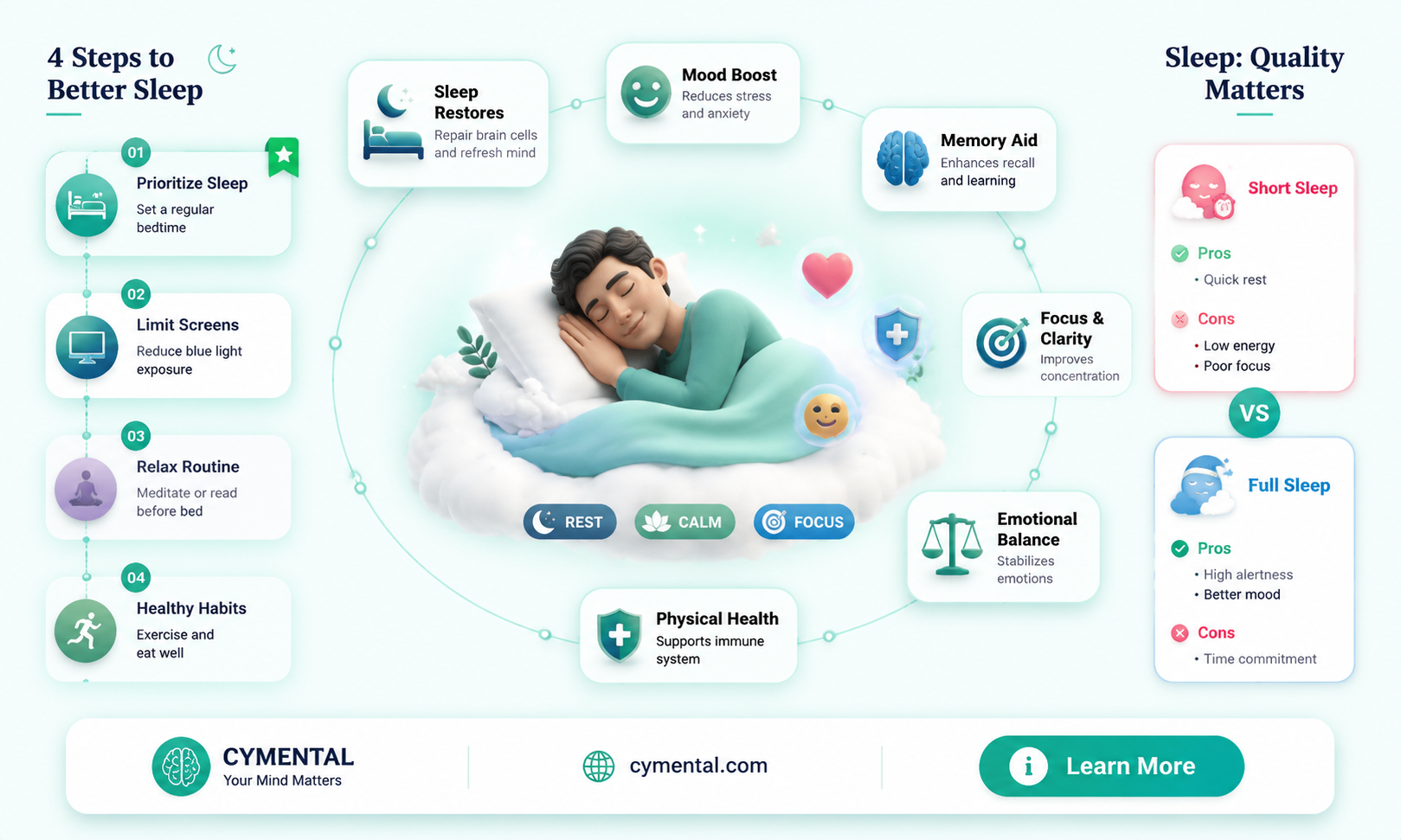
Sleep plays a crucial role in maintaining and improving mental health, as it allows the brain to process emotions, consolidate memories, and restore cognitive functions. Adequate rest has been linked to reduced symptoms of anxiety, depression, and stress, while chronic sleep deprivation can exacerbate these conditions and impair emotional regulation. During sleep, the brain clears toxins and strengthens neural connections, supporting overall psychological resilience. Additionally, quality sleep enhances mood, focus, and decision-making, making it a vital component of mental well-being. Thus, prioritizing healthy sleep habits can be a powerful tool in managing and preventing mental health challenges.
| Characteristics | Values |
|---|---|
| Mood Regulation | Sleep helps regulate emotions by allowing the brain to process and consolidate emotional experiences. Lack of sleep is linked to increased irritability, anxiety, and depression. |
| Stress Reduction | Adequate sleep reduces cortisol (stress hormone) levels, promoting relaxation and resilience to stress. |
| Cognitive Function | Sleep is essential for memory consolidation, problem-solving, and decision-making. Poor sleep impairs concentration and cognitive performance. |
| Emotional Resilience | Quality sleep enhances the ability to cope with challenging situations and reduces the risk of developing mental health disorders. |
| Brain Plasticity | Sleep supports neuroplasticity, the brain's ability to adapt and form new neural connections, crucial for mental health. |
| Risk of Mental Disorders | Chronic sleep deprivation is a risk factor for depression, anxiety disorders, bipolar disorder, and schizophrenia. |
| Inflammation Reduction | Sleep helps reduce systemic inflammation, which is linked to various mental health conditions. |
| Hormonal Balance | Sleep regulates hormones like serotonin and dopamine, which play key roles in mood and mental well-being. |
| Recovery from Trauma | Sleep aids in processing traumatic experiences and reduces the risk of developing PTSD. |
| Social Functioning | Adequate sleep improves social interactions and empathy, reducing feelings of isolation and loneliness. |
| Suicide Risk | Sleep disturbances are strongly associated with increased suicidal ideation and behavior. |
| Treatment Enhancement | Improved sleep can enhance the effectiveness of therapies and medications for mental health conditions. |
| Energy and Motivation | Quality sleep boosts energy levels and motivation, combating symptoms of depression and fatigue. |
| Immune System Support | Sleep strengthens the immune system, indirectly supporting mental health by reducing illness-related stress. |
| Circadian Rhythm Alignment | Maintaining a consistent sleep schedule aligns the body's internal clock, promoting mental stability. |
Explore related products




What You'll Learn

Sleep's role in reducing anxiety and stress levels
Sleep deprivation amplifies the brain's reactivity to stress, triggering a cascade of hormonal responses that elevate anxiety levels. Studies show that even a single night of poor sleep can increase cortisol, the body’s primary stress hormone, by up to 45%. Conversely, adequate sleep (7–9 hours for adults) regulates the hypothalamic-pituitary-adrenal (HPA) axis, the body’s central stress response system, dampening its overactivity. For teens, who require 8–10 hours, insufficient sleep correlates with a 20% higher risk of anxiety disorders, according to the National Sleep Foundation. This physiological link underscores why prioritizing sleep is a non-negotiable step in managing stress.
To harness sleep’s anxiety-reducing benefits, establish a consistent sleep schedule, even on weekends. Incorporate a 30-minute wind-down routine before bed, avoiding screens and instead engaging in calming activities like reading or deep breathing exercises. For those with racing thoughts, journaling worries earlier in the evening can prevent bedtime rumination. Temperature matters too—keep the bedroom between 60–67°F (15–19°C), as cooler environments promote deeper sleep stages, including REM sleep, which processes emotions and reduces anxiety. These actionable steps create a foundation for sleep to act as a natural stress buffer.
Comparing sleep to other stress-relief methods highlights its efficiency. While mindfulness or exercise require dedicated time and effort, sleep passively recalibrates the nervous system. For instance, a 2020 study in *Nature* found that participants who slept 8 hours post-stress exposure showed a 60% reduction in anxiety symptoms compared to those who meditated for an hour daily. Unlike medication, which may have side effects, sleep is a side-effect-free intervention accessible to all age groups. Its dual role—restoring physical energy and emotional resilience—positions it as a cornerstone of mental health.
However, not all sleep is created equal. Fragmented or poor-quality sleep can exacerbate anxiety, creating a vicious cycle. Sleep disorders like insomnia or sleep apnea disrupt the restorative phases of sleep, leaving individuals more vulnerable to stress. For older adults (65+), who often experience sleep disturbances, combining cognitive-behavioral therapy for insomnia (CBT-I) with gentle evening yoga can improve both sleep quality and anxiety levels. Monitoring sleep patterns via apps or journals can identify issues early, allowing for timely interventions. Without addressing sleep quality, its stress-reducing potential remains untapped.
Incorporating sleep hygiene practices isn’t just about quantity—it’s about creating an environment where the brain can effectively process and mitigate stress. For children and adolescents, parental modeling of healthy sleep habits is critical, as their developing brains are particularly sensitive to sleep disruptions. Schools starting later in the day, as implemented in some U.S. districts, have shown a 30% decrease in student anxiety rates. By viewing sleep as an active tool rather than a passive necessity, individuals can strategically reduce anxiety and build resilience against life’s stressors.
Assessing Mental Illness Impairment: Essential Tools for Clinicians
You may want to see also
Explore related products


Improved mood regulation through quality sleep patterns
Quality sleep isn’t just a luxury—it’s a cornerstone of emotional stability. Research shows that adults who consistently achieve 7–9 hours of uninterrupted sleep per night report 25–30% higher emotional resilience compared to those with fragmented or insufficient rest. During deep sleep stages, the brain processes and regulates emotions by consolidating memories and reducing amygdala hyperactivity, the brain’s alarm center. Without this nightly reset, minor irritants can escalate into disproportionate reactions, while chronic sleep deprivation amplifies anxiety and depressive symptoms.
Consider this practical strategy: establish a "sleep hygiene" routine to optimize mood regulation. Start by dimming screens and artificial lights 60–90 minutes before bed, as blue light suppresses melatonin production. Incorporate a 10-minute mindfulness or breathing exercise to signal relaxation. For those over 40, who often experience lighter sleep, adding a white noise machine or weighted blanket can enhance sleep continuity. Tracking progress with a sleep journal or app can highlight patterns, such as how caffeine after 2 p.m. or evening alcohol disrupts REM cycles, directly impacting next-day mood.
A comparative analysis reveals the stark contrast between sleep-deprived and well-rested individuals. In one study, participants restricted to 5 hours of sleep for five nights exhibited a 50% increase in negative emotional responses to stress tests, while those maintaining 8 hours showed stable mood profiles. The difference lies in the brain’s ability to engage the prefrontal cortex, responsible for rational decision-making, during adequate sleep. Conversely, sleep loss shifts reliance to the amygdala, fostering impulsivity and heightened emotional reactivity.
For parents and caregivers, prioritizing sleep in children and teens is equally critical. Adolescents require 8–10 hours nightly, yet 73% fall short due to early school start times and screen overuse. Implementing a "device curfew" at 8 p.m. and encouraging morning light exposure can recalibrate their circadian rhythm, reducing irritability and improving academic performance. Schools in districts that delayed start times by one hour reported a 40% drop in student mood disorders, underscoring sleep’s role in emotional development.
Finally, debunk the myth that "catching up" on weekends reverses damage. Irregular sleep patterns disrupt the body’s internal clock, worsening mood instability. Instead, aim for consistency: go to bed and wake up within 30 minutes of the same time daily, even on weekends. For shift workers or those with insomnia, cognitive behavioral therapy for insomnia (CBT-I) has proven effective, with 70–80% of patients experiencing improved sleep and mood within 4–8 sessions. Small, consistent changes yield profound emotional dividends.
Suicidal Individuals: Are They Receiving Adequate Mental Health Support?
You may want to see also
Explore related products


Sleep deprivation's link to depression symptoms
Sleep deprivation doesn’t merely leave you tired; it rewires your brain’s emotional circuitry. Studies show that after just one night of insufficient sleep, the amygdala—the brain’s emotional alarm center—becomes hyperactive, while the prefrontal cortex, responsible for rational decision-making, slows down. This imbalance creates a fertile ground for depressive symptoms: heightened anxiety, irritability, and a tendency to perceive neutral situations as overwhelmingly negative. For example, a 2018 study published in the *Journal of Neuroscience* found that sleep-deprived individuals rated negative images as more emotionally intense than their well-rested counterparts. This suggests that chronic sleep loss doesn’t just mirror depression—it actively contributes to its onset.
Consider the bidirectional relationship between sleep and depression as a vicious cycle. Poor sleep exacerbates depressive symptoms, which in turn makes it harder to achieve restful sleep. For instance, individuals with insomnia are 10 times more likely to develop depression, according to the *Journal of Psychiatric Research*. Breaking this cycle requires targeted interventions. Cognitive Behavioral Therapy for Insomnia (CBT-I) has proven effective, with a 2020 meta-analysis showing that 60–70% of participants experienced significant improvements in both sleep and mood after 6–8 sessions. Practical tips include maintaining a consistent sleep schedule, limiting screen time before bed, and creating a sleep-conducive environment—cool, dark, and quiet.
From a biological perspective, sleep deprivation disrupts key neurotransmitters linked to mood regulation. Serotonin, often called the “feel-good” neurotransmitter, is produced during sleep. Chronic sleep loss reduces serotonin levels, which are already depleted in individuals with depression. Similarly, cortisol, the stress hormone, spikes with inadequate sleep, further amplifying feelings of hopelessness and fatigue. For those over 65, the risk is even higher: age-related sleep changes, such as reduced REM sleep, compound the vulnerability to depression. Addressing sleep hygiene—like avoiding caffeine after 2 p.m. and engaging in relaxation techniques—can mitigate these effects.
Persuasively, prioritizing sleep isn’t just a lifestyle choice; it’s a mental health imperative. A 2017 study in *Nature Communications* revealed that participants who slept 4.5 hours a night for a week reported 70% more negative emotions compared to those who slept 8.5 hours. This data underscores the urgency of treating sleep as a non-negotiable pillar of mental wellness. Employers, educators, and policymakers must recognize the societal cost of sleep deprivation—from reduced productivity to increased healthcare burdens. By fostering a culture that values rest, we can dismantle the stigma around sleep and its profound link to depression. Start small: aim for 7–9 hours of sleep nightly, and track your mood changes over a month. The evidence is clear—sleep isn’t a luxury; it’s a lifeline.
Gaming for Mental Health: A New Era Under the Presidency
You may want to see also
Explore related products


Enhanced cognitive function and emotional resilience via sleep
Sleep is the cornerstone of cognitive function, and its impact on mental acuity is both profound and measurable. Studies show that adults who consistently achieve 7-9 hours of sleep per night exhibit significantly improved attention, problem-solving, and memory consolidation compared to those with chronic sleep deficits. For instance, a 2018 study in the *Journal of Experimental Psychology* found that participants who slept after learning retained 20% more information than those who stayed awake. This isn’t merely about quantity—sleep quality matters too. Deep sleep stages, particularly slow-wave sleep, are critical for synaptic pruning and memory transfer from short-term to long-term storage. Practical tip: Limit screen time an hour before bed to enhance sleep quality, as blue light disrupts melatonin production, a hormone essential for regulating sleep cycles.
Emotional resilience, the ability to adapt to stress and adversity, is another critical benefit of adequate sleep. Sleep deprivation amplifies amygdala activity, the brain’s emotional alarm system, while simultaneously reducing prefrontal cortex function, which governs rational decision-making. This imbalance leads to heightened anxiety, irritability, and emotional volatility. Conversely, well-rested individuals demonstrate greater emotional regulation and perspective-taking abilities. A 2020 study published in *Nature Communications* revealed that participants who slept 8 hours were 30% more likely to resolve emotionally charged conflicts constructively compared to those who slept 5 hours. For those struggling with emotional resilience, establishing a consistent sleep schedule and incorporating relaxation techniques like progressive muscle relaxation can be transformative.
Comparing sleep’s role in cognitive function and emotional resilience to other interventions highlights its unparalleled efficiency. While mindfulness practices and exercise are beneficial, their effects are often gradual and require sustained effort. Sleep, however, delivers immediate and cumulative benefits with relatively minimal effort. For example, a single night of restorative sleep can improve focus and mood the following day, whereas mastering mindfulness may take weeks or months. This isn’t to diminish other strategies but to underscore sleep’s unique position as a foundational pillar of mental health. Caution: Over-reliance on sleep aids or napping to compensate for poor nighttime sleep can disrupt natural sleep patterns, so prioritize consistent nighttime sleep over daytime fixes.
To harness sleep’s cognitive and emotional benefits, consider these actionable steps: First, maintain a sleep schedule with no more than 30 minutes variation on weekends. Second, create a sleep-conducive environment—cool, dark, and quiet. Third, incorporate a 10-minute wind-down routine, such as reading or journaling, to signal to your brain that bedtime is approaching. For older adults, who often experience fragmented sleep, combining these strategies with daytime physical activity can improve both sleep quality and duration. Finally, track your sleep using a journal or app to identify patterns and make data-driven adjustments. By treating sleep as a non-negotiable priority, you can unlock its full potential to enhance cognitive function and emotional resilience.
Breaking the Silence: Why Men Resist Seeking Mental Health Support
You may want to see also
Explore related products





Sleep's impact on reducing PTSD and trauma effects
Sleep deprivation exacerbates PTSD symptoms by impairing emotional regulation and memory consolidation. Studies show that individuals with PTSD often experience fragmented sleep, nightmares, and insomnia, which create a vicious cycle: poor sleep intensifies hyperarousal, anxiety, and intrusive memories, while heightened PTSD symptoms further disrupt sleep. Breaking this cycle is critical, as restorative sleep can help process traumatic memories and reduce their emotional charge. For instance, research indicates that even a single night of adequate sleep can improve fear extinction—a process where the brain learns to disassociate traumatic triggers from fear responses.
To mitigate PTSD symptoms through sleep, prioritize sleep hygiene practices. Maintain a consistent sleep schedule, even on weekends, to regulate your body’s internal clock. Create a calming bedtime routine—dim lights, avoid screens at least an hour before bed, and incorporate relaxation techniques like deep breathing or progressive muscle relaxation. For those with nightmares, cognitive behavioral therapy for insomnia (CBT-I) has proven effective, often reducing sleep disturbances by 50% or more. Additionally, limiting caffeine after noon and avoiding alcohol, which disrupts REM sleep, can significantly improve sleep quality.
A comparative analysis of sleep interventions reveals that combining pharmacological treatments with behavioral strategies yields the best outcomes for PTSD patients. While medications like prazosin can reduce nightmares, they should be paired with non-pharmacological approaches such as mindfulness-based stress reduction (MBSR) or yoga nidra. These practices not only enhance sleep but also address the root causes of trauma by promoting emotional resilience. For example, a 2020 study found that PTSD patients who practiced MBSR for 8 weeks reported a 30% reduction in insomnia severity and a 25% decrease in trauma-related distress.
Finally, consider the role of sleep timing and duration. Aim for 7–9 hours of sleep per night, as this range supports memory reconsolidation and emotional processing. For shift workers or those with irregular schedules, gradual adjustments to sleep timing can help reset circadian rhythms. Wearable sleep trackers can provide actionable insights, but avoid obsessing over data—focus instead on consistent habits. By treating sleep as a therapeutic tool, individuals with PTSD can reclaim control over their mental health, one restorative night at a time.
Moving Out: A Mental Health Boost or Added Stress?
You may want to see also
Frequently asked questions
Yes, sleep plays a crucial role in mental health. Adequate sleep helps regulate emotions, reduces stress, and supports cognitive functions like memory and decision-making. Poor sleep, on the other hand, is linked to increased anxiety, depression, and irritability.
Most adults need 7-9 hours of sleep per night to maintain optimal mental health. Consistently sleeping less than this can negatively impact mood, focus, and resilience to stress.
Absolutely. Deep, restorative sleep (including REM sleep) is essential for emotional regulation and brain health. Poor sleep quality, such as frequent awakenings or sleep disorders like insomnia, can worsen mental health conditions.
Yes, better sleep can significantly reduce symptoms of anxiety and depression. It helps stabilize mood, improves coping mechanisms, and enhances the effectiveness of other treatments like therapy or medication. Prioritizing sleep hygiene is often a key part of mental health recovery.