Lucas Bennett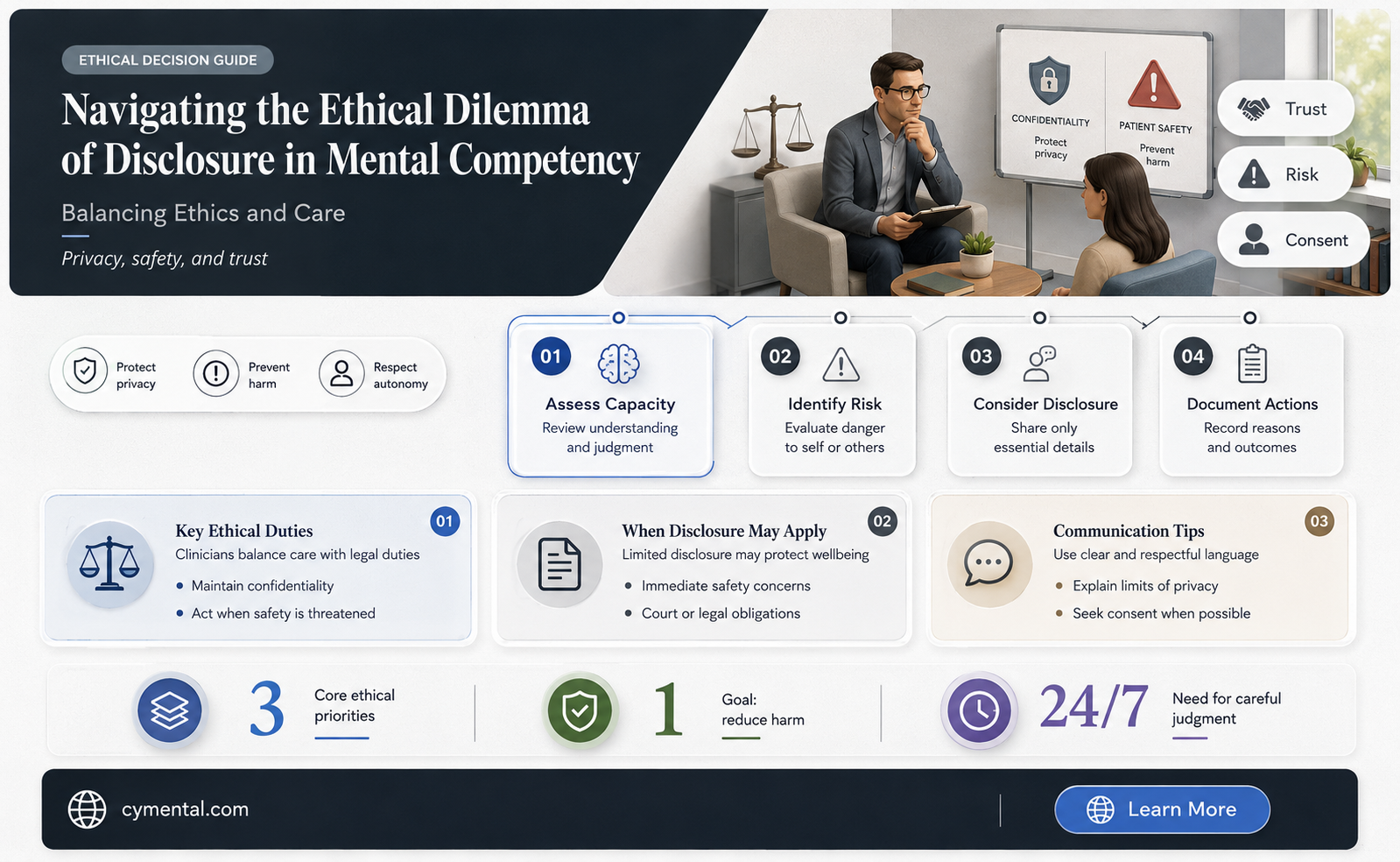
The question of whether one has to inform someone that they are mentally incompetent is a sensitive and complex issue. It involves considerations of privacy, autonomy, and the potential impact on the individual's life and relationships. Generally, a diagnosis of mental incompetence, also known as a finding of incapacity, is a legal determination made by a court based on medical evaluations and other evidence. This determination can affect a person's ability to make decisions about their own care, finances, and other personal matters. While it may be necessary to inform certain individuals or authorities about a person's mental incompetence for their protection and well-being, it is crucial to approach this situation with empathy and respect for the individual's dignity and rights.
| Characteristics | Values |
|---|---|
| Legal Requirement | Varies by jurisdiction; often requires a formal assessment by a qualified professional |
| Assessment Criteria | Typically includes evaluation of cognitive abilities, decision-making capacity, and ability to manage daily life |
| Who Can Assess | Psychiatrists, psychologists, or other mental health professionals with appropriate training and expertise |
| Purpose of Assessment | To determine if an individual lacks the capacity to make informed decisions about their own care or finances |
| Potential Outcomes | May result in guardianship, conservatorship, or other legal arrangements to protect the individual |
| Ethical Considerations | Respect for autonomy, beneficence, non-maleficence, and justice are key ethical principles to consider |
| Informed Consent | Individual must be informed of the assessment process and provide consent, unless deemed incapable |
| Confidentiality | Assessment results and discussions must be kept confidential, adhering to privacy laws and ethical standards |
| Cultural Sensitivity | Assessment should consider cultural factors that may influence an individual's decision-making capacity |
| Documentation | Detailed documentation of the assessment process, findings, and recommendations is essential |
| Review and Appeal | Individuals have the right to review their assessment results and appeal if they disagree with the findings |
| Legal Protections | Laws and regulations exist to protect individuals from wrongful or abusive guardianship or conservatorship |
| Support Services | Various support services, such as advocacy groups and legal aid, may be available to assist individuals during the assessment process |
| Education and Training | Professionals involved in the assessment process should receive ongoing education and training to ensure competency |
| Research and Evaluation | Continuous research and evaluation are necessary to improve assessment methods and ensure they are evidence-based |
What You'll Learn
- Legal Requirements: Explore the legal obligations for disclosing mental incompetence to relevant authorities or family
- Ethical Considerations: Discuss the moral dilemmas and responsibilities involved in informing someone about their mental incompetence
- Medical Perspectives: Examine the role of healthcare professionals in assessing and communicating mental incompetence
- Family Dynamics: Analyze the impact of disclosing mental incompetence within family relationships and support systems
- Individual Rights: Evaluate the rights of individuals with mental incompetence and the importance of respecting their autonomy

Legal Requirements: Explore the legal obligations for disclosing mental incompetence to relevant authorities or family
Legal requirements surrounding the disclosure of mental incompetence vary significantly by jurisdiction. In many places, there is a legal obligation to report concerns about a person's mental capacity to relevant authorities, particularly if there is a risk of harm to the individual or others. This duty often falls on healthcare professionals, social workers, and sometimes family members or caregivers. Failure to report can result in legal repercussions, including liability for any harm that may occur.
The process of reporting mental incompetence typically involves filing a formal complaint or petition with a court or mental health authority. This document must outline the reasons for the concern, provide evidence of the individual's mental state, and explain why intervention is necessary. In some cases, an emergency petition may be filed if there is an immediate risk of harm. Once a petition is filed, the court will usually appoint a mental health professional to evaluate the individual and make a determination about their capacity.
In addition to legal obligations, there are also ethical considerations when it comes to disclosing mental incompetence. Healthcare professionals and caregivers have a duty to protect the privacy and autonomy of the individual, while also ensuring their safety and well-being. This can create a complex balancing act, particularly when the individual is resistant to intervention or does not believe they need help.
Family members may also have a role to play in disclosing mental incompetence, particularly if they are concerned about a loved one's ability to make decisions for themselves. In some cases, family members may be able to file a petition for guardianship or conservatorship, which would give them legal authority to make decisions on behalf of the individual. However, this process can be emotionally challenging and may lead to conflict within the family.
Ultimately, the decision to disclose mental incompetence is a serious one that should be made with careful consideration of the legal, ethical, and personal implications. It is important to seek guidance from legal and mental health professionals to ensure that the individual's rights and well-being are protected.
Navigating the Complex Process of Declaring Mental Incompetence
You may want to see also
Ethical Considerations: Discuss the moral dilemmas and responsibilities involved in informing someone about their mental incompetence
Informing an individual about their mental incompetence raises profound ethical questions that must be navigated with care and sensitivity. At the heart of this dilemma is the tension between respecting a person's autonomy and ensuring their safety and well-being. On one hand, disclosing such information could empower the individual to seek necessary support and treatment, potentially improving their quality of life. On the other hand, it may lead to feelings of shame, stigma, or loss of self-esteem, which could exacerbate their condition or lead to social isolation.
The ethical considerations become even more complex when the individual in question holds a position of responsibility, such as a parent, caregiver, or public official. In these cases, the duty to protect others from potential harm caused by the individual's incompetence must be weighed against the obligation to maintain confidentiality and respect the individual's privacy. Failure to disclose the incompetence could result in legal or moral culpability, while disclosure could lead to the loss of trust and the erosion of relationships.
Furthermore, the manner in which the information is conveyed is crucial. It is essential to approach the conversation with empathy, compassion, and a non-judgmental attitude, ensuring that the individual feels supported and understood. The use of stigmatizing language or a confrontational approach could cause significant emotional distress and undermine the therapeutic process.
Ultimately, the decision to inform someone about their mental incompetence should be guided by a careful consideration of the potential benefits and harms, as well as the individual's capacity to understand and process the information. In some cases, it may be necessary to involve mental health professionals or legal experts to ensure that the individual's rights and well-being are protected.
In conclusion, the ethical considerations surrounding the disclosure of mental incompetence are multifaceted and require a nuanced approach that balances respect for autonomy with the duty to protect. By approaching these conversations with sensitivity and compassion, it is possible to support individuals in seeking the help they need while minimizing the potential for harm and stigma.
Understanding Mental Health Inpatient Care Duration
You may want to see also
Medical Perspectives: Examine the role of healthcare professionals in assessing and communicating mental incompetence
Healthcare professionals play a critical role in assessing and communicating mental incompetence. This involves a thorough evaluation of an individual's cognitive and functional abilities to determine if they are capable of making informed decisions about their own care. The assessment process typically includes a review of the patient's medical history, a physical examination, and the administration of cognitive tests to evaluate memory, attention, and problem-solving skills.
Once the assessment is complete, healthcare professionals must communicate their findings to the patient, family members, and other relevant parties. This communication should be done in a sensitive and respectful manner, taking into account the patient's autonomy and the potential impact of the diagnosis on their quality of life. It is essential to provide clear information about the patient's condition, the implications of the diagnosis, and the available treatment options.
In some cases, healthcare professionals may need to make difficult decisions about whether to disclose a patient's mental incompetence. This may be particularly challenging when the patient is resistant to the diagnosis or when there are concerns about the potential consequences of disclosure. In such situations, healthcare professionals must carefully consider the ethical and legal implications of their actions and consult with other experts, such as psychiatrists or legal advisors, to ensure that they are acting in the best interests of the patient.
Ultimately, the role of healthcare professionals in assessing and communicating mental incompetence is complex and multifaceted. It requires a deep understanding of the patient's condition, as well as the ability to navigate the ethical and legal complexities of disclosure. By approaching this task with sensitivity, respect, and a commitment to patient-centered care, healthcare professionals can help to ensure that individuals with mental incompetence receive the support and care they need to live fulfilling lives.
Navigating Love and Mental Health: Can You Marry Someone with Mental Illness?
You may want to see also
Family Dynamics: Analyze the impact of disclosing mental incompetence within family relationships and support systems
Disclosing mental incompetence within family relationships can have profound and far-reaching impacts on the dynamics and support systems that exist within those familial bonds. It is a delicate matter that requires careful consideration of the potential consequences for all parties involved. When a family member is deemed mentally incompetent, it often necessitates a shift in roles and responsibilities, which can lead to both emotional and practical challenges.
One of the primary impacts of such a disclosure is the potential for a loss of autonomy for the individual deemed incompetent. This can result in feelings of frustration, anger, and sadness, not only for the individual but also for their family members who may feel helpless or overwhelmed by the situation. The family may need to navigate complex legal and medical systems to ensure that the individual receives the appropriate care and support, which can be a daunting and stressful process.
Furthermore, the disclosure of mental incompetence can lead to a reevaluation of family roles and relationships. Siblings may need to take on more responsibility for their parent or sibling, which can create tension and conflict. Spouses may struggle with the changes in their relationship dynamics, as they may need to adapt to a new caregiving role. Children may experience confusion and anxiety as they try to understand what is happening to their family member and how it will affect their own lives.
In addition to the emotional impacts, there are also practical considerations that families must address. Financial planning, legal arrangements, and healthcare decisions all become more complex when a family member is mentally incompetent. Families may need to seek professional guidance to ensure that they are making informed decisions and that the individual's best interests are being protected.
Ultimately, the disclosure of mental incompetence within a family can lead to a period of adjustment and growth. While it may be a difficult and challenging time, it can also provide an opportunity for families to come together and support one another. By navigating the complexities of the situation with compassion and understanding, families can emerge stronger and more resilient.
Legal Recourse for Mental Stress: Understanding Your Rights and Options
You may want to see also
Individual Rights: Evaluate the rights of individuals with mental incompetence and the importance of respecting their autonomy
Individuals with mental incompetence possess inherent rights that must be respected, including the right to autonomy and self-determination. This means that they should be allowed to make decisions about their own lives, including their healthcare, finances, and living arrangements, to the greatest extent possible. Respecting their autonomy is crucial for promoting their dignity, well-being, and overall quality of life.
However, in some cases, individuals with mental incompetence may require support or assistance in making decisions. This is where the concept of supported decision-making comes into play. Supported decision-making involves providing individuals with the necessary information, guidance, and resources to make informed decisions about their lives. This approach prioritizes the individual's autonomy while also ensuring that they receive the support they need to make sound decisions.
It is important to note that the determination of mental incompetence should be made by a qualified healthcare professional, such as a psychiatrist or psychologist. This determination should be based on a thorough evaluation of the individual's cognitive and functional abilities, as well as their ability to understand and communicate their wishes.
In situations where an individual is deemed mentally incompetent, it is essential to involve them in the decision-making process as much as possible. This can be done by providing them with information about their condition, treatment options, and potential outcomes. It is also important to listen to their concerns, preferences, and values, and to incorporate these into the decision-making process.
Ultimately, the goal should be to empower individuals with mental incompetence to exercise their rights and make decisions about their own lives. This can be achieved by providing them with the necessary support, resources, and information to make informed decisions, while also respecting their autonomy and dignity.
Navigating the Road: Mental Illness and Driving Capabilities
You may want to see also
Frequently asked questions
It depends on the context and your relationship with the person. In general, it's important to approach such conversations with sensitivity and empathy. If you're concerned about someone's mental health, it's better to express your concerns in a supportive way rather than labeling them as incompetent.
You can express your concern by saying something like, "I've noticed some changes in your behavior lately, and I'm worried about you. Is there anything I can do to support you?" This approach shows that you care and are willing to help without making judgments about their mental state.
In some legal or medical situations, it might be necessary to inform someone that they are mentally incompetent. For example, if a person is unable to make decisions for themselves due to a mental health condition, a healthcare provider or legal guardian may need to inform them of their incompetency in order to take appropriate action.
Telling someone they are mentally incompetent can have serious consequences. It can damage their self-esteem, lead to feelings of shame or embarrassment, and strain relationships. Additionally, it can limit their autonomy and decision-making abilities. It's important to consider these potential consequences and approach such conversations with care and compassion.