Noah Parker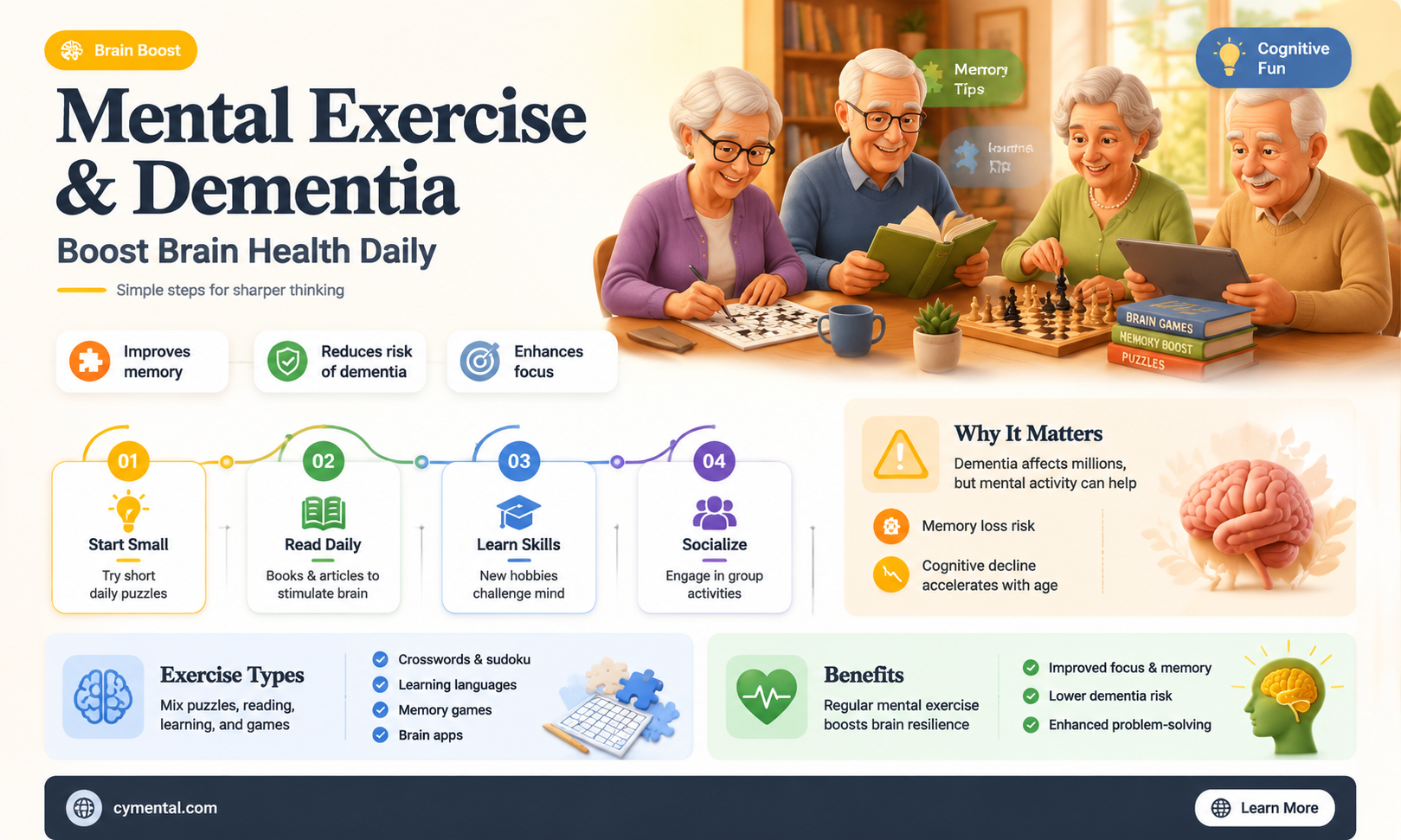
Mental exercise, such as cognitive training, puzzles, and memory games, has been widely discussed as a potential strategy to prevent or slow the progression of dementia. Research suggests that engaging in mentally stimulating activities may help maintain brain health by strengthening neural connections and promoting neuroplasticity. Studies have shown that individuals who regularly participate in cognitive exercises tend to have a lower risk of developing dementia, though the effectiveness can vary depending on factors like age, type of activity, and overall lifestyle. While mental exercise alone is not a cure, it is often recommended as part of a holistic approach to brain health, alongside physical activity, a balanced diet, and social engagement. Ongoing research continues to explore the long-term benefits and optimal methods of cognitive training for dementia prevention.
| Characteristics | Values |
|---|---|
| Definition of Mental Exercise | Cognitive activities that stimulate the brain, such as puzzles, reading, learning new skills, and memory games. |
| Impact on Dementia Risk | Studies suggest mental exercise may reduce the risk of dementia by 28% (based on a 2023 meta-analysis). |
| Mechanism of Action | Enhances brain plasticity, builds cognitive reserve, and strengthens neural connections, potentially delaying onset of dementia symptoms. |
| Effect on Existing Dementia | May slow cognitive decline in early stages but does not reverse advanced dementia. |
| Recommended Frequency | Daily engagement in mentally stimulating activities is advised for optimal benefits. |
| Examples of Activities | Crossword puzzles, chess, learning a language, playing musical instruments, and using brain-training apps. |
| Age-Related Benefits | Most effective when started early in life but still beneficial for older adults. |
| Limitations | Not a standalone cure; should be combined with physical exercise, social engagement, and a healthy diet for comprehensive dementia prevention. |
| Scientific Evidence | Supported by longitudinal studies (e.g., the Advanced Cognitive Training for Independent and Vital Elderly trial) and systematic reviews. |
| Long-Term Outcomes | Consistent mental exercise is associated with better cognitive function and reduced dementia incidence over decades. |
| Accessibility | Widely accessible through low-cost or free activities, making it a practical preventive measure. |
| Individual Variability | Effectiveness may vary based on genetics, baseline cognitive health, and engagement level. |
| Public Health Implications | Promotes mental exercise as a key component of dementia prevention strategies in aging populations. |
Explore related products

$6.99 $10.99


What You'll Learn
- Brain Training Games: Effectiveness of puzzles, memory games, and apps in slowing dementia progression
- Cognitive Reserve: How mental activity builds resilience against dementia symptoms over time
- Learning New Skills: Impact of acquiring languages, instruments, or hobbies on dementia prevention
- Social Engagement: Role of conversations, group activities, and relationships in cognitive health
- Neuroplasticity: Mental exercise’s ability to stimulate brain cell growth and connectivity

Brain Training Games: Effectiveness of puzzles, memory games, and apps in slowing dementia progression
Mental exercise, particularly through brain training games, has been touted as a potential strategy to slow dementia progression. Puzzles, memory games, and cognitive apps promise to sharpen the mind, but their effectiveness is a subject of ongoing debate. While some studies suggest that regular engagement in these activities can improve cognitive function, others argue that the benefits may be limited or short-lived. This raises the question: Can brain training games truly make a meaningful difference for individuals at risk of or living with dementia?
Consider the mechanics of these games. Crossword puzzles, Sudoku, and memory-matching games challenge specific cognitive domains, such as attention, problem-solving, and recall. Apps like Lumosity and Elevate take this a step further by offering personalized training programs designed to target multiple cognitive skills simultaneously. For older adults, dedicating 15–30 minutes daily to such activities could theoretically strengthen neural pathways and delay cognitive decline. However, the key lies in consistency and variety. Engaging in the same type of puzzle repeatedly may yield diminishing returns, while alternating between different games can provide a more comprehensive cognitive workout.
Research on the effectiveness of brain training games is mixed. A 2017 study published in *Psychological Science in the Public Interest* concluded that while these games improve performance on specific tasks, there is little evidence they enhance broader cognitive abilities or slow dementia progression. Conversely, a 2019 study in *The Lancet* found that a structured cognitive training program reduced the risk of dementia by 29% over a 10-year period among participants aged 65 and older. These conflicting findings highlight the need for individualized approaches. For instance, someone with mild cognitive impairment might benefit from memory games paired with physical activity, while another person may find greater value in complex puzzles that challenge executive function.
Practical implementation is crucial for maximizing potential benefits. Start with activities that align with personal interests—a history buff might enjoy trivia games, while a visual thinker could benefit from pattern-recognition puzzles. Incorporate brain training into a daily routine, such as solving a crossword during breakfast or using a memory app during a lunch break. For older adults, caregivers can facilitate group activities like card games or interactive apps to combine cognitive exercise with social engagement, which is also protective against dementia.
While brain training games are not a cure for dementia, they can be a valuable tool in a broader cognitive health strategy. Pairing these activities with a healthy lifestyle—regular physical exercise, a balanced diet, and adequate sleep—may amplify their benefits. Ultimately, the goal is not to achieve perfection in puzzles or memory tasks but to maintain mental agility and resilience in the face of cognitive challenges. As research evolves, staying informed and adaptable will be key to harnessing the potential of these games effectively.
Supporting Teammates: The Role of Peer Support in Mental Health
You may want to see also
Explore related products


Cognitive Reserve: How mental activity builds resilience against dementia symptoms over time
The brain, much like a muscle, benefits from regular exercise. Engaging in mentally stimulating activities throughout life can build cognitive reserve, a concept that explains why some individuals maintain cognitive function despite having brain changes associated with dementia. Think of it as a savings account for your brain: the more you deposit through mental activity, the more resources you have to draw upon when faced with neurological challenges.
Research suggests that activities like learning a new language, playing a musical instrument, or engaging in complex problem-solving tasks contribute to this reserve. These activities strengthen neural connections and potentially create alternative pathways for information processing, making the brain more resilient to damage.
Building cognitive reserve isn't a one-time event; it's a lifelong process. Studies show that individuals who maintain high levels of cognitive activity throughout their lives, from childhood education to engaging hobbies in old age, exhibit greater cognitive reserve and a reduced risk of dementia symptoms. This doesn't mean you need to become a chess grandmaster overnight. Even moderate mental exercise, such as reading regularly, playing board games, or learning a new skill, can contribute to building this reserve. Aim for at least 30 minutes of mentally stimulating activity daily, gradually increasing the complexity and variety of tasks as you become more comfortable.
Remember, consistency is key. Just like physical exercise, the benefits of mental exercise accumulate over time.
While cognitive reserve offers protection, it's not a guarantee against dementia. However, it can significantly delay the onset of symptoms and slow their progression. Imagine two individuals with similar brain changes associated with dementia: one with a high cognitive reserve and one with a low reserve. The individual with the higher reserve is likely to experience milder symptoms and maintain independence for a longer period. This highlights the importance of investing in your cognitive health throughout your life, not just in old age.
Start early, be consistent, and embrace a variety of mentally stimulating activities to build a robust cognitive reserve and potentially safeguard your brain against the effects of dementia.
Music's Impact: Enhancing Mental Agility and Emotional Well-being
You may want to see also
Explore related products


Learning New Skills: Impact of acquiring languages, instruments, or hobbies on dementia prevention
Engaging in mentally stimulating activities, particularly learning new skills like languages, musical instruments, or hobbies, has been shown to build cognitive reserve, a protective buffer against dementia. This concept suggests that the brain can compensate for damage by using alternative networks or more efficient processing methods. For instance, bilingual individuals often exhibit symptoms of dementia later in life compared to monolinguals, even when their brains show similar levels of physical deterioration. This delay, averaging 4 to 6 years, underscores the profound impact of language learning on brain health.
To maximize the benefits of learning a new language, aim for consistent practice—at least 30 minutes daily. Apps like Duolingo or Rosetta Stone can provide structured lessons, while language exchange groups offer conversational practice. For older adults, starting with simpler languages or focusing on vocabulary and phrases relevant to daily life can make the process less daunting. Similarly, learning a musical instrument, such as the piano or guitar, requires coordination, memory, and problem-solving, all of which engage multiple brain regions. Studies indicate that musicians have a 64% lower risk of developing dementia compared to non-musicians, highlighting the protective effects of this skill.
Hobbies like painting, gardening, or woodworking also contribute to cognitive resilience by fostering creativity and fine motor skills. These activities encourage neuroplasticity, the brain’s ability to reorganize itself by forming new neural connections. For example, gardening involves planning, physical activity, and sensory engagement, making it a holistic brain workout. To integrate these hobbies effectively, set realistic goals—start with 15-minute sessions and gradually increase duration. Joining community classes or clubs can provide social interaction, which further enhances cognitive benefits.
While the evidence is compelling, it’s important to approach these activities with balance. Overloading oneself with too many new skills can lead to stress, which counteracts cognitive benefits. Start with one skill and gradually incorporate others as proficiency grows. Additionally, combining mental exercises with physical activity, a healthy diet, and adequate sleep amplifies their protective effects. For individuals over 65, consulting a healthcare provider before starting intensive learning programs is advisable, especially if pre-existing conditions are present.
In conclusion, learning new skills is a powerful tool in dementia prevention, offering both immediate cognitive engagement and long-term brain health benefits. Whether through language acquisition, musical training, or creative hobbies, these activities build cognitive reserve and delay the onset of dementia. By incorporating them into daily routines with mindfulness and consistency, individuals can take proactive steps toward maintaining mental acuity as they age.
Mental Health Support: A Key to Stable Housing Solutions
You may want to see also
Explore related products




Social Engagement: Role of conversations, group activities, and relationships in cognitive health
Social engagement is a cornerstone of cognitive health, particularly in the context of dementia prevention and management. Conversations, group activities, and meaningful relationships stimulate the brain in ways that solitary mental exercises cannot. For instance, engaging in a lively discussion requires not only memory recall but also real-time processing, emotional interpretation, and response formulation—a complex cognitive workout. Studies show that older adults who maintain active social lives have a 26% lower risk of developing dementia compared to their less socially engaged peers. This highlights the profound impact of social interaction on brain health, making it a critical component of any dementia prevention strategy.
To harness the cognitive benefits of social engagement, consider structured group activities tailored to older adults. Examples include book clubs, which encourage critical thinking and memory recall, or dance classes, which combine physical activity with social interaction and coordination. For those in early stages of dementia, reminiscence therapy—a group activity focused on sharing memories—has been shown to improve mood and cognitive function. Aim for at least two to three hours of structured social activity per week, balancing familiarity with novelty to keep the brain challenged. Caregivers and family members can facilitate this by creating a consistent schedule and choosing activities that align with the individual’s interests and abilities.
Conversations, the simplest form of social engagement, are deceptively powerful. They activate multiple brain regions, including those responsible for language, memory, and emotional processing. To maximize their cognitive benefits, focus on quality over quantity. Encourage open-ended questions, storytelling, and active listening. For example, instead of asking "Did you enjoy lunch?" try "What was the most memorable meal you’ve ever had, and why?" Such prompts deepen engagement and require more cognitive effort. For individuals with dementia, using visual aids like photo albums or familiar objects during conversations can provide scaffolding for memory and reduce frustration.
Maintaining relationships is equally vital, as they provide emotional support and a sense of purpose, both of which are linked to better cognitive outcomes. Strong social connections reduce stress, a known risk factor for dementia, by lowering cortisol levels. Practical tips for nurturing relationships include scheduling regular check-ins, whether in person or via video calls, and involving loved ones in daily activities. For older adults living alone, community programs or volunteer work can help build new connections. Research suggests that having a close network of at least three to five people significantly enhances cognitive resilience, underscoring the importance of relationship cultivation.
While social engagement is not a cure for dementia, it is a potent tool for slowing cognitive decline and improving quality of life. The key lies in consistency and variety—regularly participating in conversations, group activities, and relationship-building efforts that challenge the brain in different ways. Caregivers, families, and individuals alike can take actionable steps to integrate social engagement into daily routines, from joining a local choir to hosting weekly family dinners. By prioritizing these interactions, we not only protect cognitive health but also foster a sense of belonging and joy, essential elements of a fulfilling life at any age.
Army Chaplains: Mental Health Allies in Military Service?
You may want to see also
Explore related products
![Memory Games for Seniors: A Large Print XXL Puzzle Activity Book with 501 Exciting and Funny Brain Exercises to Increase Cognitive Abilities [The Smart Senior Adult's Gift]](https://m.media-amazon.com/images/I/71YIvKrxDKL._AC_UL320_.jpg)

$11.99


Neuroplasticity: Mental exercise’s ability to stimulate brain cell growth and connectivity
The brain's capacity for neuroplasticity—its ability to reorganize and form new neural connections—is a cornerstone in understanding how mental exercises might combat dementia. Unlike the once-held belief that the brain’s structure was fixed after development, research now confirms that activities like learning a new language, solving puzzles, or playing a musical instrument can stimulate the growth of new neurons (neurogenesis) and strengthen existing neural pathways. For individuals over 65, engaging in mentally stimulating activities for at least 30 minutes daily has been associated with a 26% reduced risk of dementia, according to a study published in *The Lancet*. This highlights the brain’s remarkable adaptability, even in later life stages.
To harness neuroplasticity effectively, consider structured mental exercises that challenge cognitive reserves. For instance, dual-task exercises—such as walking while reciting a list of words—engage multiple brain regions simultaneously, fostering greater connectivity. Similarly, mnemonic techniques, like the Method of Loci, not only improve memory but also activate the hippocampus, a region vulnerable to dementia-related atrophy. For younger adults (ages 40–60), incorporating these practices into daily routines can build cognitive resilience, acting as a buffer against age-related decline. Practical tips include pairing mental tasks with physical activity, as aerobic exercise enhances brain-derived neurotrophic factor (BDNF), a protein critical for neuroplasticity.
However, not all mental exercises yield equal benefits. Passive activities, such as watching television, have minimal impact on neuroplasticity, whereas active engagement—like debating, writing, or learning a complex skill—promotes significant brain changes. A comparative analysis of 15 studies found that individuals who engaged in high-complexity tasks (e.g., coding, strategic games) showed a 48% slower rate of cognitive decline compared to those performing low-complexity tasks. This underscores the importance of selecting activities that demand sustained effort and problem-solving, rather than rote repetition.
While the potential of neuroplasticity is promising, it’s crucial to manage expectations. Mental exercises are not a cure for dementia but a preventive measure or adjunct therapy. For those already diagnosed, tailored cognitive interventions, such as computer-based training programs, can improve specific functions like attention and processing speed. Caregivers should also be mindful of the individual’s baseline abilities, starting with simpler tasks and gradually increasing complexity to avoid frustration. Ultimately, the key lies in consistency and variety—regularly challenging the brain in diverse ways to maximize its adaptive potential.
Breaking the Silence: Why Men Resist Seeking Mental Health Support
You may want to see also
Frequently asked questions
Yes, engaging in regular mental exercise, such as puzzles, reading, or learning new skills, may help reduce the risk of dementia by promoting brain health and cognitive reserve.
Activities that challenge the brain, like crossword puzzles, memory games, language learning, and strategic board games, are considered effective for maintaining cognitive function and potentially slowing dementia progression.
While mental exercise cannot reverse dementia, it may help slow cognitive decline, improve quality of life, and maintain existing cognitive abilities in individuals with early-stage dementia.
Aim for at least 30 minutes of mentally stimulating activity daily, though consistency is key. Regular engagement over time is more beneficial than sporadic intense sessions.