Harper Lewis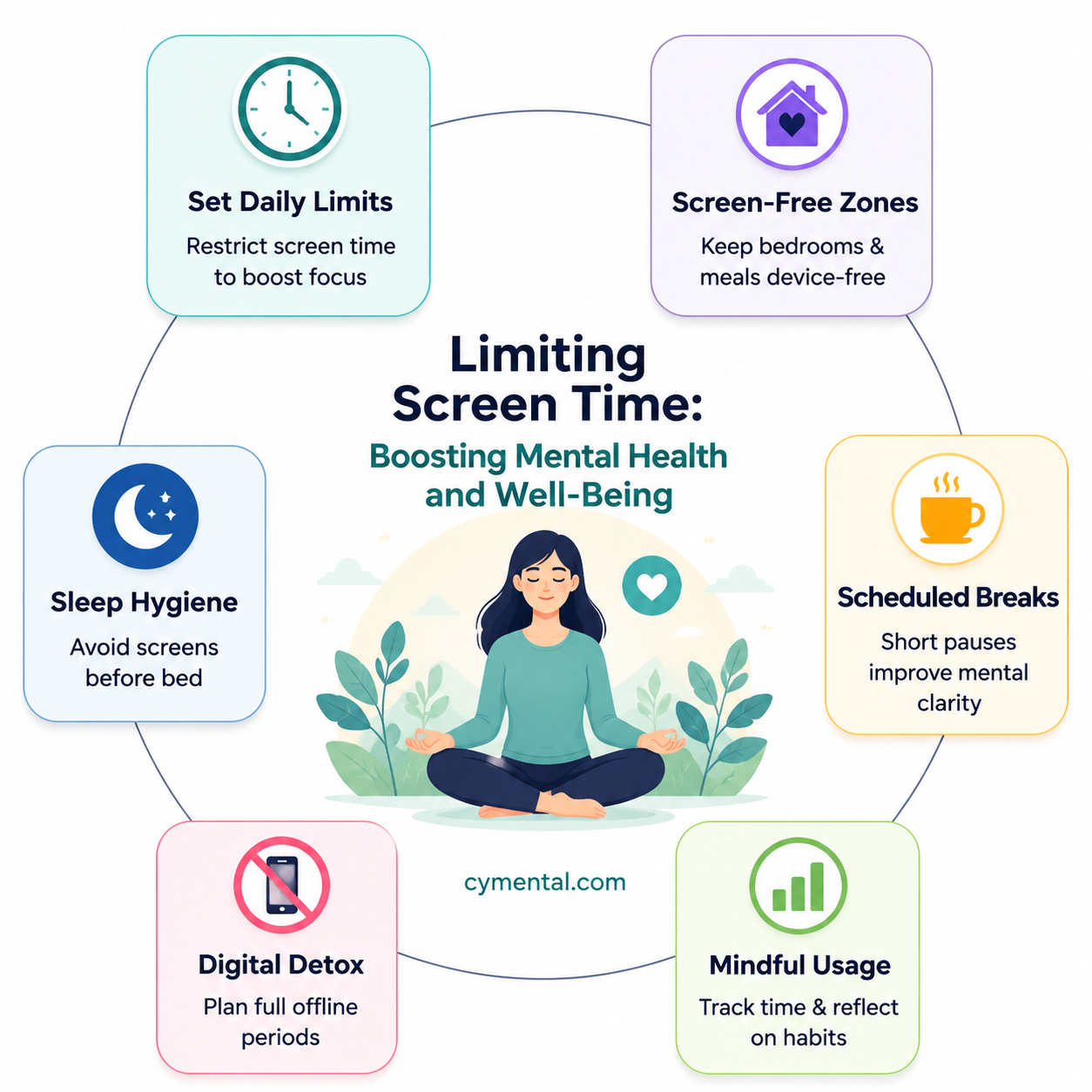
The relationship between screen time and mental health has become a pressing concern in the digital age, prompting many to question whether limiting screen time can positively impact psychological well-being. Excessive use of smartphones, computers, and other devices has been linked to increased anxiety, depression, and sleep disturbances, particularly among younger generations. Advocates for screen time restrictions argue that reducing exposure to digital screens can improve focus, enhance social interactions, and promote healthier sleep patterns. However, others contend that screens are essential tools for communication, education, and entertainment, and that moderation, rather than strict limitation, may be the key to balancing their benefits and drawbacks. As research continues to explore this complex issue, understanding the nuances of how screen time affects mental health remains crucial for fostering healthier digital habits.
Explore related products




What You'll Learn
- Impact on Sleep Quality: Reduced screen time improves sleep patterns, aiding mental health recovery and stability
- Social Interaction Benefits: Less screen time encourages face-to-face interactions, reducing loneliness and anxiety
- Reduced Stress Levels: Limiting screens lowers exposure to stressors, promoting calmer mental states
- Improved Focus & Productivity: Less screen time enhances concentration, reducing mental fatigue and overwhelm
- Decreased Risk of Depression: Lower screen use correlates with reduced symptoms of depression and mood disorders

Impact on Sleep Quality: Reduced screen time improves sleep patterns, aiding mental health recovery and stability
Excessive screen time, particularly before bed, disrupts the body's natural circadian rhythm by suppressing melatonin production. This hormone, crucial for sleep regulation, is inhibited by the blue light emitted from devices like smartphones, tablets, and computers. Studies show that exposure to blue light in the evening can delay sleep onset by up to 30 minutes, reducing overall sleep duration and quality. For adolescents, who are especially vulnerable due to their developing brains, even an hour of screen time before bed can lead to significant sleep disturbances. This disruption sets off a cascade of effects, impairing cognitive function, mood regulation, and mental resilience.
Consider a practical approach to mitigate these effects: establish a "digital sunset" at least 60 minutes before bedtime. During this period, avoid all screens and instead engage in calming activities like reading, meditation, or gentle stretching. For those who rely on devices for work or study, blue light filters or glasses can reduce exposure, though complete avoidance remains the most effective strategy. Parents can enforce this rule for children by creating a "device docking station" outside bedrooms, ensuring screens are out of reach during sleep hours. Consistency is key; even occasional late-night screen use can reset the body’s internal clock, undoing progress.
The link between reduced screen time and improved sleep quality is particularly pronounced in individuals with mental health conditions. For example, those with anxiety or depression often experience insomnia or fragmented sleep, which can exacerbate symptoms. Limiting screen time not only improves sleep architecture—the cycles of REM and non-REM sleep—but also reduces the mental stimulation that fuels racing thoughts. A study published in *Sleep Health* found that participants who cut evening screen time by 50% reported a 21% improvement in sleep quality within just two weeks. This, in turn, led to reduced symptoms of anxiety and depression, demonstrating a clear pathway to mental health recovery.
However, it’s not just about cutting screen time—it’s about replacing it with activities that promote relaxation and mental clarity. Journaling, for instance, can help process the day’s stressors, while light yoga or deep breathing exercises signal to the body that it’s time to wind down. For those who struggle with adherence, pairing screen-free evenings with a reward system—such as earning time for a favorite hobby the next day—can reinforce the habit. Even small changes, like dimming household lights after 8 PM, can cue the body to prepare for sleep, making the transition smoother.
In conclusion, reducing screen time is a tangible, actionable step toward improving sleep quality and, by extension, mental health. It requires intentionality and discipline, but the benefits are measurable and far-reaching. By prioritizing sleep hygiene through screen management, individuals can create a foundation for mental stability and recovery, one night at a time.
Finding Support: Where to Get Help for Schizophrenia Treatment
You may want to see also
Explore related products


Social Interaction Benefits: Less screen time encourages face-to-face interactions, reducing loneliness and anxiety
Excessive screen time often displaces opportunities for in-person connection, a critical factor in mental well-being. Research shows that individuals who spend more than 6 hours daily on screens are twice as likely to experience social isolation compared to those who limit usage to 2 hours. This disparity highlights a clear link between reduced screen time and increased social engagement, which in turn mitigates feelings of loneliness and anxiety.
Consider the mechanics of face-to-face interaction: Nonverbal cues like tone, facial expressions, and body language account for over 60% of communication effectiveness. Screens filter out these elements, leaving interactions shallow and less satisfying. By cutting screen time by 50%, individuals can reclaim hours for meaningful conversations, fostering deeper connections that counteract the hollow engagement of digital exchanges.
For practical implementation, start with small, measurable steps. Designate "device-free zones" in the home, such as the dining area or living room, to encourage spontaneous interaction. For children and teens, limit recreational screen time to 1 hour on weekdays and 2 hours on weekends, aligning with recommendations from the American Psychological Association. Adults should aim for a 2:1 ratio of offline to online social activity weekly, prioritizing activities like group sports, book clubs, or community events.
However, reducing screen time alone is insufficient without intentional effort to replace it with quality social engagement. Passive activities like watching TV together do not qualify; instead, opt for collaborative tasks like cooking, playing games, or discussing shared interests. For those struggling with social anxiety, begin with low-pressure interactions, such as a 10-minute daily check-in with a friend or family member, gradually increasing duration and complexity.
The takeaway is clear: Limiting screen time is not about deprivation but redirection. By reclaiming hours otherwise spent on devices, individuals can invest in relationships that provide emotional support, reduce stress, and enhance overall mental health. This shift requires mindfulness and planning but yields dividends in the form of richer, more fulfilling social connections.
Vacations and Mental Health: Unwinding for a Healthier Mind
You may want to see also
Explore related products




Reduced Stress Levels: Limiting screens lowers exposure to stressors, promoting calmer mental states
Excessive screen time often inundates the mind with a relentless stream of information, notifications, and comparisons, all of which act as chronic stressors. Limiting screen exposure reduces this cognitive overload, allowing the brain to enter a state of rest and recovery. For instance, a study published in the *Journal of Social and Clinical Psychology* found that participants who restricted their social media use to 30 minutes per day reported significant reductions in loneliness and depression, both of which are stress-related conditions. This suggests that by curbing screen time, individuals can minimize the mental strain caused by constant digital engagement.
Consider the practical steps to achieve this reduction. Start by designating screen-free zones in your home, such as the bedroom or dining area, to create physical boundaries that encourage relaxation. For adults, aim to reduce recreational screen time to no more than two hours per day, while children and adolescents should adhere to the American Academy of Pediatrics’ recommendation of one to two hours of high-quality screen time daily. Incorporate activities like reading, meditation, or hobbies that require focus and creativity, as these not only distract from screens but also actively promote a calmer mental state.
A comparative analysis reveals the stark difference between high and low screen users. Heavy screen users often report higher levels of cortisol, the stress hormone, particularly after engaging with social media or news platforms. In contrast, individuals who limit their screen time tend to exhibit lower cortisol levels and improved emotional regulation. For example, a 2020 study in *Computers in Human Behavior* found that participants who took a one-week break from Facebook experienced reduced stress levels and increased life satisfaction. This highlights the direct correlation between screen reduction and stress alleviation.
However, it’s crucial to approach screen limitation with caution. Abruptly cutting off screen time can lead to withdrawal symptoms, such as irritability or anxiety, especially in individuals accustomed to high usage. Instead, adopt a gradual reduction strategy, decreasing screen time by 15–30 minutes daily until reaching the desired threshold. Additionally, ensure that alternative activities are engaging and fulfilling to prevent feelings of deprivation. For families, implementing a collective screen-time policy can foster accountability and reduce resistance, particularly among younger members.
In conclusion, limiting screen time is a powerful tool for reducing stress levels by minimizing exposure to digital stressors and fostering a calmer mental environment. By setting clear boundaries, gradually reducing usage, and replacing screen time with enriching activities, individuals can achieve a more balanced and tranquil state of mind. The key lies in consistency and mindfulness, ensuring that the reduction is sustainable and aligned with personal well-being goals.
Finding Support: A Guide to Getting Help for Schizophrenia
You may want to see also
Explore related products


Improved Focus & Productivity: Less screen time enhances concentration, reducing mental fatigue and overwhelm
Excessive screen time fragments attention, a phenomenon backed by studies showing that even brief interruptions from notifications can double error rates in focused tasks. The brain, constantly shifting between stimuli, struggles to consolidate information into long-term memory, hindering productivity. For instance, a 2019 study in the *Journal of Social and Clinical Psychology* found that limiting smartphone use to 30 minutes per day on specific apps improved concentration and reduced cognitive failures in participants across age groups. This suggests that structured screen time reduction directly correlates with enhanced mental clarity.
To reclaim focus, start by auditing daily screen usage—most devices now offer built-in tracking tools. Identify peak distraction times (e.g., morning email checks or evening social media scrolls) and replace them with offline activities like reading or planning. For children aged 8–12, the American Academy of Pediatrics recommends capping recreational screen time at 1–2 hours daily, with designated tech-free zones like bedrooms and dining areas. Adults can adopt the "20-20-20" rule: every 20 minutes, take 20 seconds to view something 20 feet away, reducing eye strain and mental fatigue.
A persuasive argument for limiting screens lies in the concept of "attention residue"—the lingering mental pull toward unfinished digital tasks. By batch-processing emails or messages during specific times (e.g., 10 a.m. and 4 p.m.), individuals can minimize this residue, freeing cognitive resources for deeper work. Pair this with "time-blocking," allocating 90-minute intervals for focused tasks, followed by 10-minute breaks. This mimics the brain’s natural ultradian rhythm, optimizing productivity while preventing overwhelm.
Comparatively, societies with lower screen exposure demonstrate higher sustained attention spans. A 2020 study contrasting urban and rural students found that those with limited access to digital devices scored 15% higher on concentration tests. While complete avoidance is impractical, mimicking this principle through "digital sabbaths"—24-hour periods without screens—can reset mental bandwidth. For families, shared activities like board games or outdoor walks during these periods reinforce focus and reduce collective overwhelm.
In practice, reducing screen time requires intentionality, not deprivation. Start small: silence non-essential notifications, use website blockers like Freedom or Cold Turkey during work hours, and designate a "device drop-off" time two hours before bed to improve sleep quality—a critical factor in next-day productivity. The goal isn’t elimination but recalibration, ensuring screens serve your focus rather than fragment it. Over time, this shift fosters a mental environment where concentration thrives, and overwhelm diminishes.
Seeking Support: Exploring Resources to Help Navigate Life's Challenges
You may want to see also
Explore related products


Decreased Risk of Depression: Lower screen use correlates with reduced symptoms of depression and mood disorders
Excessive screen time has been linked to a higher prevalence of depressive symptoms, particularly in adolescents and young adults. A study published in the *Journal of Affective Disorders* found that individuals who spent more than six hours daily on screens were significantly more likely to report symptoms of depression compared to those who limited their usage to two hours or less. This correlation suggests that reducing screen time could be a proactive step in mitigating the risk of mood disorders.
Consider this practical approach: for every hour of screen time eliminated, replace it with an activity that promotes mental well-being, such as reading, exercising, or socializing face-to-face. For example, a teenager who cuts down from five hours of daily screen use to three could dedicate the saved two hours to outdoor activities or hobbies. This shift not only reduces exposure to potentially depressive digital content but also fosters positive engagement with the physical world.
However, it’s crucial to differentiate between types of screen use. Passive consumption, like endless scrolling on social media, has been more strongly associated with depression than active, purposeful use, such as video calls with loved ones or educational content. A 2020 study in *Computers in Human Behavior* highlighted that individuals who used screens for creative or connective purposes reported lower levels of depressive symptoms. This nuance underscores the importance of quality over quantity when evaluating screen time’s impact on mental health.
For parents and caregivers, setting boundaries is key. The American Academy of Pediatrics recommends limiting screen time to one hour per day for children aged 2 to 5 and encouraging consistent limits for older children and teens. Implementing "screen-free zones," such as bedrooms or meal times, can also help break the cycle of constant digital engagement. By creating structured, screen-free periods, families can encourage healthier habits that reduce the risk of depression and promote emotional resilience.
Ultimately, the relationship between screen time and depression is not deterministic but rather a matter of balance and intention. While screens are an integral part of modern life, mindful usage can significantly lower the risk of mood disorders. By prioritizing intentional screen use and incorporating offline activities, individuals can take control of their mental health and foster a more balanced, fulfilling lifestyle.
How Mental Health Case Managers Assist in Securing SSI Benefits
You may want to see also
Frequently asked questions
Yes, limiting screen time can improve mental health by reducing symptoms of anxiety, depression, and stress. Excessive screen use, especially on social media, has been linked to negative emotional outcomes, and setting boundaries can promote better emotional well-being.
There’s no one-size-fits-all answer, but experts recommend limiting recreational screen time to 1-2 hours per day for adults and less for children. Prioritizing offline activities, quality sleep, and face-to-face interactions is key to maintaining mental health.
Yes, reducing screen time, especially before bed, can improve sleep quality by minimizing exposure to blue light, which disrupts circadian rhythms. Better sleep often leads to improved mood, reduced irritability, and increased energy levels.