Ava Ramirez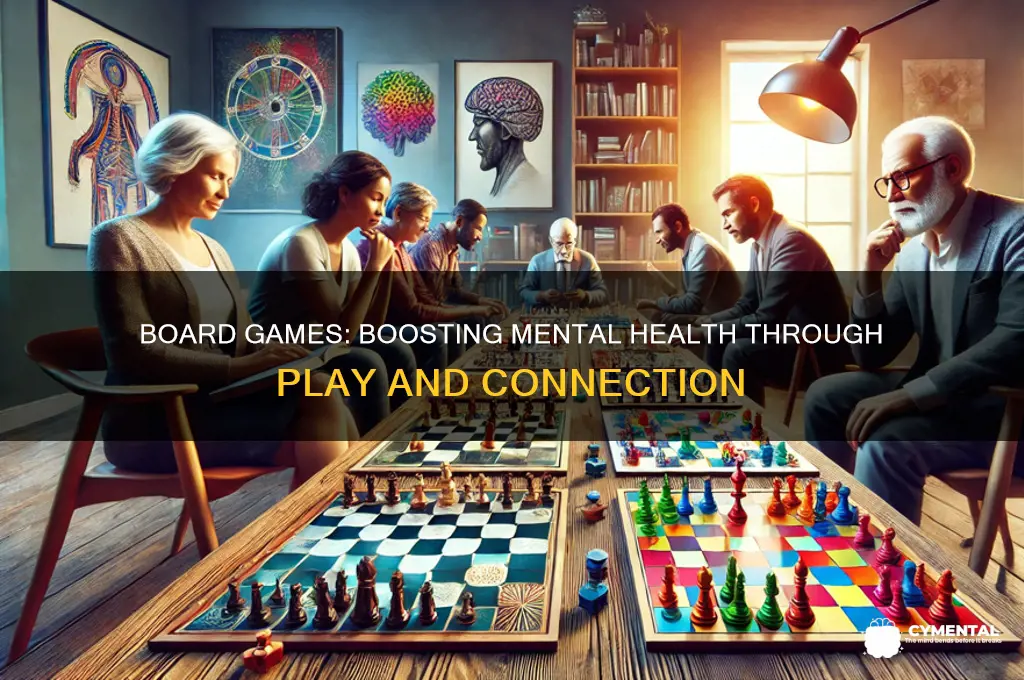
Board games have emerged as a valuable tool for supporting mental health, offering a unique blend of social interaction, cognitive stimulation, and stress relief. Engaging in board games encourages face-to-face communication, fostering connections and reducing feelings of isolation, which are critical for emotional well-being. Additionally, the strategic and problem-solving aspects of many games can enhance cognitive function, improve focus, and provide a sense of accomplishment. For individuals dealing with anxiety or depression, the structured yet enjoyable nature of board games can serve as a healthy distraction, promoting relaxation and mindfulness. Whether played in groups or one-on-one, board games create a safe and engaging space to unwind, build resilience, and nurture mental health in a fun and accessible way.
| Characteristics | Values |
|---|---|
| Social Interaction | Board games encourage face-to-face interaction, fostering social connections and reducing feelings of loneliness. |
| Stress Reduction | Engaging in gameplay can act as a distraction from daily stressors, promoting relaxation and reducing anxiety. |
| Cognitive Stimulation | Many board games require strategic thinking, problem-solving, and memory, which can improve cognitive function and delay age-related decline. |
| Emotional Regulation | Games provide a safe space to experience and manage emotions, such as frustration, excitement, and satisfaction. |
| Improved Mood | The release of endorphins during gameplay can boost mood and create a sense of accomplishment. |
| Enhanced Communication Skills | Cooperative and competitive games often require clear communication, improving verbal and non-verbal skills. |
| Sense of Belonging | Joining a gaming group or community can create a sense of belonging and shared identity. |
| Mindfulness | Some games demand focus and attention, promoting mindfulness and being present in the moment. |
| Resilience Building | Experiencing both wins and losses in games can teach resilience and coping strategies. |
| Creative Expression | Certain board games allow for creativity, such as storytelling or building, providing an outlet for self-expression. |
| Improved Self-Esteem | Mastering game rules and strategies can boost confidence and self-worth. |
| Intergenerational Bonding | Board games can bridge age gaps, allowing families to connect and bond across generations. |
| Reduced Screen Time | Playing board games offers an alternative to screen-based activities, promoting a healthier balance. |
| Therapeutic Tool | Therapists increasingly use board games as a therapeutic intervention for various mental health conditions. |
| Accessible and Inclusive | With a wide variety of games available, board games can cater to different abilities, interests, and ages, making them an inclusive activity. |
Explore related products


What You'll Learn
- Stress Relief: Board games reduce stress by promoting relaxation and mindfulness during gameplay
- Social Connection: Enhances relationships and combats loneliness through shared, engaging activities
- Cognitive Stimulation: Improves memory, problem-solving, and strategic thinking skills effectively
- Emotional Regulation: Encourages patience, resilience, and emotional expression in a safe space
- Routine & Structure: Provides predictable, enjoyable activities to boost mental stability

Stress Relief: Board games reduce stress by promoting relaxation and mindfulness during gameplay
Board games offer a unique escape from the relentless pace of modern life, providing a structured yet immersive activity that naturally fosters relaxation and mindfulness. Unlike digital distractions, which often fragment attention, board games demand focus on the present moment—whether it’s strategizing in *Catan*, negotiating in *Monopoly*, or solving puzzles in *Pandemic*. This engagement shifts the mind away from stressors, creating a mental "time-out" that mimics the effects of meditation. Studies suggest that even 30–45 minutes of gameplay can lower cortisol levels, the hormone associated with stress, making it an accessible tool for unwinding after a hectic day.
To maximize stress relief, choose games that align with your relaxation goals. Cooperative games like *Forbidden Island* or *Spirit Island* encourage teamwork and reduce competitive pressure, fostering a calm, collaborative environment. Alternatively, solo games such as *Wingspan* or *Everdell* provide a peaceful, introspective experience, allowing you to focus on the game’s mechanics without external distractions. Pairing gameplay with soothing ambient music or herbal tea can enhance the calming effect, creating a multisensory relaxation ritual. For families or groups, opt for lighter games like *Ticket to Ride* or *Sushi Go!* to keep the atmosphere light and stress-free.
Mindfulness during gameplay isn’t just about the game itself—it’s about the intentionality behind it. Set boundaries, such as turning off notifications or designating a "game night" free from work or chores. Encourage players to practice mindful breathing during turns, focusing on the sensation of rolling dice or moving pieces. For children, games like *Haba’s Unicorn Glitterluck* or *Outfoxed* teach patience and attention to detail while keeping the experience fun and engaging. Adults can benefit from more complex games like *Terraforming Mars* or *Scythe*, which require deep focus and strategic thinking, further diverting attention from stressors.
While board games are a powerful stress-relief tool, overuse or overly competitive play can backfire. Limit sessions to 1–2 hours to avoid mental fatigue, and avoid games that trigger frustration or anxiety. If competitive games like *Risk* or *Chess* heighten tension, balance them with lighter options or cooperative play. Incorporating board games into a broader self-care routine—such as combining gameplay with journaling or light stretching—can amplify their stress-reducing benefits. By treating board games as a mindful practice rather than just entertainment, you can transform them into a sustainable, enjoyable way to manage stress.
Do Mental Health Facilities Truly Aid Recovery and Healing?
You may want to see also
Explore related products



Social Connection: Enhances relationships and combats loneliness through shared, engaging activities
Human beings are inherently social creatures, yet modern life often isolates us in ways that harm our mental health. Board games offer a simple yet powerful antidote by creating structured opportunities for meaningful interaction. Unlike passive activities like watching TV, board games require active engagement, fostering a shared experience that strengthens bonds. Whether it’s the strategic tension of *Catan* or the cooperative problem-solving in *Pandemic*, these games create a common focus that encourages communication, laughter, and connection. For individuals feeling isolated, even a weekly game night can provide a sense of belonging and routine, breaking the cycle of loneliness.
Consider the mechanics of a game like *Ticket to Train*, where players build railway routes across a map. While competitive, the game demands interaction—negotiating routes, observing opponents’ moves, and celebrating small victories together. This dynamic mirrors healthy relationships, where collaboration and friendly rivalry coexist. Studies show that such structured social interactions release oxytocin, the "bonding hormone," which reduces stress and increases feelings of trust. For families, couples, or friends, dedicating 30–60 minutes to a board game can be as effective as a therapy session in improving communication and resolving conflicts indirectly.
However, not all games are created equal in fostering connection. Fast-paced, high-stress games like *Monopoly* can sometimes exacerbate tension rather than alleviate it. Opt for games that encourage teamwork or light competition, such as *Codenames* or *Sushi Go!*, especially when playing with mixed age groups or varying skill levels. For older adults or those with limited mobility, simpler games like *Dominoes* or *Rummikub* provide cognitive stimulation without overwhelming complexity. The key is to match the game to the group’s dynamics, ensuring everyone feels included and valued.
Practical tips can maximize the social benefits of board games. First, establish a regular game night—consistency builds anticipation and routine. Second, rotate game choices to keep the experience fresh and inclusive. Third, pair games with snacks or drinks to create a relaxed atmosphere. For those hesitant to initiate, start small: invite one or two people for a short game like *Patchwork* or *Jaipur*. Finally, embrace the imperfections—laughter over a misplayed card or a poorly timed move often creates the most memorable moments. By making board games a social ritual, you’re not just playing a game; you’re investing in relationships and building a buffer against loneliness.
Christian Psychology: A Faith-Based Approach to Mental Health Healing?
You may want to see also
Explore related products


Cognitive Stimulation: Improves memory, problem-solving, and strategic thinking skills effectively
Board games are not just a source of entertainment; they are powerful tools for cognitive stimulation, offering a unique blend of challenge and engagement that can significantly enhance mental health. By requiring players to remember rules, track progress, and plan ahead, these games activate multiple areas of the brain, fostering improved memory, problem-solving, and strategic thinking skills. For instance, games like Chess or Catan demand players to anticipate opponents’ moves, manage resources, and adapt strategies, all of which sharpen cognitive abilities over time.
To maximize cognitive benefits, consider the "dosage" of gameplay. Research suggests that playing board games for 30–60 minutes, 2–3 times per week, can yield noticeable improvements in memory and problem-solving skills, particularly in adults aged 50 and above. For younger players, games like Ticket to Ride or Pandemic offer a balance of complexity and accessibility, making them ideal for building foundational strategic thinking skills. Pairing gameplay with social interaction further amplifies these benefits, as discussions and collaboration during play engage additional cognitive processes.
However, not all board games are created equal in terms of cognitive stimulation. Games that require multi-step planning, pattern recognition, or resource management are most effective. For example, Scrabble enhances vocabulary and spatial reasoning, while Codenames challenges players to think abstractly and make connections between seemingly unrelated concepts. When selecting a game, look for those that push players slightly beyond their comfort zone, as this is where the most significant cognitive growth occurs.
A practical tip for integrating board games into a cognitive health routine is to rotate games regularly to keep the brain engaged with new challenges. For instance, alternate between strategy-heavy games like Terraforming Mars and memory-focused games like Memory or Pairs. Additionally, playing with diverse groups—varying in age, skill level, and perspective—can introduce unexpected strategies and problem-solving approaches, further enriching the cognitive experience.
In conclusion, board games are a dynamic and accessible way to improve cognitive function. By incorporating them into a regular routine, individuals can effectively enhance memory, problem-solving, and strategic thinking skills. Whether played solo, with family, or in a group, these games offer a fun and engaging method to keep the mind sharp and resilient, proving that mental exercise can be as enjoyable as it is beneficial.
Ancient Rome's Approach to Mental Health: Care or Neglect?
You may want to see also
Explore related products


Emotional Regulation: Encourages patience, resilience, and emotional expression in a safe space
Board games, often seen as mere entertainment, serve as powerful tools for emotional regulation. They create structured environments where players face challenges, make decisions, and experience outcomes—all within a safe and controlled space. This dynamic mirrors real-life situations, allowing individuals to practice managing their emotions without immediate, high-stakes consequences. For instance, losing a turn or falling behind in a game provides an opportunity to cultivate patience and resilience, skills that are transferable to daily life.
Consider the mechanics of cooperative board games like *Pandemic* or *Forbidden Island*. These games require teamwork, communication, and emotional control under pressure. Players must remain calm and focused despite setbacks, such as failing to contain a disease outbreak or losing a critical resource. This process not only strengthens emotional resilience but also fosters a sense of collective effort, reducing feelings of isolation. For children and adolescents, these games can be particularly beneficial, as they learn to regulate their emotions in a social setting without the fear of judgment.
To maximize the emotional regulation benefits of board games, intentionality is key. Start with games that have clear rules and manageable complexity, such as *Ticket to Ride* or *Codenames*. These games provide enough challenge to engage players without overwhelming them. Encourage participants to verbalize their feelings during gameplay—frustration, excitement, or disappointment—to normalize emotional expression. For younger players, pair gameplay with brief discussions about emotions, using prompts like, "How did you feel when you couldn’t complete your route?" or "What helped you stay calm when you lost a turn?"
However, it’s important to balance challenge with support. Avoid games that are overly competitive or punitive, as these can trigger negative emotions rather than regulate them. Instead, opt for games with positive reinforcement mechanisms, such as *Wingspan* or *Sushi Go!,* which reward progress and strategic thinking. For individuals with anxiety or trauma histories, start with shorter sessions and gradually increase playtime as emotional stamina improves. Pairing gameplay with mindfulness techniques, such as deep breathing during critical turns, can further enhance emotional regulation.
Incorporating board games into therapeutic or personal development routines requires consistency. Aim for 2–3 sessions per week, each lasting 30–60 minutes, to build emotional resilience over time. For families, make gameplay a regular part of bonding activities, ensuring a mix of cooperative and competitive games to address different emotional skills. By treating board games as more than just pastimes, individuals can transform them into practical tools for emotional growth, turning playtime into a safe space for self-discovery and regulation.
School Psychologists: Essential Mental Health Support in Education
You may want to see also
Explore related products


Routine & Structure: Provides predictable, enjoyable activities to boost mental stability
Human brains crave routine, especially when navigating the unpredictable currents of mental health challenges. Board games, with their inherent structure and predictable rhythms, offer a sanctuary of order. Each game has defined rules, a clear beginning and end, and a set sequence of actions. This predictability acts as a mental anchor, providing a sense of control and stability in a world that often feels chaotic.
For individuals struggling with anxiety or depression, the structured nature of board games can be particularly beneficial. The act of setting up the game, following established rules, and progressing through defined phases creates a microcosm of order, a safe space where outcomes are determined by skill, strategy, and sometimes luck, but always within a known framework. This sense of control can be empowering, offering a temporary reprieve from the overwhelming unpredictability of daily life.
Consider the classic game of chess. Its 64 squares and 32 pieces represent a miniature universe governed by strict rules. Each move is a calculated decision, a step towards a clear goal. This structured environment encourages focus and strategic thinking, diverting attention from intrusive thoughts or worries. The game's predictable flow provides a sense of rhythm and routine, allowing players to immerse themselves in the present moment, a form of mindfulness that can be therapeutic.
Incorporating board games into a daily or weekly routine can be a powerful tool for mental health management. For instance, a family game night can become a cherished tradition, offering not just entertainment but also a sense of stability and connection. For adults, a weekly game session with friends can provide a structured social outlet, combining the benefits of social interaction with the calming predictability of game play. Even solo board games can offer a structured escape, a way to engage the mind in a focused, rule-bound activity that provides a sense of accomplishment and control.
To maximize the mental health benefits of board games, consider the following practical tips: choose games with clear rules and defined objectives to enhance the sense of structure; establish a regular game schedule to create a routine; and vary the games to maintain interest and challenge. For those with specific mental health concerns, consulting a therapist or counselor can help tailor game choices to individual needs. By embracing the routine and structure of board games, individuals can find a unique and enjoyable way to bolster their mental stability and overall well-being.
Supporting Your Adult Son’s Mental Health: Practical Steps for Parents
You may want to see also
Frequently asked questions
Board games can improve mental health by promoting social interaction, reducing stress, and providing a sense of accomplishment. They encourage communication, teamwork, and laughter, which can boost mood and reduce feelings of isolation.
A: Yes, playing board games can help reduce anxiety by providing a structured, engaging activity that distracts from worries. The focus required during gameplay can also help calm the mind and promote relaxation.
A: Absolutely. Board games often require strategic thinking, problem-solving, and memory recall, which can enhance cognitive function and keep the mind sharp, especially in older adults.
A: Board games foster emotional well-being by encouraging social connections, building confidence through skill development, and providing a safe space for emotional expression and laughter.
A: Yes, cooperative games (e.g., Pandemic) promote teamwork and reduce competition-related stress, while lighthearted games (e.g., Cards Against Humanity) encourage laughter and social bonding. Strategy games (e.g., Chess) also stimulate the mind and improve focus.