Caleb Wright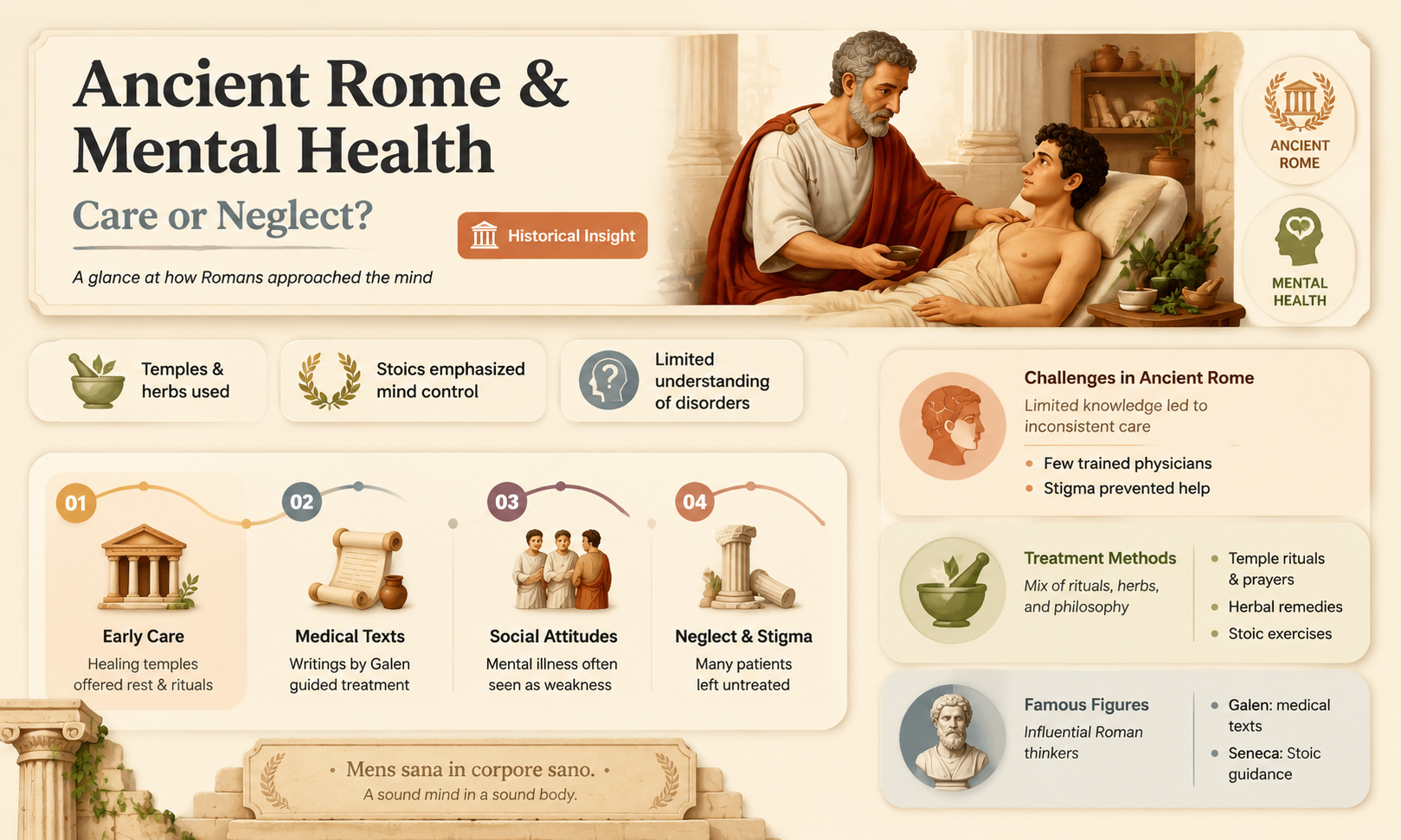
The ancient Roman Empire, known for its advanced legal systems, engineering marvels, and military prowess, also displayed a nuanced approach to mental illness, though it was often intertwined with superstition, religion, and philosophy. While the Romans lacked modern medical understanding, they recognized conditions like melancholia, mania, and hysteria, attributing them to imbalances in bodily humors or divine displeasure. Treatment methods varied widely, ranging from spiritual rituals and temple healing to philosophical counseling and herbal remedies. Figures like Galen and Celsus contributed early medical insights, advocating for humane care, while institutions such as the *Valetudinaria* (hospitals) occasionally provided refuge for the afflicted. However, societal attitudes were mixed, with some viewing mental illness as a punishment or possession, leading to stigmatization or abandonment. Despite these limitations, the Romans' efforts reflect an early attempt to address mental health within the constraints of their time, blending empirical observation with cultural and religious beliefs.
| Characteristics | Values |
|---|---|
| Recognition of Mental Illness | Ancient Romans acknowledged mental disorders, often attributing them to supernatural causes (e.g., divine punishment, possession). |
| Medical Treatments | Physicians like Galen and Celsus proposed treatments such as bloodletting, diet changes, and herbal remedies for mental conditions. |
| Asylums and Care Facilities | Limited evidence of dedicated asylums; some temples (e.g., Temple of Aesculapius) offered sanctuary and healing for the mentally ill. |
| Legal and Social Attitudes | Mentally ill individuals were often marginalized but not universally persecuted; some laws protected them from harsh treatment. |
| Religious and Spiritual Interventions | Temples and priests played a role in "curing" mental illness through rituals, prayers, and exorcisms. |
| Philosophical Perspectives | Stoic philosophers viewed mental health as a matter of self-control, while others like Cicero acknowledged emotional struggles. |
| Documentation and Case Studies | Limited written records exist, but texts by Roman physicians and historians provide insights into their understanding of mental health. |
| Cultural Stigma | Mental illness was often seen as a weakness or moral failing, leading to social exclusion in some cases. |
| Integration with Physical Health | Romans viewed mental and physical health as interconnected, often treating both through holistic approaches. |
| Lack of Modern Diagnosis | No standardized classification of mental illnesses; conditions were described symptomatically rather than diagnostically. |
Explore related products


What You'll Learn
- Roman beliefs about mental illness and supernatural causes
- Treatments involving temples, rituals, and spiritual healing practices
- Use of herbal remedies and early medical interventions for mental health
- Role of philosophers in understanding and addressing mental disorders
- Social attitudes toward mentally ill individuals in Roman society

Roman beliefs about mental illness and supernatural causes
The ancient Romans, like many civilizations of their time, often attributed mental illness to supernatural causes, weaving a complex tapestry of religious and spiritual explanations into their understanding of the mind. They believed that erratic behavior, mood disorders, and cognitive disturbances were not merely physical or psychological ailments but manifestations of divine displeasure, demonic possession, or the influence of malevolent spirits. This perspective was deeply rooted in their polytheistic religion, where gods and goddesses governed every aspect of life, including mental health.
One prominent example of this belief is the association of epilepsy with the moon goddess Luna. The Romans observed the cyclical nature of epileptic seizures and linked them to the lunar phases, believing that the goddess’s wrath or favor caused the condition. Treatment often involved rituals and offerings to appease Luna, such as placing lunar symbols under the patient’s pillow or conducting ceremonies during specific moon phases. While these practices may seem superstitious today, they reflect the Romans’ attempt to address mental and physical ailments through the lens of their spiritual worldview.
Another significant aspect of Roman belief was the role of *genii* and *lares*, household spirits thought to protect individuals and families. Mental disturbances were sometimes attributed to the neglect or anger of these spirits, leading to rituals aimed at restoring harmony. Families would offer incense, food, or prayers at household shrines to placate these entities. This practice not only addressed the perceived supernatural cause but also reinforced communal and familial bonds, providing a sense of control and order in the face of inexplicable conditions.
However, the Romans were not entirely devoid of practical approaches. They often combined spiritual remedies with more tangible treatments, such as herbal medicines, dietary changes, and even early forms of psychotherapy. For instance, the physician Celsus recommended rest, soothing music, and gentle conversation for those suffering from melancholia, a condition believed to be caused by an excess of black bile but also influenced by supernatural forces. This dual approach highlights the Romans’ pragmatic attempt to address mental illness from both spiritual and physical angles.
In conclusion, Roman beliefs about mental illness and supernatural causes were deeply intertwined with their religious and cultural practices. While their explanations may appear archaic, they demonstrate a sincere effort to understand and alleviate suffering. By blending spiritual rituals with practical care, the Romans laid the groundwork for a holistic approach to mental health, one that acknowledged the complexity of the human experience. Their legacy reminds us that the quest to heal the mind has always been as much about compassion and creativity as it is about science.
Kathy Murphy's Mental Health Journey: Seeking Support and Healing
You may want to see also
Explore related products


Treatments involving temples, rituals, and spiritual healing practices
The ancient Romans, like many civilizations, intertwined medicine with spirituality, often treating mental ailments through religious practices. Temples dedicated to healing deities, such as Aesculapius, served as sanctuaries where the afflicted sought relief. Patients would spend nights in these temples, a practice known as *incubatio*, hoping to receive divine guidance or healing in their dreams. This blend of spiritual and physical care highlights the Roman belief in the interconnectedness of body and soul.
Rituals played a pivotal role in these treatments, often involving purification ceremonies to expel perceived evil spirits or imbalances. Priests or priestesses would lead prayers, offer sacrifices, and perform symbolic acts, such as washing with sacred waters or burning incense. These rituals were not merely superstitious but served as structured, communal interventions to restore mental equilibrium. For instance, the *fascinum*, an amulet believed to ward off the evil eye, was commonly used to alleviate anxiety and fear.
Spiritual healing practices extended beyond temples, incorporating household deities like the *Lares* and *Penates*, who were thought to protect families from harm, including mental distress. Families would offer daily prayers and small offerings to these gods, fostering a sense of security and well-being. This domestic spirituality acted as a preventive measure, aiming to maintain mental health through consistent spiritual engagement.
While these methods may seem archaic, they reflect a holistic approach to mental health, addressing emotional and psychological needs through communal and spiritual means. Modern practitioners of integrative medicine often draw parallels, emphasizing the importance of rituals, community, and belief systems in healing. For those exploring historical remedies, understanding these practices offers insight into the enduring human quest to alleviate suffering through both tangible and intangible means.
Gym and Mind: How Physical Fitness Boosts Mental Well-Being
You may want to see also
Explore related products





Use of herbal remedies and early medical interventions for mental health
The ancient Romans, while not possessing modern psychiatric knowledge, actively sought to alleviate mental suffering through a blend of herbal remedies and early medical interventions. Their approach, rooted in humoral theory, aimed to restore balance within the body's fluids (blood, phlegm, yellow bile, black bile) believed to influence temperament and mental states. This led to the use of specific herbs and treatments tailored to perceived imbalances.
For melancholia, characterized by excess black bile, they prescribed mandrake root, believed to induce sleep and alleviate sadness. Dosage was crucial; a small amount was considered a sedative, while larger doses were thought to be hallucinogenic. Valerian, another herb, was used for its calming effects, often steeped in wine to treat anxiety and insomnia. The Romans also utilized lavender, both aromatically and topically, to soothe nervousness and promote relaxation.
Beyond herbs, Roman physicians employed more invasive techniques. Bloodletting, a common practice, aimed to remove excess blood believed to cause agitation. This was often done through venesection (cutting a vein) or cupping, where heated cups were applied to the skin to draw blood. While seemingly harsh, these methods reflected the era's understanding of physiology. Additionally, hydrotherapy, involving baths of varying temperatures, was used to stimulate the body and mind. Cold baths were thought to invigorate, while warm baths were prescribed for relaxation and stress relief.
Physical activity was also considered therapeutic. Gladiators, despite their brutal profession, engaged in rigorous training believed to promote mental fortitude and discipline. This emphasis on physical exertion as a means of mental well-being aligns with modern understanding of exercise's positive impact on mood and stress reduction.
While the Romans lacked the scientific understanding of mental illness we possess today, their use of herbal remedies and early medical interventions demonstrates a genuine attempt to address psychological suffering. Their methods, though often based on flawed theories, laid the groundwork for future developments in mental health care. We can learn from their emphasis on holistic approaches, recognizing the interconnectedness of physical and mental well-being, while also acknowledging the importance of evidence-based practices in modern treatment.
College and Mental Growth: Unlocking Personal Development and Resilience
You may want to see also
Explore related products


Role of philosophers in understanding and addressing mental disorders
Ancient Roman philosophers played a pivotal role in shaping early understandings of mental disorders, blending philosophical inquiry with practical observations. Figures like Galen, often regarded as the most influential medical thinker of antiquity, proposed that mental illnesses stemmed from imbalances in the four humors—blood, phlegm, yellow bile, and black bile. This theory, while rudimentary by modern standards, laid the groundwork for systematic approaches to diagnosis and treatment. Galen’s work emphasized the interconnectedness of the body and mind, a concept that foreshadowed contemporary biopsychosocial models of mental health.
To address mental disorders, Roman philosophers advocated for a combination of physical and psychological interventions. For instance, Seneca, a Stoic philosopher, suggested that emotional regulation and rational thought could mitigate symptoms of anxiety and depression. His letters often included practical advice, such as mindfulness exercises and the cultivation of resilience, which resonate with modern cognitive-behavioral techniques. Similarly, Cicero’s writings on the importance of social connections and moral purpose offered early insights into the role of community and meaning in mental well-being.
A comparative analysis reveals that Roman philosophers approached mental disorders with a holistic perspective, contrasting sharply with the spiritual or supernatural explanations prevalent in other ancient cultures. While Greek philosophers like Hippocrates had already begun to medicalize mental illness, Roman thinkers like Asclepiades of Bithynia introduced more humane treatments, such as diet, exercise, and music therapy, instead of harsher methods like restraint or exorcism. This shift toward compassionate care marked a significant advancement in the ethical treatment of individuals with mental disorders.
For those seeking to apply these ancient insights today, consider integrating philosophical principles into daily routines. For example, practicing Stoic mindfulness for 10–15 minutes daily can help manage stress, while engaging in physical activities like walking or swimming aligns with Roman beliefs in the healing power of exercise. Additionally, fostering social connections and pursuing meaningful goals, as Cicero advised, can serve as protective factors against mental health challenges. These practices, rooted in ancient wisdom, remain remarkably relevant in contemporary mental health strategies.
In conclusion, Roman philosophers not only sought to understand mental disorders but also pioneered compassionate and multifaceted approaches to treatment. Their emphasis on balance, rationality, and holistic well-being offers enduring lessons for modern mental health care. By studying their contributions, we gain not only historical insight but also practical tools for addressing mental disorders in our own time.
Medications for Mental Illness: A Helpful Treatment or Not?
You may want to see also
Explore related products


Social attitudes toward mentally ill individuals in Roman society
In ancient Rome, social attitudes toward mentally ill individuals were shaped by a blend of religious, philosophical, and practical considerations. Unlike modern societies, which often distinguish between mental illness and spiritual or supernatural phenomena, Romans frequently attributed erratic behavior to divine intervention or demonic possession. This perspective was deeply rooted in their polytheistic beliefs, where gods and spirits were thought to influence human lives directly. For instance, individuals exhibiting symptoms of what we might now recognize as schizophrenia or bipolar disorder were sometimes seen as vessels for divine messages, earning them a peculiar mix of reverence and fear. This duality in perception meant that while some mentally ill individuals were ostracized, others were granted a degree of social tolerance or even elevated status, depending on the interpretation of their condition.
The Roman legal system also reflected these attitudes, offering limited protections but no systematic approach to care. Mentally ill individuals were often deemed *furiosi*—legally incompetent—and thus exempt from certain responsibilities, such as signing contracts or testifying in court. However, this exemption was not an act of compassion but a practical measure to maintain legal order. Families were typically left to manage their afflicted relatives, with no public institutions dedicated to mental health. Wealthier families might confine their kin to private estates or seek the services of priests or healers, while the poor often faced neglect or abandonment. This reliance on familial responsibility underscores the absence of a collective social obligation to care for the mentally ill.
Philosophical thought in Rome further complicated attitudes, as Stoic and Epicurean teachings emphasized self-control and rationality as virtues. Mental illness, which disrupted these ideals, was often viewed as a failure of personal discipline rather than a medical condition. Yet, some Roman physicians, like Galen, acknowledged the biological basis of certain disorders, proposing treatments ranging from herbal remedies to dietary changes. These medical efforts, however, were sporadic and accessible only to the elite, leaving the majority of mentally ill individuals to navigate a society that prioritized order and conformity over understanding or support.
Despite these challenges, there are scattered examples of empathy and accommodation. Temples dedicated to gods like Aesculapius, the deity of healing, sometimes served as sanctuaries for those suffering from mental ailments, offering rituals and communal spaces that provided solace. Additionally, the Roman concept of *pietas*—duty and compassion—occasionally extended to the mentally ill, particularly within close-knit communities. These instances, though rare, suggest that while systemic support was lacking, individual acts of kindness were not entirely absent.
In conclusion, Roman society’s approach to mental illness was neither uniformly cruel nor compassionate. It was a patchwork of religious interpretations, legal pragmatism, philosophical ideals, and sporadic medical intervention. While some individuals found limited acceptance or aid, the overarching attitude was one of ambivalence, reflecting a civilization that struggled to reconcile its values of order and rationality with the unpredictable nature of mental illness. This historical context offers a cautionary tale about the dangers of conflating spiritual and medical explanations, while also highlighting the enduring human capacity for both indifference and empathy.
Mental Illness in Court: A Defense or Prosecution Tool?
You may want to see also
Frequently asked questions
Yes, the ancient Romans recognized mental illness, though their understanding was limited compared to modern psychiatry. They attributed mental disorders to supernatural causes, such as divine punishment or possession, but also acknowledged physical and environmental factors.
Roman treatments for mental illness varied. They used methods like herbal remedies, dietary changes, and religious rituals. Physicians like Galen proposed more rational approaches, such as exercise and bloodletting, while temples dedicated to healing gods, like Aesculapius, offered spiritual cures.
While there is no evidence of dedicated mental institutions, the Romans did have general hospitals and temples where individuals with mental illnesses might receive care. Wealthier families often cared for affected relatives at home, but societal attitudes could lead to neglect or ostracism.