Harper Lewis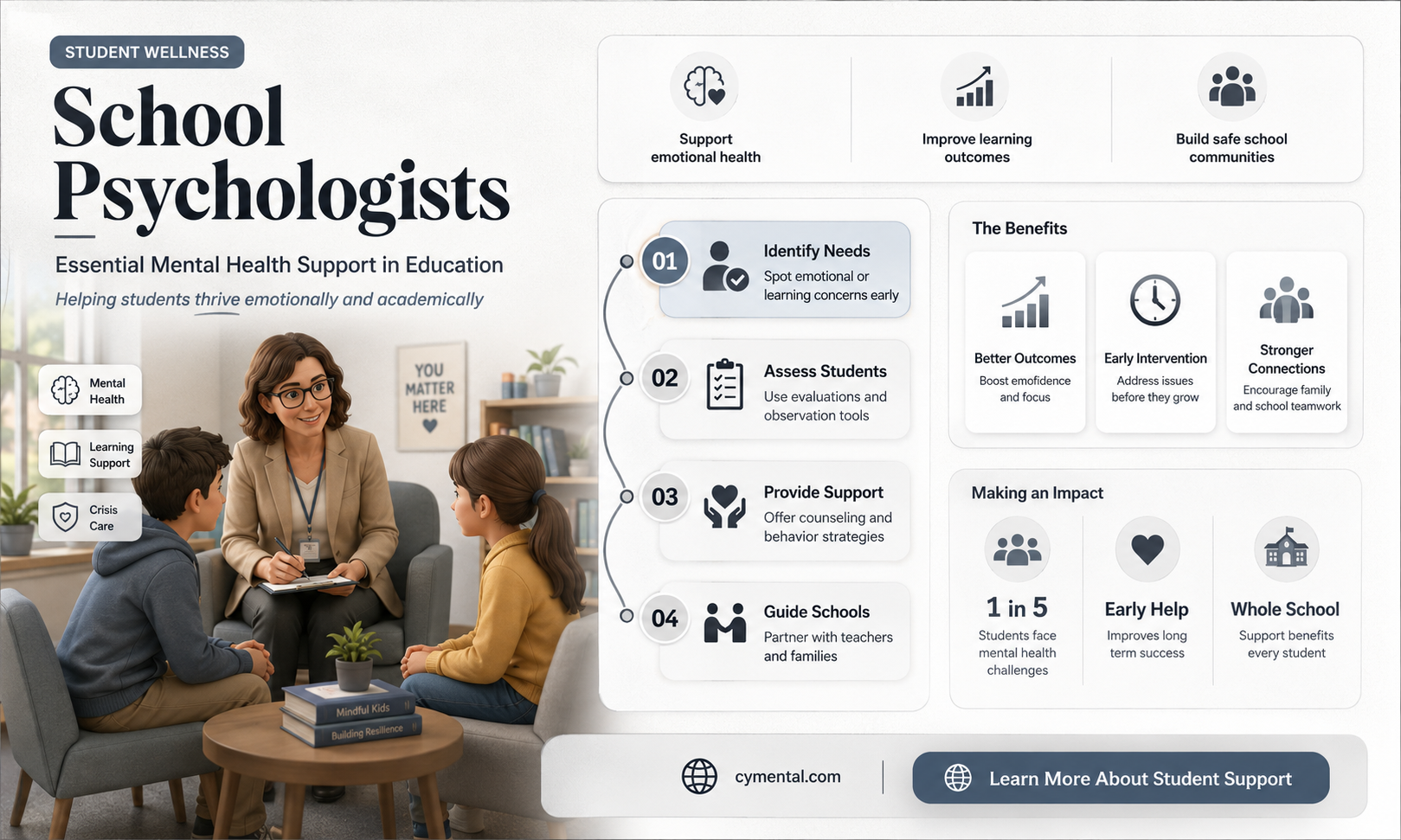
School psychologists play a crucial role in supporting students' mental health by providing a range of services aimed at promoting emotional well-being, academic success, and overall development. They are trained professionals who assess, diagnose, and intervene in mental health issues such as anxiety, depression, and behavioral challenges, often collaborating with teachers, parents, and other specialists to create individualized plans for students. Beyond addressing specific concerns, school psychologists also focus on prevention by implementing programs that foster resilience, social skills, and coping strategies, ensuring a supportive school environment. Their expertise bridges the gap between education and mental health, making them essential in identifying and addressing the unique needs of students in an academic setting.
Explore related products


What You'll Learn
- Assessment & Diagnosis: Identifying mental health issues through evaluations and standardized tests
- Intervention Strategies: Developing tailored plans to address emotional and behavioral challenges
- Crisis Support: Providing immediate assistance during emergencies like trauma or self-harm
- Counseling Services: Offering individual or group therapy for students in need
- Collaboration: Working with teachers, parents, and professionals for comprehensive student care

Assessment & Diagnosis: Identifying mental health issues through evaluations and standardized tests
School psychologists play a pivotal role in identifying mental health issues among students through systematic assessment and diagnosis. Utilizing a combination of evaluations and standardized tests, they gather critical data to uncover underlying challenges that may impede a student’s academic, social, or emotional functioning. These assessments are not one-size-fits-all; they are tailored to the student’s age, developmental stage, and presenting concerns, ensuring accuracy and relevance. For instance, a 7-year-old struggling with focus might undergo the Conners 3rd Edition (Conners 3), a standardized tool designed to assess ADHD symptoms, while a teenager experiencing anxiety may complete the Beck Youth Inventories (BYI) to measure emotional distress.
The process begins with a comprehensive evaluation, often including interviews with the student, parents, and teachers, to gather a holistic view of the student’s behavior and environment. Standardized tests, such as the Achenbach System of Empirically Based Assessment (ASEBA) or the Behavior Assessment System for Children (BASC-3), provide quantifiable data to identify specific mental health concerns. These tools are norm-referenced, meaning a student’s results are compared to a large, representative sample of their peers, ensuring objectivity. For example, a student scoring in the 90th percentile on the anxiety subscale of the BASC-3 would indicate significant distress relative to their age group, prompting further investigation.
However, assessments are not without limitations. Standardized tests, while valuable, must be interpreted within context. Cultural, linguistic, or socioeconomic factors can skew results, leading to misdiagnosis if not carefully considered. School psychologists must also guard against over-reliance on quantitative data, balancing it with qualitative insights from observations and interviews. For instance, a student from a non-English-speaking household might underperform on verbal-based tests, not due to mental health issues, but because of language barriers.
Practical tips for educators and parents include advocating for timely assessments if a student shows persistent signs of distress, such as withdrawal, aggression, or declining grades. Collaboration with school psychologists is key; sharing specific observations (e.g., "The student avoids group activities and often cries during transitions") can enhance the accuracy of the evaluation. Additionally, understanding the purpose and limitations of standardized tests empowers stakeholders to ask informed questions, such as, "How does this test account for cultural differences?" or "What additional measures are being used to confirm these results?"
In conclusion, assessment and diagnosis by school psychologists are indispensable in identifying mental health issues, but they require a nuanced approach. By combining standardized tools with contextual understanding, these professionals can provide actionable insights that support students’ well-being. For schools and families, recognizing the signs early and engaging in the process proactively can make a profound difference in a student’s life.
Supporting Your Adult Son’s Mental Health: Practical Steps for Parents
You may want to see also
Explore related products


Intervention Strategies: Developing tailored plans to address emotional and behavioral challenges
School psychologists play a pivotal role in addressing the mental health needs of students by crafting intervention strategies that are both personalized and actionable. Unlike one-size-fits-all approaches, these plans are tailored to the unique emotional and behavioral challenges each student faces, ensuring that support is effective and sustainable. For instance, a student struggling with anxiety might benefit from a combination of cognitive-behavioral techniques, mindfulness exercises, and structured check-ins, while another with disruptive behaviors may require positive reinforcement systems and social skills training. The key lies in assessing the root causes of the challenges and aligning interventions with the student’s developmental stage, cultural background, and individual strengths.
Consider the process of developing these plans as a three-step framework: assessment, collaboration, and implementation. First, thorough assessment tools such as behavioral observations, standardized tests, and interviews with teachers and parents are used to identify specific needs. For example, a 10-year-old exhibiting frequent outbursts might undergo a Functional Behavioral Assessment (FBA) to determine the triggers behind their behavior. Second, collaboration with educators, families, and sometimes external therapists ensures that the plan is holistic and feasible. A school psychologist might recommend a daily 10-minute mindfulness session for a student with anxiety, but only if the teacher can integrate it into the classroom routine and the family reinforces it at home. Finally, implementation involves setting measurable goals, such as reducing outbursts by 50% in two months, and regularly monitoring progress through data collection and adjustments.
One critical aspect of these tailored plans is their adaptability. For younger students (ages 5–10), interventions often focus on play-based therapy or visual aids, such as emotion charts, to help them express feelings. Adolescents (ages 11–18), on the other hand, may respond better to goal-setting frameworks or peer-led group discussions. For example, a middle school student struggling with peer relationships might participate in a six-week social skills group, meeting twice weekly for 30-minute sessions. The psychologist must remain flexible, ready to pivot strategies if initial efforts fall short. This might mean replacing a reward system with a token economy for a student who finds the former too abstract.
While these strategies are powerful, they are not without challenges. Overloading students with too many interventions can lead to burnout, and plans that lack family involvement often fail to generalize beyond the school setting. School psychologists must also navigate limited resources, such as time constraints or lack of training among staff. To mitigate this, they can advocate for professional development sessions on mental health for teachers or involve parents through workshops on behavior management techniques. For instance, teaching parents how to use a simple behavior tracking app can enhance consistency between home and school.
Ultimately, the success of intervention strategies hinges on their precision and practicality. By grounding plans in evidence-based practices and fostering a collaborative environment, school psychologists can create meaningful change for students. A well-designed plan not only addresses immediate challenges but also equips students with lifelong skills, such as emotional regulation and problem-solving. For example, a high school student who learns to use a stress journal during exam season may carry that coping mechanism into college and beyond. In this way, school psychologists do far more than manage mental health—they empower students to thrive.
Exploring CBD Oil's Potential Benefits for Mental Health Disorders
You may want to see also
Explore related products


Crisis Support: Providing immediate assistance during emergencies like trauma or self-harm
In moments of crisis, such as trauma or self-harm, the role of school psychologists shifts from prevention to immediate intervention. These professionals are often the first responders within the school setting, equipped with the skills to de-escalate situations and provide critical emotional first aid. Their presence ensures that students receive timely support, bridging the gap until more specialized resources can be mobilized. For instance, a student who has just experienced a traumatic event, like the sudden loss of a family member, may exhibit acute distress—crying uncontrollably, withdrawing, or even becoming aggressive. A school psychologist can step in to create a safe space, using calming techniques like grounding exercises or simply offering a quiet room to process emotions.
The effectiveness of crisis support hinges on structured protocols and clear communication. School psychologists often lead or participate in crisis teams, which may include counselors, administrators, and external mental health professionals. A key tool in their arsenal is the Psychological First Aid (PFA) framework, endorsed by organizations like the National Child Traumatic Stress Network. PFA emphasizes listening without pressure, assessing immediate needs, and connecting students to ongoing support. For example, after a school shooting, a psychologist might conduct brief interventions with affected students, focusing on safety, calming, and practical assistance, while also identifying those at risk for severe reactions like PTSD.
One of the most challenging aspects of crisis support is addressing self-harm, which requires a delicate balance of urgency and empathy. School psychologists are trained to recognize warning signs—such as unexplained injuries, sudden changes in behavior, or explicit expressions of self-harm—and respond with a combination of compassion and firmness. A practical step involves privately speaking with the student to assess risk level using tools like the Columbia Suicide Severity Rating Scale (C-SSRS). If immediate danger is present, the psychologist coordinates with parents and emergency services, ensuring the student is not left alone. Follow-up care is equally critical, often involving referrals to therapists or inpatient programs, alongside ongoing check-ins at school.
Comparatively, while teachers and administrators play vital roles in student well-being, their interventions during crises are often limited by training and scope. School psychologists bring specialized knowledge of mental health crises, trauma-informed care, and risk assessment, making their involvement indispensable. For example, a teacher might notice a student cutting in class but may not know how to approach the situation without causing further distress. A psychologist, however, can intervene with a pre-established protocol, ensuring the student feels heard and supported while also addressing the immediate safety concern.
In conclusion, crisis support from school psychologists is a lifeline during emergencies, offering structured, compassionate care when it matters most. Their ability to stabilize situations, assess risks, and connect students to long-term resources underscores their unique value in the mental health ecosystem of schools. By prioritizing immediate needs while laying the groundwork for recovery, they not only address acute crises but also foster resilience and hope in vulnerable students.
Supporting Loved Ones: Strategies to Assist Those Denying Mental Health Struggles
You may want to see also
Explore related products


Counseling Services: Offering individual or group therapy for students in need
School psychologists play a pivotal role in addressing the mental health needs of students, often serving as the first line of defense against emotional and behavioral challenges. One of their most impactful contributions is through counseling services, which can be tailored to meet the unique needs of individual students or delivered in a group setting. These services are not one-size-fits-all; they are carefully designed to address specific issues such as anxiety, depression, trauma, or social difficulties. For instance, a student struggling with test anxiety might receive cognitive-behavioral therapy (CBT) techniques to reframe negative thoughts, while a group therapy session could focus on building resilience through shared experiences.
Individual therapy sessions typically last 30 to 50 minutes and occur weekly or biweekly, depending on the student’s needs. School psychologists use evidence-based approaches like mindfulness, play therapy (for younger students), or solution-focused brief therapy to help students develop coping strategies. For example, a middle school student dealing with peer rejection might work on assertiveness skills through role-playing exercises. Group therapy, on the other hand, fosters a sense of community and reduces feelings of isolation. Groups often consist of 6 to 10 students and meet for 45 to 60 minutes weekly, focusing on themes like anger management, grief, or self-esteem. A high school group might use journaling and peer feedback to process emotions, while an elementary group could employ art activities to express feelings.
While counseling services are invaluable, they are not without challenges. School psychologists must navigate limited resources, high caseloads, and the stigma surrounding mental health. To maximize effectiveness, they often collaborate with teachers, parents, and external providers to create a holistic support system. For instance, a psychologist might teach a classroom lesson on stress management while also working with a student individually to apply those skills. Parents can reinforce therapy techniques at home by encouraging open communication and modeling healthy coping mechanisms.
The benefits of these services extend beyond the individual student. Group therapy, in particular, can improve classroom dynamics by fostering empathy and understanding among peers. For example, a group focused on conflict resolution can lead to fewer disruptions in the classroom and stronger relationships. Individual therapy, meanwhile, can enhance academic performance by addressing underlying emotional barriers. A student who learns to manage anxiety through therapy is more likely to engage in class and complete assignments.
In conclusion, counseling services offered by school psychologists are a critical component of student mental health support. By providing individualized and group interventions, they empower students with tools to navigate life’s challenges. Schools that prioritize these services not only address immediate mental health needs but also cultivate a culture of resilience and well-being. Practical steps for implementation include training staff to identify students in need, allocating dedicated time for therapy sessions, and educating the school community about the value of mental health care. With thoughtful planning and collaboration, counseling services can transform the lives of students and the climate of the school as a whole.
Mental Health History: Boosting Temporary Insanity Claims in Court?
You may want to see also
Explore related products



Collaboration: Working with teachers, parents, and professionals for comprehensive student care
School psychologists are uniquely positioned to foster a collaborative ecosystem that addresses student mental health holistically. By integrating insights from teachers, parents, and external professionals, they create a multi-faceted support network. For instance, a teacher might notice a student’s declining academic performance, while a parent observes increased irritability at home. The school psychologist acts as the nexus, synthesizing these observations to identify underlying mental health issues, such as anxiety or depression, and devising targeted interventions. This collaborative approach ensures no red flag is overlooked, providing a more accurate and comprehensive understanding of the student’s needs.
Effective collaboration begins with clear communication protocols. School psychologists should establish regular check-ins with teachers, perhaps bi-weekly, to discuss student progress and emerging concerns. Parents can be engaged through structured meetings or digital platforms like email or apps, ensuring they feel heard and informed. For example, a psychologist might recommend a teacher implement a "calm corner" in the classroom for a student prone to anxiety, while advising parents to maintain a consistent bedtime routine. Such coordinated strategies amplify the impact of interventions, creating a seamless support system across environments.
One of the most powerful tools in collaborative care is the integration of external professionals, such as pediatricians, therapists, or social workers. School psychologists often facilitate referrals and coordinate care plans, ensuring all parties align on goals and methods. For a student with ADHD, this might involve sharing behavioral data with a pediatrician to adjust medication dosages, while collaborating with a therapist to implement cognitive-behavioral strategies at school and home. This interdisciplinary approach addresses mental health from biological, psychological, and environmental angles, maximizing outcomes.
However, collaboration is not without challenges. Misaligned priorities, differing communication styles, and confidentiality concerns can hinder progress. School psychologists must navigate these complexities by fostering trust and clarity. For instance, they can use anonymized case studies in team meetings to illustrate effective collaboration without breaching privacy. Additionally, providing teachers and parents with basic mental health literacy training can empower them to contribute more meaningfully. By proactively addressing these barriers, psychologists ensure collaboration remains a strength, not a stumbling block.
Ultimately, the collaborative model championed by school psychologists transforms mental health care from a fragmented effort into a cohesive, student-centered process. It leverages the unique perspectives of teachers, parents, and professionals to create tailored, dynamic solutions. For example, a student struggling with trauma might benefit from a teacher’s classroom accommodations, a parent’s emotional support, and a therapist’s specialized interventions—all coordinated by the school psychologist. This synergy not only addresses immediate concerns but also equips students with resilience and coping skills for long-term well-being. In this way, collaboration is not just a strategy; it’s the cornerstone of effective student care.
Exercise and Diet: Powerful Allies in Mental Health Recovery
You may want to see also
Frequently asked questions
Yes, school psychologists are trained to address mental health concerns in students, including anxiety, depression, trauma, and behavioral issues, through assessment, intervention, and counseling.
School psychologists can assess and identify mental health concerns, but formal diagnoses are typically made in collaboration with licensed clinical psychologists, psychiatrists, or other mental health professionals.
School psychologists provide counseling, crisis intervention, and emotional support to students, while also collaborating with teachers, parents, and administrators to create a supportive school environment.
Yes, school psychologists often involve families in the process by providing guidance, resources, and strategies to support students’ mental health at home and in school.