Lucas Bennett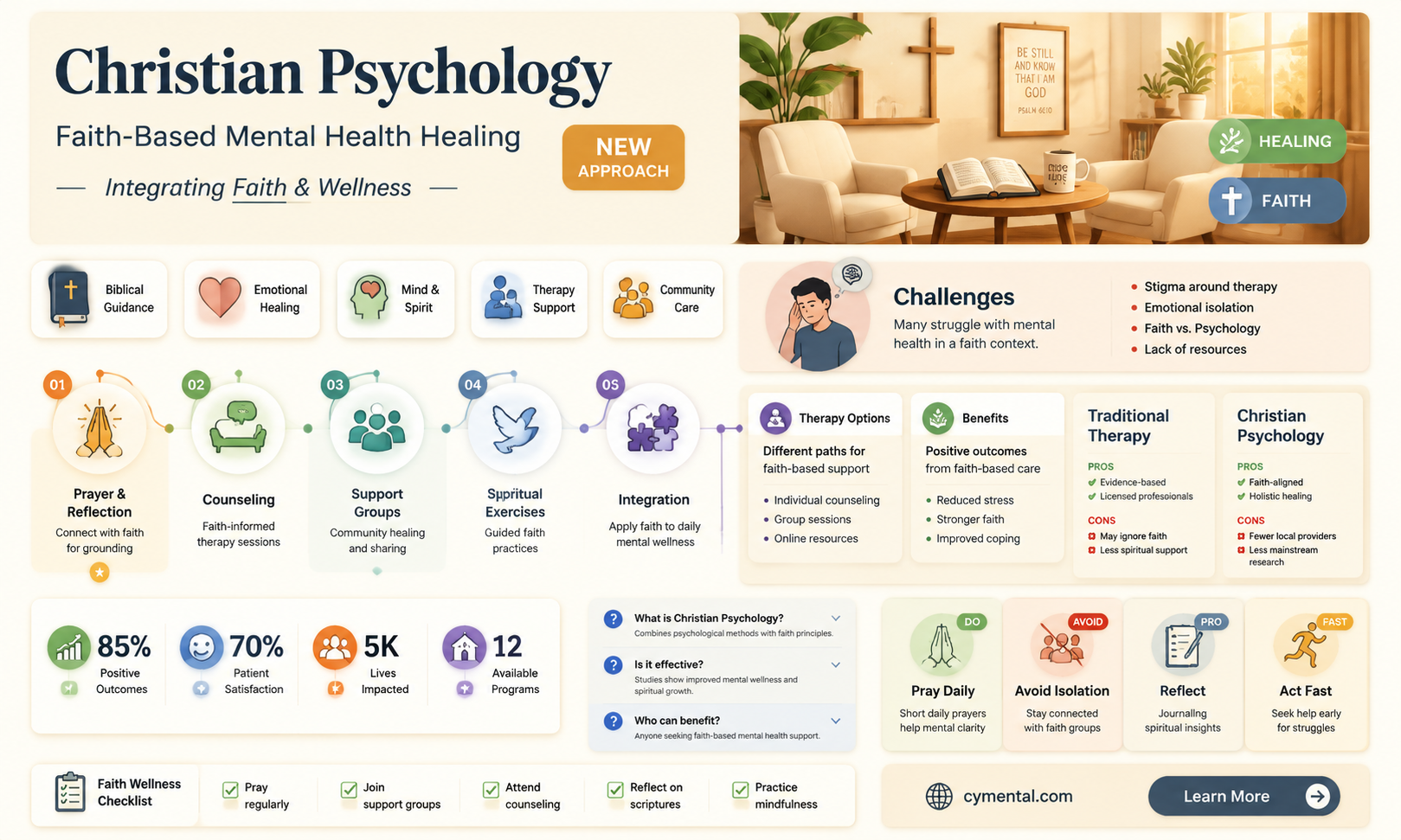
Christian psychology integrates psychological principles with Christian faith and values, offering a unique approach to addressing mental illness by incorporating spiritual beliefs and practices. Rooted in the idea that faith can complement traditional therapeutic methods, it emphasizes healing the whole person—mind, body, and spirit. By incorporating prayer, scripture, and faith-based coping strategies, Christian psychology aims to provide individuals with a sense of purpose, hope, and connection to God, which can be particularly comforting for those who find strength in their religious beliefs. While it may not replace evidence-based treatments, it can serve as a valuable adjunct, offering additional support and meaning for individuals struggling with mental health challenges within a Christian framework. However, its effectiveness depends on the individual’s beliefs and the integration of sound psychological practices, raising questions about its applicability and inclusivity for diverse populations.
| Characteristics | Values |
|---|---|
| Integration of Faith and Psychology | Combines Christian principles with evidence-based psychological practices to address mental health issues. |
| Holistic Approach | Addresses spiritual, emotional, and psychological aspects of mental illness. |
| Biblical Foundations | Uses Scripture to provide guidance, hope, and coping strategies for mental health struggles. |
| Prayer and Spiritual Practices | Incorporates prayer, worship, and spiritual disciplines as part of the healing process. |
| Community Support | Emphasizes the role of the church and Christian community in providing support and accountability. |
| Focus on Forgiveness and Grace | Highlights forgiveness, grace, and redemption as key components of healing. |
| Addressing Root Causes | Seeks to identify and address spiritual and emotional root causes of mental illness. |
| Professional Competence | Requires practitioners to be trained in both Christian theology and professional psychology. |
| Ethical Considerations | Adheres to Christian ethical standards while providing mental health care. |
| Limitations and Criticisms | May face criticism for over-emphasizing spiritual solutions or lacking scientific rigor in some cases. |
| Effectiveness | Research suggests it can be effective for individuals who find meaning in Christian faith, but outcomes vary. |
| Accessibility | May be more accessible to individuals within Christian communities but limited for those outside these networks. |
| Cultural Sensitivity | Requires cultural sensitivity to avoid imposing beliefs on non-Christian clients. |
| Collaboration with Secular Mental Health | Often works alongside secular mental health treatments for comprehensive care. |
| Personalized Care | Tailors treatment to individual spiritual beliefs and needs within a Christian framework. |
Explore related products


What You'll Learn
- Biblical Integration in Therapy: Combining Scripture with psychological methods for holistic healing
- Faith-Based Coping Strategies: Using prayer, worship, and trust in God to manage symptoms
- Christian Counseling Approaches: Techniques like narrative therapy with a spiritual focus
- Addressing Stigma in Churches: Reducing shame around mental health in religious communities
- Role of Community Support: How church networks aid recovery and emotional well-being

Biblical Integration in Therapy: Combining Scripture with psychological methods for holistic healing
Christian psychology posits that mental health interventions are most effective when they align with an individual’s spiritual framework. For believers, this means integrating Scripture into therapeutic practices to address not just psychological symptoms but also spiritual struggles. For instance, cognitive-behavioral therapy (CBT) techniques can be paired with Philippians 4:8, which encourages focusing on what is true, noble, and praiseworthy, to reframe negative thought patterns. This approach doesn’t replace evidence-based methods but enhances them by grounding them in a client’s faith, fostering deeper meaning and motivation for change.
To implement biblical integration effectively, therapists must first understand the client’s spiritual maturity and preferences. A 20-year-old struggling with anxiety may resonate with Psalm 55:22, which reassures believers to cast their burdens on God, while a 40-year-old grappling with grief might find solace in Isaiah 41:10. Practical steps include incorporating Scripture into mindfulness exercises—for example, using biblical affirmations during guided meditation—or assigning reflective journaling on verses related to identity and worth, such as Ephesians 2:10. Dosage matters: start with one or two verses per session, gradually increasing as the client becomes more comfortable.
One caution is the risk of oversimplifying complex mental health issues with Scripture alone. While Romans 12:2 encourages renewing the mind, it’s not a standalone cure for depression or PTSD. Therapists must balance biblical principles with empirically supported interventions like exposure therapy or medication when necessary. Another pitfall is imposing beliefs on clients who may not share the same faith. Always assess receptivity and avoid spiritual bypassing, where spiritual practices are used to avoid addressing underlying emotional pain.
Comparatively, secular therapy often focuses on symptom management, while biblical integration seeks holistic restoration—mind, body, and spirit. For example, a secular therapist might help a client develop coping skills for panic attacks, whereas a Christian therapist could additionally explore how 1 Peter 5:7 (“Cast all your anxiety on Him”) shifts the client’s perspective on worry. This dual approach can lead to more enduring change, as it addresses both behavioral patterns and the spiritual root causes of distress.
In conclusion, biblical integration in therapy is not about replacing psychology with theology but harmonizing the two for comprehensive healing. By weaving Scripture into evidence-based practices, therapists can meet clients where they are—both emotionally and spiritually. This method requires sensitivity, training, and a commitment to honoring the client’s faith journey. When done thoughtfully, it offers a unique pathway to wholeness that secular approaches alone may not achieve.
Supporting Mentally Ill Homeless Relatives: Compassionate Strategies for Family Care
You may want to see also
Explore related products
$12.44 $16.99


$15.71 $20


Faith-Based Coping Strategies: Using prayer, worship, and trust in God to manage symptoms
Christian psychology often integrates faith-based coping strategies as a complementary approach to managing mental illness, leveraging prayer, worship, and trust in God to alleviate symptoms and foster resilience. These practices are not meant to replace clinical treatments but to enhance them by addressing spiritual and emotional needs. For instance, prayer can serve as a form of mindfulness, grounding individuals in the present moment while fostering a sense of connection to a higher power. Studies suggest that regular prayer correlates with reduced anxiety and depression, particularly when it involves gratitude or intercession, as it shifts focus away from distressing thoughts.
Worship, whether through music, scripture, or communal gatherings, acts as a therapeutic tool by engaging multiple senses and emotions. Engaging in worship can release dopamine, a neurotransmitter associated with pleasure and reward, which may counteract symptoms of depression. For example, singing hymns or listening to worship music has been shown to lower cortisol levels, the body’s primary stress hormone. Practical tips include setting aside 10–15 minutes daily for worship, either alone or with a faith community, to create a consistent ritual that reinforces spiritual grounding.
Trust in God, a cornerstone of faith-based coping, encourages individuals to surrender control and find peace in divine providence. This practice aligns with cognitive-behavioral principles by challenging catastrophic thinking and promoting acceptance. For those struggling with obsessive-compulsive disorder or generalized anxiety, reframing worries as opportunities to trust God’s plan can reduce the compulsive need for certainty. A specific exercise involves writing down anxieties and then symbolically releasing them through prayer, repeating this process daily to reinforce the habit of trust.
However, it’s crucial to approach these strategies with caution. Over-reliance on faith-based coping without professional intervention can lead to spiritual bypassing, where emotional pain is suppressed rather than addressed. For example, individuals with severe depression may misinterpret their struggles as a lack of faith, exacerbating guilt and shame. To avoid this, faith-based strategies should be integrated into a holistic treatment plan that includes therapy, medication, and lifestyle changes. Clergy or spiritual counselors can collaborate with mental health professionals to ensure balanced care.
In conclusion, faith-based coping strategies offer a unique and powerful dimension to mental health management, particularly for those rooted in Christian beliefs. By incorporating prayer, worship, and trust in God, individuals can find solace, strength, and a renewed sense of purpose. However, these practices are most effective when used alongside evidence-based treatments, ensuring a comprehensive approach to healing. For those exploring this path, start small—dedicate five minutes daily to prayer, attend a worship service weekly, and journal about moments of trust in God’s plan. Over time, these practices can become transformative tools in the journey toward mental wellness.
Brain Scans and Mental Health: Unlocking Diagnostic Potential for Illnesses
You may want to see also
Explore related products





Christian Counseling Approaches: Techniques like narrative therapy with a spiritual focus
Christian counseling approaches, particularly those incorporating narrative therapy with a spiritual focus, offer a unique framework for addressing mental illness by integrating psychological techniques with biblical principles. Unlike traditional therapy, which often separates the spiritual from the clinical, this method views an individual’s story through the lens of faith, emphasizing redemption, purpose, and divine presence. For instance, a client struggling with anxiety might reframe their narrative not just as a battle against fear, but as a journey of trusting God’s sovereignty, using Scripture to challenge distorted thoughts and cultivate hope.
One practical technique involves spiritual narrative reconstruction, where the counselor helps the client identify "chapters" of their life story that align with biblical themes like suffering, grace, or transformation. For example, a person dealing with depression might explore how their pain mirrors the biblical story of Job, finding meaning in perseverance and eventual restoration. This approach doesn’t dismiss psychological tools—such as cognitive-behavioral strategies—but layers them with spiritual insights, creating a holistic healing process. Research suggests that clients who resonate with faith-based narratives often report greater motivation and resilience, as their struggles are contextualized within a larger, divine purpose.
However, implementing this approach requires caution. Counselors must avoid spiritual bypassing, where faith is used to suppress emotions rather than process them. For instance, telling a client, "Just pray more," without addressing underlying trauma can be dismissive. Instead, counselors should balance spiritual guidance with evidence-based practices, such as encouraging prayer alongside mindfulness exercises for anxiety. Additionally, cultural sensitivity is critical; not all clients interpret faith the same way, so tailoring the narrative to their specific beliefs and experiences is essential.
A step-by-step application might look like this: 1) Assess the client’s spiritual beliefs and comfort with integrating faith into therapy. 2) Co-create a narrative timeline, identifying key life events and their emotional impact. 3) Introduce biblical parallels or principles that resonate with the client’s story. 4) Use journaling or reflective exercises to explore how faith can inform coping strategies. 5) Regularly evaluate progress, ensuring the spiritual focus enhances, rather than hinders, psychological healing. For example, a teenager struggling with self-worth might write letters to themselves from God’s perspective, challenging negative self-talk with affirmations rooted in Scripture.
In conclusion, narrative therapy with a spiritual focus in Christian counseling can be a powerful tool for mental health, provided it’s used thoughtfully and collaboratively. By weaving faith into the therapeutic process, counselors can offer clients not just symptom relief, but a transformative journey toward wholeness, grounded in both psychological science and spiritual truth. This approach isn’t a one-size-fits-all solution, but for those who find meaning in faith, it can provide a uniquely effective path to healing.
Supporting Loved Ones: Practical Ways to Help Family with Mental Illness
You may want to see also
Explore related products



Addressing Stigma in Churches: Reducing shame around mental health in religious communities
Mental health stigma persists in many churches, where struggles are often dismissed as spiritual weakness or lack of faith. This misconception silences sufferers, delaying treatment and deepening isolation. To dismantle this barrier, church leaders must reframe mental illness as a medical condition, not a moral failing. Start by integrating mental health education into sermons, small groups, and youth programs. Use biblical examples of figures like Elijah and David, who experienced profound emotional distress, to normalize vulnerability. Pair scripture with clinical insights from Christian psychologists to bridge faith and science, showing they’re not mutually exclusive.
Practical steps include hosting workshops led by mental health professionals who share faith-based perspectives. Provide resources like vetted Christian counseling services, support groups, and reading materials in church libraries. Train pastoral staff to recognize warning signs and respond with empathy, not platitudes. For instance, instead of saying, “Just pray more,” encourage, “Let’s pray together, and I’ll help you find a counselor who shares our values.” Create safe spaces for testimonies, allowing congregants to share their mental health journeys without fear of judgment. Normalize seeking help by inviting recovered individuals to speak, demonstrating that healing is possible through faith and professional care.
A cautionary note: avoid tokenism. Simply acknowledging mental health once a year isn’t enough. Stigma reduction requires sustained effort, embedded in the church’s culture. Be mindful of language; phrases like “battle demons” or “spiritual warfare” can inadvertently stigmatize those with conditions like depression or anxiety. Instead, emphasize God’s compassion and the church’s role as a sanctuary for all. Regularly assess progress through anonymous surveys to gauge congregants’ comfort levels in discussing mental health. Adjust strategies based on feedback, ensuring initiatives remain relevant and effective.
Finally, model vulnerability from the top. When leaders openly discuss their own struggles or those of loved ones, it sets a powerful precedent. For example, a pastor sharing how counseling helped their family during a crisis can inspire others to seek support. Encourage small group leaders to foster trust by sharing personal challenges, creating an environment where mental health is treated with the same urgency as physical ailments. By weaving mental health into the fabric of church life, communities can replace shame with compassion, proving that faith and psychology are allies in the journey toward wholeness.
Supporting Your Adult Son’s Mental Health: Practical Steps for Parents
You may want to see also
Explore related products

$10.49 $24.99


Role of Community Support: How church networks aid recovery and emotional well-being
Church communities offer a unique and powerful form of social support that can significantly aid individuals struggling with mental illness. Unlike secular support groups, church networks provide a sense of belonging rooted in shared faith, offering both emotional and spiritual solace. This dual layer of support can be particularly beneficial for those who find comfort in religious beliefs and practices. For instance, a study published in the *Journal of Religion and Health* found that regular church attendance was associated with lower rates of depression and anxiety, highlighting the potential therapeutic value of communal worship and fellowship.
One practical way church networks aid recovery is through structured programs and ministries tailored to mental health. Many churches now offer support groups led by trained facilitators, often incorporating biblical teachings with evidence-based psychological principles. For example, Celebrate Recovery, a Christ-centered 12-step program, addresses issues like addiction, depression, and anxiety by fostering accountability and peer support. These programs not only provide a safe space for individuals to share their struggles but also equip them with tools for emotional and spiritual growth. Churches can further enhance their impact by partnering with Christian psychologists or counselors to offer professional guidance within a faith-based framework.
The role of pastoral care within church communities cannot be overstated. Pastors and church leaders often serve as first responders to emotional and spiritual crises, offering prayer, counseling, and practical assistance. However, it’s crucial for these leaders to recognize the limits of their expertise and refer individuals to mental health professionals when necessary. A balanced approach, combining pastoral care with professional intervention, ensures that individuals receive holistic support. For instance, a pastor might provide ongoing emotional support while encouraging a congregant to seek therapy or medication for clinical depression, demonstrating how church networks can complement, rather than replace, traditional mental health treatments.
Finally, the communal rituals and practices of church life—such as prayer, worship, and service—can foster resilience and emotional well-being. Engaging in acts of service, for example, has been shown to reduce symptoms of depression by shifting focus outward and fostering a sense of purpose. Churches can encourage this by organizing volunteer opportunities or mission trips, which not only benefit the community but also provide individuals with a sense of accomplishment and connection. By integrating these practices into the fabric of church life, congregations can create an environment that actively promotes mental and emotional health, proving that community support is not just a supplement to recovery but a cornerstone of it.
Journaling for Mental Health: Unlocking Emotional Healing and Self-Discovery
You may want to see also
Frequently asked questions
Yes, Christian psychology integrates psychological principles with Christian faith, offering a holistic approach that addresses spiritual, emotional, and mental well-being. It can be effective for those who find meaning and comfort in faith-based practices.
Christian psychology incorporates biblical teachings and spiritual practices, such as prayer and forgiveness, alongside evidence-based therapeutic techniques. It emphasizes the role of faith and God in healing, whereas secular psychology focuses solely on psychological and behavioral interventions.
Christian psychology can be beneficial for many mental health issues, but its effectiveness depends on the individual’s beliefs and openness to integrating faith into treatment. Severe or complex cases may require additional secular interventions or medical treatment.
No, Christian psychology is not a replacement for medication or traditional therapy. It can complement these treatments by providing spiritual support and additional coping strategies, but professional medical advice should always be followed.