Ava Ramirez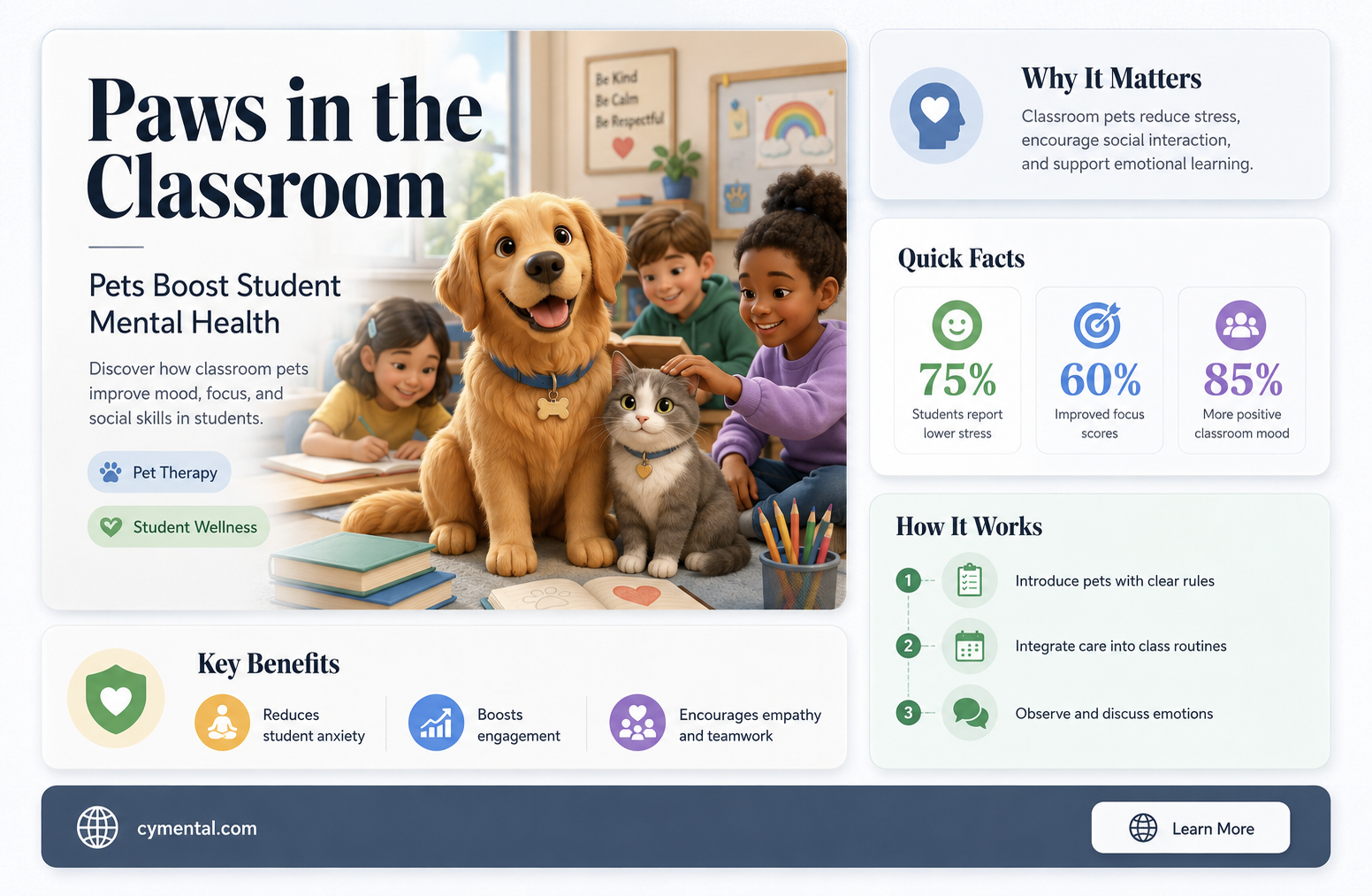
Bringing pets into schools has emerged as a promising strategy to support students' mental health and well-being. Animals, such as therapy dogs or classroom pets, can create a calming and comforting environment, reducing stress and anxiety among students. Interacting with pets has been shown to lower cortisol levels, increase oxytocin (the feel-good hormone), and promote a sense of emotional connection. For students facing challenges like anxiety, depression, or trauma, pets can provide a non-judgmental source of comfort and companionship, fostering a sense of safety and trust. Additionally, caring for animals teaches responsibility and empathy, while group interactions with pets can enhance social skills and reduce feelings of isolation. By integrating pets into the school setting, educators can create a more supportive and inclusive atmosphere, ultimately contributing to improved mental health outcomes for students.
| Characteristics | Values |
|---|---|
| Stress Reduction | Pets in schools can lower cortisol levels in students, reducing anxiety and promoting a calmer learning environment. |
| Emotional Support | Animals provide non-judgmental companionship, helping students feel supported and understood, which can improve emotional well-being. |
| Social Interaction | Pets encourage students to interact with peers, fostering social skills and reducing feelings of isolation. |
| Responsibility | Caring for pets teaches students accountability and empathy, contributing to positive mental health development. |
| Improved Focus | The presence of pets has been shown to increase attention span and engagement in classroom activities. |
| Mood Enhancement | Interacting with pets releases oxytocin and serotonin, which can elevate mood and reduce symptoms of depression. |
| Behavioral Improvement | Pets can help students with behavioral issues by providing a calming influence and reducing disruptive behaviors. |
| Therapeutic Benefits | Animal-assisted therapy in schools can support students with mental health disorders, such as ADHD or anxiety. |
| Sense of Safety | Pets can create a more welcoming and secure school environment, reducing fear and increasing comfort levels. |
| Physical Activity | Walking or playing with pets during breaks can increase physical activity, which positively impacts mental health. |
Explore related products


What You'll Learn
- Reducing Stress and Anxiety: Pets provide comfort, lowering cortisol levels and promoting relaxation in students
- Improving Social Interaction: Animals act as social catalysts, encouraging students to connect and communicate
- Boosting Mood and Happiness: Interacting with pets releases endorphins, enhancing overall emotional well-being
- Teaching Responsibility and Empathy: Caring for pets fosters empathy and a sense of accountability
- Enhancing Focus and Learning: Pets create a calming environment, improving concentration and academic performance

Reducing Stress and Anxiety: Pets provide comfort, lowering cortisol levels and promoting relaxation in students
Stress and anxiety levels among students have been on the rise, with academic pressures, social dynamics, and personal challenges contributing to a pervasive sense of unease. Introducing pets into the school environment offers a tangible solution to this growing concern. Studies have shown that interacting with animals can significantly lower cortisol levels, the hormone associated with stress. For instance, a 2019 study published in the *Journal of Pediatric Nursing* found that children who spent just 10 minutes petting a dog experienced a noticeable reduction in cortisol, highlighting the immediate benefits of animal interaction.
To implement this effectively, schools can adopt structured programs that integrate pets into daily routines. For example, "paws and relax" sessions during exam periods or designated pet therapy rooms can provide students with a calming space. Younger students, aged 6–12, may benefit from short, supervised interactions with therapy dogs during breaks, while teenagers might find solace in longer, more independent time with animals. Practical tips include ensuring pets are hypoallergenic, well-trained, and comfortable in school settings to avoid additional stressors.
The science behind this approach lies in the physiological and psychological responses triggered by pet interaction. Physical touch, such as petting a dog or cat, stimulates the release of oxytocin, often referred to as the "love hormone," which promotes feelings of relaxation and trust. Simultaneously, the presence of a non-judgmental, affectionate animal can reduce feelings of isolation and anxiety, particularly in students who struggle with social interactions. Schools can amplify these effects by pairing pet interactions with mindfulness exercises, such as guided breathing while petting an animal, to enhance relaxation.
However, it’s crucial to consider potential challenges. Not all students may feel comfortable around animals, and allergies or fears must be respected. Schools should offer alternative stress-relief options and ensure pet programs are optional. Additionally, the well-being of the animals must be prioritized—overhandling or noisy environments can stress pets, negating their calming effects. Regular training for staff and students on proper interaction techniques is essential to maintain a harmonious balance.
In conclusion, bringing pets into schools to reduce stress and anxiety is a practical, evidence-based strategy that can yield immediate and lasting benefits. By incorporating structured programs, understanding the science, and addressing potential challenges, schools can create a more supportive environment for students. Whether through a quick petting session or a longer therapy visit, the presence of animals offers a simple yet powerful tool to foster mental well-being in educational settings.
Logic's Role in Managing Mental Illness: A Thoughtful Exploration
You may want to see also
Explore related products


Improving Social Interaction: Animals act as social catalysts, encouraging students to connect and communicate
Pets in the classroom can transform social dynamics, breaking down barriers and fostering connections that might otherwise never form. Consider a shy student who struggles to initiate conversations. A therapy dog, with its non-judgmental presence, becomes an instant icebreaker. Classmates naturally gather around, asking questions, sharing stories, and laughing together. This simple interaction, centered around the animal, creates a shared experience that transcends cliques and social anxieties. Research supports this: a study published in the *Journal of Alternative and Complementary Medicine* found that children with autism spectrum disorder (ASD) showed increased social interaction and communication when animals were present during therapy sessions. The same principle applies in a classroom setting, where pets act as social catalysts, drawing students out of their shells and into meaningful exchanges.
To maximize this effect, schools can implement structured programs where pets are integrated into group activities. For instance, a "Pet of the Week" program could rotate different animals through classrooms, giving students a regular opportunity to interact. During these sessions, teachers can guide discussions about the animal’s behavior, needs, and care, encouraging students to share their own experiences and ask questions. For younger age groups (ages 6–10), simple activities like drawing the pet or writing short stories about it can spark conversations. Older students (ages 11–18) might engage in more complex tasks, such as researching the animal’s species or creating presentations about responsible pet ownership. The key is to use the animal as a focal point for collaboration, ensuring that all students have a role to play and a reason to communicate.
However, it’s crucial to balance spontaneity with structure. While pets naturally encourage interaction, some students may feel overwhelmed or unsure how to engage. Teachers should provide clear guidelines for appropriate behavior around the animal, such as asking before petting or speaking softly. Additionally, consider pairing more outgoing students with those who are reserved, creating buddy systems that encourage peer-to-peer interaction. For example, a confident student might be tasked with introducing the pet to the class, while a quieter student observes and later shares their observations. This approach ensures that all students benefit from the social catalyst effect, regardless of their starting point.
The takeaway is clear: pets are not just companions; they are powerful tools for building social skills and fostering connections. By strategically incorporating animals into the classroom, educators can create an environment where students feel safe, engaged, and motivated to communicate. Whether it’s a guinea pig in a reading corner or a therapy dog visiting weekly, the presence of a pet can turn a classroom into a community. Schools looking to implement such programs should start small, perhaps with a single animal and a pilot group, gradually expanding as students and staff grow comfortable. With careful planning and a focus on inclusivity, pets can become integral to improving social interaction and mental well-being in schools.
Ginkgo Biloba: Enhancing Mental Function and Memory – Fact or Fiction?
You may want to see also
Explore related products


Boosting Mood and Happiness: Interacting with pets releases endorphins, enhancing overall emotional well-being
Interacting with pets triggers the release of endorphins, the body’s natural "feel-good" chemicals, which directly combat stress and anxiety. Studies show that even brief interactions, such as petting a dog for 15–30 minutes, can significantly elevate mood by reducing cortisol levels and increasing oxytocin, the bonding hormone. In a school setting, where students often face academic pressure and social stressors, incorporating pets into the environment could provide a quick, accessible way to reset emotional states. For instance, a "pet therapy corner" during study breaks could offer students a structured opportunity to engage with animals, fostering a calmer, happier mindset.
Consider the practical implementation: schools could partner with local animal shelters to bring trained therapy dogs on campus for short sessions. Teachers might schedule 10-minute pet interactions before exams or after particularly demanding lessons. For younger students, aged 6–12, who are more tactile and responsive to sensory experiences, this could be especially effective. Older students, aged 13–18, might benefit from longer, more reflective interactions, such as walking a dog during lunch breaks. The key is consistency—regular exposure maximizes the endorphin-boosting benefits, creating a cumulative effect on emotional well-being.
Critics might argue that introducing pets into schools could be disruptive or unhygienic, but evidence suggests the opposite. Schools that have implemented pet programs report improved classroom focus and reduced behavioral issues, likely due to the calming effect of endorphins. Hygiene concerns can be mitigated with simple measures: hand-washing stations near pet areas, allergen-free zones for sensitive students, and regular health checks for the animals. The emotional payoff far outweighs the minimal logistical challenges, making this a viable strategy for schools of all sizes.
To maximize the benefits, schools should pair pet interactions with mindfulness practices. For example, students could be encouraged to focus on their breathing while petting an animal, amplifying the stress-relieving effects. Educators could also integrate pet-related activities into lessons, such as journaling about their interactions or discussing the science behind endorphins. By combining emotional and educational elements, schools can create a holistic approach to mental health that resonates with students across age groups and learning styles.
In conclusion, bringing pets into schools isn’t just a feel-good idea—it’s a science-backed strategy to enhance emotional well-being. By understanding the endorphin-releasing power of pet interactions and implementing structured, age-appropriate programs, schools can create a happier, more resilient student body. With minimal effort and maximum impact, this approach offers a simple yet transformative way to support mental health in educational settings.
Staying Active: How Keeping Busy Boosts Mental Health and Well-being
You may want to see also
Explore related products





Teaching Responsibility and Empathy: Caring for pets fosters empathy and a sense of accountability
Caring for pets in a school setting isn’t just about feeding or petting—it’s a structured lesson in responsibility and empathy. Assigning students specific tasks, such as refilling a guinea pig’s water bottle daily or monitoring a fish tank’s temperature, teaches them accountability. For younger children (ages 6–10), start with simple, supervised tasks like brushing a classroom rabbit. Older students (ages 11–18) can take on more complex duties, like creating a care schedule or researching dietary needs. This hands-on approach ensures they learn that their actions directly impact another living being’s well-being.
Empathy develops naturally when students observe and respond to an animal’s needs. For instance, a child who notices a hamster’s lethargy might connect it to a dirty cage or lack of food, prompting them to act. Teachers can deepen this by asking reflective questions: “How do you think the fish feels when the tank is cloudy?” or “Why might the dog wag its tail when you approach gently?” Such inquiries encourage students to consider another’s perspective, a skill transferable to human relationships. Studies show that children who interact with pets regularly demonstrate higher emotional intelligence, making this a powerful tool for social-emotional learning.
Implementing a pet care program requires careful planning to maximize its benefits. Start small—a single classroom pet like a bearded dragon or beta fish is manageable and cost-effective. Establish clear guidelines: who feeds the animal, when, and how often. Use visual aids like chore charts to keep everyone involved. Caution: avoid overburdening students, as this can lead to neglect or stress. Regularly rotate responsibilities to ensure fairness and prevent burnout. For older students, consider integrating pet care into project-based learning, such as designing a habitat or tracking behavioral changes.
Critics might argue that pets in schools are distracting or unhygienic, but these concerns can be mitigated with proper protocols. For example, handwashing stations near the pet area and designated pet-free zones maintain cleanliness. Teachers should also model responsible behavior, showing students how to handle animals gently and respectfully. When done right, pet care becomes a seamless part of the curriculum, not a disruption. Schools that have adopted this approach report improved student engagement and a stronger sense of community, proving that the rewards far outweigh the challenges.
Ultimately, teaching responsibility and empathy through pet care is about creating meaningful connections. It’s not just about keeping an animal alive—it’s about nurturing compassion, discipline, and awareness. Schools can amplify this by incorporating journaling or group discussions about their experiences. For instance, a weekly “Pet Care Reflection” session allows students to share challenges and successes, fostering teamwork and self-awareness. By treating pet care as both a duty and a learning opportunity, educators can help students develop essential life skills while supporting their mental well-being.
Testosterone's Impact on Mental Clarity: Enhancing Focus and Cognitive Function
You may want to see also
Explore related products


Enhancing Focus and Learning: Pets create a calming environment, improving concentration and academic performance
The presence of pets in a classroom can significantly alter the learning environment, transforming it from a high-stress zone to a sanctuary of calm. Studies have shown that the mere presence of a dog in a room can reduce cortisol levels, the hormone associated with stress, by up to 24%. This physiological change is not just a fleeting effect; it creates a sustained atmosphere where students feel more at ease. For instance, a classroom with a resident therapy dog often reports a noticeable shift in student behavior—less fidgeting, more attentive postures, and a general sense of tranquility. This calming effect is particularly beneficial during exams or intense study sessions, where stress can otherwise impair cognitive function.
To harness this benefit, schools can implement structured pet interaction times. For example, a 10-minute petting session with a classroom dog before a test can help students relax and focus. Teachers can also incorporate pets into daily routines, such as having a cat roam freely during independent study periods. For younger students (ages 6–12), short, supervised interactions with small animals like guinea pigs or hamsters can be integrated into lesson transitions. These practices not only reduce anxiety but also teach students the importance of mindfulness and emotional regulation, skills that directly translate to improved concentration.
Critics might argue that pets could become distractions, but research suggests the opposite when interactions are managed thoughtfully. A study published in the *Journal of Educational Psychology* found that students in classrooms with pets demonstrated a 15% increase in attention span during lessons. The key lies in setting clear boundaries—pets should be accessible but not intrusive. For instance, a dog could be stationed in a designated corner of the room, available for interaction during breaks or as a reward for completed tasks. This approach ensures that the pet enhances focus rather than detracting from it.
The benefits extend beyond immediate concentration to long-term academic performance. A calming environment fosters a positive association with learning, encouraging students to engage more deeply with material. Schools in Finland, known for their innovative educational practices, have introduced "pet corners" in classrooms, reporting a 10% increase in test scores among participating students. Similarly, a pilot program in the U.S. found that students who interacted with pets daily showed greater retention of complex concepts, such as mathematical formulas or historical timelines. These outcomes highlight the transformative potential of pets in educational settings.
Implementing a pet-friendly classroom requires careful planning. Schools should start by assessing student allergies and fears, ensuring inclusivity. Pets should be well-trained and temperamentally suited for a classroom setting—calm, gentle, and responsive to commands. Teachers can also involve students in the care of the pet, fostering responsibility and a sense of community. For example, assigning daily tasks like feeding or grooming can create a shared purpose, further enhancing the classroom dynamic. By creating a calming environment through pet presence, schools can unlock new levels of focus and academic achievement, proving that sometimes, the best study buddy has four legs.
Music's Impact: Enhancing Mental Agility and Emotional Well-being
You may want to see also
Frequently asked questions
Pets have a calming presence that can lower cortisol levels, the stress hormone. Interacting with animals, such as petting a dog or cat, triggers the release of oxytocin, which promotes relaxation and reduces anxiety, creating a more peaceful learning environment.
Yes, pets provide unconditional love and companionship, which can boost students' self-esteem and emotional resilience. Caring for animals also teaches empathy and responsibility, fostering a sense of purpose and connection.
Pets offer non-judgmental support, which can help students feel less isolated. The routine of interacting with a pet provides structure and a sense of stability, while the physical activity involved, such as walking a dog, can release endorphins that combat depressive symptoms.
Yes, pets can act as grounding tools for students with ADHD or anxiety, helping them focus and stay present. For example, a therapy dog can provide a sense of security during stressful situations, reducing panic attacks and improving attention span in the classroom.