Lucas Bennett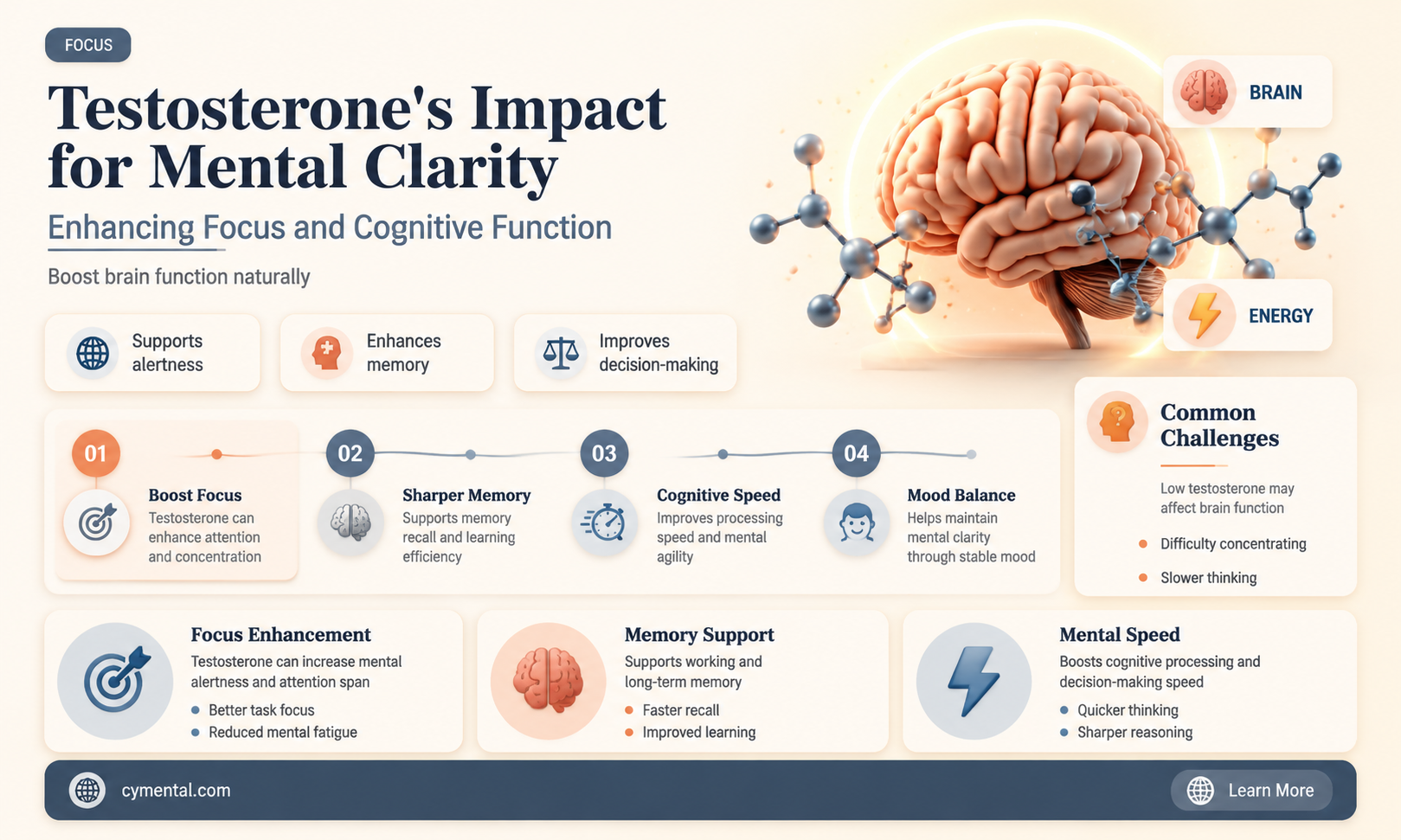
Testosterone, primarily known for its role in muscle mass and libido, is increasingly being studied for its potential impact on cognitive functions, including mental clarity. Emerging research suggests that optimal testosterone levels may enhance focus, memory, and overall cognitive performance, particularly in individuals with low testosterone. However, the relationship is complex, as excessively high levels can have the opposite effect, leading to irritability or impaired judgment. Factors such as age, lifestyle, and underlying health conditions also play a significant role in how testosterone influences mental clarity. While some studies show promising results, more research is needed to fully understand the mechanisms and long-term effects of testosterone on cognitive health.
| Characteristics | Values |
|---|---|
| Effect on Cognitive Function | Testosterone may improve aspects of cognitive function, particularly in older men with low testosterone levels. Studies suggest potential benefits in spatial memory, verbal memory, and processing speed. |
| Mood and Well-being | Higher testosterone levels are associated with improved mood, reduced fatigue, and enhanced overall well-being, which can indirectly contribute to mental clarity. |
| Neuroprotective Effects | Testosterone has been shown to have neuroprotective properties, potentially reducing the risk of cognitive decline and neurodegenerative diseases like Alzheimer’s. |
| Attention and Focus | Some evidence suggests testosterone may enhance attention and focus, though results are mixed and depend on baseline testosterone levels. |
| Stress Reduction | Testosterone may help reduce stress and anxiety, which can improve mental clarity by minimizing cognitive interference from stress hormones. |
| Energy Levels | Increased testosterone is linked to higher energy levels, which can improve mental alertness and clarity. |
| Limitations and Variability | Effects vary widely based on age, baseline testosterone levels, and individual health conditions. Not all studies show consistent benefits, and excessive testosterone may have adverse effects. |
| Gender Differences | Research primarily focuses on men; limited data exists on testosterone’s cognitive effects in women, though some studies suggest potential benefits in specific areas. |
| Mechanism of Action | Testosterone may influence mental clarity by modulating neurotransmitters, reducing inflammation, and promoting neuronal growth. |
| Clinical Implications | Testosterone replacement therapy (TRT) may be beneficial for men with low testosterone and cognitive impairments, but it should be prescribed cautiously and monitored. |
Explore related products


What You'll Learn
- Testosterone's impact on cognitive function and brain health
- Link between testosterone levels and focus/concentration
- Effects of testosterone on memory and learning abilities
- Role of testosterone in reducing mental fog and fatigue
- Testosterone therapy's potential benefits for mental clarity in aging men

Testosterone's impact on cognitive function and brain health
Testosterone, primarily known as a male sex hormone, plays a multifaceted role in the body, extending beyond its traditional associations with muscle mass and libido. Recent studies suggest that it may also influence cognitive function and brain health, particularly in areas related to mental clarity, memory, and overall cognitive performance. This relationship is particularly significant as individuals age, with declining testosterone levels often paralleling cognitive decline. Understanding this connection can offer insights into potential therapeutic interventions for maintaining or enhancing mental acuity.
From an analytical perspective, research indicates that testosterone may support neuronal health by promoting neurogenesis—the formation of new neurons—and enhancing synaptic plasticity, which is crucial for learning and memory. For instance, a study published in the *Journal of Alzheimer's Disease* found that older men with higher testosterone levels exhibited better spatial memory and executive function compared to those with lower levels. However, the relationship is not linear; both deficiency and excess can impair cognitive function. Optimal testosterone levels, typically between 300 to 1,000 ng/dL for adult men, appear to be key. For women, whose testosterone levels are naturally lower (15 to 70 ng/dL), even small fluctuations can impact cognitive performance, highlighting the hormone's delicate role in brain health.
Instructively, individuals seeking to optimize testosterone levels for cognitive benefits should focus on lifestyle modifications. Regular resistance training, adequate sleep, and a balanced diet rich in zinc, vitamin D, and healthy fats can naturally support testosterone production. For those with clinically low levels, testosterone replacement therapy (TRT) may be considered, but caution is advised. Dosages should be tailored to individual needs, typically starting at 50 to 100 mg weekly for men, with regular monitoring to avoid side effects like mood swings or cardiovascular risks. Women may benefit from lower doses, often administered via patches or creams, under strict medical supervision.
Comparatively, while estrogen has long been studied for its neuroprotective effects, particularly in women, testosterone's role is gaining recognition. Unlike estrogen, which primarily acts through estrogen receptors in the brain, testosterone exerts its effects by converting to estradiol or binding directly to androgen receptors. This dual mechanism suggests that testosterone may offer unique cognitive benefits, such as improved verbal memory and attention, which are distinct from those associated with estrogen. However, the interplay between these hormones underscores the complexity of hormonal influence on brain health, necessitating personalized approaches to treatment.
Descriptively, the brain regions most affected by testosterone include the hippocampus, prefrontal cortex, and amygdala—areas critical for memory, decision-making, and emotional regulation. In men with age-related testosterone decline, these regions may show reduced activity, contributing to symptoms like brain fog or difficulty concentrating. Conversely, optimized testosterone levels can enhance neural connectivity, fostering sharper mental clarity and quicker information processing. Practical tips for maintaining brain health alongside hormonal balance include mindfulness practices, cognitive exercises like puzzles or language learning, and social engagement, all of which synergize with testosterone's effects on cognitive function.
In conclusion, testosterone's impact on cognitive function and brain health is a nuanced but promising area of research. By understanding its role and implementing targeted strategies, individuals can potentially mitigate age-related cognitive decline and enhance mental clarity. Whether through lifestyle adjustments or medical interventions, the key lies in achieving and maintaining optimal hormonal balance, tailored to individual needs and health profiles.
Does MaineCare Cover Inpatient Mental Health Treatment? What You Need to Know
You may want to see also
Explore related products




Link between testosterone levels and focus/concentration
Testosterone, primarily known for its role in muscle mass and libido, also influences cognitive functions like focus and concentration. Research indicates that optimal testosterone levels are associated with improved attention span and mental clarity, particularly in men. A study published in the *Journal of Clinical Endocrinology & Metabolism* found that older men with higher testosterone levels performed better on cognitive tests, including tasks requiring sustained attention. Conversely, low testosterone levels, often seen in aging men, have been linked to cognitive decline and difficulty concentrating. This suggests a direct correlation between testosterone and the brain’s ability to maintain focus.
To harness this link, maintaining healthy testosterone levels is key. For men over 30, testosterone naturally declines by about 1% annually, making supplementation or lifestyle adjustments a consideration. Dosages of testosterone therapy, typically ranging from 100 to 600 mg per week, should be tailored to individual needs under medical supervision. However, natural methods like strength training, adequate sleep, and a diet rich in zinc and vitamin D can also support optimal levels. For instance, a study in *Sports Medicine* highlighted that resistance training increases testosterone production, which may indirectly enhance concentration.
While the benefits are promising, caution is necessary. Excessive testosterone, often from misuse of supplements or steroids, can lead to adverse effects such as irritability, aggression, and impaired decision-making. A balanced approach is critical. For example, combining testosterone-boosting activities with mindfulness practices like meditation can improve focus without overstimulation. Women, though typically having lower testosterone levels, may also experience cognitive benefits from maintaining hormonal balance, though research in this area is less conclusive.
Practical tips for leveraging testosterone’s cognitive benefits include prioritizing consistent sleep patterns, as testosterone peaks during REM sleep. Incorporating foods like oysters, beef, and leafy greens can naturally support hormone production. Additionally, managing stress through techniques like deep breathing or yoga is essential, as chronic stress reduces testosterone levels. By addressing both hormonal health and lifestyle factors, individuals can optimize their focus and mental clarity effectively.
Hydration's Mental Boost: Unlocking Cognitive Benefits for a Sharper Mind
You may want to see also
Explore related products


Effects of testosterone on memory and learning abilities
Testosterone, primarily known for its role in muscle mass and libido, also influences cognitive functions like memory and learning. Research indicates that optimal testosterone levels are associated with enhanced spatial memory and verbal fluency, particularly in older men. A study published in the *Journal of Clinical Endocrinology & Metabolism* found that men with higher testosterone levels performed better on memory tests, suggesting a direct link between the hormone and cognitive performance. However, the relationship is not linear; both deficiency and excess can impair cognitive abilities, underscoring the importance of balance.
To harness testosterone’s cognitive benefits, consider age-specific strategies. For men over 40, where natural testosterone decline begins, supplementation under medical supervision may improve memory and learning. Dosages typically range from 100 to 600 mg of testosterone enanthate every 2–4 weeks, but individualized plans are crucial. Younger adults should focus on lifestyle factors like resistance training, adequate sleep, and a diet rich in zinc and vitamin D, which naturally support testosterone production. Women, though having lower baseline levels, can also benefit from maintaining healthy testosterone levels through similar lifestyle adjustments.
A comparative analysis reveals that testosterone’s effects on memory are more pronounced in tasks requiring spatial reasoning, such as navigating maps or assembling puzzles. For instance, a study in *Psychoneuroendocrinology* showed that older men with higher testosterone levels outperformed their peers in spatial memory tests. In contrast, its impact on verbal memory is less consistent, possibly due to the interplay with other hormones like estrogen. This highlights the need for targeted cognitive exercises, such as spatial training games, to maximize testosterone’s benefits in specific learning domains.
Practical tips for optimizing testosterone’s cognitive effects include incorporating high-intensity interval training (HIIT) into your routine, as it boosts testosterone more effectively than steady-state cardio. Managing stress through mindfulness or meditation is also key, as chronic stress elevates cortisol, which suppresses testosterone. For those considering supplementation, monitor levels regularly and watch for side effects like mood swings or sleep disturbances. Combining these strategies with brain-healthy habits, such as omega-3 supplementation and mental stimulation, can create a synergistic effect on memory and learning.
In conclusion, testosterone’s role in memory and learning is nuanced but significant, particularly for spatial cognition. By understanding age-specific needs, adopting evidence-based lifestyle changes, and avoiding extremes in hormone levels, individuals can leverage testosterone to enhance mental clarity. Whether through natural methods or supervised supplementation, a balanced approach ensures cognitive benefits without compromising overall health.
Teen Mental Health Support: Confidential Options Without Parental Involvement
You may want to see also
Explore related products


Role of testosterone in reducing mental fog and fatigue
Testosterone, primarily known as a male sex hormone, plays a pivotal role in cognitive function, particularly in reducing mental fog and fatigue. Research indicates that optimal testosterone levels are associated with improved focus, memory, and overall mental clarity. For instance, studies have shown that men with low testosterone often report symptoms such as difficulty concentrating, memory lapses, and persistent mental fatigue. Conversely, restoring testosterone to healthy levels through lifestyle changes or hormone replacement therapy (HRT) has been linked to enhanced cognitive performance. This suggests that testosterone acts as a neurosteroid, influencing brain health and cognitive resilience.
To harness testosterone’s potential in combating mental fog, it’s essential to understand the factors that influence its production. Regular exercise, particularly strength training and high-intensity interval training (HIIT), has been shown to boost testosterone levels naturally. For example, a study published in the *Journal of Strength and Conditioning Research* found that men who engaged in heavy resistance training experienced a 15-20% increase in testosterone levels. Additionally, adequate sleep (7-9 hours per night) and a diet rich in zinc, vitamin D, and healthy fats can support optimal hormone production. For those considering HRT, dosages typically range from 100 to 200 mg of testosterone cypionate or enanthate every 7 to 14 days, but individualized plans are crucial, as monitored by a healthcare provider.
While testosterone’s cognitive benefits are promising, it’s important to approach supplementation with caution. Over-reliance on exogenous testosterone can lead to side effects such as mood swings, acne, and cardiovascular risks. Moreover, not everyone with mental fog will benefit from testosterone therapy; underlying issues like thyroid dysfunction, chronic stress, or nutrient deficiencies must be ruled out first. A comparative analysis reveals that testosterone is most effective in individuals with clinically low levels, often defined as below 300 ng/dL for men. For women, whose testosterone levels are naturally lower, even small deficiencies can impact cognitive function, though supplementation must be carefully dosed to avoid virilization.
Practical tips for optimizing testosterone and reducing mental fog include maintaining a consistent sleep schedule, as testosterone production peaks during REM sleep. Incorporating stress management techniques like mindfulness or meditation can also be beneficial, as chronic stress elevates cortisol, which suppresses testosterone. For older adults, particularly men over 40, regular monitoring of hormone levels is advisable, as testosterone naturally declines with age. Combining these strategies with a balanced lifestyle can create a synergistic effect, enhancing mental clarity and reducing fatigue without relying solely on hormonal interventions.
In conclusion, testosterone’s role in reducing mental fog and fatigue is multifaceted, influenced by lifestyle, age, and individual health status. While it is not a universal solution, targeted interventions—whether through exercise, diet, or HRT—can yield significant cognitive benefits for those with suboptimal levels. By adopting a holistic approach and addressing potential underlying causes, individuals can effectively leverage testosterone to improve mental clarity and overall well-being.
Medication's Role in Stabilizing Mental Health and Medical Conditions
You may want to see also
Explore related products



Testosterone therapy's potential benefits for mental clarity in aging men
As men age, cognitive decline can manifest as foggy thinking, memory lapses, and reduced focus. Testosterone therapy, often prescribed for hypogonadism, is increasingly investigated for its potential to counteract these effects. Studies suggest that optimal testosterone levels may enhance neuronal health, improve synaptic plasticity, and support brain regions critical for memory and executive function. For instance, a 2018 meta-analysis in *The Journal of Clinical Endocrinology & Metabolism* found that older men with low testosterone who underwent therapy reported significant improvements in cognitive performance, particularly in verbal memory and spatial abilities.
Implementing testosterone therapy for mental clarity requires careful consideration of dosage and delivery methods. Typical protocols involve transdermal gels (50–100 mg daily), intramuscular injections (100–200 mg every 2–4 weeks), or subcutaneous pellets (inserted every 3–6 months). Dosage is individualized based on baseline testosterone levels, age, and symptom severity. For men over 60, starting with lower doses (e.g., 25 mg gel daily) and titrating upward minimizes risks like erythrocytosis or cardiovascular strain. Regular monitoring of hematocrit, lipid profiles, and prostate-specific antigen (PSA) is essential to ensure safety.
Critics argue that the link between testosterone and mental clarity is not definitive, pointing to mixed results in trials. For example, some studies show no cognitive benefit in men with normal baseline testosterone levels, suggesting therapy may only be effective in hypogonadal populations. However, emerging research highlights the role of testosterone in reducing neuroinflammation and amyloid-beta accumulation, mechanisms implicated in age-related cognitive decline. This positions testosterone therapy as a potential adjunctive strategy for men experiencing mild cognitive impairment, particularly when combined with lifestyle interventions like exercise and cognitive training.
Practical tips for maximizing the cognitive benefits of testosterone therapy include maintaining a consistent dosing schedule, avoiding alcohol (which can impair testosterone synthesis), and prioritizing sleep (as poor sleep reduces testosterone production). Combining therapy with a Mediterranean diet rich in omega-3s and antioxidants may further support brain health. Men should also engage in regular mental exercises, such as puzzles or learning new skills, to synergize with the therapy’s effects. While not a panacea, testosterone therapy offers a promising avenue for aging men seeking to preserve mental clarity and cognitive vitality.
Nature's Healing Power: How Outdoor Time Boosts Mental Well-Being
You may want to see also
Frequently asked questions
Testosterone may indirectly support mental clarity by improving mood, energy levels, and cognitive function, particularly in individuals with low testosterone levels. However, its direct impact on mental clarity varies and is not universally experienced.
Testosterone therapy has been shown to improve focus and concentration in some individuals, especially those with testosterone deficiency. However, results depend on baseline hormone levels and individual health factors.
Using testosterone solely for mental clarity without medical need can lead to side effects like mood swings, acne, or cardiovascular issues. It should only be used under medical supervision and when clinically indicated.