Lucas Bennett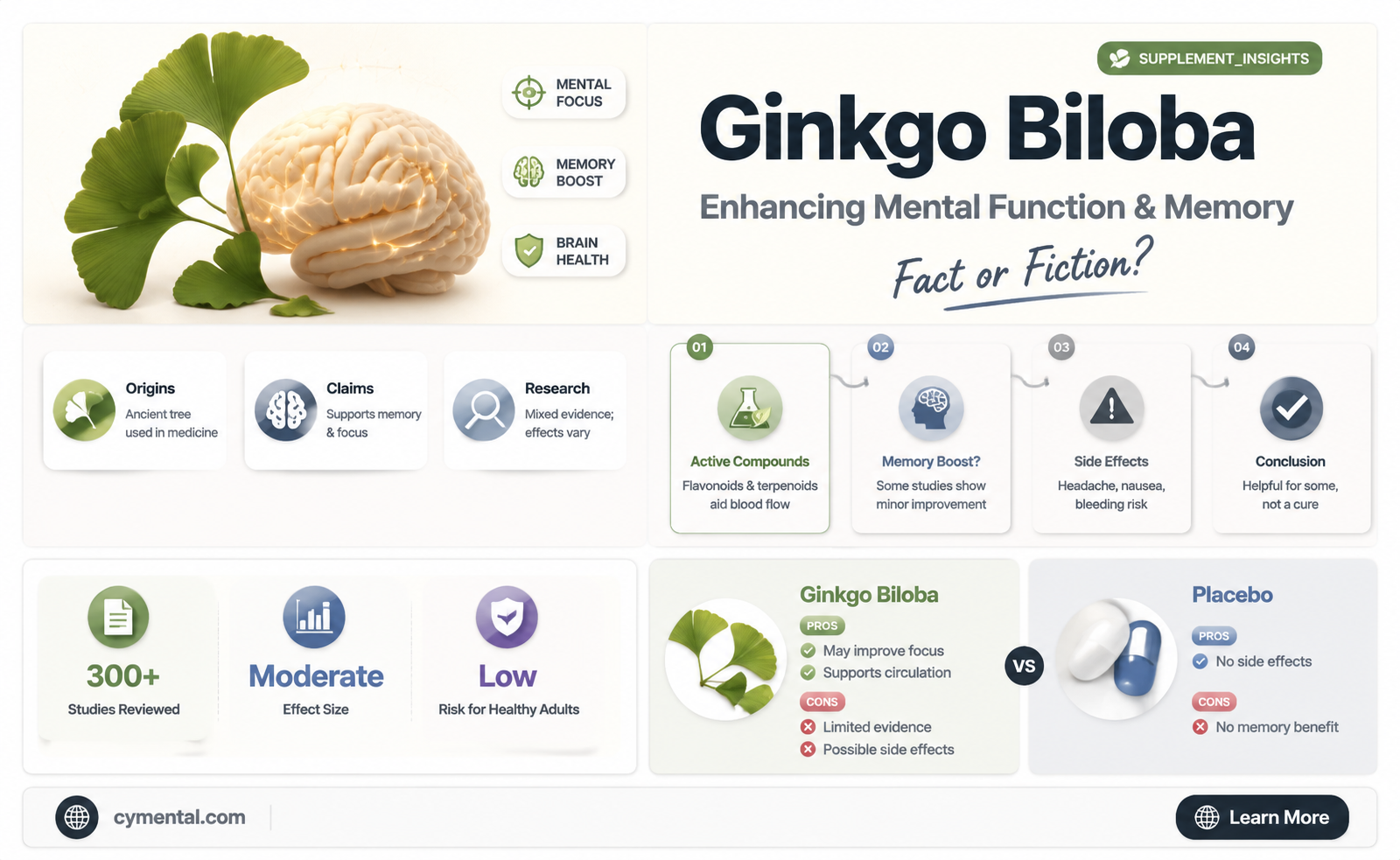
Ginkgo biloba, an ancient herb derived from the Ginkgo biloba tree, has long been touted for its potential cognitive benefits, particularly in enhancing mental function and memory. Widely used in traditional Chinese medicine and increasingly popular in modern supplements, ginkgo is believed to improve blood flow to the brain, act as an antioxidant, and protect nerve cells from damage. While some studies suggest that it may aid in alleviating cognitive decline, particularly in older adults or those with conditions like dementia, the evidence remains mixed. Researchers continue to explore its efficacy, with some findings supporting modest improvements in memory and focus, while others show limited or no significant benefits. As interest in natural remedies for cognitive health grows, understanding the true impact of ginkgo biloba remains a subject of ongoing scientific investigation.
| Characteristics | Values |
|---|---|
| Effect on Cognitive Function | Limited evidence suggests mild improvement in cognitive function, particularly in older adults with mild cognitive impairment or dementia. |
| Effect on Memory | Some studies indicate slight enhancement in memory, especially working memory and short-term recall, but results are inconsistent. |
| Mechanism of Action | Believed to improve blood flow to the brain, act as an antioxidant, and modulate neurotransmitters like acetylcholine. |
| Dosage | Commonly studied doses range from 120–240 mg/day of standardized Ginkgo biloba extract (GBE), divided into 2–3 doses. |
| Duration of Use | Benefits, if any, are typically observed after 6–12 weeks of consistent use. |
| Safety Profile | Generally considered safe for short-term use (up to 6 months). Possible side effects include headache, gastrointestinal upset, and increased risk of bleeding in high doses or with anticoagulants. |
| Population Studied | Most research focuses on older adults, particularly those with age-related cognitive decline or dementia. Limited data on younger populations. |
| Evidence Strength | Mixed results across studies; some meta-analyses show small but statistically significant benefits, while others find no effect. Larger, well-designed trials are needed for conclusive evidence. |
| Comparative Effectiveness | Less effective than prescription medications for dementia (e.g., cholinesterase inhibitors) but may offer mild benefits as a complementary therapy. |
| Regulatory Status | Classified as a dietary supplement in the U.S.; not approved by the FDA as a drug for cognitive enhancement or memory improvement. |
| Conclusion | Ginkgo biloba may provide modest cognitive and memory benefits, particularly in older adults, but evidence is not strong enough to recommend it as a primary treatment for cognitive decline or memory loss. |
Explore related products



What You'll Learn

Ginkgo's impact on cognitive decline in elderly individuals
Ginkgo biloba, a herb derived from one of the oldest tree species, has been widely studied for its potential to combat cognitive decline in elderly individuals. Research suggests that its antioxidant and anti-inflammatory properties may help protect brain cells from damage, a key factor in age-related cognitive impairment. Studies often focus on doses ranging from 120 to 240 mg per day, standardized to contain 24% ginkgo flavone glycosides and 6% terpene lactones, taken in divided doses for optimal absorption. While results are mixed, some trials indicate modest improvements in memory, attention, and executive function in older adults with mild cognitive impairment or early-stage dementia.
Consider the practical application of ginkgo for seniors experiencing cognitive decline. For instance, a 2008 study published in the *Journal of the American Medical Association* found that ginkgo did not significantly reduce the overall incidence of dementia in elderly participants but showed potential benefits in specific cognitive domains. This highlights the importance of managing expectations—ginkgo is not a cure but may offer supportive benefits when used as part of a broader cognitive health strategy. Pairing supplementation with lifestyle changes, such as regular exercise, a balanced diet, and mental stimulation, could enhance its effectiveness.
Critics argue that evidence supporting ginkgo’s cognitive benefits remains inconclusive, with some studies showing no significant effects compared to placebo. However, this doesn’t render ginkgo irrelevant. Its safety profile is generally favorable, with mild side effects like headaches or gastrointestinal discomfort reported infrequently. For elderly individuals, particularly those on multiple medications, consulting a healthcare provider is essential to avoid interactions, especially with blood thinners or antiplatelet drugs. Dosage consistency and patience are key, as cognitive improvements may take several weeks to become apparent.
A comparative analysis reveals that ginkgo’s mechanism of action—improving blood flow to the brain and reducing oxidative stress—may be particularly beneficial for vascular-related cognitive decline. Unlike pharmaceuticals targeting specific neurotransmitters, ginkgo’s multifaceted approach could address multiple contributors to cognitive impairment. For example, a 2016 meta-analysis in *Phytotherapy Research* suggested that ginkgo might be more effective in individuals with vascular dementia than in those with Alzheimer’s disease. This underscores the importance of tailoring supplementation to the underlying cause of cognitive decline.
In conclusion, while ginkgo biloba is not a panacea for cognitive decline, its potential as a complementary therapy warrants consideration. Elderly individuals, particularly those with vascular cognitive impairment, may benefit from its neuroprotective properties when used appropriately. Start with a low dose (120 mg/day) and gradually increase to 240 mg/day if tolerated, monitoring for improvements over 8–12 weeks. Combine supplementation with a holistic approach to brain health, and always consult a healthcare professional to ensure safety and efficacy. Ginkgo’s role in cognitive decline management is nuanced but holds promise for those seeking natural interventions.
Comic Books and Cartoons: Unlocking Mental Health Benefits Through Art
You may want to see also
Explore related products




Effects of ginkgo on short-term memory enhancement
Ginkgo biloba, a herb derived from one of the oldest tree species, has been touted for its potential to enhance cognitive functions, particularly short-term memory. While its long-term effects are still under scrutiny, emerging research suggests that ginkgo may offer immediate benefits for tasks requiring quick recall and mental agility. For instance, a study published in *Psychopharmacology* found that healthy young adults who took 120 mg of ginkgo biloba extract showed improved performance in short-term memory tests compared to a placebo group. This raises the question: how can individuals harness ginkgo’s potential for short-term memory enhancement effectively?
To maximize the effects of ginkgo on short-term memory, dosage and timing are critical. Most studies indicate that doses ranging from 120 to 240 mg per day, divided into two or three doses, are optimal for cognitive benefits. For example, taking 120 mg in the morning and another 120 mg in the afternoon could align with peak mental activity periods. However, it’s essential to start with a lower dose (e.g., 60 mg) to assess tolerance, especially for older adults or those with sensitivities. Pairing ginkgo with a meal can also enhance absorption, as its active compounds are fat-soluble.
While ginkgo shows promise, its effectiveness varies across age groups and cognitive states. Young adults may experience subtle improvements in short-term memory during tasks like memorizing lists or recalling recent information. In contrast, older adults, particularly those with mild cognitive impairment, may notice more pronounced benefits. A study in the *Journal of Alzheimer’s Disease* highlighted that ginkgo improved short-term memory in participants over 50, though results were less consistent in younger cohorts. This suggests that ginkgo’s impact may be more significant in populations with declining cognitive function.
Practical tips for incorporating ginkgo into a memory-enhancement routine include combining it with cognitive exercises. For instance, after taking a dose, engage in activities like memorizing a short passage or solving puzzles to reinforce neural pathways. Additionally, maintaining a consistent schedule is key, as sporadic use may yield minimal results. Caution is advised for individuals on blood-thinning medications, as ginkgo can interact with these drugs. Consulting a healthcare provider before starting supplementation is always recommended.
In conclusion, while ginkgo biloba’s role in short-term memory enhancement is not definitive, its potential is supported by targeted research and practical applications. By focusing on proper dosage, timing, and complementary activities, individuals can explore its benefits effectively. Whether for academic performance, professional tasks, or daily recall, ginkgo offers a natural avenue worth considering—provided it’s approached with informed caution and realistic expectations.
Acupuncture and Mental Health: A Natural Path to Wellness?
You may want to see also
Explore related products


Ginkgo biloba's role in reducing dementia symptoms
Ginkgo biloba, derived from one of the oldest tree species, has been scrutinized for its potential to alleviate dementia symptoms, particularly in Alzheimer's disease and vascular dementia. Clinical trials suggest that ginkgo may modestly improve cognitive function and daily living activities in some patients. For instance, a 2015 meta-analysis published in *Neuropsychiatric Disease and Treatment* found that ginkgo extract (EGb 761, 240 mg/day) demonstrated small but statistically significant benefits in cognitive performance among dementia patients over 22–26 weeks. However, results vary, and the mechanism remains unclear—whether it’s through improved blood flow, antioxidant effects, or neuroprotection.
To incorporate ginkgo into a dementia management plan, start with a standardized extract like EGb 761, typically dosed at 120–240 mg daily, divided into two or three doses. Consistency is key; benefits may take 4–6 weeks to manifest. For older adults (65+), consult a healthcare provider to avoid interactions with anticoagulants or antiplatelet medications. Practical tips include pairing ginkgo with a balanced diet rich in omega-3s and engaging in cognitive exercises like puzzles or memory games to amplify potential benefits.
Critics argue that evidence for ginkgo’s efficacy in dementia is inconsistent, with some studies showing no significant improvement. For example, the 2008 Ginkgo Evaluation of Memory (GEM) study found no reduction in dementia incidence among older adults taking 120 mg of ginkgo twice daily over 6 years. This highlights the importance of managing expectations—ginkgo is not a cure but a complementary approach. Caregivers should monitor progress and adjust strategies based on individual responses.
Comparatively, ginkgo’s role in dementia management is often contrasted with cholinesterase inhibitors like donepezil. While prescription medications target specific neurotransmitters, ginkgo’s multifaceted approach—improving circulation, reducing oxidative stress, and potentially protecting neurons—offers a broader but less targeted intervention. For mild cognitive impairment or early-stage dementia, ginkgo may be a gentler alternative with fewer side effects, though it should not replace conventional treatments without medical advice.
In conclusion, ginkgo biloba’s role in reducing dementia symptoms is supported by some studies but remains inconclusive. Its potential lies in its ability to enhance blood flow and protect neural tissue, making it a viable adjunct therapy for certain individuals. When considering ginkgo, prioritize standardized extracts, monitor for interactions, and combine it with lifestyle modifications for optimal results. Always consult a healthcare professional to tailor the approach to the patient’s specific needs and condition.
Can Faith and Divine Intervention Aid Mental Health Struggles?
You may want to see also
Explore related products




Influence of ginkgo on attention and focus improvement
Ginkgo biloba, a herb derived from one of the oldest tree species, has been touted for its potential to enhance cognitive functions, particularly attention and focus. While its efficacy in improving memory is a subject of ongoing research, its influence on attention spans and concentration has garnered notable interest. Studies suggest that ginkgo may improve blood flow to the brain, which could theoretically enhance cognitive performance. However, the evidence is mixed, with some trials showing modest benefits in attention tasks among healthy adults and older individuals, while others find no significant effects. This variability underscores the need for personalized approaches when considering ginkgo as a cognitive enhancer.
For those exploring ginkgo as a tool to sharpen focus, dosage and consistency are critical factors. Most studies investigating cognitive benefits use standardized extracts containing 24% ginkgo flavone glycosides and 6% terpene lactones, typically administered in doses ranging from 120 to 240 mg per day, divided into two or three doses. It’s essential to start with a lower dose to assess tolerance, especially since side effects like headaches, digestive issues, or allergic reactions can occur. Older adults, particularly those over 50, may find ginkgo more beneficial for attention-related tasks, as age-related cognitive decline can impact focus. However, individuals on blood-thinning medications should exercise caution, as ginkgo may increase bleeding risks.
A practical approach to incorporating ginkgo for focus improvement involves combining supplementation with lifestyle adjustments. For instance, pairing ginkgo with mindfulness practices, such as meditation or deep-breathing exercises, can amplify its effects on attention. Additionally, maintaining a balanced diet rich in omega-3 fatty acids and engaging in regular physical activity can synergize with ginkgo’s potential cognitive benefits. It’s also advisable to monitor progress over several weeks, as ginkgo’s effects on focus may not manifest immediately. Keeping a journal to track changes in concentration levels can provide valuable insights into its efficacy.
Comparatively, ginkgo’s impact on attention stands out when contrasted with stimulants like caffeine, which offer immediate but short-lived focus enhancement. Ginkgo’s mechanism, centered on improving cerebral circulation and antioxidant activity, suggests a more sustained and holistic approach to cognitive support. However, unlike caffeine, ginkgo’s effects are not instantaneous, requiring patience and consistent use. This distinction makes ginkgo a viable option for those seeking a natural, long-term strategy to improve focus without the jitters or crashes associated with stimulants.
In conclusion, while ginkgo biloba shows promise in enhancing attention and focus, its effectiveness varies among individuals. Tailoring dosage, considering age-related factors, and integrating it with complementary lifestyle habits can maximize its potential benefits. As with any supplement, consulting a healthcare provider is advisable, especially for those with pre-existing conditions or medication regimens. Ginkgo’s role in cognitive enhancement remains a fascinating area of study, offering a natural avenue for those looking to sharpen their mental acuity.
Ancient Rome's Approach to Mental Health: Care or Neglect?
You may want to see also
Explore related products




Scientific evidence supporting ginkgo's neuroprotective properties
Ginkgo biloba, derived from one of the oldest tree species, has been scrutinized for its potential to enhance cognitive function and memory. Among its purported benefits, the neuroprotective properties of ginkgo stand out as a focal point of scientific inquiry. Research indicates that ginkgo contains flavonoids and terpenoids, antioxidants that combat oxidative stress—a key contributor to neuronal damage and cognitive decline. Studies have shown that these compounds may protect brain cells from damage caused by free radicals, particularly in aging populations. For instance, a 2015 meta-analysis published in *Neuropsychiatric Disease and Treatment* found that ginkgo supplementation improved cognitive performance in older adults with mild cognitive impairment, suggesting its role in preserving neural integrity.
To harness ginkgo's neuroprotective effects, dosage is critical. Clinical trials often use standardized extracts, such as EGb 761, with doses ranging from 120 to 240 mg per day, divided into two or three administrations. For adults over 50 seeking cognitive support, starting with 120 mg daily and gradually increasing under medical supervision is recommended. However, individual responses vary, and factors like age, overall health, and concurrent medications must be considered. For example, individuals on anticoagulants should exercise caution due to ginkgo's potential to inhibit platelet aggregation, though evidence of significant bleeding risks remains inconclusive.
Comparative studies highlight ginkgo's unique mechanism of action relative to other nootropics. Unlike stimulants that provide short-term cognitive boosts, ginkgo's effects are cumulative, often manifesting after 4–6 weeks of consistent use. A 2016 study in *Phytotherapy Research* demonstrated that ginkgo improved attention and executive function in healthy young adults, outperforming placebo groups. This contrasts with substances like caffeine, which primarily enhance alertness without addressing long-term neural health. Ginkgo's dual action—improving blood flow to the brain while reducing oxidative damage—positions it as a multifaceted neuroprotective agent.
Practical integration of ginkgo into daily routines requires awareness of its limitations. While evidence supports its efficacy in mild cognitive impairment and age-related decline, it is not a panacea for severe neurodegenerative conditions like Alzheimer's. Combining ginkgo with lifestyle modifications, such as regular exercise, a Mediterranean diet, and cognitive training, may amplify its benefits. For instance, a 2018 study in *Aging Clinical and Experimental Research* found that participants who paired ginkgo supplementation with cognitive exercises showed greater improvements in memory recall than those using ginkgo alone. This underscores the importance of a holistic approach to brain health.
In conclusion, scientific evidence substantiates ginkgo biloba's neuroprotective properties, particularly in mitigating oxidative stress and enhancing cerebral blood flow. While its efficacy is most pronounced in older adults with mild cognitive impairment, younger individuals may also benefit from its long-term neural support. Adhering to recommended dosages, considering potential interactions, and complementing supplementation with lifestyle changes maximizes its therapeutic potential. As research evolves, ginkgo remains a promising natural intervention for preserving and enhancing cognitive function across the lifespan.
Self-Improvement Practices: A Mental Health Game-Changer or Myth?
You may want to see also
Frequently asked questions
Ginkgo biloba may support memory and cognitive function, particularly in older adults experiencing age-related decline. Studies suggest it may enhance blood flow to the brain and act as an antioxidant, though results are mixed, and more research is needed for definitive conclusions.
Ginkgo biloba is believed to improve mental clarity and focus by increasing blood flow to the brain and protecting neurons from damage. Some users report enhanced concentration, but individual results vary, and scientific evidence is not universally consistent.
While Ginkgo biloba has been studied for its potential to prevent or treat Alzheimer's and dementia, current evidence is inconclusive. It may provide mild symptomatic relief in some cases, but it is not a proven cure or preventive measure for these conditions.