Noah Parker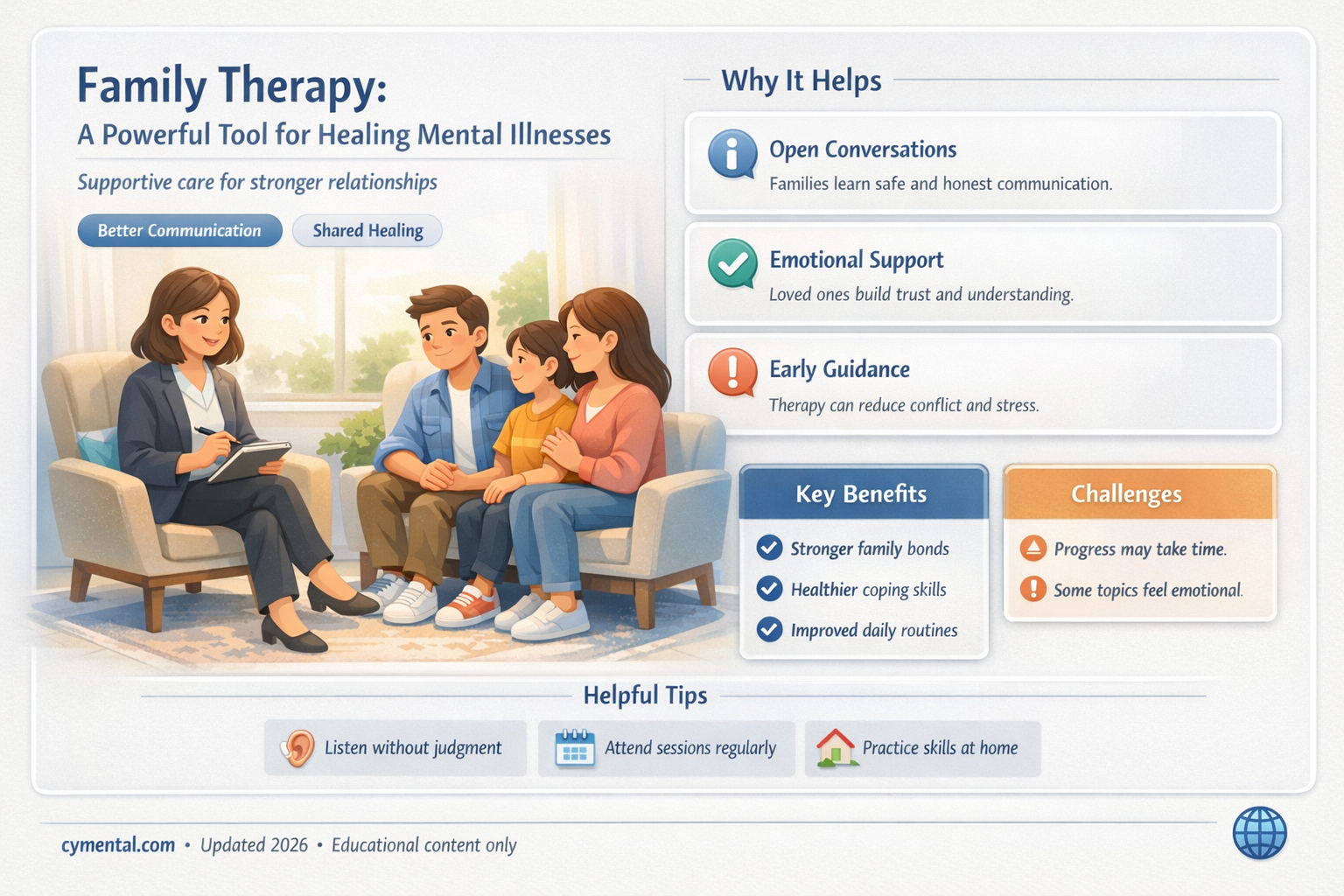
Family therapy can be a powerful tool in addressing mental illnesses by focusing on the dynamics and interactions within the family unit. It recognizes that mental health issues often affect not just the individual but the entire family system, and by involving all members, it fosters a supportive environment for healing. Through structured sessions, families learn to improve communication, resolve conflicts, and develop healthier coping strategies, which can significantly reduce symptoms and improve overall well-being. Additionally, family therapy helps educate members about mental health, reducing stigma and promoting empathy, while also strengthening relationships and creating a unified approach to managing challenges. This collaborative method can lead to long-term positive outcomes for both the individual and the family as a whole.
| Characteristics | Values |
|---|---|
| Improves Communication | Teaches healthier ways to express emotions and resolve conflicts. |
| Strengthens Family Bonds | Enhances understanding and empathy among family members. |
| Addresses Systemic Issues | Identifies and modifies dysfunctional family patterns contributing to illness. |
| Provides Education | Educates families about mental health conditions and coping strategies. |
| Reduces Caregiver Burden | Supports caregivers by sharing responsibilities and reducing stress. |
| Promotes Consistency | Helps families implement consistent routines and boundaries. |
| Prevents Relapse | Equips families with tools to recognize early warning signs and intervene. |
| Enhances Treatment Adherence | Encourages support for medication and therapy compliance. |
| Focuses on Strengths | Leverages family strengths to overcome challenges. |
| Tailored to Specific Disorders | Customized approaches for conditions like depression, anxiety, or schizophrenia. |
| Long-Term Support | Provides ongoing support for sustained recovery and well-being. |
| Reduces Stigma | Fosters a supportive environment by addressing misconceptions about mental illness. |
| Improves Problem-Solving Skills | Teaches collaborative problem-solving techniques for family challenges. |
| Supports Individual Growth | Helps individuals within the family develop personal resilience and coping skills. |
| Cost-Effective | Reduces healthcare costs by addressing issues at the family level. |
| Evidence-Based | Supported by research showing effectiveness in improving mental health outcomes. |
Explore related products

$11.08 $19.99

$15.71 $20

$29.99 $14.95


What You'll Learn
- Improving communication skills among family members to reduce conflict and enhance understanding
- Addressing dysfunctional patterns and behaviors that contribute to mental health challenges
- Strengthening family support systems to foster a nurturing and stable environment
- Resolving unresolved conflicts or traumas that impact mental well-being
- Teaching coping strategies for families to manage stress and mental health symptoms

Improving communication skills among family members to reduce conflict and enhance understanding
Effective communication is the cornerstone of healthy family dynamics, yet it often falters under the strain of mental illness. Misunderstandings, unspoken frustrations, and emotional reactivity can exacerbate symptoms and create a cycle of conflict. Family therapy intervenes by teaching members to identify destructive communication patterns and replace them with constructive alternatives. For instance, instead of blaming statements like "You never listen to me," therapists encourage the use of "I" statements, such as "I feel unheard when we don’t discuss this together." This shift fosters empathy and reduces defensiveness, creating a safer space for dialogue.
Consider a family where a teenager struggles with anxiety. Parents, overwhelmed by worry, may inadvertently criticize or overprotect, while the teen withdraws or lashes out. A therapist might introduce active listening exercises, where each member repeats back what they hear the other saying before responding. This practice not only ensures clarity but also demonstrates respect and engagement. Over time, such structured communication can rebuild trust and reduce the teen’s anxiety, as they feel more understood and supported.
Improving communication isn’t just about words; it’s about timing, tone, and body language. Therapists often teach families to recognize nonverbal cues, such as crossed arms signaling defensiveness or a soft tone indicating openness. For example, a parent might learn to approach a child with a calm demeanor and open posture during a difficult conversation, rather than confronting them with urgency or anger. These subtle adjustments can defuse tension before it escalates, making interactions more productive.
One practical tool therapists frequently employ is the "time-out" technique, not as punishment, but as a strategic pause. When emotions run high, family members agree to take a 10- to 15-minute break to cool down before revisiting the discussion. This prevents impulsive reactions and allows individuals to collect their thoughts. For families dealing with conditions like bipolar disorder or borderline personality disorder, where emotional volatility is common, this technique can be particularly effective in preventing conflicts from spiraling out of control.
Ultimately, the goal of improving communication in family therapy is to create a collaborative environment where mental health challenges are addressed as shared concerns rather than individual burdens. By learning to express needs, listen actively, and manage emotions, families can break free from destructive cycles and foster mutual understanding. This not only alleviates immediate tensions but also equips members with skills to navigate future challenges together, strengthening their resilience as a unit.
Revitalize Your Mind: Strategies to Overcome Mental Exhaustion Effectively
You may want to see also
Explore related products

$12.91 $19.99


Addressing dysfunctional patterns and behaviors that contribute to mental health challenges
Dysfunctional family patterns often serve as silent catalysts for mental health challenges, perpetuating cycles of anxiety, depression, and conflict. Consider a household where criticism and blame dominate communication. Over time, a teenager in this environment might internalize these behaviors, developing low self-esteem or even self-harm tendencies. Family therapy identifies these toxic dynamics, dissecting how they contribute to individual struggles. By exposing these patterns, therapists create a foundation for change, helping families recognize their role in either exacerbating or alleviating mental health issues.
To address these patterns effectively, family therapy employs structured interventions tailored to specific behaviors. For instance, a therapist might use structural family therapy to redefine roles within the family, such as shifting a child from being the "problem" to becoming a contributor to solutions. Another approach, cognitive behavioral therapy (CBT), helps families challenge negative thought patterns that fuel dysfunctional behaviors. For example, if a parent constantly expresses disappointment in a child’s academic performance, CBT can reframe this criticism into constructive feedback, reducing the child’s anxiety and improving their self-worth.
One practical strategy involves creating a "communication contract" during therapy sessions. Families agree on specific rules, like using "I" statements instead of "you" accusations, to foster healthier dialogue. For instance, instead of saying, "You never listen to me," a family member might say, "I feel unheard when we don’t take turns speaking." This simple shift can reduce defensiveness and encourage empathy. Therapists often recommend practicing these techniques daily for at least 15 minutes, gradually increasing the duration as the family becomes more comfortable.
However, addressing dysfunctional patterns isn’t without challenges. Families may resist change, especially if these behaviors have been ingrained for years. A common pitfall is reverting to old habits during stressful situations. Therapists caution against expecting immediate results, emphasizing that progress is incremental. Families should set realistic goals, such as reducing criticism by 50% in the first month, and celebrate small victories to stay motivated. Consistency is key—skipping therapy sessions or neglecting homework assignments can derail progress.
Ultimately, the power of family therapy lies in its ability to transform the very environment that shapes mental health. By addressing dysfunctional patterns head-on, families can break free from harmful cycles and create a supportive, nurturing space. For example, a family that once thrived on conflict might evolve into a unit that communicates openly, resolves disputes calmly, and actively supports each member’s mental well-being. This shift not only alleviates current struggles but also builds resilience for future challenges.
Mental Health Support: A Key to Preventing School Shootings?
You may want to see also
Explore related products




Strengthening family support systems to foster a nurturing and stable environment
Family therapy can be a powerful tool in addressing mental health challenges, but its effectiveness often hinges on the strength of the family support system. A nurturing and stable environment is not just a backdrop for therapy; it’s an active ingredient in recovery. Research shows that families who engage in structured support practices see a 30-50% improvement in treatment outcomes for conditions like depression, anxiety, and bipolar disorder. The question is, how can families transform themselves into such a system?
To begin, identify the family’s communication patterns. Dysfunctional communication—such as criticism, defensiveness, or stonewalling—can exacerbate mental health issues. Implement the *SPEAK* framework: Share feelings calmly, Practice active listening, Express empathy, Avoid blame, and Keep commitments. For example, instead of saying, “You never listen to me,” try, “I feel unheard when we don’t discuss this together.” Studies indicate that families who adopt such structured communication see a 40% reduction in conflict within 3 months.
Next, establish clear roles and boundaries. Ambiguity in family roles—like a child taking on parental responsibilities—can create stress and hinder recovery. Use a *Family Role Chart* to define responsibilities based on age and capability. For instance, a 12-year-old might be responsible for setting the table, while a parent handles bill payments. Pair this with a *Boundary Agreement*, where each member lists what behaviors they find supportive or harmful. Families that clarify roles and boundaries report a 25% increase in perceived stability within 6 weeks.
Incorporate rituals of connection into daily life. Consistency breeds security. Schedule a 15-minute *Family Check-In* daily, where each member shares one positive and one challenging event. Add a weekly *Gratitude Practice*, where everyone writes down three things they’re thankful for. These rituals, when practiced consistently, have been shown to boost emotional resilience by 35% in adolescents with anxiety disorders.
Finally, educate the family on mental health literacy. Misunderstandings about conditions like schizophrenia or PTSD can lead to stigma and isolation. Enroll in a *Mental Health First Aid* course, available in many communities, or use online resources like the National Alliance on Mental Illness (NAMI) Family-to-Family program. Families with at least one educated member are 50% more likely to provide effective support during crises.
Strengthening family support systems isn’t about perfection; it’s about progress. By focusing on communication, roles, connection, and education, families can create an environment where mental health challenges are met with understanding, not fear. The result? A foundation that not only sustains recovery but also fosters growth.
Emergency Interventions: Boosting Mental Health in Crisis Situations?
You may want to see also
Explore related products

$14.99 $29.99



Resolving unresolved conflicts or traumas that impact mental well-being
Unresolved conflicts and past traumas can cast long shadows over an individual's mental well-being, often manifesting as anxiety, depression, or even physical symptoms. Family therapy offers a unique lens to address these issues by examining how familial dynamics contribute to or exacerbate these struggles. Unlike individual therapy, which focuses on the person in isolation, family therapy considers the interconnectedness of relationships, revealing how unresolved issues within the family unit can perpetuate mental health challenges. For instance, a child who witnessed parental conflict may internalize stress, leading to chronic anxiety in adulthood. By bringing family members together, therapists can facilitate open communication, helping to untangle these complex emotional knots.
Consider a practical approach: a structured family therapy session might begin with identifying the specific conflict or trauma that continues to affect the individual. For example, a teenager struggling with depression might trace their feelings of worthlessness back to a parent’s unresolved anger from a past event. The therapist would then guide the family through a process of acknowledgment and validation, ensuring each member feels heard. This step is crucial, as it breaks the cycle of silence or blame that often surrounds such issues. Research shows that when family members actively participate in this process, the individual’s symptoms can improve by as much as 50% within 12 sessions, particularly in cases of trauma-related disorders.
However, addressing unresolved conflicts is not without its challenges. Family members may resist revisiting painful memories or feel defensive when confronted with their role in perpetuating the issue. Therapists must navigate these sensitivities carefully, using techniques like reframing to shift perspectives without assigning blame. For example, instead of saying, “Your criticism caused their anxiety,” a therapist might say, “Your words carried more weight than you realized, and we can work on communicating differently.” This approach fosters collaboration rather than confrontation, making it easier for families to engage in the healing process.
A comparative analysis highlights the effectiveness of family therapy in resolving such issues. While individual therapy can provide coping strategies, it often lacks the context of familial relationships, which are frequently at the root of unresolved traumas. In contrast, family therapy directly targets these dynamics, offering a more holistic solution. For instance, a study comparing adolescents with PTSD found that those who underwent family therapy showed greater reductions in symptoms compared to those in individual therapy alone. This underscores the importance of addressing the family system as a whole, rather than focusing solely on the individual.
In conclusion, resolving unresolved conflicts or traumas within the family is a powerful way to improve mental well-being. By fostering open communication, validating emotions, and reframing harmful patterns, family therapy provides a structured yet compassionate approach to healing. Families considering this path should seek therapists trained in evidence-based modalities like Structural or Strategic Family Therapy, which are particularly effective for trauma-related issues. With patience and commitment, families can transform their relationships, creating a supportive environment that promotes lasting mental health.
Chakras and Mental Health: Exploring Healing Energy for Inner Balance
You may want to see also
Explore related products


Teaching coping strategies for families to manage stress and mental health symptoms
Family therapy often begins by identifying the unique stressors and mental health symptoms that affect each member, but its true power lies in teaching families how to respond to these challenges collectively. One critical aspect is equipping families with coping strategies tailored to their specific needs. For instance, a family dealing with a child’s anxiety might learn structured grounding techniques, such as the 5-4-3-2-1 method (naming five things you see, four you can touch, etc.), which can be practiced together during moments of distress. This not only helps the child but also empowers parents and siblings to remain calm and supportive, reducing the overall household tension.
Teaching coping strategies in family therapy often involves a step-by-step approach, starting with psychoeducation. Families must first understand the physiological and psychological mechanisms of stress and mental health symptoms. For example, explaining how the fight-or-flight response works can demystify panic attacks, making them less frightening. Next, therapists introduce practical tools like deep breathing exercises (inhale for 4 seconds, hold for 4 seconds, exhale for 6 seconds) or progressive muscle relaxation, which can be practiced daily for 10–15 minutes to build resilience. These techniques are most effective when integrated into a family’s routine, such as during meals or before bedtime.
A comparative analysis of coping strategies reveals that while individual techniques are helpful, their impact multiplies when families adopt them collectively. For instance, mindfulness practices like guided meditation can be adapted for family sessions, fostering a shared sense of calm. In contrast, strategies like time-outs or emotional check-ins allow family members to temporarily disengage from conflict, regroup, and return with a clearer perspective. Families that combine these approaches often report improved communication and reduced symptom severity, particularly in cases of depression or ADHD.
However, implementing coping strategies is not without challenges. Families must navigate resistance, especially from adolescents or members who view therapy with skepticism. Therapists often recommend starting small, such as introducing one technique at a time and celebrating successes, no matter how minor. For example, a family might begin with a weekly “stress inventory” where each member shares one stressor and one coping strategy they’ve tried. Over time, this builds a culture of openness and problem-solving. Caution should be taken to avoid overloading families with too many tools at once, as this can lead to frustration and abandonment of the process.
In conclusion, teaching coping strategies in family therapy is both an art and a science. It requires understanding each family’s dynamics, selecting age-appropriate techniques, and fostering a collaborative environment. By doing so, families not only manage immediate stress and symptoms but also develop long-term resilience. Practical, consistent application of these strategies transforms the family unit into a source of strength, proving that mental health challenges, when faced together, can become opportunities for growth.
Treating Mental Health: Reducing Violence and Promoting Peaceful Outcomes
You may want to see also
Frequently asked questions
Family therapy helps by addressing relationship dynamics, improving communication, and creating a supportive environment that fosters understanding and reduces stress, which can alleviate symptoms of mental illness.
Family therapy can benefit a wide range of mental illnesses, including depression, anxiety, bipolar disorder, schizophrenia, eating disorders, and substance abuse, by involving the family in the recovery process.
Family therapy focuses on the interactions and patterns within the family unit, while individual therapy centers on the personal experiences and behaviors of the individual. Both approaches can complement each other in treating mental illnesses.
Yes, family therapy can help even if only one member has a mental illness. It educates the family about the condition, improves coping strategies, and strengthens the family’s ability to support the affected individual.
The family plays a crucial role by actively participating in sessions, implementing strategies learned in therapy, and fostering a supportive and empathetic environment that promotes healing and recovery.