Harper Lewis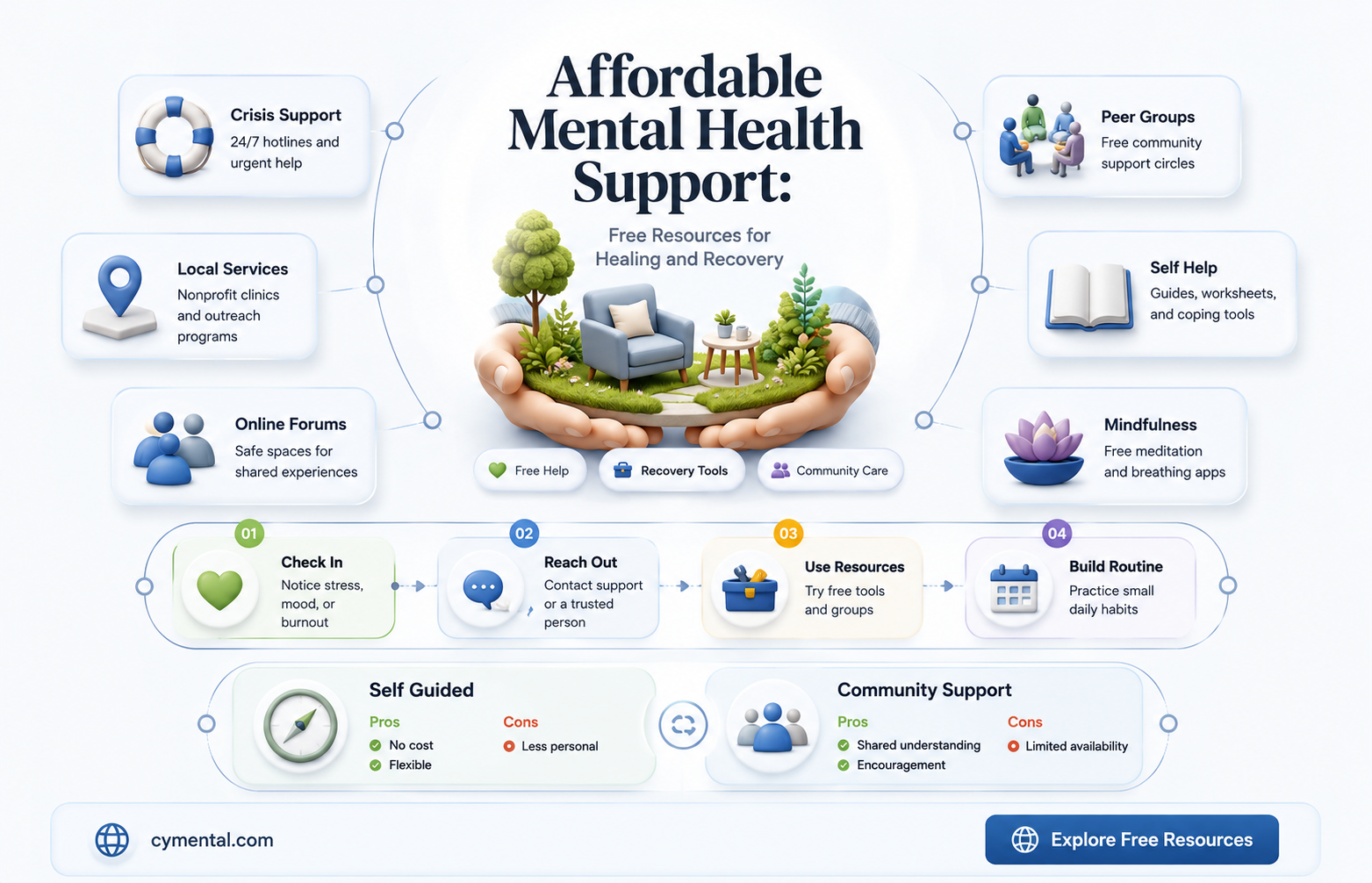
Accessing mental health support without financial resources can feel daunting, but there are several avenues available for those in need. Many communities offer free or low-cost mental health services through local clinics, nonprofits, or government programs, often funded by grants or donations. Online platforms and hotlines provide immediate assistance, such as crisis text lines or peer support groups, which can be invaluable in times of distress. Additionally, some therapists and counselors offer sliding scale fees or pro bono sessions based on income. Universities and training institutions may also provide affordable therapy through student clinicians under supervision. Exploring these options, along with self-help resources like mindfulness apps or community support groups, can help bridge the gap until more formal care becomes accessible.
Explore related products


What You'll Learn
- Free Mental Health Hotlines: Access 24/7 crisis support via national or local helplines at no cost
- Community Health Clinics: Seek low-cost or sliding-scale therapy services based on income
- Online Therapy Platforms: Use free or discounted apps offering mental health resources and support
- Support Groups: Join free peer-led groups for shared experiences and emotional support
- Self-Help Resources: Utilize free books, podcasts, and online tools for mental wellness

Free Mental Health Hotlines: Access 24/7 crisis support via national or local helplines at no cost
In moments of mental health crisis, immediate support can be a lifeline. Free mental health hotlines offer 24/7 access to trained professionals who provide confidential, non-judgmental assistance at no cost. These services are designed to help individuals navigate acute distress, suicidal thoughts, anxiety, or any overwhelming emotional state. Whether you’re calling for yourself or someone else, these hotlines ensure you’re not alone in your darkest moments.
National hotlines like the 988 Suicide & Crisis Lifeline in the U.S. (dial 988) are widely recognized and staffed by counselors trained in crisis intervention. For those outside the U.S., similar services exist, such as the Samaritans in the UK (116 123) or Lifeline in Australia (13 11 14). These lines are not just for emergencies; they’re also for anyone feeling overwhelmed, isolated, or unsure where to turn. Calls are anonymous, and operators focus on active listening, de-escalation, and connecting callers to local resources if needed.
Local hotlines often provide more region-specific support, addressing cultural, linguistic, or community-specific needs. For example, The Trevor Project (1-866-488-7386) offers crisis intervention for LGBTQ+ youth, while Veterans Crisis Line (dial 988, press 1) caters to veterans and their families. Many local hotlines also offer text or chat options for those uncomfortable speaking on the phone. To find a local hotline, search online for "free mental health hotline in [your city/state]" or check resources from organizations like the National Alliance on Mental Illness (NAMI).
While hotlines are invaluable for immediate support, they’re not a substitute for long-term care. If you’re in ongoing distress, use these calls as a stepping stone to explore other no-cost options, such as community mental health clinics, support groups, or sliding-scale therapy programs. Hotlines can also help you create a safety plan, offering tools to manage future crises independently.
Practical tip: Save hotline numbers in your phone or write them down in a visible place. In a crisis, searching for the number can feel overwhelming. Knowing you have immediate access to help can reduce anxiety and empower you to reach out when needed. Free mental health hotlines are a testament to the belief that everyone deserves support, regardless of their financial situation.
Boost Focus and Calm: Strategies for Achieving Mental Clarity
You may want to see also
Explore related products

$7.76 $18.99


Community Health Clinics: Seek low-cost or sliding-scale therapy services based on income
Community health clinics often provide mental health services on a sliding-scale fee basis, meaning the cost is adjusted according to your income. For instance, if you earn below the federal poverty level, you might pay as little as $10–$20 per session, compared to the $100–$200 typical in private practice. These clinics are staffed by licensed therapists, social workers, or counselors, often including interns supervised by experienced professionals. To find one, search for "federally qualified health centers" or "community mental health clinics" in your area using resources like the Health Resources and Services Administration (HRSA) website.
The process typically begins with an intake assessment to determine your needs and financial eligibility. Bring proof of income, such as pay stubs or tax returns, to ensure accurate fee calculation. Some clinics may also require identification and insurance information, though lack of insurance is not a barrier to service. Appointments may be less frequent than in private practice—perhaps biweekly instead of weekly—due to high demand, but consistency can still yield significant progress.
One challenge is availability; waitlists can range from a few weeks to several months, depending on location and funding. To navigate this, call multiple clinics and ask about wait times and alternative resources they might offer, such as group therapy or workshops, which often have shorter waits. Additionally, inquire about telehealth options, as some clinics expanded virtual services post-pandemic, increasing accessibility for those with transportation barriers.
Despite potential limitations, community health clinics offer a critical lifeline for those without financial means. They often integrate mental health care with other services like primary care or substance abuse treatment, providing holistic support. For example, a clinic might address both your anxiety and diabetes management in coordination, ensuring your overall well-being. This integrated approach, combined with affordability, makes them a cornerstone of accessible mental health care.
To maximize your experience, be proactive in advocating for your needs. If you feel a therapist isn’t the right fit, ask to switch—most clinics prioritize client-therapist compatibility. Also, take advantage of additional resources they may offer, such as free psychoeducation materials, support groups, or referrals to low-cost medication programs. With persistence and flexibility, community health clinics can be a transformative resource for mental health care without financial strain.
Nutrition's Impact: How Eating Better Boosts Mental Health and Well-Being
You may want to see also
Explore related products


Online Therapy Platforms: Use free or discounted apps offering mental health resources and support
The digital age has democratized access to mental health support, with numerous online therapy platforms offering free or discounted services. These apps provide a lifeline for individuals who might otherwise be unable to afford traditional therapy. Platforms like 7 Cups and BetterHelp often feature sliding scale fees or free trials, ensuring that financial constraints don’t bar anyone from seeking help. Additionally, apps like Woebot and Sanvello use AI-driven tools to offer cognitive-behavioral therapy techniques at no cost, making professional strategies accessible to all.
For those hesitant to commit to paid therapy, free apps like Moodpath and Talkspace (which occasionally offers discounted plans) provide a low-stakes entry point. These platforms typically include mood tracking, guided meditations, and access to peer support communities. While they may not replace one-on-one therapy, they serve as valuable tools for managing stress, anxiety, and mild depression. Users can explore these resources at their own pace, gradually building a mental health toolkit without financial pressure.
However, it’s crucial to evaluate the credibility of these platforms. Look for apps backed by licensed professionals or evidence-based practices. For instance, Calm and Headspace offer free trials of their meditation and mindfulness programs, which are scientifically proven to reduce stress. Similarly, Crisis Text Line provides immediate, free support via text, ensuring help is available in urgent situations. Always check user reviews and privacy policies to ensure your data is protected.
To maximize the benefits of these platforms, consistency is key. Dedicate 10–15 minutes daily to engage with the app’s features, whether it’s journaling, meditation, or chatting with a peer supporter. Combine these tools with offline strategies like exercise and social connection for a holistic approach. While free apps may not solve severe mental health issues, they can be a stepping stone toward professional care or a sustainable way to maintain mental wellness on a budget.
Supporting Teammates: The Role of Peer Support in Mental Health
You may want to see also
Explore related products


Support Groups: Join free peer-led groups for shared experiences and emotional support
Support groups offer a powerful, cost-free way to address mental health challenges by connecting you with others who understand your struggles. Unlike therapy, which can be expensive and clinical, these groups are peer-led, fostering a sense of community and shared experience. For instance, organizations like the National Alliance on Mental Illness (NAMI) offer free, peer-led programs such as NAMI Connection, where adults living with mental illness meet weekly to share stories, coping strategies, and encouragement. This model reduces isolation and provides emotional support without financial barriers.
Joining a support group requires minimal effort but yields significant benefits. Start by identifying groups tailored to your specific needs—whether it’s anxiety, depression, grief, or addiction. Websites like Meetup, Facebook, or local community boards often list free groups. Once you find one, attend consistently; regularity builds trust and deepens connections. Be open to sharing your experiences, but remember, participation is voluntary. Listening alone can still provide comfort and insight. Pro tip: If in-person meetings feel intimidating, many groups now offer virtual sessions, making access even easier.
While support groups are not a substitute for professional treatment, they complement other mental health strategies effectively. Research shows that peer support can improve mood, reduce symptoms, and increase feelings of empowerment. For example, a study published in *Psychiatric Services* found that participants in peer-led groups reported higher levels of hope and recovery compared to those who didn’t engage. However, it’s crucial to choose groups with clear guidelines and facilitators trained in creating safe, nonjudgmental spaces. Avoid groups that promote harmful advice or discourage professional help.
One of the most compelling aspects of support groups is their ability to humanize mental health struggles. Hearing others articulate similar feelings—like overwhelming anxiety or persistent sadness—validates your own experiences. This shared vulnerability often leads to practical advice, such as breathing techniques, journaling prompts, or local resources. For instance, a group member might recommend a free mindfulness app or a low-cost clinic they’ve found helpful. These exchanges transform abstract struggles into actionable steps, making mental health care feel less daunting.
In conclusion, free peer-led support groups are an accessible, impactful way to address mental health without financial strain. They combine emotional support, practical advice, and a sense of belonging, all of which are essential for healing. To maximize their benefits, approach them with an open mind, commit to regular attendance, and remember they’re one tool in a broader toolkit. Whether you’re seeking immediate relief or long-term coping strategies, these groups can be a lifeline—proof that you’re not alone in your journey.
Ensure Plus and Mental Health: Exploring Nutritional Support for Well-Being
You may want to see also
Explore related products


Self-Help Resources: Utilize free books, podcasts, and online tools for mental wellness
Accessing mental health support doesn't always require financial resources. A wealth of self-help materials is available at no cost, offering guidance, comfort, and strategies for managing emotional challenges. Free books, podcasts, and online tools provide diverse perspectives and practical techniques to enhance mental wellness, often created by professionals or individuals with lived experience. These resources can serve as a starting point or supplement to other forms of care, empowering individuals to take proactive steps toward self-improvement.
Consider starting with free e-books available on platforms like Project Gutenberg, OpenStax, or the Internet Archive. Titles such as *Feeling Good* by David D. Burns (often available in PDF form) or *The Mindful Way Through Depression* offer evidence-based cognitive-behavioral techniques. For younger audiences, *The Anxiety Workbook for Teens* provides age-appropriate strategies. Pair these readings with actionable steps: dedicate 20 minutes daily to a chapter, jot down key insights, and practice one exercise per week to build consistency. Audiobook platforms like Librivox or Loyal Books also offer free mental health titles for those who prefer listening.
Podcasts deliver bite-sized, accessible insights for on-the-go learning. Shows like *The Mental Illness Happy Hour* and *The Happiness Lab* blend personal stories with expert advice, while *Where Should We Begin?* by Esther Perel explores relational dynamics affecting mental health. To maximize benefits, listen during commutes or chores, reflect on one episode per week, and apply a single takeaway to daily life. For example, after hearing about mindfulness, try a 5-minute breathing exercise each morning to ground yourself.
Online tools and apps provide structured support without cost. Platforms like Moodpath offer symptom tracking and mental health assessments, while Calm (free version) and Insight Timer provide guided meditations. Websites such as 7 Cups connect users with trained listeners for emotional support. When using apps, set realistic goals—start with 10 minutes daily—and avoid over-reliance by combining them with offline practices like journaling or walking. Always verify the credibility of tools by checking reviews or consulting mental health forums.
While these resources are valuable, they aren’t a substitute for professional therapy in severe cases. Use them as a bridge to build resilience and self-awareness, monitoring progress over time. Combining books, podcasts, and tools creates a holistic approach tailored to individual needs. By leveraging these free resources strategically, anyone can take meaningful steps toward mental wellness without financial barriers.
Can ERs Provide Mental Health Support in Crisis Situations?
You may want to see also
Frequently asked questions
Many community health centers, non-profit organizations, and government programs offer free or low-cost mental health services. You can also explore online platforms that provide free counseling or support groups.
Yes, some organizations like Open Path Collective offer reduced-fee therapy sessions, and platforms like 7 Cups provide free peer support. Additionally, local universities with psychology programs may offer free or low-cost therapy through their training clinics.
Many employers and schools offer Employee Assistance Programs (EAPs) or counseling services that are free for employees or students. Check with your HR department or student services for available resources.
Self-help strategies include mindfulness practices, journaling, exercise, and joining support groups. Free apps like Calm, Headspace, or Insight Timer offer guided meditations and mental health tools.
Contact your local health department, community mental health centers, or dial 211 (in the U.S.) to connect with free or low-cost mental health resources in your area. Online directories like SAMHSA’s treatment locator can also help.


![Support Your Local Sheriff [Blu-ray]](https://m.media-amazon.com/images/I/81THHG1wB7L._AC_UL320_.jpg)