Caleb Wright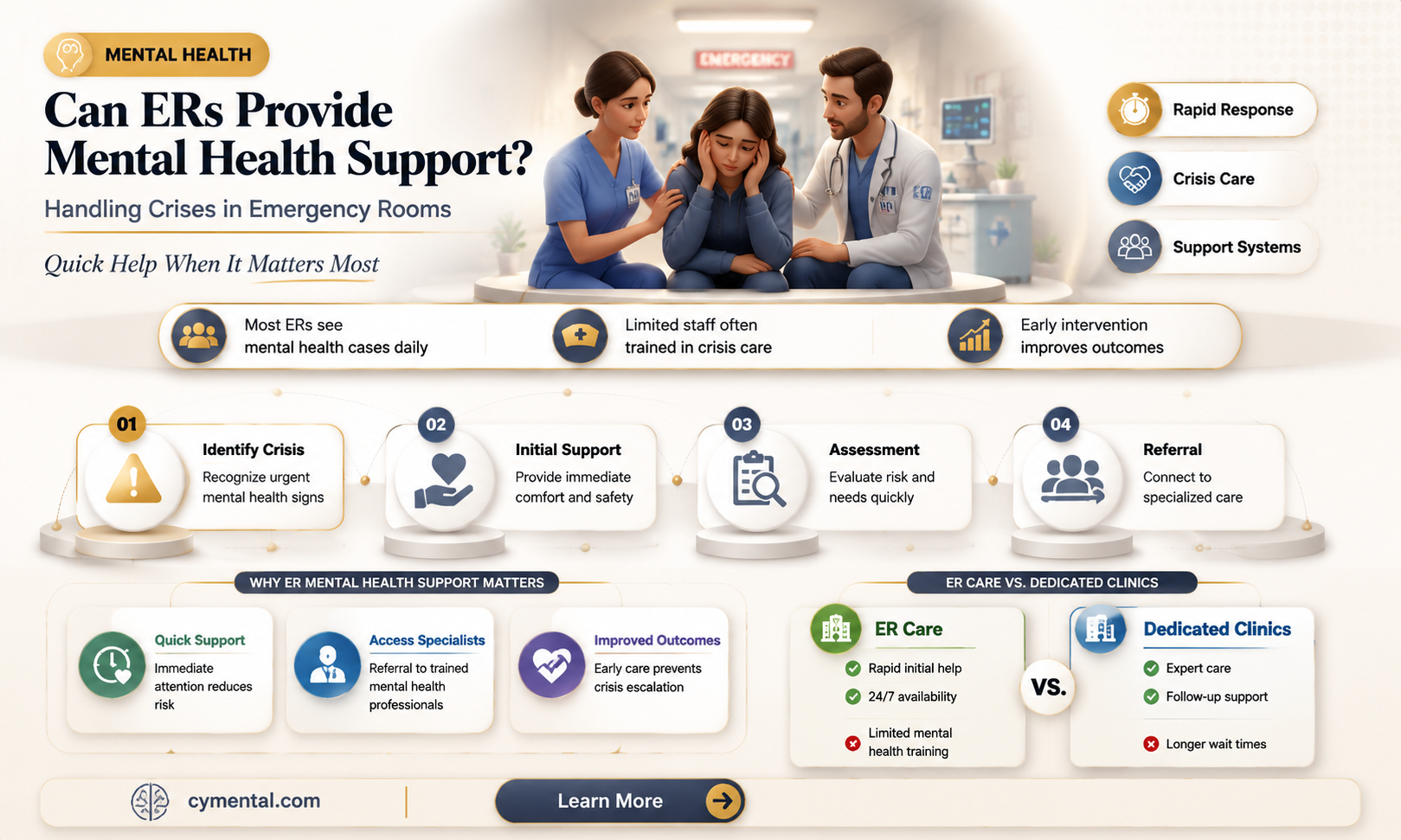
The emergency room (ER) is often seen as a place for immediate physical health crises, but its role in addressing mental health emergencies is increasingly important. While the ER is not a long-term solution for mental health care, it can provide critical stabilization for individuals experiencing acute psychiatric episodes, such as severe anxiety, suicidal ideation, or psychosis. ER staff are trained to assess and manage these situations, offering interventions like medication, crisis counseling, and referrals to specialized mental health services. However, the ER’s ability to help with mental health is limited by factors like overcrowding, short-term focus, and a lack of integrated psychiatric resources. Despite these challenges, it remains a vital safety net for those in immediate mental health distress, highlighting the need for better coordination between emergency care and ongoing mental health support systems.
| Characteristics | Values |
|---|---|
| Immediate Crisis Intervention | ERs can provide immediate stabilization for acute mental health crises, such as suicidal ideation, severe anxiety, or psychotic episodes. |
| Safety Assessment | Trained professionals assess the risk of self-harm or harm to others and ensure the individual is in a safe environment. |
| Medication Management | Short-term medication adjustments or prescriptions can be provided to manage acute symptoms. |
| Referral to Specialized Care | ER staff can connect individuals to mental health professionals, inpatient psychiatric facilities, or outpatient services for ongoing treatment. |
| Brief Counseling | Limited counseling or de-escalation techniques may be offered to help individuals cope with immediate distress. |
| Limited Long-Term Treatment | ERs are not equipped for long-term mental health care; they focus on crisis management and stabilization. |
| Overcrowding and Wait Times | ERs often face high patient volumes, which can lead to long wait times and limited attention to mental health needs. |
| Stigma and Environment | The ER environment may not always be conducive to mental health care, and stigma can deter individuals from seeking help. |
| Cost | ER visits can be expensive, especially for uninsured or underinsured individuals, and may not be covered for mental health crises. |
| Follow-Up Challenges | Ensuring individuals follow up with appropriate mental health services after ER discharge can be challenging. |
Explore related products


What You'll Learn

Emergency mental health assessments
Emergency departments (ERs) are increasingly becoming critical access points for individuals experiencing acute mental health crises. According to the American College of Emergency Physicians, nearly 12% of all ER visits involve mental health or substance abuse concerns, highlighting the growing demand for immediate psychiatric care. Emergency mental health assessments serve as the first line of defense in these situations, aiming to stabilize patients, identify risks, and determine appropriate next steps. These assessments are structured yet flexible, designed to address the unique challenges of a fast-paced, high-pressure environment.
The process typically begins with a rapid triage, where ER staff evaluates the severity of the patient’s condition. Key indicators include suicidal ideation, homicidal threats, psychosis, or severe agitation. For instance, a patient expressing a specific plan to harm themselves within the next 24 hours would be prioritized for immediate intervention. Following triage, a comprehensive assessment is conducted, often by a multidisciplinary team including nurses, physicians, and mental health specialists. This involves gathering a detailed psychiatric history, assessing current symptoms, and screening for co-occurring conditions such as substance use disorders. Tools like the Columbia-Suicide Severity Rating Scale or the Brief Psychiatric Rating Scale may be employed to standardize evaluations and ensure accuracy.
One critical aspect of emergency mental health assessments is the legal and ethical framework guiding decision-making. In many jurisdictions, ERs operate under involuntary commitment laws, allowing them to hold patients against their will if they pose an imminent danger to themselves or others. However, this power is wielded cautiously, balancing patient autonomy with public safety. For example, a 25-year-old patient with schizophrenia experiencing command hallucinations to harm a family member might be held for observation and treatment, even if they refuse. Conversely, a teenager with mild depression and no suicidal intent would likely be referred to outpatient services instead.
Despite their importance, emergency mental health assessments face significant challenges. ERs are often overcrowded and understaffed, limiting the time clinicians can spend with each patient. Additionally, the lack of specialized psychiatric resources in many hospitals can hinder effective care. For instance, a rural ER may have no on-site psychiatrist, forcing staff to rely on telepsychiatry consultations or transfer patients to distant facilities. To mitigate these issues, some hospitals have implemented dedicated psychiatric emergency services (PES), which provide specialized care for mental health crises. These units, while not universally available, offer a promising model for improving outcomes.
In conclusion, emergency mental health assessments are a vital yet complex component of crisis care. They require a delicate balance of clinical skill, ethical judgment, and resource management. For patients and families navigating a mental health emergency, understanding this process can demystify the experience and highlight the importance of seeking timely help. While ERs may not be the ideal setting for long-term psychiatric treatment, they play an indispensable role in stabilizing acute crises and connecting individuals to ongoing care. As the demand for mental health services continues to rise, refining these assessments will remain a critical priority for healthcare systems worldwide.
Reading for Resilience: How Books Support Mental Health and Healing
You may want to see also
Explore related products


Crisis intervention and stabilization
Emergency departments (EDs) are increasingly becoming the front line for mental health crises, often serving as the only accessible option for individuals in acute distress. Crisis intervention and stabilization in the ED aim to de-escalate immediate psychological emergencies, ensure safety, and bridge the gap to ongoing care. This process typically involves rapid assessment, pharmacological interventions, and brief therapeutic techniques to restore emotional equilibrium. For instance, a patient presenting with severe anxiety or suicidal ideation might receive benzodiazepines (e.g., 0.5–2 mg of lorazepam) or antipsychotics (e.g., 2.5–5 mg of olanzapine) to manage acute symptoms, alongside verbal de-escalation strategies like active listening and validation.
The effectiveness of ED-based crisis intervention hinges on a structured approach that balances urgency with compassion. Key steps include a thorough risk assessment to identify immediate dangers, such as self-harm or harm to others, followed by targeted interventions to stabilize the patient. For example, a 20-minute session of grounding techniques—like deep breathing or sensory redirection—can help a panic attack subside. However, EDs face challenges, including time constraints, limited resources, and the transient nature of patient interactions. These factors often necessitate a focus on short-term relief rather than long-term solutions, highlighting the need for seamless transitions to outpatient mental health services.
A critical yet underutilized aspect of ED crisis intervention is the involvement of specialized mental health professionals. Psychiatric nurses, social workers, or crisis counselors can provide more nuanced care, such as safety planning or brief cognitive-behavioral interventions. For adolescents, family involvement is crucial; a 16-year-old with depressive symptoms, for instance, might benefit from a joint session with parents to address communication barriers and establish a supportive home environment. Such collaborative efforts can enhance the immediate stabilization process and improve long-term outcomes.
Despite its limitations, the ED plays a vital role in preventing mental health crises from escalating into tragedies. Practical tips for patients and caregivers include arriving early in the day when staffing is higher, bringing a list of current medications and symptoms, and advocating for a mental health assessment if not offered. For providers, adopting a trauma-informed approach—such as avoiding restraint unless absolutely necessary—can reduce patient distress and build trust. Ultimately, while the ED is not a substitute for comprehensive mental health care, its crisis intervention and stabilization efforts are a lifeline for those in immediate need, offering a critical first step toward recovery.
Nurturing Your Mind: Practical Strategies for Better Mental Health
You may want to see also
Explore related products




Referrals to mental health specialists
Emergency departments (EDs) often serve as a critical entry point for individuals experiencing acute mental health crises. However, their role extends beyond immediate stabilization; they can also facilitate referrals to mental health specialists, ensuring continuity of care. When a patient presents with symptoms such as severe anxiety, suicidal ideation, or psychosis, ED staff assess the urgency and determine if specialized care is needed. Referrals are typically made to psychiatrists, psychologists, or licensed therapists who can provide long-term treatment plans tailored to the individual’s needs. This process bridges the gap between crisis intervention and sustained mental health management.
The referral process begins with a thorough evaluation by ED clinicians, who use standardized tools like the Columbia-Suicide Severity Rating Scale or the GAD-7 for anxiety to gauge symptom severity. If the patient requires specialized care, the ED coordinates with local mental health providers or community resources. For instance, a patient with bipolar disorder might be referred to a psychiatrist for medication management, while someone with PTSD could benefit from a psychologist specializing in trauma-focused therapy. In cases where immediate follow-up is critical, some EDs have integrated care models that include on-site mental health professionals or telehealth consultations to expedite referrals.
Despite these efforts, challenges persist. Limited availability of mental health specialists, particularly in rural areas, can delay referrals. Insurance barriers and long wait times for appointments further complicate access. To mitigate these issues, EDs increasingly collaborate with community mental health centers and use care coordinators to track referrals and ensure patients connect with providers. For example, programs like the Emergency Department-Based Behavioral Health Care model have shown success in improving referral completion rates by providing case management and follow-up support.
Practical tips for patients and caregivers include asking ED staff about available mental health resources before discharge and requesting written referral information, including contact details and appointment instructions. If a referral is delayed, consider contacting local crisis hotlines or telehealth services for interim support. For parents of children in crisis, EDs may refer to pediatric psychologists or child psychiatrists, emphasizing the importance of age-appropriate care. By understanding the referral process and advocating for timely follow-up, individuals can navigate the system more effectively and receive the specialized care they need.
Can You Force Someone to Get Mental Help? Ethical and Legal Considerations
You may want to see also
Explore related products




Short-term medication management
Emergency departments (ERs) often serve as critical access points for individuals experiencing acute mental health crises. While not designed for long-term care, ERs can provide short-term medication management to stabilize patients and bridge the gap until they connect with ongoing treatment. This approach is particularly vital for conditions like severe anxiety, panic attacks, suicidal ideation, or psychotic episodes, where immediate pharmacological intervention can be life-saving.
The goal of short-term medication management in the ER is not to resolve underlying mental health issues but to stabilize the patient enough for safe discharge and referral to appropriate follow-up care. This often includes prescribing a limited supply of medication (e.g., a 3- to 7-day course of an anxiolytic or antidepressant) to tide the patient over until they can see a psychiatrist or primary care provider. Practical tips for patients include keeping a list of current medications, informing ER staff of any allergies or past adverse reactions, and asking for a clear explanation of the prescribed medication’s purpose and potential side effects.
A critical caution in this context is the risk of over-reliance on short-term medications without addressing the root cause of the crisis. ERs are not equipped to provide therapy or long-term psychiatric care, so patients must be actively linked to outpatient services. For instance, a patient stabilized with a benzodiazepine for acute anxiety should be referred to a therapist or psychiatrist for cognitive-behavioral therapy and consideration of longer-term medications like SSRIs. Without this handoff, the ER’s intervention remains a temporary fix rather than a step toward sustained recovery.
In conclusion, short-term medication management in the ER is a vital tool for addressing acute mental health crises, offering rapid symptom relief and ensuring patient safety. However, its effectiveness hinges on seamless coordination with long-term care providers. Patients and caregivers should view ER interventions as a starting point, not a solution, and advocate for comprehensive follow-up to address the underlying issues driving the crisis.
First Responders' Mental Health: Personal Struggles and Support Solutions
You may want to see also
Explore related products


Access to psychiatric consultations
Emergency departments (EDs) are increasingly becoming the front line for mental health crises, yet access to psychiatric consultations within these settings remains inconsistent. A 2020 study published in *JAMA Psychiatry* found that only 40% of EDs in the United States have immediate access to psychiatric consultation, leaving a significant gap in care for patients in acute distress. This disparity highlights a critical need for standardized protocols to ensure timely intervention, as delays in psychiatric assessment can exacerbate symptoms and increase the risk of self-harm or hospitalization.
To bridge this gap, EDs can implement structured triage systems that prioritize mental health emergencies alongside physical ones. For instance, the Emergency Severity Index (ESI) can be adapted to include mental health criteria, ensuring patients with suicidal ideation, psychosis, or severe anxiety receive immediate attention. Additionally, integrating telepsychiatry services can provide remote consultations for EDs lacking on-site psychiatrists. A pilot program in rural Michigan demonstrated that telepsychiatry reduced wait times by 50% and improved patient outcomes, offering a scalable solution for resource-limited areas.
However, reliance on telepsychiatry alone is not without challenges. Technical issues, such as poor internet connectivity or lack of private spaces in the ED, can hinder effectiveness. To mitigate these risks, EDs should invest in robust infrastructure and train staff to facilitate seamless virtual consultations. Furthermore, establishing partnerships with local mental health providers can ensure follow-up care, as EDs are not equipped to manage long-term psychiatric needs. A collaborative model in California’s Alameda County reduced ED recidivism by 30% by linking patients to community-based services within 48 hours of discharge.
Ultimately, expanding access to psychiatric consultations in the ED requires a multifaceted approach. Policymakers must allocate funding to train more psychiatric professionals and incentivize their work in emergency settings. Hospitals should adopt evidence-based practices, such as the Zero Suicide framework, which emphasizes early identification and intervention. By addressing these systemic barriers, EDs can transform from stopgap solutions to vital gateways for comprehensive mental health care, ensuring no patient in crisis is left behind.
Nourish Your Mind: How Healthy Eating Boosts Mental Well-Being
You may want to see also
Frequently asked questions
Yes, the ER can provide immediate assistance for mental health emergencies, such as suicidal thoughts, severe anxiety, or psychotic episodes. Staff can stabilize patients, administer medications, and connect them to appropriate mental health resources.
No, the ER is not equipped for long-term mental health care. It focuses on crisis stabilization and short-term intervention. After stabilization, patients are typically referred to outpatient services, therapists, or inpatient psychiatric facilities.
While the ER can assess and provide initial support, it is not the best resource for non-emergency mental health concerns. For milder issues, it’s recommended to contact a primary care provider, therapist, or mental health hotline for more appropriate care.