Noah Parker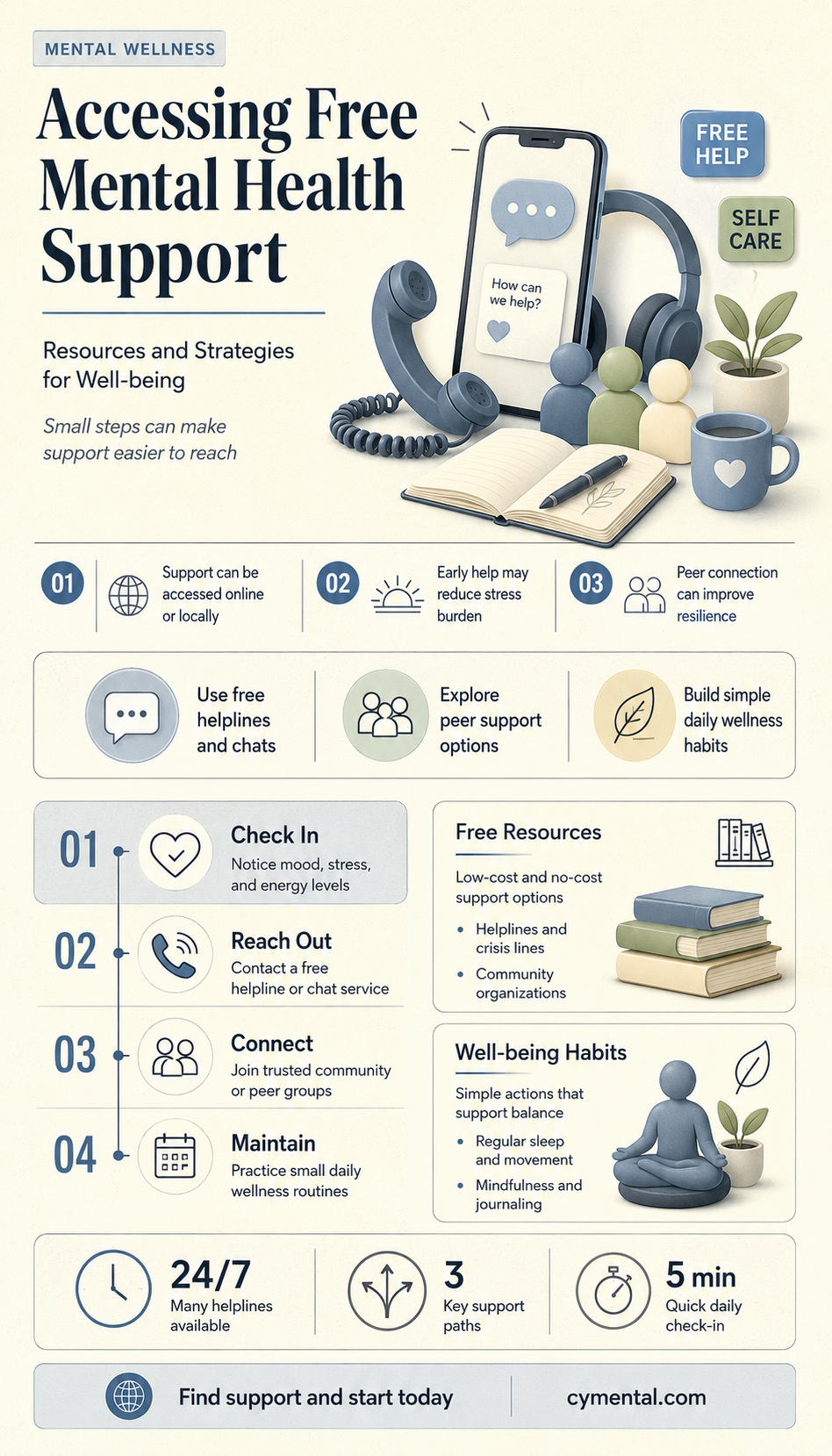
Accessing free mental health support is a crucial step for anyone seeking assistance, and fortunately, there are numerous resources available to those in need. Many organizations and community programs offer free counseling, therapy, and support groups, often funded by government initiatives or charitable donations, ensuring that financial barriers do not prevent individuals from receiving care. Online platforms and hotlines provide immediate help, connecting users with trained professionals or volunteers who can offer guidance and emotional support. Additionally, universities, workplaces, and religious institutions sometimes provide free mental health services to their members. By exploring these options and reaching out to local health departments or non-profit organizations, individuals can find the support they need without incurring costs, promoting overall well-being and mental health.
| Characteristics | Values |
|---|---|
| Availability | 24/7 access to crisis hotlines and online resources |
| Crisis Hotlines | National Suicide Prevention Lifeline (988 in the US), Crisis Text Line (text HOME to 741741), SAMHSA National Helpline (1-800-662-HELP) |
| Online Therapy Platforms | 7 Cups, BetterHelp (financial aid available), BlahTherapy (free peer support) |
| Community Mental Health Centers | Federally funded centers offering free or low-cost services based on income |
| Non-Profit Organizations | NAMI (National Alliance on Mental Illness), Mental Health America (MHA), Open Path Collective |
| Government Programs | Medicaid, Medicare, Veterans Affairs (VA) mental health services |
| Support Groups | Local and online groups for specific conditions (e.g., depression, anxiety, PTSD) |
| University Clinics | Free or low-cost therapy provided by graduate students under supervision |
| Mobile Apps | Calm, Headspace (free trials or limited free content), Sanvello (free tools) |
| Workplace Resources | Employee Assistance Programs (EAPs) offering free counseling sessions |
| Religious Organizations | Free counseling services through churches, mosques, temples, etc. |
| Peer Support | Online forums, Reddit communities (e.g., r/mentalhealth), and local meetups |
| Educational Resources | Free mental health courses on platforms like Coursera, Khan Academy, and YouTube |
| Financial Assistance | Sliding scale fees at private practices, grants, and scholarships for therapy |
| Emergency Services | Local emergency rooms and psychiatric urgent care centers |
| Telehealth Services | Free or low-cost virtual therapy sessions through telehealth platforms |
Explore related products


What You'll Learn
- Online Therapy Platforms: Access free counseling via apps or websites offering limited sessions or volunteer-based support
- Community Resources: Local clinics, nonprofits, or churches often provide free or low-cost mental health services
- Support Groups: Join peer-led groups for shared experiences, available in-person or virtually, often at no cost
- Crisis Hotlines: Call or text 24/7 helplines for immediate emotional support and guidance in emergencies
- Self-Help Tools: Use free apps, worksheets, or mindfulness resources to manage stress and improve mental well-being

Online Therapy Platforms: Access free counseling via apps or websites offering limited sessions or volunteer-based support
Online therapy platforms have emerged as a lifeline for those seeking mental health support without the barriers of cost or accessibility. Many apps and websites now offer free counseling services, though often with limitations such as a capped number of sessions or reliance on volunteer therapists. These platforms leverage technology to connect individuals with licensed professionals or trained volunteers, providing a confidential space to discuss concerns ranging from stress and anxiety to more complex issues. Examples include 7 Cups, which pairs users with trained listeners for free emotional support, and BetterHelp, which occasionally offers financial aid for its services. While these options may not replace long-term therapy, they serve as a critical entry point for those in need.
For those exploring these platforms, it’s essential to understand their structure and limitations. Most free services operate on a session-based model, typically offering 1–3 sessions before requiring payment or suggesting a donation. Volunteer-based platforms, like 7 Cups or Befrienders Worldwide, rely on non-professionals who undergo basic training to provide empathetic listening rather than clinical therapy. These services are ideal for individuals seeking immediate support or those who cannot afford traditional therapy. However, they may not be suitable for severe mental health conditions, such as suicidal ideation or chronic disorders, which require specialized care. Always assess the platform’s credentials and user reviews to ensure it aligns with your needs.
A practical tip for maximizing these resources is to treat them as a stepping stone rather than a permanent solution. Use the initial sessions to clarify your concerns, identify patterns, and determine whether you need further professional intervention. For instance, if you’re experiencing mild anxiety, a few sessions on a free platform might provide coping strategies. If the issues persist, the therapist or volunteer can often guide you toward low-cost clinics or sliding-scale therapists in your area. Additionally, some platforms offer group sessions or community forums, which can provide ongoing support without additional cost.
One cautionary note is the variability in quality across volunteer-based platforms. While many volunteers are compassionate and well-trained, their expertise may not match that of a licensed therapist. To mitigate this, look for platforms that vet their volunteers rigorously or partner with mental health organizations. For example, Crisis Text Line requires volunteers to complete a 30-hour training program before handling conversations. Always prioritize platforms that prioritize user safety and confidentiality, especially when discussing sensitive topics.
In conclusion, online therapy platforms offering free counseling are a valuable resource for those seeking immediate mental health support. By understanding their limitations, leveraging their strengths, and using them strategically, individuals can access meaningful help without financial strain. While not a substitute for long-term therapy, these platforms can provide critical relief and guidance, serving as a bridge to more comprehensive care when needed. Whether through apps, websites, or community forums, the digital landscape has made mental health support more accessible than ever before.
No Money, No Insurance: Finding Mental Health Support Anyway
You may want to see also
Explore related products

$7.76 $18.99


Community Resources: Local clinics, nonprofits, or churches often provide free or low-cost mental health services
Local clinics, nonprofits, and faith-based organizations often serve as hidden gems for accessible mental health support, offering services that rival those of private practices at a fraction of the cost—sometimes even for free. These community resources are particularly vital in areas where mental health professionals are scarce or expensive, acting as a safety net for individuals who might otherwise go without care. For instance, federally qualified health centers (FQHCs) provide mental health services on a sliding fee scale based on income, ensuring that cost is not a barrier to treatment. Similarly, nonprofits like the National Alliance on Mental Illness (NAMI) offer free support groups and educational programs, while many churches and religious institutions provide counseling services rooted in spiritual guidance, often at no charge.
To tap into these resources, start by identifying local clinics or community health centers in your area. Many of these facilities offer walk-in appointments or same-day scheduling, making it easier to access care without long wait times. Nonprofits often host workshops, peer support groups, or crisis hotlines that provide immediate assistance. For example, organizations like the Salvation Army or local YWCA branches frequently offer counseling services tailored to specific demographics, such as women, veterans, or youth. Churches and faith-based groups may provide pastoral counseling or support groups focused on grief, addiction, or stress management, blending emotional and spiritual healing.
One practical tip is to call ahead to inquire about eligibility and available services, as some programs may have specific requirements or limited capacity. For instance, certain clinics might prioritize uninsured individuals or those below a certain income threshold. Additionally, many community resources rely on grants or donations, so their offerings can vary seasonally or annually. Keep an eye on local community boards, social media groups, or newsletters for updates on new programs or funding opportunities. If you’re unsure where to start, contact your county’s health department or dial 211, a nationwide service that connects individuals with local resources, including mental health support.
While these community-based options may not always offer the same level of specialization as private therapists, they excel in accessibility and inclusivity. For example, a nonprofit-run support group can provide a sense of belonging and shared experience, which is invaluable for those feeling isolated. Similarly, faith-based counseling can offer comfort to individuals who find strength in spiritual practices. The key is to approach these resources with an open mind, recognizing that mental health care can take many forms and that the right support often comes from unexpected places.
In conclusion, community resources like local clinics, nonprofits, and churches are unsung heroes in the mental health landscape, providing critical services that are both affordable and culturally sensitive. By leveraging these options, individuals can access the care they need without financial strain, proving that quality mental health support is not limited to those with deep pockets. Whether through a sliding-scale clinic, a peer-led support group, or faith-based counseling, these resources demonstrate that community-driven care is not just a fallback—it’s a lifeline.
Does MaineCare Cover Inpatient Mental Health Treatment? What You Need to Know
You may want to see also
Explore related products


Support Groups: Join peer-led groups for shared experiences, available in-person or virtually, often at no cost
Support groups offer a unique form of solace: the understanding that comes from shared experience. Unlike clinical therapy, these groups are led by peers who have navigated similar struggles, fostering a sense of community and mutual support. Whether you're grappling with anxiety, depression, grief, or addiction, there’s likely a group tailored to your needs. Many are free, operating through nonprofits, community centers, or online platforms, making them accessible to those with financial constraints.
To find a group, start with local resources. Libraries, churches, and community health centers often host in-person meetings. Online, platforms like Meetup, Facebook Groups, and specialized websites such as 7 Cups or Supportiv connect individuals globally. When selecting a group, consider its focus—some are issue-specific, while others are more general. Virtual groups offer flexibility, allowing you to participate from home, while in-person groups provide face-to-face interaction, which some find more grounding.
Participating effectively requires openness and respect. Listen actively, share when comfortable, and avoid judgment. Remember, these groups are not therapy sessions; they’re spaces for empathy and encouragement. If you’re new, introduce yourself briefly and observe the dynamics before diving in. Consistency is key—attending regularly helps build trust and deepen connections. For virtual groups, ensure a stable internet connection and a quiet space to minimize distractions.
One common concern is privacy. Reputable groups prioritize confidentiality, but it’s wise to verify their policies beforehand. In-person groups often have stricter guidelines, while online platforms may vary. If you feel uncomfortable, it’s okay to leave and try another group. The goal is to find a space where you feel safe and understood. Over time, these groups can become a vital part of your support network, offering not just comfort but also practical advice from those who’ve walked a similar path.
Boost Your Mind: How Exercise Enhances Mental Health and Clarity
You may want to see also
Explore related products


Crisis Hotlines: Call or text 24/7 helplines for immediate emotional support and guidance in emergencies
In moments of crisis, when emotions feel overwhelming and thoughts spiral out of control, immediate support can be a lifeline. Crisis hotlines offer exactly that—a direct, confidential connection to trained professionals who provide emotional support and guidance 24/7. Whether you’re experiencing severe anxiety, suicidal thoughts, or simply need someone to talk to, these helplines are designed to meet you where you are, without judgment or cost.
Consider this: crisis hotlines are not just for emergencies in the traditional sense. They’re for anyone feeling isolated, overwhelmed, or unsure of how to cope. For example, the National Suicide Prevention Lifeline (988 in the U.S.) connects callers to counselors who can de-escalate crises, provide coping strategies, and even help create safety plans. Similarly, the Crisis Text Line (text HOME to 741741) offers silent support for those who prefer texting over calling, making it ideal for situations where speaking aloud isn’t safe or comfortable.
One common misconception is that calling a hotline means you’re “bothering” someone or that your problem isn’t serious enough. This couldn’t be further from the truth. Hotline operators are trained to handle a wide range of issues, from acute distress to chronic struggles. They’re there to listen, validate your feelings, and help you navigate the next steps. For instance, if you’re unsure whether to seek professional therapy or just need someone to talk to, a hotline can provide clarity and reassurance.
Practical tip: Keep hotline numbers saved in your phone or written down somewhere accessible. In a crisis, searching for contact information can feel impossible. Additionally, if you’re calling on behalf of someone else, let the operator know—they can guide you on how to support the person effectively. Remember, these services are free, anonymous, and available to everyone, regardless of age, background, or the nature of the crisis.
The beauty of crisis hotlines lies in their immediacy and accessibility. Unlike therapy, which often requires scheduling and financial resources, hotlines provide instant support without barriers. They’re a testament to the idea that no one has to face their darkest moments alone. Whether you’re at home, work, or in public, a simple call or text can connect you to a compassionate voice ready to help. In a world where mental health struggles are increasingly common, crisis hotlines are a vital, underutilized resource—one that could make all the difference in a moment of need.
Brain Fingerprinting: Predicting Mental Health Risks Before Symptoms Appear?
You may want to see also
Explore related products


![Support Your Local Sheriff [Blu-ray]](https://m.media-amazon.com/images/I/81THHG1wB7L._AC_UL320_.jpg)
Self-Help Tools: Use free apps, worksheets, or mindfulness resources to manage stress and improve mental well-being
In the digital age, your smartphone can be a powerful ally in managing stress and improving mental well-being. Free mental health apps like Headspace, Calm, and Insight Timer offer guided meditations, breathing exercises, and sleep stories tailored to reduce anxiety and enhance focus. For instance, Headspace provides a free "Basics" course, a 10-day introduction to mindfulness meditation, ideal for beginners. These apps often include progress tracking, making it easier to see improvements over time. While they aren’t a substitute for therapy, they’re accessible tools to incorporate mindfulness into daily routines.
Worksheets and journaling prompts are another underutilized yet effective self-help resource. Websites like Psychology Tools and Therapy Aid offer free, downloadable PDFs for cognitive behavioral therapy (CBT) exercises, such as thought records and behavioral activation logs. These tools help identify negative thought patterns and encourage actionable steps toward positive change. For example, a thought record worksheet guides you through examining a distressing situation, the emotions it triggered, and the evidence for and against your thoughts. Consistent use of these worksheets can foster self-awareness and emotional regulation, particularly for those dealing with mild to moderate stress or anxiety.
For those seeking structured mindfulness practices without the tech, free online resources like UCLA Mindful and Smiling Mind provide audio-guided meditations and mindfulness exercises. UCLA Mindful, for instance, offers a 3-minute breathing exercise perfect for quick stress relief during a busy day. Pairing these practices with a mindfulness journal can deepen their impact. Write down observations about your thoughts and feelings before and after each session to track progress and gain insights into your mental patterns. This combination of guided practice and self-reflection can be particularly beneficial for individuals aged 18–65, as mindfulness has been shown to reduce symptoms of anxiety and depression across this age range.
While self-help tools are widely accessible, it’s crucial to approach them with realistic expectations. Apps and worksheets are most effective for mild symptoms or as supplements to professional care. If stress or anxiety persists despite consistent use, consider reaching out to a mental health professional. Additionally, not all resources are created equal—stick to evidence-based platforms and tools vetted by mental health organizations. For example, Woebot, a free AI-based chatbot, uses CBT principles to provide emotional support, but it’s designed to complement, not replace, human therapy. By combining these tools thoughtfully, you can create a personalized toolkit to manage stress and nurture your mental well-being.
Are Mental Health Diagnoses Helpful? Exploring Benefits and Limitations
You may want to see also
Frequently asked questions
Many communities offer free mental health services through local health departments, non-profit organizations, or community clinics. You can also check with your local government’s mental health department or use online directories like the Substance Abuse and Mental Health Services Administration (SAMHSA) Treatment Locator.
Yes, there are several free or low-cost online therapy platforms, such as 7 Cups, BetterHelp (which offers financial aid), or Supportiv. Additionally, some apps like Calm or Headspace provide free trials or limited free resources for mental wellness.
Many schools and workplaces offer free counseling services or Employee Assistance Programs (EAPs). Check with your school’s counseling center or your employer’s HR department to see what resources are available.
In emergencies, you can call crisis hotlines like the National Suicide Prevention Lifeline (988 in the U.S.) or use free text-based crisis services like Crisis Text Line (text HOME to 741741). These services are available 24/7 and provide immediate support.
Yes, organizations like the National Alliance on Mental Illness (NAMI) offer free support groups for individuals and families. Additionally, local churches, community centers, or online platforms like Reddit or Facebook may host free peer-led support groups for specific conditions.