Madison Cole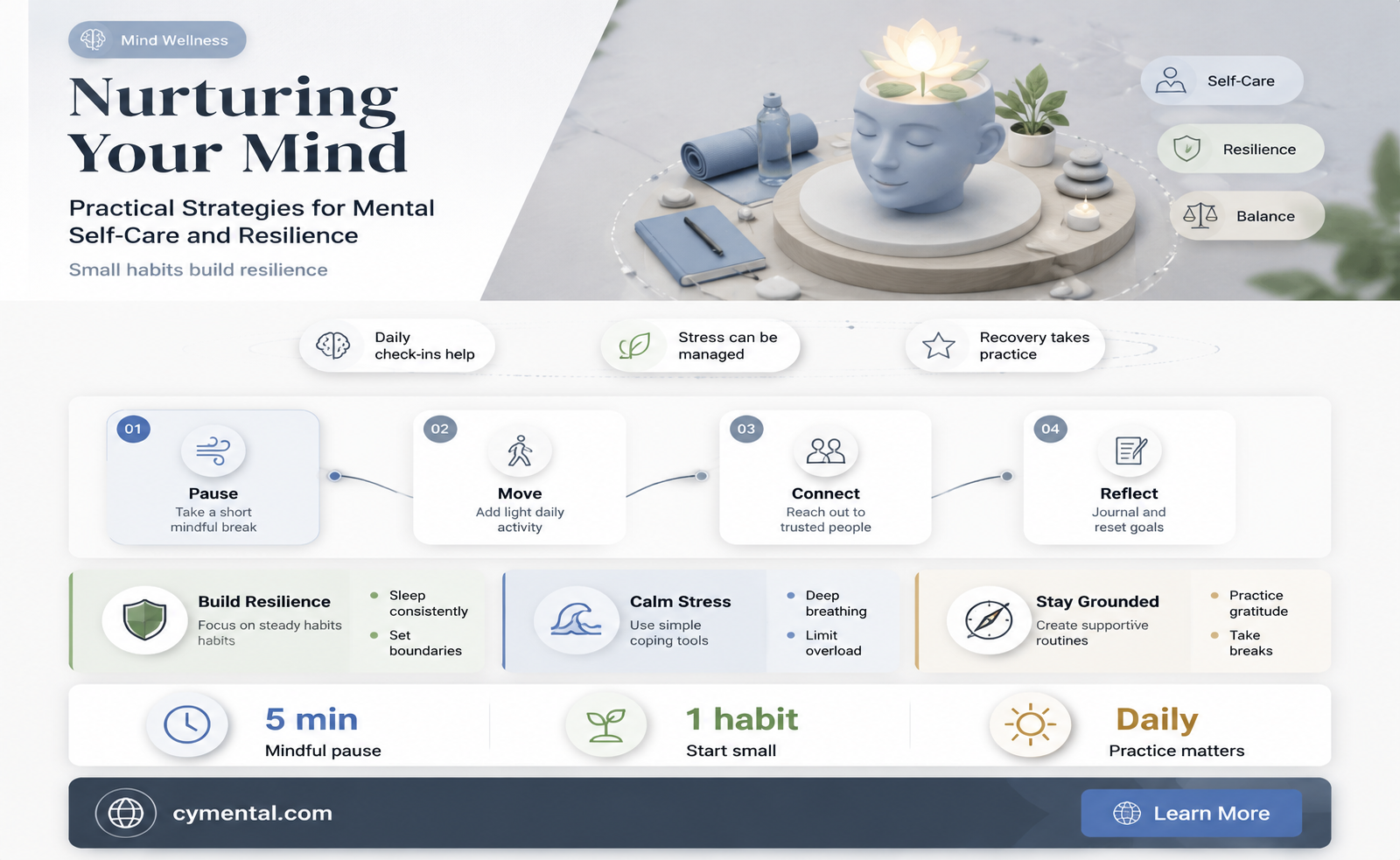
Taking care of your mental health is essential for overall well-being, and there are numerous ways to support yourself on this journey. Self-help strategies can be powerful tools to manage and improve your mental health, offering a sense of control and empowerment. From practicing mindfulness and engaging in regular physical activity to seeking social support and setting realistic goals, these methods can help reduce stress, anxiety, and symptoms of depression. By exploring various techniques and finding what works best for you, you can develop a personalized toolkit to navigate life's challenges and foster a healthier, more resilient mindset. This proactive approach to self-care is a crucial step towards long-term mental wellness.
Explore related products

$16.98 $30

$14.99 $29.99


What You'll Learn
- Practice Mindfulness: Focus on the present moment to reduce stress and improve mental clarity
- Exercise Regularly: Physical activity boosts mood, reduces anxiety, and enhances overall mental well-being
- Maintain a Routine: Structured daily habits provide stability and reduce feelings of overwhelm
- Seek Social Support: Connect with friends, family, or groups to combat loneliness and isolation
- Limit Negative Inputs: Reduce exposure to toxic media, people, or environments that harm mental health

Practice Mindfulness: Focus on the present moment to reduce stress and improve mental clarity
The human mind is a restless wanderer, often darting between past regrets and future anxieties. This mental time travel, while natural, can fuel stress and cloud judgment. Mindfulness, the practice of anchoring your attention to the present moment, offers a powerful antidote.
By consciously observing your thoughts, feelings, and sensations without judgment, you create a mental space where stress loses its grip.
Imagine your mind as a busy highway. Thoughts are cars, constantly speeding by. Mindfulness is like stepping onto the sidewalk, watching the traffic flow without getting caught up in it. This practice doesn't aim to stop the thoughts, but to change your relationship with them. You become the observer, not the passenger.
Incorporating mindfulness into your daily routine doesn't require hours of meditation. Start small. Dedicate 5-10 minutes each day to focused breathing. Sit comfortably, close your eyes, and simply pay attention to the sensation of air moving in and out of your body. When your mind wanders (and it will), gently bring your focus back to the breath. This simple act trains your brain to stay present.
Other everyday activities can become mindfulness exercises. Eating, for instance, can be transformed. Slow down, savor each bite, noticing the textures, flavors, and aromas. Engage your senses fully, experiencing the meal as if for the first time.
Mindfulness isn't about achieving a state of perpetual calm. It's about cultivating awareness, allowing you to respond to life's challenges with greater clarity and resilience. Research suggests regular mindfulness practice can reduce symptoms of anxiety and depression, improve sleep, and boost overall well-being. It's a tool, not a cure-all, but one that empowers you to navigate the complexities of your mind with greater ease.
Superstitions and Mental Health: Unraveling the Psychological Comfort They Offer
You may want to see also
Explore related products




Exercise Regularly: Physical activity boosts mood, reduces anxiety, and enhances overall mental well-being
Regular physical activity is a powerful tool for improving mental health, yet it’s often overlooked in favor of therapy or medication. Studies show that exercise triggers the release of endorphins, the brain’s natural mood lifters, and reduces levels of stress hormones like cortisol. Even a 30-minute walk can provide immediate benefits, making it an accessible and cost-effective strategy for managing mental well-being. Unlike quick fixes, exercise offers cumulative advantages, with consistent practice leading to long-term resilience against anxiety and depression.
To harness these benefits, aim for at least 150 minutes of moderate aerobic activity or 75 minutes of vigorous activity per week, as recommended by the World Health Organization. This can include activities like brisk walking, cycling, or swimming. For those short on time, breaking sessions into 10-minute increments still yields results. Incorporating strength training twice a week further enhances mental clarity and self-esteem. The key is consistency, not intensity—find an activity you enjoy to ensure it becomes a sustainable habit.
Age and fitness level play a role in tailoring an exercise routine. Younger adults might benefit from high-intensity interval training (HIIT) to combat stress, while older adults may prefer low-impact activities like yoga or tai chi to improve mood and balance. For individuals with anxiety, mindfulness-based exercises like walking meditation can amplify calming effects. Practical tips include scheduling workouts as non-negotiable appointments, exercising outdoors to boost serotonin levels, and tracking progress to stay motivated.
Comparing exercise to other mental health interventions highlights its unique advantages. While therapy addresses root causes of distress, exercise provides immediate symptom relief. Medication can stabilize severe conditions but often comes with side effects, whereas physical activity is side-effect-free and promotes holistic health. Combining exercise with other strategies creates a synergistic effect, offering both short-term relief and long-term mental resilience.
Incorporating regular exercise into your routine isn’t just about physical fitness—it’s a proactive step toward mental wellness. By understanding the science, tailoring activities to your needs, and staying consistent, you can unlock a natural and effective way to boost mood, reduce anxiety, and enhance overall mental well-being. Start small, stay committed, and let movement become your ally in the journey to better mental health.
Australia's Innovative Mental Health Support: Initiatives and Impact
You may want to see also
Explore related products

$10.21 $18.95


Maintain a Routine: Structured daily habits provide stability and reduce feelings of overwhelm
Human brains thrive on predictability, even if we often romanticize spontaneity. When faced with uncertainty or chaos, our bodies release stress hormones like cortisol, triggering the fight-or-flight response. A consistent daily routine acts as a counterbalance, signaling to your brain that the environment is safe and controlled. This reduces the constant drip of stress hormones, allowing your nervous system to shift into "rest and digest" mode, essential for mental restoration.
Consider your morning routine. Waking up at the same time, engaging in a predictable sequence of activities (shower, breakfast, etc.), and even eating similar meals creates a sense of order. This isn't about rigidity; it's about providing a framework. For example, a study published in the *Journal of Health Psychology* found that individuals who maintained consistent sleep and meal schedules reported lower levels of perceived stress and higher overall well-being. The key is consistency, not perfection.
Building a routine doesn't mean every minute is scheduled. Start small: identify 2-3 non-negotiable habits (e.g., 7 AM wake-up, 30 minutes of reading before bed) and anchor your day around them. Use time-blocking for tasks, but allow flexibility within those blocks. For instance, dedicate 9-11 AM to focused work, but let the specific tasks within that window vary based on priorities. Apps like Habitica or Notion can help visualize and track progress without becoming overwhelming.
However, routines can backfire if they become too rigid or if they’re not aligned with your values. For example, forcing yourself into a 5 AM workout routine when you’re naturally a night owl can increase stress rather than alleviate it. Similarly, overloading your routine with too many new habits at once (e.g., meditation, journaling, exercise, meal prep) can lead to burnout. Start with one change, master it, then layer on the next.
The ultimate goal of a routine is to create mental bandwidth. When basic decisions (what to eat, when to work) are automated, you free up cognitive resources for more complex tasks or emotional processing. Think of it as decluttering your mind: just as a tidy room reduces visual stress, a structured day reduces mental noise. Over time, this stability becomes a foundation for resilience, enabling you to handle unexpected challenges without feeling overwhelmed.
Physicians Seeking Mental Health Support: Breaking Stigma, Prioritizing Well-being
You may want to see also
Explore related products

$7.84 $14.99


Seek Social Support: Connect with friends, family, or groups to combat loneliness and isolation
Human beings are inherently social creatures, and our mental health thrives on connection. Loneliness and isolation, on the other hand, can act like a slow-acting poison, eroding our sense of well-being and leaving us vulnerable to anxiety, depression, and even physical health problems.
Think of social support as a mental health multivitamin. Just as our bodies need essential nutrients, our minds need the nourishment of human connection. Friends, family, and community groups provide a safety net, a sounding board, and a source of joy. They offer different perspectives, challenge our assumptions, and remind us that we're not alone in our struggles.
A study published in the *Journal of Health and Social Behavior* found that individuals with strong social ties have a 50% greater likelihood of survival compared to those with weak social ties. This highlights the profound impact social connection has on both our mental and physical health.
Building and maintaining social connections isn't always easy, especially in a world that often prioritizes digital interactions over face-to-face encounters. Start small. Reach out to an old friend, join a local club or class based on your interests, or volunteer in your community. Even brief, meaningful interactions can make a difference. Aim for at least one social activity per week, gradually increasing the frequency as you feel comfortable. Remember, quality trumps quantity. A deep conversation with a close friend can be more beneficial than superficial interactions with many acquaintances.
Don't be afraid to be vulnerable. Sharing your feelings and experiences fosters deeper connections and allows others to support you.
While technology can sometimes contribute to feelings of isolation, it can also be a powerful tool for connection. Online support groups and communities can provide valuable support, especially for those who struggle with mobility or live in remote areas. However, strive for a balance between online and offline interactions. Virtual connections should complement, not replace, real-world interactions.
Seeking social support is not a sign of weakness; it's a testament to your strength and self-awareness. By nurturing your relationships and building new connections, you're investing in your mental well-being and creating a life filled with meaning and belonging. Remember, you are not alone, and there are people who care. Reach out, connect, and let the power of human connection heal and uplift you.
Social Media's Impact: Boosting or Burdening Your Mental Well-Being?
You may want to see also
Explore related products




Limit Negative Inputs: Reduce exposure to toxic media, people, or environments that harm mental health
The average person consumes over 10 hours of media daily, much of it designed to provoke fear, anger, or envy. This constant barrage of negativity rewires your brain’s threat response, leaving you on edge even when no real danger exists. Limiting exposure to toxic media isn’t about burying your head in the sand—it’s about reclaiming mental bandwidth for what truly matters. Start by auditing your consumption: track how much time you spend on news sites, social media, or shows that leave you feeling drained. Then, set hard boundaries. For example, allocate 20 minutes daily for news updates, but avoid doomscrolling before bed. Replace one toxic input with a neutral or positive alternative, like a podcast on a hobby or a calming nature documentary.
Toxic people operate like emotional vampires, draining your energy and sowing self-doubt. These relationships often masquerade as "complicated" or "challenging," but their impact on your mental health is clear. To protect yourself, identify the red flags: constant criticism, manipulation, or a lack of reciprocity. Once identified, limit contact through firm boundaries. For instance, if a family member consistently undermines your self-worth, keep interactions brief and surface-level. Use phrases like, "I’m not discussing this further," to assert control. If cutting ties isn’t possible, practice emotional detachment by reminding yourself their behavior reflects their issues, not your worth.
Environments play a silent but powerful role in shaping your mental state. Cluttered spaces, for example, overstimulate the brain, increasing stress hormones like cortisol. Similarly, noisy or chaotic surroundings can elevate anxiety levels, even if you’re not consciously bothered. To counteract this, conduct a "mental health audit" of your surroundings. Start with your physical space: declutter one room at a time, focusing on areas where you spend the most time. Incorporate calming elements like plants, soft lighting, or soothing colors. For external environments, avoid places that trigger negativity—whether it’s a crowded mall or a toxic workplace breakroom. Instead, seek out spaces that foster peace, like parks or quiet cafes.
Limiting negative inputs isn’t about creating a sterile, conflict-free bubble—it’s about curating a mental ecosystem that supports growth and resilience. Think of it as pruning a garden: removing weeds allows the flowers to thrive. Practically, this means being intentional about what you allow into your life. For media, use tools like screen time trackers or app blockers to enforce limits. For people, prioritize relationships that uplift and challenge you in healthy ways. For environments, design your spaces to minimize stress and maximize calm. Remember, every small change compounds over time. Start with one toxic input today, and watch how your mental clarity and emotional stability improve.
Supporting Mental Health: Practical Ways to Make a Positive Impact
You may want to see also
Frequently asked questions
Engage in regular physical activity, practice mindfulness or meditation, maintain a balanced diet, get adequate sleep, and connect with supportive friends or family members.
Practice deep breathing exercises, set realistic goals, prioritize tasks, limit exposure to negative news or social media, and seek professional help if needed.
Focus on positive thinking, learn from setbacks, develop problem-solving skills, cultivate a strong support network, and practice self-compassion.