Ava Ramirez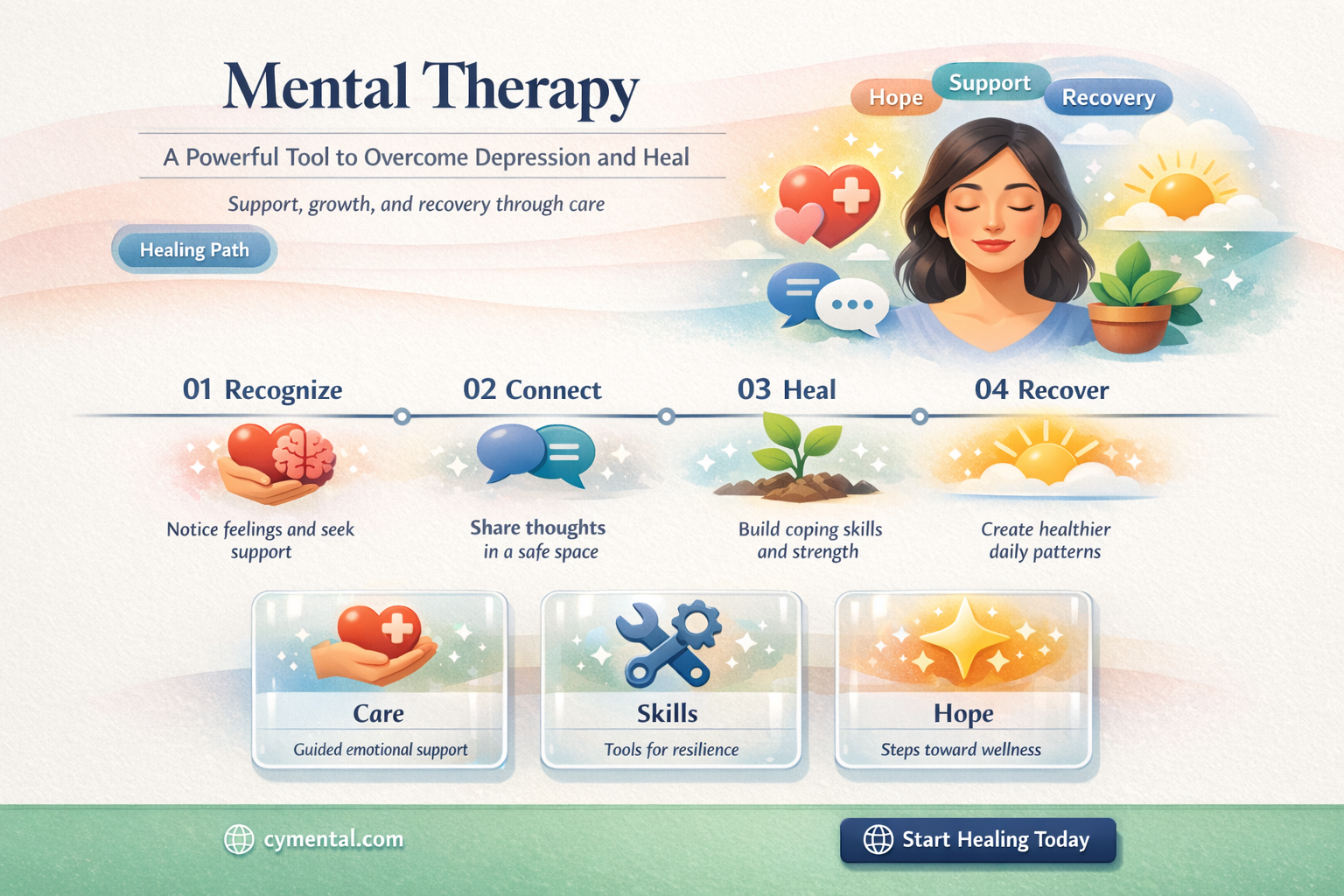
Mental therapy, particularly cognitive-behavioral therapy (CBT) and interpersonal therapy (IPT), plays a crucial role in managing and alleviating symptoms of depression by addressing underlying thought patterns, behaviors, and emotional triggers. Through structured sessions, therapists help individuals identify and challenge negative thought cycles, fostering healthier coping mechanisms and improving emotional regulation. Additionally, therapy provides a safe space for exploring and resolving interpersonal conflicts, enhancing communication skills, and rebuilding social connections, which are often strained by depression. By combining evidence-based techniques with personalized support, mental therapy empowers individuals to regain control over their lives, reduce the severity of depressive episodes, and build resilience for long-term mental well-being.
| Characteristics | Values |
|---|---|
| Identifies Negative Thought Patterns | Helps recognize and challenge distorted thinking (e.g., catastrophizing, black-and-white thinking) that contribute to depressive symptoms. |
| Develops Coping Strategies | Teaches practical tools to manage stress, emotions, and difficult situations, such as mindfulness, relaxation techniques, and problem-solving skills. |
| Improves Emotional Regulation | Helps individuals understand and express emotions in healthier ways, reducing feelings of overwhelm and hopelessness. |
| Enhances Problem-Solving Skills | Encourages breaking down problems into manageable steps and finding constructive solutions, fostering a sense of control and agency. |
| Builds Self-Esteem and Self-Compassion | Challenges negative self-beliefs and promotes self-acceptance, leading to improved self-worth and resilience. |
| Addresses Underlying Causes | Explores past experiences, relationships, and traumas that may contribute to depression, allowing for healing and resolution. |
| Improves Communication and Relationships | Helps individuals express needs effectively, set boundaries, and build healthier connections with others, reducing feelings of isolation. |
| Changes Behavioral Patterns | Encourages engagement in pleasurable activities and social interactions, combating withdrawal and inactivity associated with depression. |
| Provides Support and Accountability | Offers a safe and non-judgmental space to process emotions, track progress, and stay motivated throughout treatment. |
| Reduces Risk of Relapse | Equips individuals with tools and strategies to recognize early warning signs of depression and prevent future episodes. |
| Complements Medication | Can be used alongside antidepressants for enhanced effectiveness, especially in moderate to severe cases. |
Explore related products


What You'll Learn
- Cognitive Restructuring: Helps identify and change negative thought patterns contributing to depressive symptoms
- Behavioral Activation: Encourages engaging in activities to improve mood and reduce isolation
- Emotion Regulation: Teaches skills to manage and express emotions effectively, reducing overwhelm
- Interpersonal Therapy: Focuses on improving relationships and communication to alleviate depression triggers
- Mindfulness Techniques: Promotes present-moment awareness to reduce rumination and enhance emotional balance

Cognitive Restructuring: Helps identify and change negative thought patterns contributing to depressive symptoms
Depression often thrives on distorted thinking, where negative thoughts become a self-fulfilling prophecy. Cognitive restructuring, a core technique in cognitive-behavioral therapy (CBT), acts as a mental detective, uncovering these harmful thought patterns and replacing them with more realistic and balanced perspectives.
Imagine constantly viewing the world through a distorted lens, magnifying failures and minimizing successes. This is the reality for many individuals battling depression. Cognitive restructuring aims to clean this lens, allowing for a clearer, more accurate perception of oneself and the surrounding environment.
The process begins with identifying automatic negative thoughts (ANTs), those instantaneous, often unconscious beliefs that pop into our minds. For instance, someone struggling with depression might automatically think, "I'm a complete failure" after receiving a single criticism at work. Cognitive restructuring encourages individuals to challenge these ANTs by examining the evidence. Is there concrete proof to support the thought? Are there alternative explanations for the situation? This analytical approach helps to dismantle the power of these negative thoughts.
Once the ANTs are identified and challenged, the next step is to replace them with more realistic and helpful thoughts. Instead of "I'm a complete failure," the individual might reframe the thought to, "I received some constructive feedback at work, which I can use to improve my performance." This doesn't deny the existence of challenges but offers a more balanced and empowering perspective.
Think of cognitive restructuring as a mental workout. Just as physical exercise strengthens muscles, consistently practicing cognitive restructuring strengthens the brain's ability to identify and challenge negative thought patterns. Over time, this can lead to a significant reduction in depressive symptoms and a greater sense of control over one's emotional well-being.
Boost Mental Alertness to Prevent Injuries and Stay Safe
You may want to see also
Explore related products




Behavioral Activation: Encourages engaging in activities to improve mood and reduce isolation
Depression often traps individuals in a cycle of inactivity and withdrawal, where the very thought of engaging in once-enjoyable activities feels insurmountable. Behavioral Activation (BA) disrupts this cycle by systematically reintroducing purposeful actions into daily life. Unlike passive approaches, BA is an active intervention that leverages the inherent connection between behavior and emotion. By scheduling and completing specific tasks, even when motivation is low, individuals can experience tangible improvements in mood and a gradual reduction in feelings of isolation.
Consider this structured approach: Begin by identifying small, manageable activities aligned with personal values or past interests. For example, a 30-minute walk, journaling for 10 minutes, or initiating a brief conversation with a friend. The key is consistency—aim for daily engagement, even if the activity seems trivial. Research shows that completing just three such tasks per day can yield noticeable mood enhancements within two weeks. However, caution against overloading; start with one or two activities and gradually increase frequency to avoid overwhelm.
A comparative analysis highlights BA’s effectiveness: While cognitive therapies focus on altering thought patterns, BA targets behavior directly, often yielding faster symptom relief. For instance, a 2016 meta-analysis found BA to be as effective as antidepressants in mild to moderate depression cases, with fewer side effects. This makes it particularly suitable for adolescents and older adults who may prefer non-pharmacological interventions. Pairing BA with mindfulness practices can further amplify results, as mindfulness helps individuals stay present during activities, enhancing their emotional impact.
Practical implementation requires self-compassion and flexibility. Use a planner or digital app to schedule activities, treating them as non-negotiable appointments. If an activity feels too daunting, break it into smaller steps—for example, instead of “clean the house,” start with “tidy one drawer.” Celebrate completions, no matter how small, to reinforce progress. For those in social isolation, begin with low-stakes interactions, such as joining an online hobby group or volunteering for short shifts at a local organization.
In conclusion, Behavioral Activation is a powerful, evidence-based tool for combating depression’s paralyzing effects. By prioritizing action over emotion, it creates a positive feedback loop where small behavioral changes lead to significant emotional shifts. Whether used independently or alongside other therapies, BA offers a practical pathway to reclaiming agency and connection in the face of depression. Start small, stay consistent, and let the science of behavior work in your favor.
Medication as a Tool: Supporting Mental Health Recovery and Wellness
You may want to see also
Explore related products


Emotion Regulation: Teaches skills to manage and express emotions effectively, reducing overwhelm
Depression often amplifies emotional intensity, trapping individuals in cycles of overwhelm and avoidance. Emotion regulation, a core focus of therapies like Dialectical Behavior Therapy (DBT) and Cognitive Behavioral Therapy (CBT), disrupts this cycle by teaching concrete skills to observe, tolerate, and respond to emotions constructively. Unlike suppression, which fuels emotional buildup, regulation fosters a mindful relationship with feelings, reducing their paralyzing grip.
Consider the skill of "opposite action," a DBT technique. When sadness immobilizes, deliberate engagement in an activity that contradicts the emotion (e.g., exercising despite fatigue) retrains the brain's emotional response pathways. Research shows such practices, when practiced 15-20 minutes daily, can decrease depressive symptoms by up to 30% within 8 weeks. Similarly, "emotional surfing," a metaphorical exercise where one visualizes riding an emotional wave, teaches that emotions, like waves, crest and subside, reducing the urge to fight or flee from distress.
However, emotion regulation is not about eliminating discomfort but about expanding tolerance. Techniques like paced breathing (inhale 4 seconds, hold 4, exhale 6) activate the parasympathetic nervous system, lowering cortisol levels and creating physiological calm. Pairing this with cognitive reframing—asking "What’s one small step I can take right now?"—shifts focus from insurmountable problems to actionable solutions. For adolescents, incorporating these skills into daily routines (e.g., journaling emotions before bed) has shown a 40% reduction in depressive relapse rates.
A common pitfall is expecting immediate mastery. Emotion regulation is a muscle, strengthened through consistent, small efforts. Start with 5-minute daily check-ins: rate your emotion (1-10), identify triggers, and apply one coping skill. Over time, this builds emotional agility, transforming overwhelm into manageable moments. As one DBT practitioner notes, "You don’t need to control the storm—just learn to sail through it."
Finding Mental Health Support: A Guide to Accessible Resources and Services
You may want to see also
Explore related products


$15.35 $34.99




Interpersonal Therapy: Focuses on improving relationships and communication to alleviate depression triggers
Depression often thrives in the shadows of strained relationships, where miscommunication and unresolved conflicts create a breeding ground for negative emotions. Interpersonal Therapy (IPT) steps into this arena, wielding the power of connection as a weapon against despair. Unlike approaches that delve into deep-seated traumas, IPT focuses on the here and now, targeting the interpersonal challenges that fuel depressive episodes.
Imagine a garden choked by weeds; IPT acts as the gardener, clearing away the entanglements of poor communication, unresolved grief, and social isolation, allowing the flowers of emotional well-being to bloom.
This time-limited therapy, typically spanning 12 to 16 weekly sessions, follows a structured approach. It begins by identifying specific interpersonal problems contributing to depression, such as unresolved conflicts with a partner, the loss of a loved one, or difficulty adjusting to life transitions. Once these triggers are pinpointed, the therapist collaborates with the individual to develop concrete strategies for improving communication, assertiveness, and problem-solving skills. For instance, a person struggling with setting boundaries might learn to express their needs clearly and directly, while someone grieving a loss might explore ways to rebuild their social support network.
Think of it as learning a new language – the language of healthy relationships – with the therapist acting as a skilled translator, guiding the individual through the nuances of effective communication and conflict resolution.
The beauty of IPT lies in its practicality. It doesn't require delving into painful childhood memories or unraveling complex psychological knots. Instead, it focuses on tangible changes in the present, empowering individuals to take control of their relationships and, consequently, their mental health. Research consistently demonstrates the effectiveness of IPT, particularly for individuals experiencing mild to moderate depression. Studies show that IPT can be as effective as antidepressant medication in some cases, offering a valuable alternative for those seeking non-pharmacological interventions.
Like a well-tailored suit, IPT is adaptable, catering to diverse age groups and cultural backgrounds. It can be particularly beneficial for adolescents struggling with peer relationships, adults navigating marital difficulties, or older adults coping with loneliness and bereavement.
However, IPT is not a magic bullet. It requires active participation and a willingness to confront difficult emotions and patterns of behavior. The process can be challenging, demanding vulnerability and a commitment to change. Imagine learning to play a musical instrument – it takes practice, patience, and a willingness to make mistakes along the way. Similarly, mastering the art of healthy communication and relationship building takes time and effort.
Ultimately, IPT offers a beacon of hope for those grappling with depression, illuminating a path towards healing through the power of human connection. By addressing the interpersonal roots of despair, it empowers individuals to cultivate healthier relationships, fostering a sense of belonging and emotional well-being that acts as a bulwark against the darkness of depression.
Can Hospitals Provide Effective Mental Health Support and Treatment?
You may want to see also
Explore related products


Mindfulness Techniques: Promotes present-moment awareness to reduce rumination and enhance emotional balance
Depression often traps individuals in a cycle of rumination, where negative thoughts about the past or future dominate their mental landscape. Mindfulness techniques disrupt this cycle by anchoring attention to the present moment, fostering a non-judgmental awareness of thoughts and feelings as they arise. This shift in focus reduces the mental chatter that fuels depressive symptoms, allowing individuals to observe their experiences without becoming overwhelmed by them.
One effective mindfulness practice is focused breathing. Set aside 5–10 minutes daily in a quiet space. Sit comfortably, close your eyes, and direct your attention to your breath. Notice the sensation of air entering and leaving your nostrils, the rise and fall of your chest. When your mind wanders (which it inevitably will), gently guide your focus back to the breath. Research suggests that consistent practice, even for as little as 8 weeks, can significantly reduce symptoms of depression by calming the nervous system and increasing emotional regulation.
Another powerful technique is the body scan, particularly useful for those whose depression manifests physically as tension or fatigue. Lie down in a comfortable position and systematically bring your attention to each part of your body, starting from the toes and moving upward. Notice any sensations—tightness, warmth, or numbness—without trying to change them. This practice cultivates a deeper connection between mind and body, helping individuals recognize and release physical manifestations of emotional distress.
For those who struggle with sitting still, mindful walking offers a dynamic alternative. Choose a quiet path and walk at a slow, deliberate pace. Focus on the sensation of your feet touching the ground, the rhythm of your steps, and the sounds around you. This practice not only grounds you in the present but also integrates mindfulness into daily activity, making it more accessible for individuals with restless minds or busy schedules.
While mindfulness is not a cure-all, its consistent application can rewire neural pathways associated with depression. Studies show that mindfulness-based cognitive therapy (MBCT) reduces the risk of relapse in individuals with recurrent depression by up to 43%. However, it’s essential to approach these techniques with patience and self-compassion. Mindfulness is a skill that develops over time, and initial attempts may feel awkward or unproductive. Pairing mindfulness with professional therapy can provide additional support, ensuring that the practice is tailored to individual needs and challenges.
Reading for Resilience: How Books Boost Mental Health and Well-Being
You may want to see also
Frequently asked questions
Mental therapy helps with depression by addressing underlying causes, teaching coping strategies, and improving emotional regulation. Therapists use evidence-based techniques like Cognitive Behavioral Therapy (CBT) to challenge negative thought patterns and promote healthier behaviors.
The most effective therapies for depression include Cognitive Behavioral Therapy (CBT), Interpersonal Therapy (IPT), and Mindfulness-Based Cognitive Therapy (MBCT). These approaches focus on changing thought patterns, improving relationships, and reducing relapse risk.
Yes, therapy can be highly effective even if medication isn’t working. It provides tools to manage symptoms, address root causes, and build resilience. Combining therapy with medication often yields better results, but therapy alone can also be sufficient for many individuals.
The duration varies depending on the individual and severity of depression. Some people notice improvements within a few weeks, while others may need several months. Consistency and active participation in therapy sessions are key to achieving lasting results.
Yes, therapy can help prevent relapse by teaching long-term coping skills, improving self-awareness, and addressing recurring triggers. Techniques like mindfulness and cognitive restructuring empower individuals to manage symptoms proactively and maintain mental health over time.