Ava Ramirez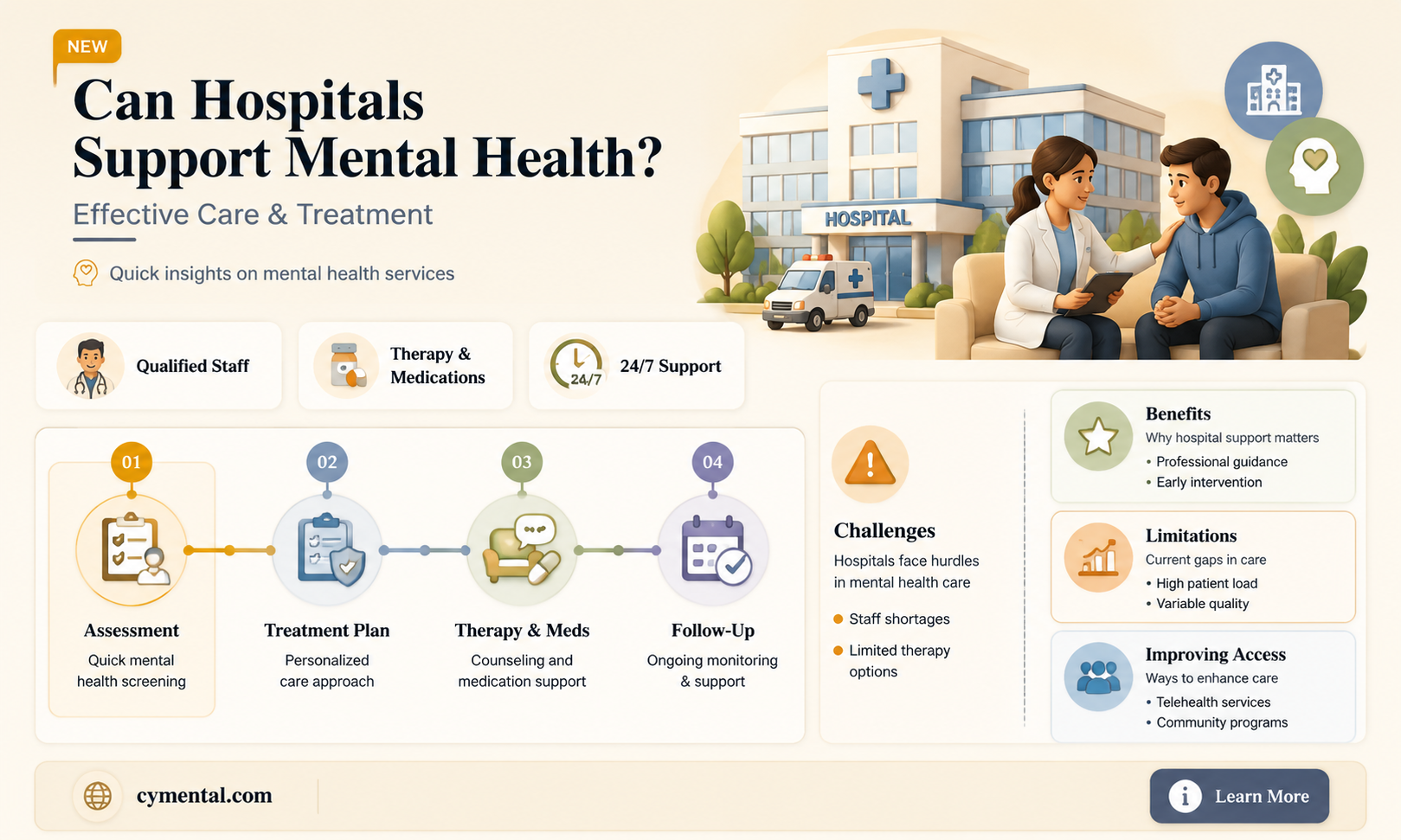
Hospitals play a crucial role in addressing mental health issues, offering a range of services from emergency care for acute crises to long-term treatment plans. Many hospitals have dedicated psychiatric units or departments staffed with professionals like psychiatrists, psychologists, and social workers who provide diagnosis, therapy, and medication management. Additionally, hospitals often serve as gateways to community resources, connecting patients with outpatient programs, support groups, and counseling services. While hospitals are primarily associated with physical health, their integrated approach to care increasingly recognizes the importance of mental well-being, making them a vital resource for individuals seeking help with mental health challenges.
| Characteristics | Values |
|---|---|
| Emergency Care | Hospitals provide immediate crisis intervention for severe mental health episodes, such as suicidal ideation or psychosis. |
| Inpatient Psychiatric Units | Specialized wards for short-term stabilization and treatment of acute mental health conditions. |
| Outpatient Services | Some hospitals offer therapy, medication management, and counseling through outpatient mental health clinics. |
| Integrated Care | Collaboration between primary care and mental health professionals to address both physical and mental health needs. |
| Diagnostic Assessments | Comprehensive evaluations by psychiatrists or psychologists to diagnose mental health disorders. |
| Medication Management | Prescription and monitoring of psychiatric medications by qualified professionals. |
| Referral Services | Hospitals can refer patients to community-based mental health resources, such as therapists or support groups. |
| Support for Co-occurring Disorders | Treatment for individuals with both mental health and substance use disorders. |
| Access to Specialists | Availability of psychiatrists, psychologists, and other mental health specialists for complex cases. |
| Crisis Hotlines and Support | Many hospitals offer or connect patients to 24/7 crisis hotlines for immediate mental health support. |
| Education and Prevention | Programs to educate patients and families about mental health and strategies for prevention. |
| Follow-up Care | Post-discharge planning and follow-up appointments to ensure continuity of care. |
| Telehealth Services | Increasingly, hospitals offer virtual mental health consultations for accessibility. |
| Cultural Competence | Services tailored to diverse cultural and linguistic needs of patients. |
| Limitations | Hospitals may not provide long-term therapy or extensive community-based support, often requiring referrals to external providers. |
Explore related products


What You'll Learn
- Therapy Services: Access to psychologists, counselors, and psychiatrists for individual or group therapy sessions
- Crisis Intervention: Emergency support for acute mental health episodes, including suicide prevention
- Medication Management: Prescription and monitoring of psychiatric medications by qualified professionals
- Inpatient Care: Short-term hospitalization for severe mental health conditions requiring intensive treatment
- Outpatient Programs: Structured programs for ongoing mental health support without hospital admission

Therapy Services: Access to psychologists, counselors, and psychiatrists for individual or group therapy sessions
Hospitals increasingly serve as vital hubs for mental health therapy services, offering access to psychologists, counselors, and psychiatrists for both individual and group sessions. These professionals provide evidence-based treatments tailored to diverse needs, from anxiety and depression to trauma and chronic conditions. Unlike standalone clinics, hospital-based therapy often integrates medical care, ensuring a holistic approach for patients with co-occurring physical and mental health issues.
Consider the process of accessing these services. Most hospitals require a referral from a primary care physician or emergency department, though some offer walk-in crisis counseling. Initial assessments typically last 45–60 minutes, during which the therapist evaluates symptoms, history, and goals. For children under 12, play therapy or family sessions might be recommended, while adolescents and adults often benefit from cognitive-behavioral therapy (CBT) or dialectical behavior therapy (DBT). Group therapy, usually capped at 8–12 participants, fosters peer support and skill-building, often focusing on themes like stress management or substance abuse recovery.
A critical advantage of hospital-based therapy is the availability of psychiatrists who can prescribe medication when needed. For instance, selective serotonin reuptake inhibitors (SSRIs) like fluoxetine (10–20 mg/day) are commonly paired with therapy for depression. However, medication management is just one component; therapy sessions remain essential for addressing underlying behaviors and thought patterns. Hospitals often coordinate care between therapists and psychiatrists, streamlining treatment for complex cases.
Practical tips can enhance the therapy experience. Arrive early to sessions to minimize stress, and keep a journal to track progress and questions. For group therapy, active participation maximizes benefits, even if it feels uncomfortable initially. If cost is a concern, inquire about sliding-scale fees or insurance coverage—many hospitals accept Medicaid or offer financial assistance programs. Finally, consistency is key: weekly sessions for 8–12 weeks are standard, though long-term therapy may be recommended for chronic conditions.
While hospital therapy services are robust, they’re not without limitations. Wait times can be lengthy, especially in underserved areas, and some specialized therapies (e.g., eye movement desensitization and reprocessing, or EMDR) may not be available. Additionally, the clinical environment might feel impersonal to some. Nonetheless, for those seeking structured, multidisciplinary care, hospital-based therapy remains a cornerstone of mental health treatment, blending expertise, accessibility, and integration with broader healthcare systems.
Supporting the Mentally Handicapped: Are Current Efforts Truly Making a Difference?
You may want to see also
Explore related products


Crisis Intervention: Emergency support for acute mental health episodes, including suicide prevention
In moments of acute mental health crisis, immediate and effective intervention can be the difference between life and death. Hospitals play a critical role in providing emergency support, particularly for individuals experiencing severe episodes such as suicidal ideation, psychotic breaks, or overwhelming anxiety. Crisis intervention teams, often comprising psychiatrists, nurses, and social workers, are trained to de-escalate situations, stabilize patients, and connect them to ongoing care. For instance, a person in suicidal crisis may be admitted to an emergency department, where they receive rapid assessment, medication if necessary (e.g., benzodiazepines for acute agitation), and placement in a safe environment until the risk subsides.
The process begins with a thorough assessment, typically using tools like the Columbia-Suicide Severity Rating Scale (C-SSRS) to gauge the immediacy and severity of risk. This step is crucial, as misjudging a patient’s condition can have dire consequences. Once stabilized, patients are often referred to inpatient psychiatric units or outpatient programs, depending on their needs. For example, someone with a first-time psychotic episode might require a 72-hour hold for observation and medication adjustment, while another with recurrent depression and suicidal thoughts may benefit from intensive outpatient therapy. Hospitals act as a bridge, ensuring continuity of care during the most vulnerable moments.
Practical tips for individuals or caregivers in crisis include knowing the location of the nearest emergency department with psychiatric services and having a crisis hotline number readily available (e.g., the National Suicide Prevention Lifeline at 988 in the U.S.). Bringing a list of current medications and a brief summary of the person’s mental health history can expedite care. It’s also essential to remain calm and cooperative with hospital staff, as their primary goal is to ensure safety and provide relief.
Comparatively, while hospitals are equipped to handle acute crises, they are not a long-term solution for chronic mental health issues. Emergency departments often face challenges such as overcrowding and limited psychiatric resources, which can delay care. However, they remain a vital safety net, particularly in regions with inadequate community mental health services. For instance, rural areas may rely heavily on hospitals for crisis intervention due to a lack of local therapists or clinics.
In conclusion, hospitals serve as indispensable hubs for crisis intervention, offering immediate support during acute mental health episodes. Their role extends beyond stabilization to include linkage to ongoing care, ensuring that individuals receive the help they need to recover. While not without limitations, hospitals remain a cornerstone of emergency mental health services, saving lives through swift and compassionate action.
Do Mental Hospitals Help: Exploring Effectiveness and Patient Outcomes
You may want to see also
Explore related products




Medication Management: Prescription and monitoring of psychiatric medications by qualified professionals
Psychiatric medications are a cornerstone of treatment for many mental health conditions, but their effectiveness hinges on precise management. Qualified professionals—psychiatrists, nurse practitioners, and physician assistants—play a critical role in prescribing and monitoring these medications to ensure safety and efficacy. For instance, antidepressants like selective serotonin reuptake inhibitors (SSRIs) often require dosage adjustments based on patient response and side effects. A psychiatrist might start a patient on 20 mg of fluoxetine daily, gradually increasing to 40 mg if symptoms persist after 4–6 weeks, while monitoring for adverse reactions such as insomnia or gastrointestinal discomfort.
Effective medication management begins with a thorough assessment of the patient’s medical history, current symptoms, and potential drug interactions. For example, a patient with bipolar disorder may require mood stabilizers like lithium, but regular blood tests are essential to maintain therapeutic levels (0.8–1.0 mEq/L) and avoid toxicity. Similarly, antipsychotics such as olanzapine are often prescribed for schizophrenia but can cause metabolic side effects, necessitating routine monitoring of weight, blood sugar, and lipid levels. This proactive approach minimizes risks and maximizes benefits, ensuring the medication regimen aligns with the patient’s unique needs.
Monitoring extends beyond the prescription phase. Follow-up appointments are crucial to evaluate progress and make necessary adjustments. A patient on an SSRI might report improved mood but persistent anxiety, prompting the addition of a low-dose benzodiazepine like clonazepam (0.5 mg as needed). However, such combinations require careful oversight to prevent dependence. Practical tips for patients include keeping a symptom journal, taking medications at the same time daily, and using pill organizers to maintain adherence. These strategies empower patients to actively participate in their treatment.
Comparatively, medication management in a hospital setting offers advantages over outpatient care, particularly for acute cases. Inpatient teams can observe patients closely, allowing for rapid titration of medications like antipsychotics or mood stabilizers. For example, a patient experiencing a manic episode might receive oral quetiapine starting at 50 mg twice daily, with increments of 100 mg every 2–3 days until symptoms stabilize. This level of supervision ensures immediate intervention if side effects arise, such as extrapyramidal symptoms or sedation.
In conclusion, medication management by qualified professionals is a dynamic, patient-centered process that requires expertise, vigilance, and collaboration. From initial prescription to ongoing monitoring, every step is tailored to optimize outcomes while minimizing risks. Whether in a hospital or outpatient setting, this structured approach ensures psychiatric medications serve as a powerful tool in the broader mental health treatment landscape. Patients and caregivers alike benefit from understanding this process, fostering trust and adherence to the prescribed regimen.
Reading the Bible: A Path to Mental Health and Healing?
You may want to see also
Explore related products


$15.71 $20

$12.14 $19.99


Inpatient Care: Short-term hospitalization for severe mental health conditions requiring intensive treatment
Hospitals play a critical role in managing severe mental health crises through inpatient care, a short-term hospitalization option designed for individuals experiencing acute symptoms that cannot be safely treated in an outpatient setting. This level of care is reserved for conditions like suicidal ideation, severe depression with psychotic features, manic episodes in bipolar disorder, or acute psychosis, where immediate stabilization is essential. Unlike therapy or medication management, inpatient care provides 24/7 monitoring, intensive treatment, and a structured environment to prevent self-harm or harm to others.
The process typically begins with a psychiatric evaluation in the emergency department, where clinicians assess the severity of symptoms and determine the need for hospitalization. Once admitted, patients undergo a comprehensive treatment plan tailored to their condition. This often includes a combination of pharmacotherapy, such as antipsychotics, mood stabilizers, or antidepressants, administered under close supervision to ensure efficacy and manage side effects. For instance, a patient with severe mania might receive lithium, starting at 300 mg twice daily, with serum levels monitored to maintain therapeutic ranges (0.8–1.2 mEq/L).
In addition to medication, inpatient care emphasizes psychotherapy and behavioral interventions. Group therapy sessions, often led by licensed therapists, focus on coping strategies, emotional regulation, and social skills. Individual therapy may address trauma, thought patterns, or triggers contributing to the crisis. Patients also participate in structured activities like art therapy, mindfulness exercises, or physical therapy to promote holistic healing. For example, a 28-year-old with severe anxiety and panic attacks might learn diaphragmatic breathing techniques during daily sessions, reducing symptoms by up to 50% within the first week.
Despite its benefits, inpatient care is not without challenges. The hospital environment can feel restrictive, and the intensity of treatment may overwhelm some individuals. Stigma surrounding hospitalization can deter people from seeking help, while insurance limitations often cap stays at 5–7 days, potentially cutting short necessary treatment. To mitigate these issues, hospitals increasingly involve families in care planning and provide aftercare resources, such as partial hospitalization programs or outpatient follow-ups, to ensure continuity of treatment.
Inpatient care serves as a vital safety net for those in acute mental health distress, offering a concentrated, multidisciplinary approach to stabilization. While it is not a long-term solution, it provides a critical foundation for recovery, equipping individuals with tools and insights to manage their conditions effectively post-discharge. For those facing severe mental health challenges, it can be a lifeline, bridging the gap between crisis and sustained wellness.
Sleep's Role in Boosting Mental Health and Emotional Well-Being
You may want to see also
Explore related products



Outpatient Programs: Structured programs for ongoing mental health support without hospital admission
Hospitals often serve as the first point of contact for individuals seeking mental health support, but they are not the only resource available. For those who do not require inpatient care, outpatient programs offer a structured, ongoing approach to mental health treatment. These programs provide a middle ground between sporadic therapy sessions and full hospitalization, catering to individuals who need consistent support but can manage their daily lives outside a clinical setting.
Consider the case of a 32-year-old professional diagnosed with generalized anxiety disorder. Instead of admitting them to a hospital, an outpatient program might offer a tailored schedule: three weekly group therapy sessions, bi-weekly individual counseling, and monthly psychiatric check-ins. This structure ensures regular monitoring and intervention while allowing the individual to maintain their work and personal responsibilities. Programs often incorporate evidence-based therapies like Cognitive Behavioral Therapy (CBT) or Dialectical Behavior Therapy (DBT), with sessions typically lasting 60–90 minutes. For medication management, psychiatrists may prescribe SSRIs (e.g., 20–40 mg of fluoxetine daily) or other pharmacological interventions, adjusting dosages based on progress.
One of the key advantages of outpatient programs is their flexibility. Unlike inpatient care, which requires a full-time commitment, outpatient programs can be adapted to fit individual needs. For instance, a teenager struggling with depression might attend after-school sessions, while a retiree could participate in morning programs. However, this flexibility comes with a caveat: success depends on the individual’s commitment to attending sessions and engaging in treatment. Missed appointments or lack of adherence to treatment plans can hinder progress, making self-discipline a critical factor.
Outpatient programs also foster a sense of community, which is often lacking in individual therapy settings. Group sessions allow participants to share experiences, learn coping strategies from peers, and build a support network. For example, a program for individuals with PTSD might include group activities like mindfulness exercises or role-playing scenarios to practice emotional regulation. This communal aspect not only enhances therapeutic outcomes but also reduces feelings of isolation, a common challenge in mental health struggles.
In conclusion, outpatient programs serve as a vital bridge between acute hospital care and independent living. They offer structured, ongoing support tailored to individual needs, combining therapy, medication management, and community engagement. While they require active participation, their flexibility and comprehensive approach make them an effective option for those seeking sustained mental health improvement without the constraints of hospitalization. For anyone navigating mental health challenges, exploring outpatient programs could be a transformative step toward long-term well-being.
Dance Therapy: Unlocking Mental Wellness Through Movement and Expression
You may want to see also
Frequently asked questions
Yes, hospitals, especially emergency departments, can provide immediate assistance for mental health crises, such as suicidal thoughts, severe anxiety, or psychotic episodes. They can stabilize patients, conduct assessments, and connect them with appropriate resources or inpatient care.
Hospitals typically focus on acute care and stabilization rather than long-term treatment. However, they can refer patients to outpatient services, therapists, psychiatrists, or community mental health programs for ongoing support.
Yes, you can visit a hospital’s emergency department for mental health issues without an appointment. They are equipped to handle urgent situations and will provide the necessary care or referrals. For non-emergency concerns, contacting a primary care provider or mental health clinic may be more appropriate.