Noah Parker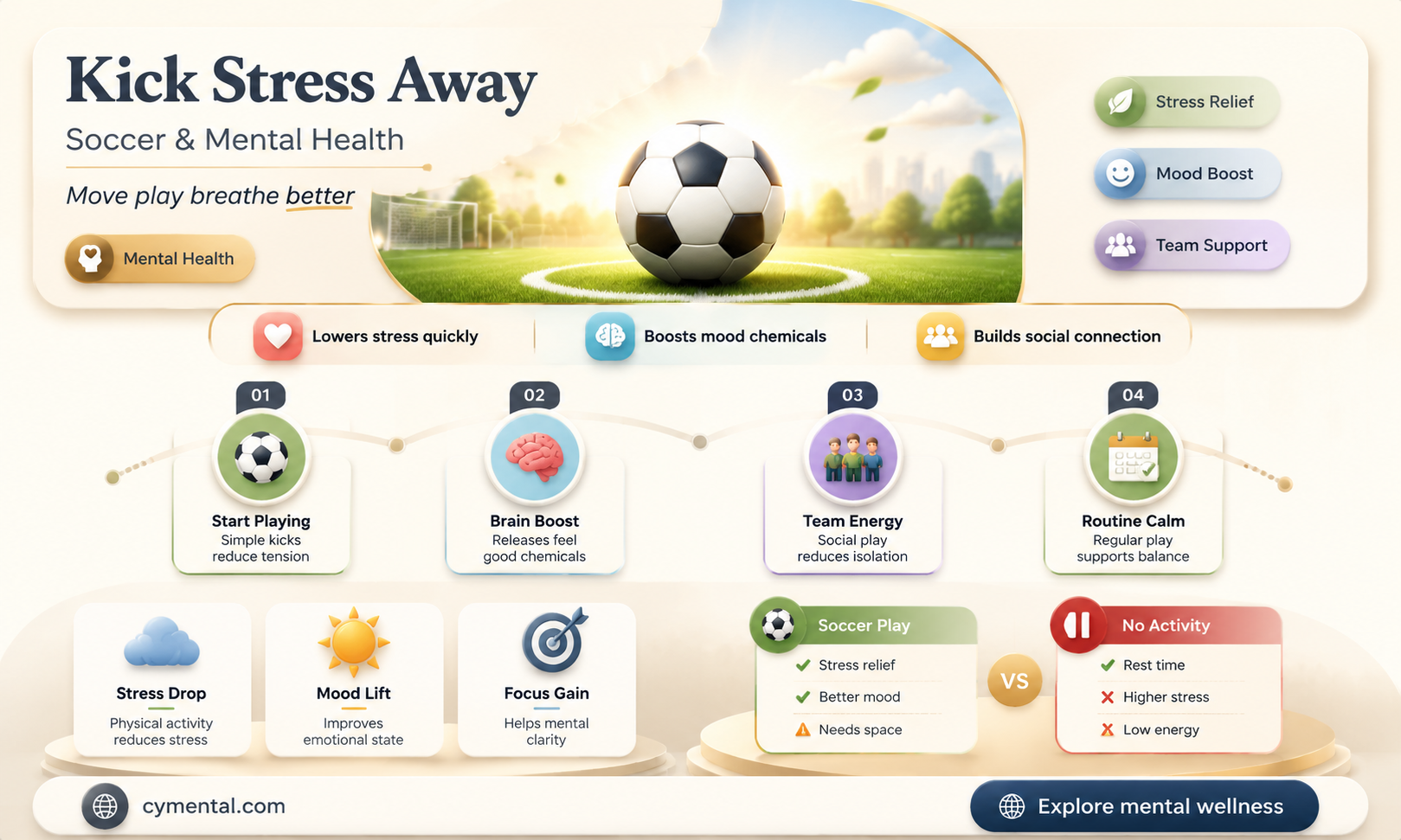
Soccer, beyond being a globally beloved sport, offers significant mental health benefits that extend far beyond the physical activity it provides. Engaging in soccer fosters a sense of community and belonging, as players collaborate toward a common goal, reducing feelings of isolation and loneliness. The structured nature of the game, combined with the release of endorphins during exercise, can alleviate symptoms of anxiety and depression, promoting emotional well-being. Additionally, the strategic and skill-based aspects of soccer enhance cognitive function, improve focus, and boost self-confidence. For many, the sport serves as a healthy outlet for stress, allowing individuals to channel their emotions into productive and enjoyable activity, ultimately contributing to a more balanced and resilient mental state.
| Characteristics | Values |
|---|---|
| Stress Reduction | Physical activity in soccer triggers the release of endorphins, which reduce stress and improve mood. |
| Social Connection | Team sports like soccer foster camaraderie, reduce feelings of loneliness, and provide a supportive community. |
| Improved Self-Esteem | Achieving goals, mastering skills, and contributing to a team boost self-confidence and self-worth. |
| Cognitive Function | Soccer enhances concentration, decision-making, and strategic thinking, promoting mental sharpness. |
| Anxiety Relief | Regular physical activity in soccer helps reduce symptoms of anxiety by regulating neurotransmitters like serotonin. |
| Emotional Regulation | The structured nature of soccer provides an outlet for emotions, helping individuals manage anger, frustration, and other feelings. |
| Better Sleep | Physical exertion from soccer improves sleep quality, which is crucial for mental health. |
| Mindfulness | The focus required during gameplay promotes mindfulness, helping players stay present and reduce overthinking. |
| Resilience | Facing challenges, setbacks, and competition in soccer builds mental resilience and coping skills. |
| Reduced Depression Symptoms | Regular participation in soccer has been linked to lower rates of depression due to its physical and social benefits. |
| Goal Setting | Soccer encourages setting and working toward personal and team goals, providing purpose and motivation. |
| Physical Fitness | Improved physical health from soccer positively impacts mental well-being, reducing symptoms of mental health disorders. |
Explore related products





What You'll Learn
- Stress Relief: Physical activity in soccer reduces stress hormones, promoting relaxation and mental clarity
- Social Connection: Team play fosters camaraderie, reduces loneliness, and builds supportive relationships
- Mood Boost: Exercise releases endorphins, improving mood and reducing symptoms of depression and anxiety
- Focus & Discipline: Structured training enhances concentration, self-discipline, and goal-setting skills
- Confidence Building: Mastering skills and achieving goals in soccer boosts self-esteem and resilience

Stress Relief: Physical activity in soccer reduces stress hormones, promoting relaxation and mental clarity
Stress hormones like cortisol thrive in sedentary lifestyles, often spiking during periods of mental strain. Soccer, a dynamic sport requiring constant movement, directly counters this by elevating heart rate and triggering the release of endorphins, the body’s natural stress fighters. A study published in the *Journal of Sports Sciences* found that moderate-intensity exercise, such as a 60-minute soccer match, can reduce cortisol levels by up to 20%. This physiological response not only alleviates immediate stress but also fosters a sense of calm that extends beyond the field.
Consider the mechanics of a soccer game: sprinting, dribbling, and strategic thinking demand focus, diverting attention from stressors. This mental shift is akin to meditation in motion, where the mind becomes absorbed in the present moment. For adults aged 18–45, incorporating two to three soccer sessions weekly can serve as a structured stress-relief regimen. Even younger players, aged 10–17, benefit from the sport’s ability to channel excess energy and anxiety into productive physical activity.
Practical integration of soccer for stress relief requires minimal equipment—a ball, appropriate footwear, and a willingness to engage. For beginners, starting with small-sided games (3v3 or 5v5) reduces pressure while maintaining intensity. Advanced players can amplify benefits by incorporating interval training, alternating between high-intensity sprints and recovery jogs during practice. Caution should be taken to avoid overtraining, as excessive physical exertion can paradoxically increase stress hormones.
The social aspect of soccer further enhances its stress-relieving properties. Team dynamics foster camaraderie, providing a support network that buffers against life’s pressures. A study in *Psychology of Sport and Exercise* highlighted that group sports participants reported 30% lower stress levels compared to solo exercisers. Whether through organized leagues or casual pick-up games, soccer’s communal nature amplifies its mental health benefits, making it a holistic tool for stress management.
Incorporating soccer into a stress-relief routine is both accessible and effective. For those seeking immediate results, a 30-minute session of dribbling drills or light scrimmaging can provide quick mental clarity. Long-term practitioners often report sustained reductions in anxiety and improved mood regulation. By combining physical activity, social interaction, and mental engagement, soccer offers a multifaceted approach to combating stress, proving that the beautiful game is as much a workout for the mind as it is for the body.
Art's Healing Power: Boosting Mental Health Through Creativity
You may want to see also
Explore related products


$11.99 $14.95


Social Connection: Team play fosters camaraderie, reduces loneliness, and builds supportive relationships
Soccer, a sport often celebrated for its physical benefits, also serves as a powerful catalyst for social connection. Team play inherently requires collaboration, communication, and trust, which naturally foster camaraderie among players. Whether you’re passing the ball to a teammate or celebrating a goal together, these shared experiences create bonds that extend beyond the field. For individuals struggling with feelings of isolation, joining a soccer team can provide a sense of belonging that combats loneliness. Studies show that regular participation in team sports, like soccer, can reduce symptoms of depression and anxiety by up to 30%, largely due to the social support networks formed.
Consider the structure of a soccer team: it’s a microcosm of society, with diverse roles and personalities working toward a common goal. Defenders rely on midfielders, who in turn depend on forwards, creating interdependence that mirrors real-life relationships. This dynamic encourages empathy and understanding, as players learn to appreciate each other’s strengths and weaknesses. For younger players, aged 10–18, this can be particularly impactful, as it teaches them the value of teamwork during formative years. Adults, too, benefit from this structure, as it provides a break from individual responsibilities and fosters a sense of collective achievement.
To maximize the social benefits of soccer, consistency is key. Aim to play at least twice a week, whether in organized matches or casual kickabouts with friends. For beginners, start with small-sided games (e.g., 5v5) to ease into the social dynamics and build confidence. If you’re new to the sport, don’t hesitate to join local recreational leagues, which often prioritize fun and inclusivity over competition. Additionally, take time to socialize off the field—grab a post-game drink, organize team outings, or simply chat during warm-ups. These small actions strengthen relationships and ensure the team feels like a second family.
One caution: while soccer can be a powerful tool for connection, it’s important to manage expectations. Not every team will instantly feel like a tight-knit group, and conflicts may arise. However, these challenges themselves can deepen bonds, as resolving disagreements requires open communication and mutual respect. If you’re feeling overwhelmed, remember that the goal isn’t perfection but progress—both in the game and in your relationships.
In conclusion, soccer’s team-based nature makes it an unparalleled avenue for building social connections. By fostering camaraderie, reducing loneliness, and creating supportive relationships, it addresses a fundamental human need for belonging. Whether you’re a seasoned player or a complete novice, stepping onto the pitch can be the first step toward a healthier, more connected life. So lace up your cleats, find a team, and let the beautiful game work its magic.
Healing Hooves: How Horses Boost Mental Health and Well-being
You may want to see also
Explore related products





Mood Boost: Exercise releases endorphins, improving mood and reducing symptoms of depression and anxiety
Exercise, particularly team sports like soccer, acts as a natural antidepressant. When you sprint across the field, dodge opponents, or execute a precise pass, your brain releases endorphins—chemicals that act as natural painkillers and mood elevators. Studies show that just 30 minutes of moderate exercise, like a casual game of soccer, can significantly boost endorphin levels. For those struggling with depression or anxiety, this biochemical response can provide immediate relief, offering a sense of calm and well-being that lingers long after the final whistle.
Consider the rhythm of a soccer match: the ebb and flow of play, the bursts of intensity, and the moments of strategic pause. This dynamic nature keeps your mind engaged and your body active, creating an optimal environment for endorphin release. Unlike solitary workouts, soccer’s social aspect amplifies these benefits. Laughter with teammates, shared goals, and collective effort enhance emotional connection, further elevating mood. For instance, a study published in the *Journal of Sports Science & Medicine* found that team sports participants reported higher levels of happiness and lower stress compared to solo exercisers.
To harness soccer’s mood-boosting power, aim for consistency. Two to three 60-minute sessions per week can yield noticeable improvements in mental health. If you’re new to the sport, start with shorter, less intense games and gradually build stamina. Incorporate drills that focus on agility and coordination, as these require mental focus and can maximize endorphin release. For older adults or those with physical limitations, modified versions like walking soccer or small-sided games offer similar benefits without the strain.
However, it’s crucial to balance enthusiasm with caution. Overexertion can lead to fatigue or injury, counteracting the positive effects. Listen to your body, stay hydrated, and prioritize recovery. Pairing soccer with mindfulness practices, such as deep breathing during breaks, can further enhance its mental health benefits. By combining physical activity with social interaction, soccer becomes more than a game—it’s a powerful tool for emotional resilience.
Moving Out: A Mental Health Boost or Added Stress?
You may want to see also
Explore related products


Focus & Discipline: Structured training enhances concentration, self-discipline, and goal-setting skills
Soccer, with its structured training regimens, demands more than physical prowess—it requires mental fortitude. Each practice session is a lesson in focus, breaking down complex skills into manageable drills that demand sustained attention. For instance, mastering a precise pass or perfecting a penalty kick involves repetitive practice, training the mind to concentrate on minute details over extended periods. This heightened focus translates off the field, improving productivity in tasks that require sustained mental engagement, such as studying or problem-solving.
Consider the discipline embedded in a typical training schedule. Players commit to regular sessions, often multiple times a week, regardless of weather or personal inclination. This routine fosters self-discipline, a skill that extends beyond the pitch. For youth players, adhering to a structured training plan can instill habits like time management and accountability. Adults, too, benefit from this consistency, finding that the discipline learned in soccer helps them stay committed to personal and professional goals.
Goal-setting is another critical aspect of soccer training. Coaches often work with players to set short-term and long-term objectives, such as improving dribbling skills or securing a starting position. This practice mirrors effective goal-setting strategies in psychology, like the SMART criteria (Specific, Measurable, Achievable, Relevant, Time-bound). For example, a player might aim to complete 50 successful crosses in practice within a month, tracking progress weekly. This structured approach not only enhances performance but also builds mental resilience, as players learn to navigate setbacks and celebrate incremental achievements.
Practical tips for leveraging soccer’s focus and discipline benefits include incorporating mindfulness techniques during training, such as focusing on the sensation of the ball at your feet to stay present. For those new to the sport, starting with 2-3 training sessions per week can establish a manageable routine without overwhelming the schedule. Parents and coaches can encourage players to keep a training journal, noting goals and progress, to reinforce discipline and self-awareness.
In essence, soccer’s structured training is a mental workout as much as a physical one. By demanding focus, discipline, and goal-oriented thinking, it equips players with tools to tackle challenges both on and off the field. Whether you’re a seasoned athlete or a beginner, the mental benefits of this structured approach are accessible—and transformative.
Music's Power: Boosting Middle Schoolers' Mental Health and Well-Being
You may want to see also
Explore related products


Confidence Building: Mastering skills and achieving goals in soccer boosts self-esteem and resilience
Mastering a skill in soccer, whether it’s perfecting a penalty kick or executing a precise pass, provides tangible proof of capability. Each successful action reinforces the belief that effort yields results, a mindset that translates beyond the field. For instance, a teenager who spends 30 minutes daily practicing dribbling techniques will notice improvement within weeks. This measurable progress fosters a sense of accomplishment, directly boosting self-esteem. Research from the *Journal of Sports Psychology* highlights that athletes who track their skill development report higher confidence levels compared to those who don’t. The key takeaway? Consistent, focused practice in soccer creates a cycle of achievement that strengthens self-belief.
Consider the act of setting and achieving goals in soccer, such as scoring a certain number of goals per season or improving endurance through regular training. These objectives require resilience—the ability to bounce back from setbacks like missed shots or losses. A study by the *American Psychological Association* found that individuals who engage in goal-oriented activities, like soccer, develop greater emotional resilience over time. For adults, joining a local league and committing to a fitness regimen can provide structure and purpose, while for children, participating in youth programs teaches them to handle both success and failure gracefully. The process of striving for and reaching these goals builds mental toughness, a trait that enhances overall confidence.
Soccer’s team-based nature amplifies the confidence-building process by providing a supportive environment for skill mastery. When a player learns to communicate effectively with teammates or adapts to different positions, they develop versatility and self-assurance. For example, a midfielder who learns to transition from defense to offense seamlessly gains a sense of competence that extends to other areas of life. Coaches and teammates offer immediate feedback, creating a dynamic where mistakes are viewed as opportunities for growth rather than failures. This collaborative approach accelerates confidence development, particularly in group settings like school teams or community clubs.
To maximize the confidence-building benefits of soccer, incorporate specific strategies into your routine. Dedicate 15–20 minutes of each practice session to refining a single skill, such as shooting accuracy or defensive positioning. Set SMART goals (Specific, Measurable, Achievable, Relevant, Time-bound) and track progress in a journal. For instance, a beginner might aim to complete 50 successful passes in a row within two months. Celebrate small victories, like mastering a new technique or contributing to a team win, to reinforce positive self-perception. Finally, engage in reflective practices, such as post-game analysis, to identify areas for improvement and acknowledge strengths. By treating soccer as both a physical and mental exercise, individuals can harness its power to build lasting confidence and resilience.
Overcoming Mental Blocks: Strategies to Support Athletes' Performance and Resilience
You may want to see also
Frequently asked questions
Playing soccer promotes the release of endorphins, reduces stress, and boosts mood. The physical activity combined with social interaction helps combat anxiety and depression, while the focus required during the game can act as a form of mindfulness, clearing the mind of negative thoughts.
Yes, soccer fosters confidence and self-esteem through skill development, teamwork, and achieving goals. Successes on the field, whether scoring a goal or mastering a technique, translate into a stronger sense of self-worth and belief in one’s abilities.
Soccer is a team sport that encourages social connections and a sense of belonging. Being part of a team provides emotional support, shared experiences, and a community, which can significantly reduce feelings of isolation and loneliness.